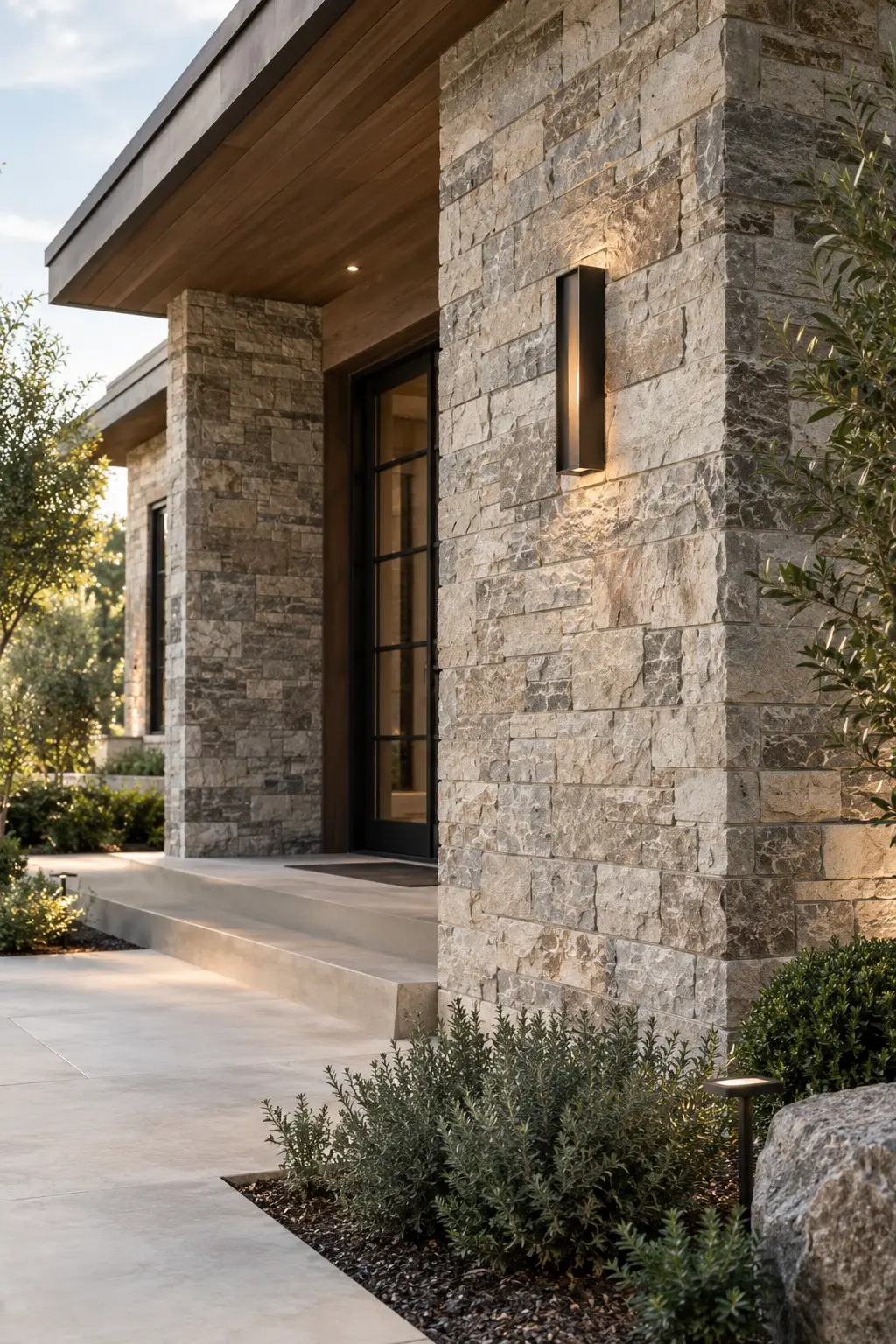
Exterior stone veneers are non-structural layers of stone attached to the outside walls of a home to give it the appearance of solid stone masonry. Natural options are cut from real quarried stone, such as granite, quartzite, or travertine, to about 3/4 to 1 1/2 inches thick for thin veneer or 3 to 5 inches thick for full-bed veneer. Homeowners choose exterior stone veneers to add curb appeal and a finish known for durability and weather resistance on new and existing homes.
Nova Tile and Stone helps homeowners, designers, and builders select natural stone for residential exteriors at our showrooms in Reno, Minden, Fernley, and Sacramento.
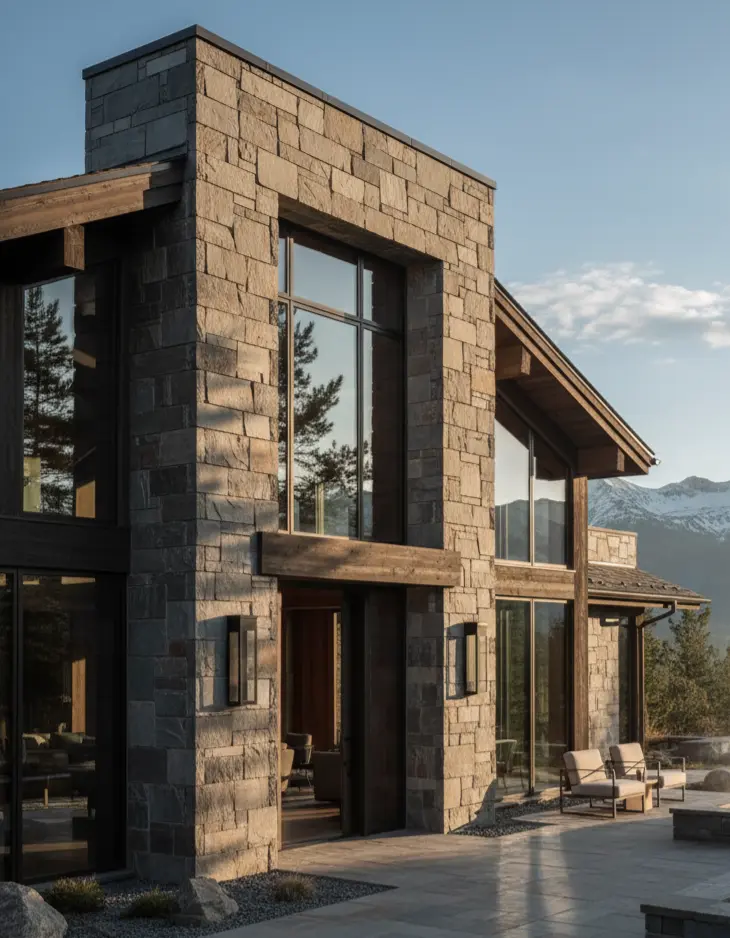
What Are Exterior Stone Veneers?
Also known as stone cladding, exterior stone veneers depend on the structural wall behind them for support. A key difference between the types is thickness, which affects how much weight that wall must carry.
Full-Bed Natural Stone Veneer
Full-bed stone veneer is the traditional approach to stone masonry. Its weight typically requires a concrete footing or foundation ledge, along with wall ties that secure the stone to the backing wall.
Thin Natural Stone Veneer
Thin stone veneer is sawn from quarried rock and typically weighs under 15 pounds per square foot. That lighter weight often allows it to be adhered directly to a properly prepared wall without a footing or wall ties.
Manufactured Stone Veneer
Manufactured stone veneer is a Portland cement product cast in molds and colored to imitate natural rock. It is typically similar in thickness to thin natural stone veneer.
Browse Our Complete OfferingsWhere to Use Natural Stone Veneer on a Home's Exterior
Common residential applications for exterior stone veneers include full exterior siding, accent walls, foundation wraps, porch columns, entryways, exterior fireplaces, and retaining or landscape walls. A project can cover an entire façade or focus on a single feature, such as a pair of entry columns.
Best Natural Stones for Residential Walls and Façades
On exterior walls, a stone's density and porosity largely determine how it handles moisture, sun, and freezing temperatures..
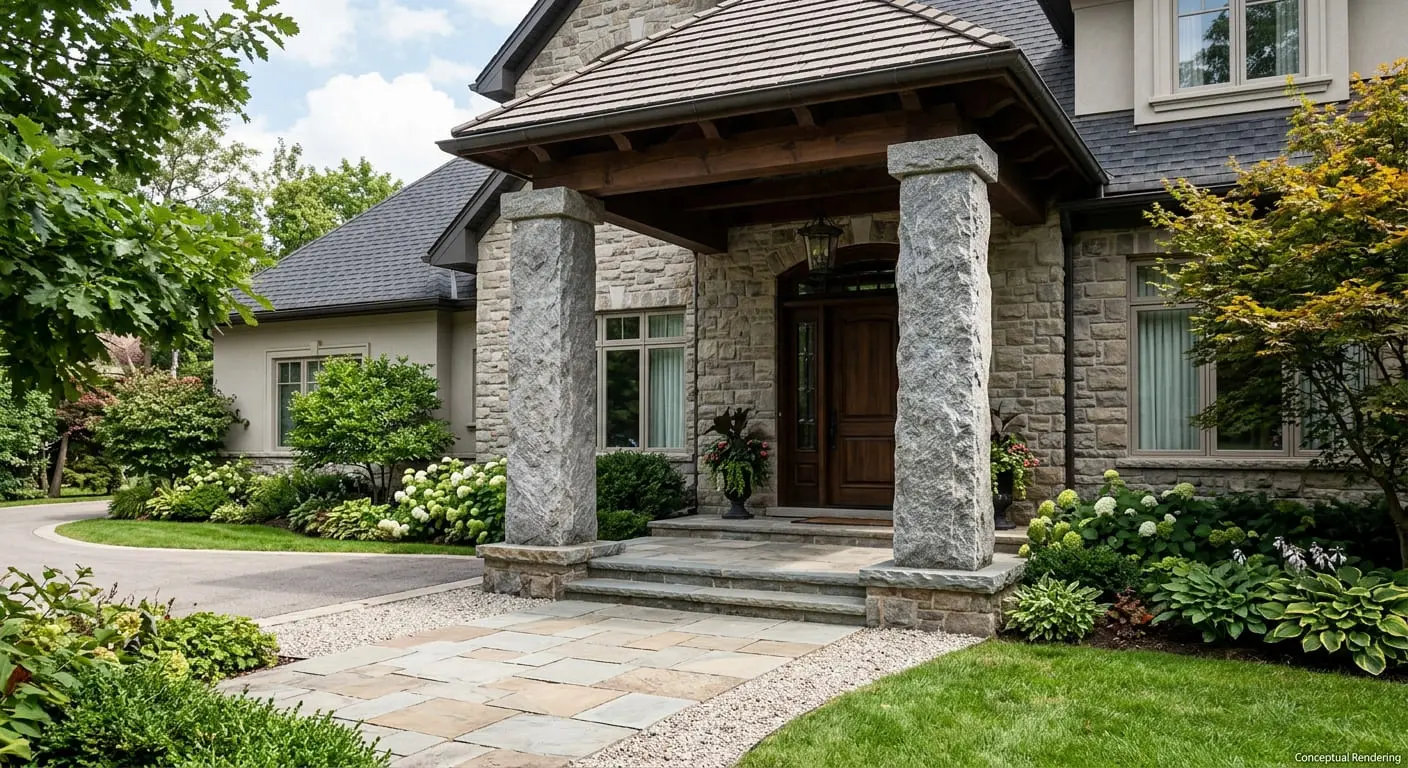 Granite
Granite is an igneous rock with a dense crystalline structure and water absorption typically below 0.5 percent. Its hardness helps it resist scratches, chips, and cracks.
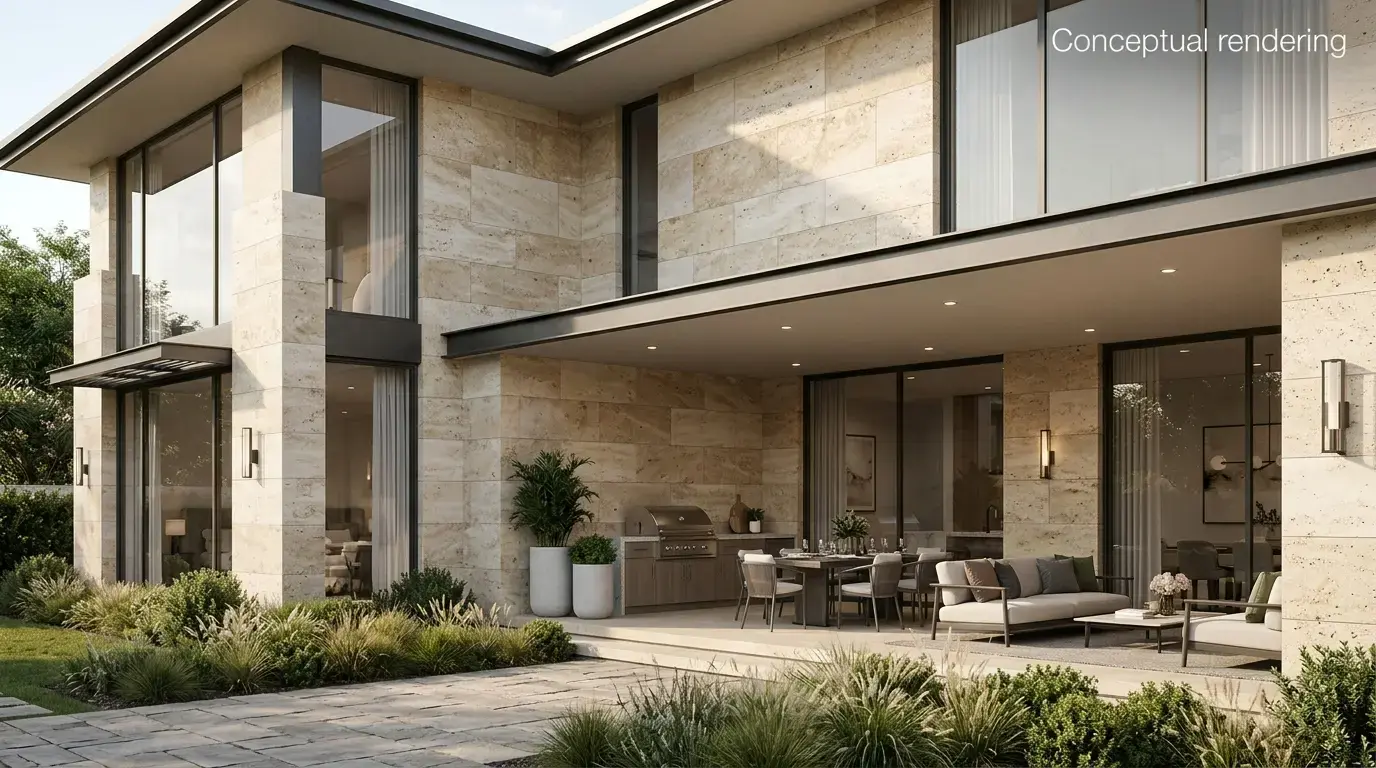 Travertine
Travertine is a type of limestone with natural voids in its surface and warm, earthy tones. Filled and sealed travertine tends to perform better outdoors, while untreated stone may spall in wet winters.
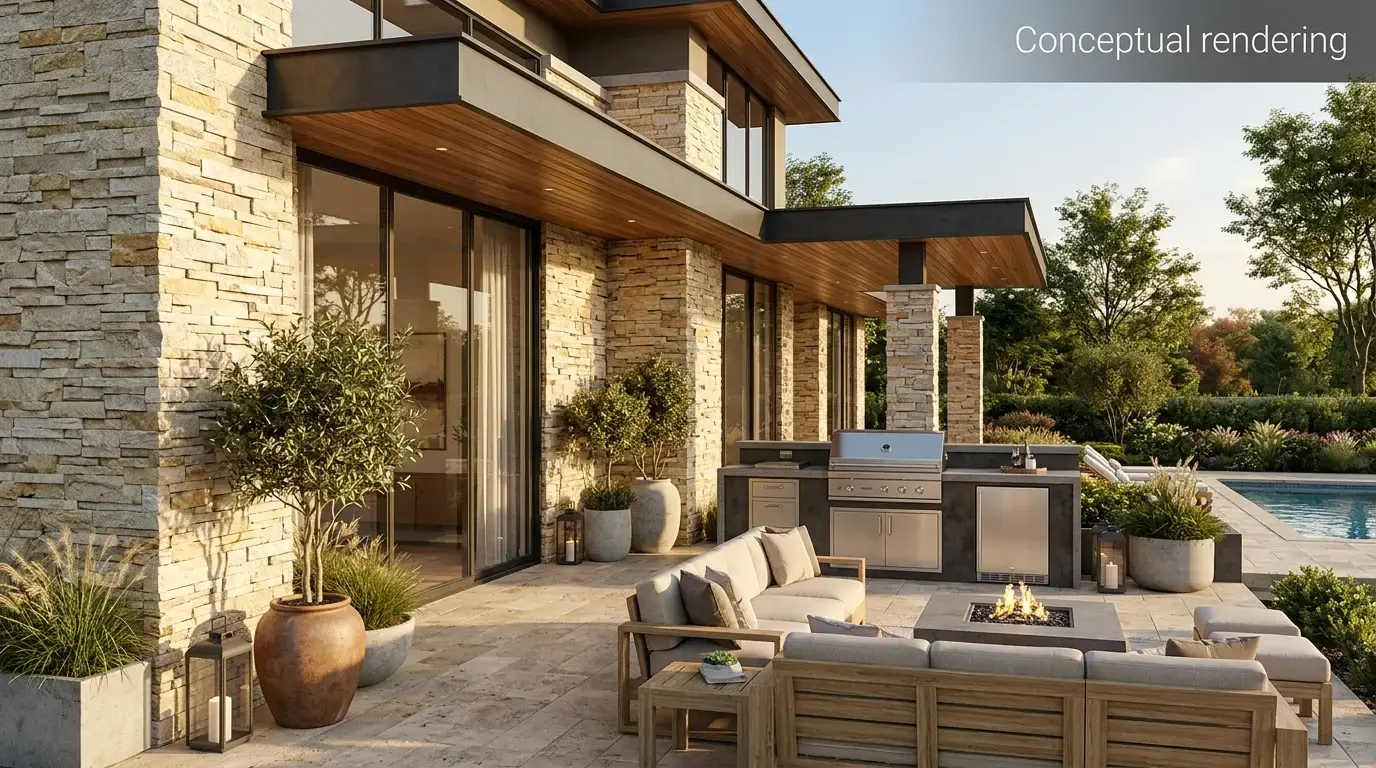 Quartzite
Quartzite is a metamorphic rock with a very high quartz content. It is generally harder than granite and also has low water absorption, which can make it a good fit for walls with heavy weather exposure.
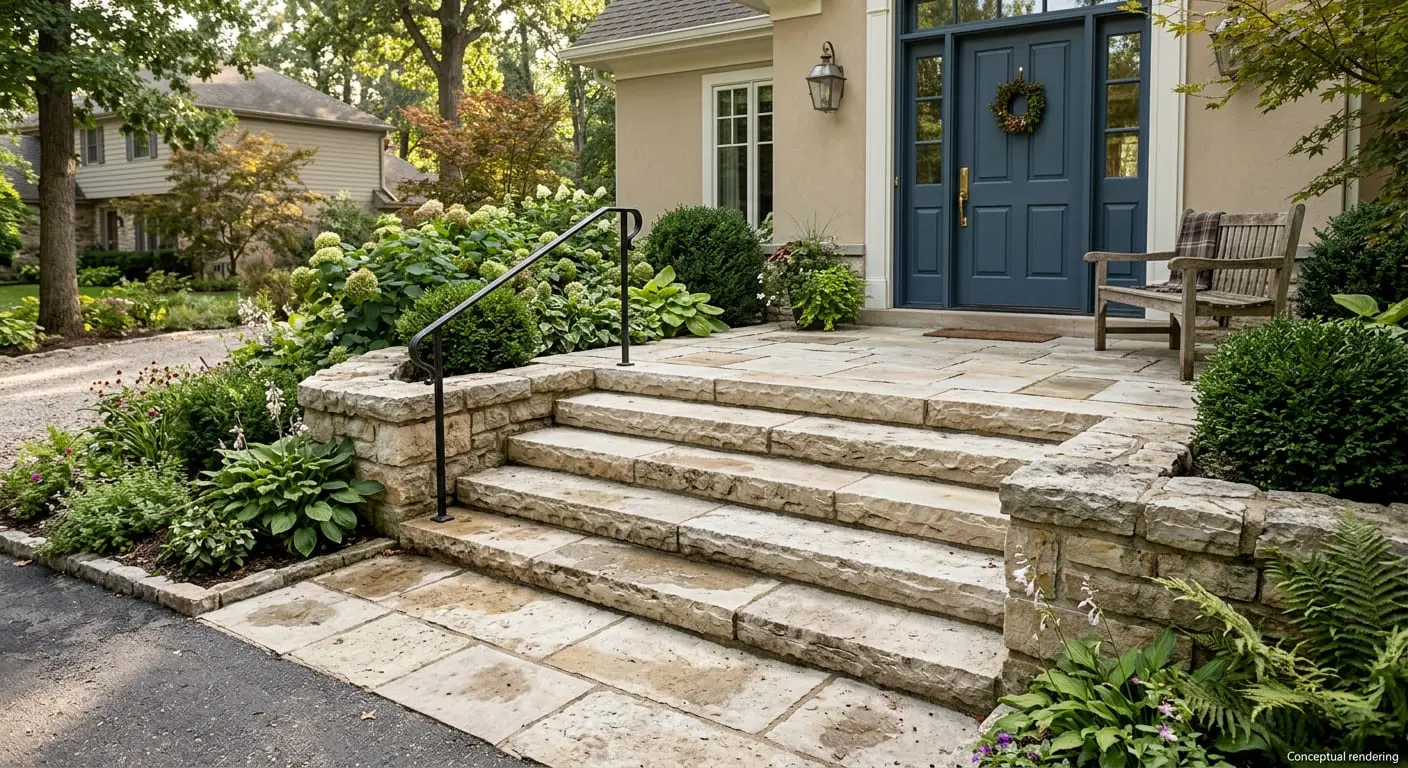 Limestone and Sandstone
Limestone and sandstone are more porous than granite and quartzite. High-density limestone can handle freeze-thaw cycles, while softer limestone and sandstone often benefit from sealing and good drainage in cold climates.
How to Choose Natural Stone Veneer for Walls and Façades
Climate and Freeze-Thaw Performance
In climates where temperatures regularly swing above and below freezing, exterior walls go through repeated freeze-thaw cycles. Water that soaks into porous stone expands when it freezes, and that internal pressure can crack or spall the surface over time. Dense, low-absorption stones such as granite and quartzite are known for strong resistance to this damage, making them well-suited exterior stone veneers for freeze-prone regions.
Color and Undertones
Take cues from the undertones of your roof, trim, and landscaping, then choose stone in complementary hues, whether that means a cooler gray blend or a warmer tan one. It also helps to decide early whether the stone should stand out as a focal point or blend in with the rest of the exterior.
Cut Patterns and Profiles
Ledgestone uses long, narrow strips and is often dry-stacked with no visible mortar for a clean, contemporary look. Ashlar combines square and rectangular stones in more uniform sizes for a tailored appearance. Mosaic fits irregular shapes together like a puzzle, creating a rustic look with plenty of natural variation.
Structure and Moisture Management
The wall assembly needs a water-resistive barrier and a path for water to drain from behind the stone. Trapped moisture can lead to wet insulation, mold, and rot in sheathing and framing, so we recommend working with a licensed mason or contractor who follows local building codes.
Frequently Asked Questions
When properly installed, both full-bed and thin natural exterior stone veneers can last for generations. Because each is cut from real quarried stone, proper installation and a stone suited to the local climate tend to matter more for longevity than the veneer type.
Natural stone gets its color from its minerals, while manufactured stone relies on pigments that are more prone to fading. Manufactured stone also typically absorbs more water than dense natural stone, though it does offer more consistent sizing and color from piece to piece.
Once installed, thin stone veneer can be difficult to distinguish from full-bed stone. Matching corner pieces wrap outside corners and edges, helping create the appearance of full-depth masonry.
Natural stone is noncombustible, which makes it a strong option for fire-resistant siding. On its own, however, it does not keep embers from entering vents and other openings, a common cause of home ignition during wildfires, so it is most effective as part of a broader fire-resistant design.
In many cases, yes. Thin natural stone veneer is often used for renovations where adding a footing would be impractical. The existing wall should first be evaluated to confirm it can carry the added weight.
Curious about something else?
Note: Some images on this page may be conceptual renderings created to illustrate design possibilities and may not depict actual installations.
Explore Natural Stone Veneer at Our Reno, Minden, Fernley, and Sacramento Showrooms
Choosing the right stone veneer is easier when you can see real stone in person. Our team can help you compare options for your home's style and exposure, and our free design consultations help you plan color, texture, and pattern before your project begins. Visit Nova Tile and Stone in Reno, Minden, Fernley, or Sacramento to schedule a consultation.
1855 US Highway 95A North, Fernley, NV 89408
 Google Maps
Store hours this week:
- Mon. - Fri.: 7:30 am - 4:00 pm
- Sat. - Sun.: Closed
12835 Old Virginia Rd Suite 24, Reno, NV 89521
Store hours this week:
- Mon. - Fri.: 7:30 am - 6:00 pm
- Sat.: 9:00 am - 3:00 pm
- Sun.: Closed
2548 Business Pkwy, Minden, NV 89423
Store hours this week:
- Mon. - Fri.: 7:30 am - 6:00 pm
- Sat.: 9:00 am - 3:00 pm
- Sun.: Closed
6100 Warehouse Way, Sacramento, CA 95826
Store hours this week:
- Mon. - Fri.: 7:30 am - 5:00 pm
- Sat. - Sun.: Closed
Bringing a few photos of the house exterior, along with rough measurements for walls, columns, or patio area, helps a showroom visit move faster.