Stone veneer for exterior walls is a thin facing of natural or manufactured stone that adheres to framed, concrete, or concrete block walls to create the look of solid masonry. Natural thin stone veneer is typically 3/4 inch to 1-1/4 inches thick. Because adhered veneer is generally limited to 15 pounds or less per square foot, it doesn't need the foundation ledge that full-bed stone requires.
Exterior stone veneer can cover a full facade, run along the lower wall as a wainscot, or accent entries, porch columns, and chimneys. Common materials include natural thin stone and manufactured (cultured) stone in profiles such as ledgestone, fieldstone, and flagstone, along with thin brick. A key factor is how the wall behind the stone handles moisture, starting with a water-resistive barrier and a weep screed at the base.
What is exterior stone veneer?
Exterior stone veneer is a decorative stone facing that attaches to a wall rather than carrying structural load itself. Most residential projects use adhered veneer, which bonds to a prepared wall surface with mortar. Full-bed stone is different: it's typically 3 to 5 inches thick, laid like traditional masonry, and needs a foundation ledge or footing to carry its weight. Some manufacturers also offer mortarless panel systems that fasten to the wall like siding.
How much of an exterior wall should stone veneer cover?
How much stone to use depends on your home's architecture and proportions, something our team can talk through during a free design consultation.
Full-height coverage
Full coverage wraps an entire elevation or the whole home in stone. It suits mountain, rustic, and European-inspired styles, where stone reads as the primary building material.
Wainscot or lower-wall bands
A wainscot runs stone along the lower portion of the wall, often up to window sill height or roughly one-third of the wall, with siding or stucco above. It adds visual weight at the base of the home and works well with craftsman, farmhouse, and transitional exteriors.
Where to stop the stone
Stone veneer typically reads as solid masonry when it wraps outside corners and ends at an inside corner, a column, or a natural break in the wall. Stopping stone flat at an outside corner can expose the thin edge and make the veneer look applied rather than built.
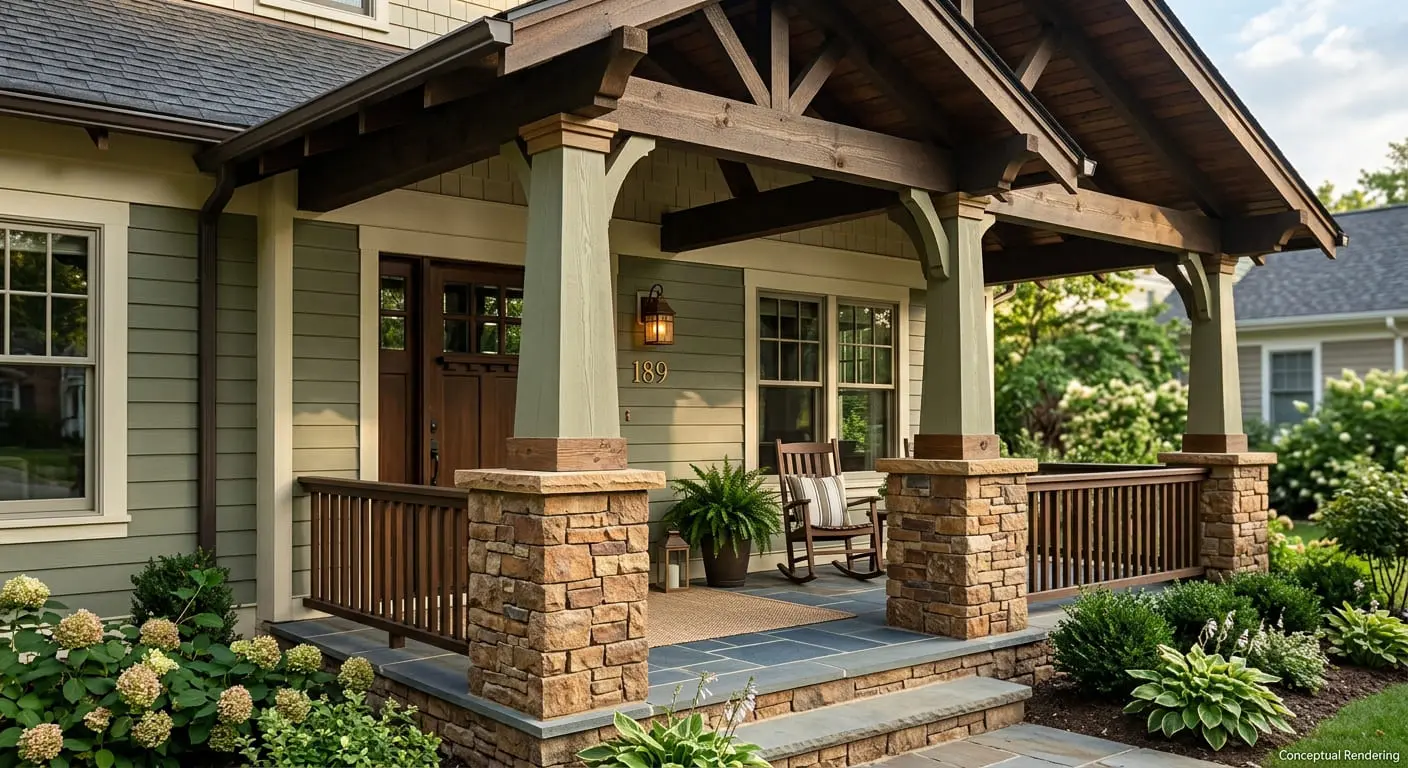
Where does stone veneer work best as an accent?
Common exterior accent areas include:
- Front entries: stone around the door frames the main entrance.
- Porch columns and column bases: stone-wrapped piers add visual weight to tapered or square columns.
- Chimneys: a stone-clad chimney chase carries the material up to the roofline.
- Garage piers and bump-outs: small stone sections break up large, flat facades.
- Outdoor living features: fireplaces, kitchen islands, and seat walls can use the same stone as the house for a consistent look across the property.
Using one stone in two or three places around the property ties the accents together. Since quantities are limited, our overstock and close-out materials are generally better suited to smaller accents.
What material options are available for exterior stone veneer?
Most exterior stone veneer falls into two categories: natural thin stone and manufactured stone, which is often called cultured stone. Full-bed stone is a third option when a project calls for traditional masonry.
| Type | What it is | Key considerations |
| Natural thin stone veneer | Real quarried stone sawn thin, typically about 3/4 inch to 1-1/4 inches | Mineral color runs through the stone; natural variation from piece to piece |
| Manufactured stone veneer | Lightweight concrete cast in molds and colored with pigments to resemble stone | Consistent sizing; color often lightens slightly as new stone cures |
| Full-bed natural stone | Full-thickness stone, typically 3 to 5 inches, laid as traditional masonry | Heaviest option; needs a footing or ledge for support |
Profiles, patterns, and thin brick
The profile determines the wall's pattern and texture. Ledgestone, often called stacked stone, uses long, narrow pieces in tight horizontal lines and is often used on modern and contemporary homes. Fieldstone uses irregular shapes for a rustic look, while flagstone sets flat, irregular pieces in a mosaic-style pattern. If you want the look of brick without full-size masonry, thin brick goes on the same way as adhered stone.
Choosing stone for your climate
Exterior walls face sun, rain, and often freeze-thaw cycles. Denser stones such as granite and quartzite tend to absorb less water, while limestone and sandstone vary widely by quarry and density. For any product you're considering, ask about its water absorption and freeze-thaw rating. They're the same questions worth asking about pavers and exterior stone for patios and walkways.
What installation considerations should you plan for?
Exterior stone veneer performs only as well as the wall system behind it. Your contractor or mason will handle the installation, but knowing the basics helps you plan and ask the right questions. If you're a contractor or designer sourcing veneer for clients, you can apply for a trade account with us.
- Moisture management
- On framed walls, adhered veneer relies on several layers behind the stone: a water-resistive barrier (usually two layers), metal lath, and a mortar scratch coat. A weep screed at the base of the wall lets trapped moisture drain out. Codes typically call for it to sit at least 4 inches above soil or 2 inches above paving.
- Substrate and structure
- Concrete and concrete block walls that are clean, rough, and free of paint, sealers, or waterproofing may accept veneer directly, while framed walls need the full assembly. The wall must also carry the added weight of the stone and mortar.
- Openings, flashing, and codes
- Windows, doors, and roof-to-wall intersections need proper flashing so water runs away from the wall. Follow the stone manufacturer's instructions and local building requirements, and confirm permit needs with your building department before work begins.
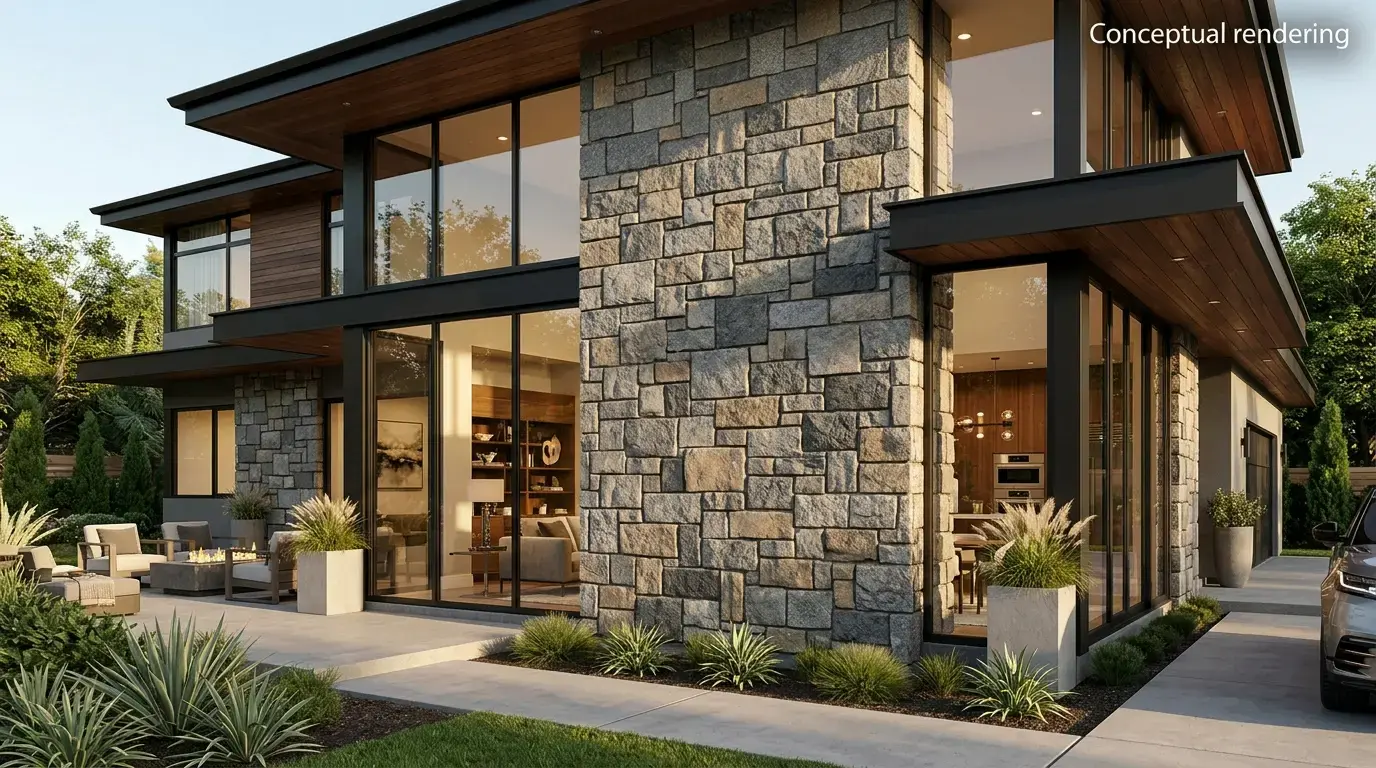
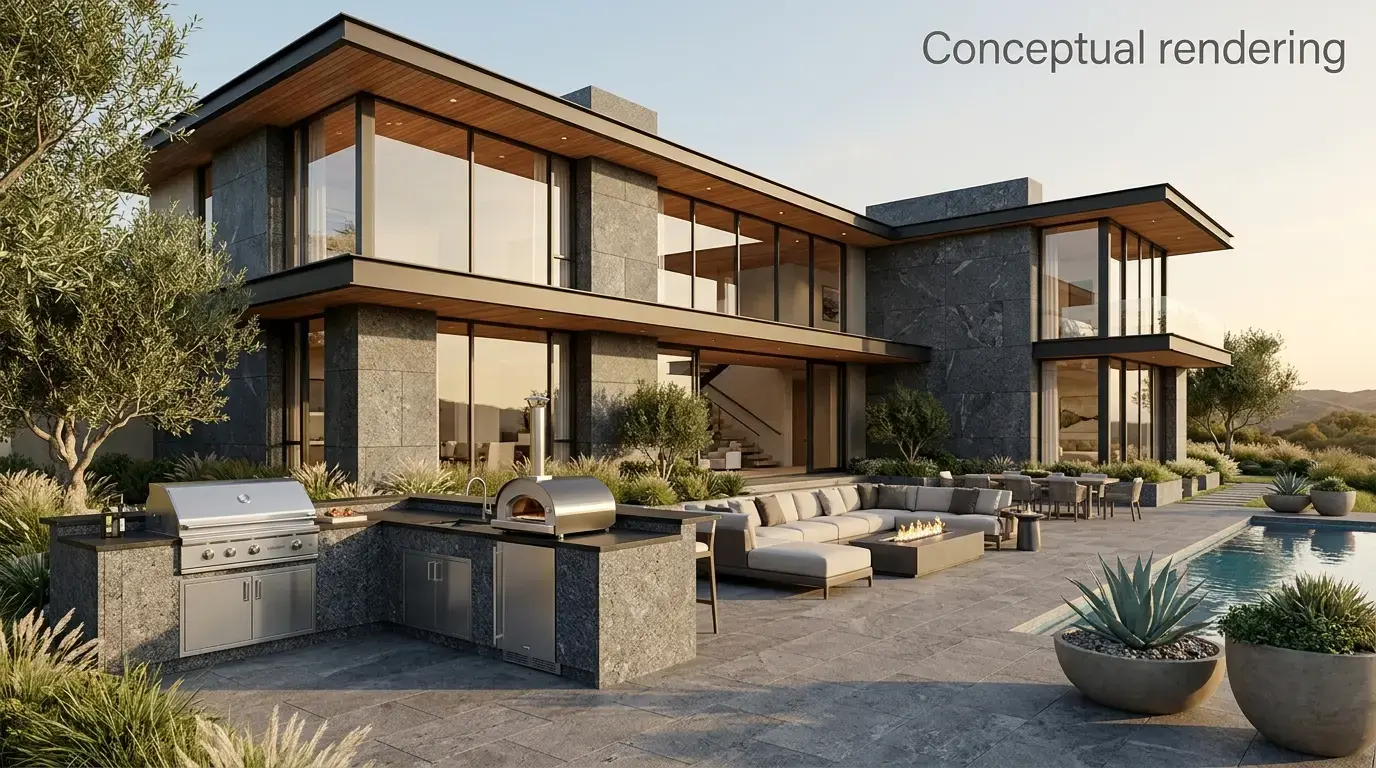 Conceptual rendering
Conclusion
Stone veneer for exterior walls comes down to a few decisions: full coverage or a wainscot band, where to place accents, whether natural or manufactured stone fits your home and climate, and how the wall behind the stone will manage water.
We work with a network of stone veneer manufacturers, from natural and manufactured stone to thin brick, and you can meet with our team at our showrooms in Sacramento, Reno, Minden, and Fernley. Bring photos of your home and any plans from your builder, and we'll help you narrow down a veneer that fits your design.
Frequently Asked Questions
For mortar-set veneer, usually not. Siding is typically removed down to the sheathing so a water-resistive barrier, lath, and scratch coat can be installed correctly. Some mortarless panel systems have their own requirements, so follow the manufacturer's instructions. Concrete or concrete block walls that are clean, rough, and free of paint or sealers may accept veneer directly, but a contractor should evaluate the surface first.
Both work on exterior walls. Natural thin stone veneer offers real stone color and texture throughout each piece, while manufactured stone veneer offers consistent sizing and a range of colors and profiles. The better choice depends on your design goals, climate, and the specific product's exterior ratings.
The lifespan of exterior stone veneer depends more on the wall assembly than on the stone itself. Moisture management, flashing, and installation quality are the main factors, since trapped water is one of the most common causes of veneer problems.
Many exterior stone veneers do not require sealing. If a sealer is used, it should be a breathable, penetrating masonry sealer, such as a silane or siloxane product, that lets moisture escape. Some sealers darken the stone, so test a small area first. Always check the stone manufacturer's recommendations before applying any sealer.
Measure the square footage of each wall area, subtract windows and doors, and measure outside corners separately in linear feet, since corner pieces are usually sold that way. Many manufacturers suggest subtracting the area the corners cover from the flat total, so check the product's coverage chart. Add a small waste allowance for cuts, which your installer can recommend based on the stone profile.
Looking for immediate assistance?
Give us a call!
775-374-6682
(Available Mon-Fri 7:30am - 4:00pm PST)
Unlike most customer service lines, ours connects you with real people.
When you call, just press 1 for online shopping support, or 2 for local shopping support!
Note: Some images on this page may be conceptual renderings created to illustrate design possibilities and may not depict actual installations.