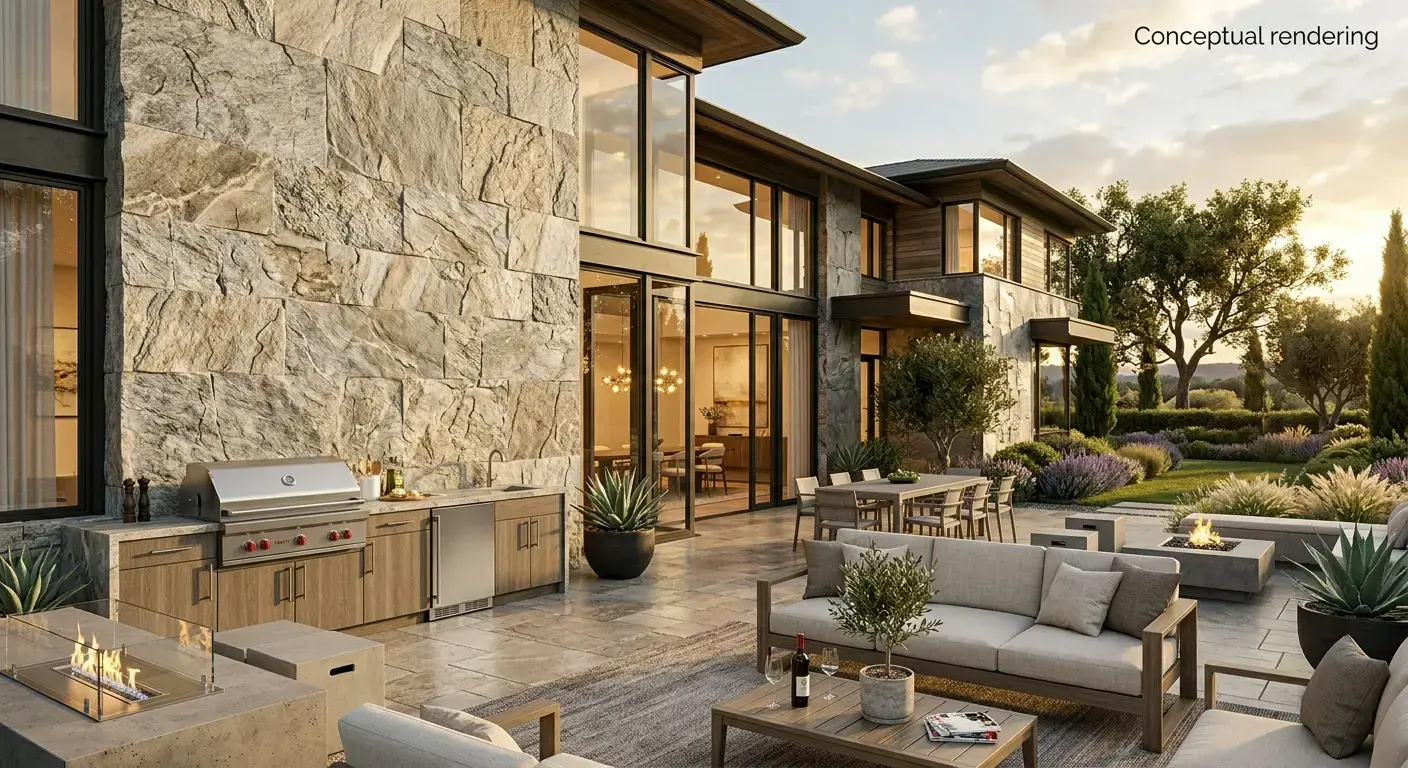
Stone cladding is a layer of stone attached to the outside of a building's walls, forming a decorative outer face over the underlying structure. On a home, it can add texture, visual weight, and a sense of permanence, and it can help define the character of the exterior from the street.
On residential walls, exterior stone cladding is commonly used in three ways: full-wall coverage across an entire facade, partial cladding such as a lower wainscot or a single street-facing elevation, and architectural accents around entries, columns, and chimneys. The right approach usually depends on the home's architecture, the scale of the walls, and the look you want to achieve.
Our team supplies natural stone slabs and tile for these projects, and your contractor or fabricator handles the installation. A good starting point is our exterior stone guide, along with our overview of natural stone for exteriors.
Full-Wall, Partial, or Accent: Which Stone Layout Suits Your Home?
Exterior stone cladding on a home generally falls into three design approaches: full-wall coverage, partial cladding, and architectural accents. Full-wall coverage applies stone across an entire facade or elevation, creating a solid, unified look.
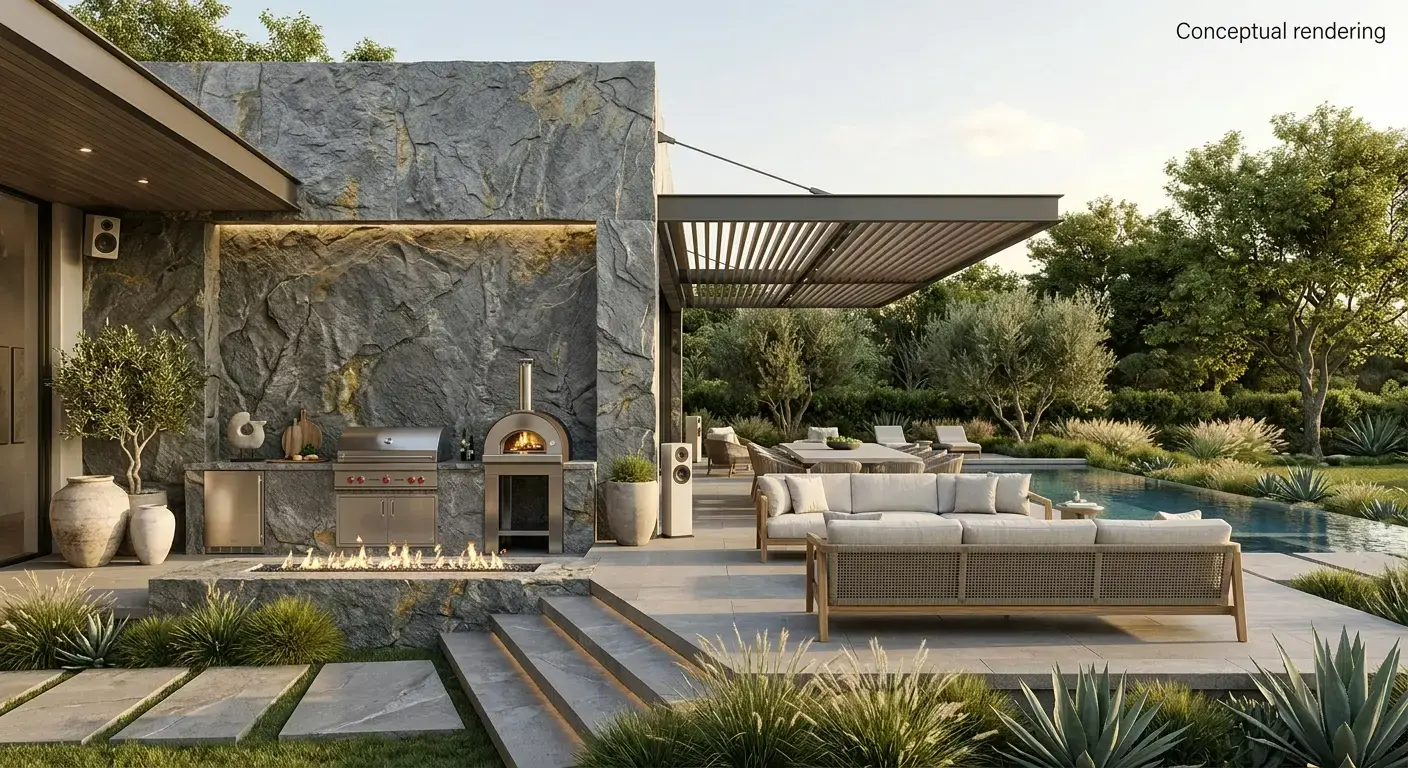
Partial cladding places stone on a defined area, such as a wainscot along the base of a wall or a single elevation facing the street. This can add visual weight while the rest of the exterior stays in another finish. Architectural accents use stone in smaller, focused areas, including entry surrounds, columns, window surrounds, and chimney faces, where a modest amount of stone can draw attention to specific features.
These approaches can also be combined, for example pairing a stone wainscot with a stone-faced entry, to create balance across the exterior. Color plays a role as well, since lighter tones can give a facade a brighter look, while deeper tones can add contrast and visual weight.
Viewing material at full scale can help with these decisions, and browsing our live slab inventory alongside our wider tile and stone selection can help you narrow your options. For projects that require sustainability documentation, this guide to environmental and health product labels for natural stone explains the EPD and HPD labels design professionals often review.
What Affects How Exterior Stone Cladding Holds Up Over Time?
Natural stone has been used on building exteriors for centuries. Exterior stone cladding can hold up well to rain, sun, and seasonal temperature changes, but performance depends on the specific stone, its thickness, and how the wall system is designed and installed.
Many stones hold their color well outdoors, but some can show gradual surface changes over many years of sun exposure and weather cycles. Stone can handle rainwater, but moisture that collects behind the cladding or sits at the base of a wall can contribute to staining, efflorescence, or freeze-thaw damage in colder climates, which is why drainage and flashing matter.
The attachment method also affects long-term results. Thin stone veneer and tile are often adhered to a prepared wall surface, while thicker or heavier stone panels are commonly secured with mechanical anchors. The system is typically determined by the project's architect, structural engineer, and stone installer in line with local building codes.
This overview of anchorage systems for natural stone cladding outlines the common approaches. Our role is supplying the stone slabs and tile for exterior stone cladding, while your contractor or installer handles the installation.
Keeping Exterior Stone Cladding Clean Through the Seasons
Exterior stone cladding tends to need relatively little routine care, but periodic cleaning helps maintain its appearance, and regular inspections can catch issues before water gets behind the stone. Care needs can vary by stone, so it is worth checking with your contractor or a stone care professional before trying a new product.
The Natural Stone Institute care guidelines also offer helpful cleaning recommendations. These basic habits can help keep stone walls looking their best:
- Rinse the surface with clean water and a soft brush to remove dust, pollen, and dirt buildup.
- Use a mild, pH-neutral cleaner made for natural stone, since abrasive cleaners, acidic products, and harsh chemicals can etch, scratch, or dull some stone surfaces.
- Address moss, mildew, or algae in shaded or damp areas promptly, using a cleaning solution suited to natural stone.
- Avoid high-pressure washing at close range, since it can damage some stone finishes as well as mortar or sealant joints.
- Inspect joints, sealant, and flashing periodically, especially after winter, and have your contractor address cracks or gaps that could let water behind the stone.
- Ask a stone professional whether your stone needs a penetrating sealer, since many stones do not require sealing, and a sealer reduces absorption rather than making stone waterproof.
- Keep sprinklers, downspouts, and soil from directing water onto the stone, as repeated wetting can lead to staining or mineral deposits over time.
Conclusion
Full-wall coverage, partial cladding, and architectural accents each give a home a different presence. The best fit usually comes from matching the stone to the architecture and the size of the walls. Exterior stone cladding is a long-term design decision, so taking time to review samples with your designer or contractor can help the finished walls suit your home for years to come.
Seeing material in person, under natural light, can make color and texture easier to judge than a photo alone. When you have a direction in mind, you can request a slab quote for the material your project needs or book a design consultation to view stone with our team.
Note: Some images on this page may be conceptual renderings created to illustrate design possibilities and may not depict actual installations.
Frequently Asked Questions
The right amount of exterior stone cladding depends on the home's architecture and the look you want. Full coverage creates a unified look across the facade, while a lower wainscot or stone accents on entries, columns, and chimneys use less material and highlight specific areas.
Natural stone can perform well through rain and seasonal temperature swings, but results depend on the stone, its thickness, and the installation. Proper drainage and flashing, handled by your contractor, help limit water getting behind the stone, which can lead to freeze-thaw damage in colder climates.
Rinse the stone with water and a soft brush, then use a mild, pH-neutral cleaner made for natural stone when needed. Avoid abrasive cleaners, harsh chemicals, and high-pressure washing at close range, since these can damage the stone surface and the joints.
Yes, store pickup is available for material ordered through our team. Confirming a pickup time with our team in advance helps make sure your stone slabs or tile are ready when you arrive.
Delivery options can vary by material, quantity, and location. Our team can confirm available shipping details when you request a quote.