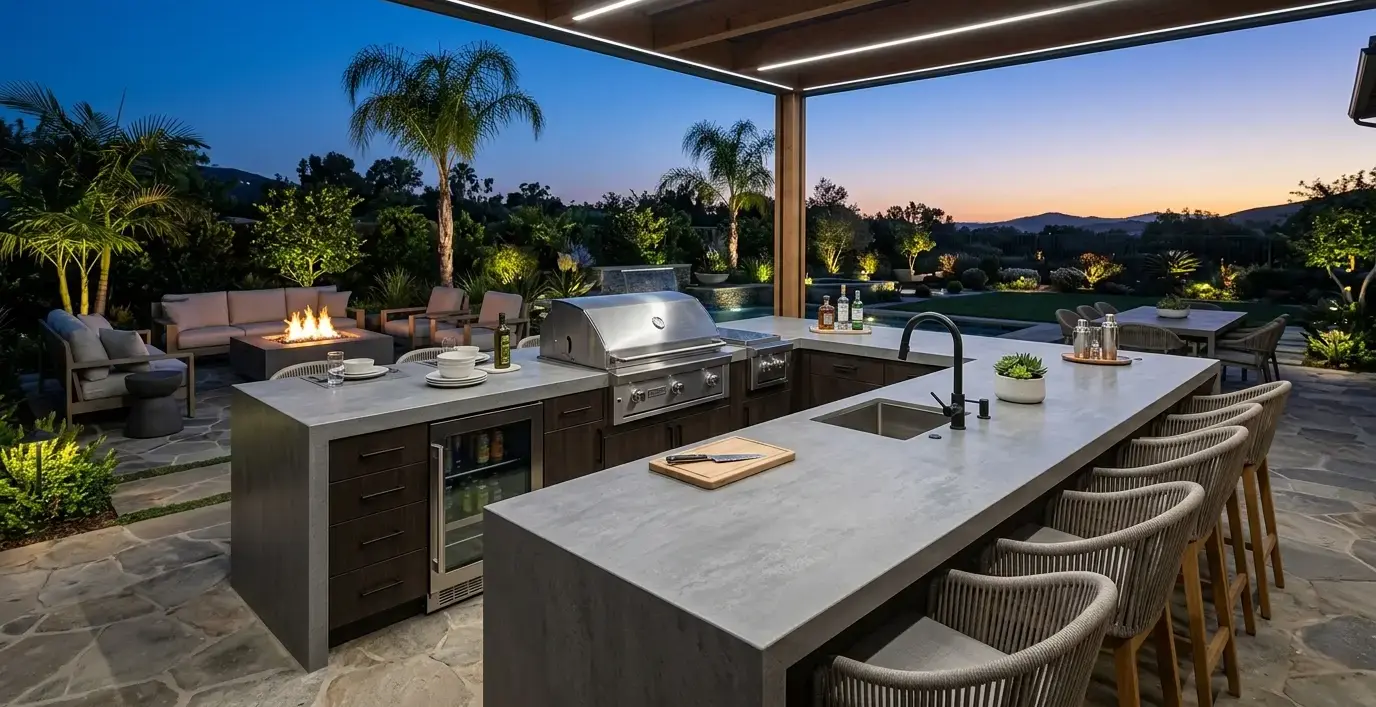
Engineered stone for countertops brings together the visual richness of natural stone and the reliability of precision manufacturing. Available in two core materials, porcelain and quartz, these slabs are designed for a wide range of applications including kitchen countertops, bathroom vanities, kitchen islands, bars, flooring, wall cladding, and outdoor living spaces where both aesthetics and durability matter.
Primary colors span white, gray, black, brown, and tan, with secondary tones including beige, cream, taupe, gold, rust, blue-gray, and soft greenish shades. Finishes come in polished, honed, and specialty options to suit a range of aesthetic preferences and functional needs. Veining patterns range from linear and cross-cut to marble-like and cloudy soft compositions, with each slab offering a one-of-a-kind arrangement.
Whether you are outfitting a sleek modern kitchen or a spa-inspired bathroom, Nova Tile and Stone's premium slab specialists offer free design consultations to help you match the right material and style to your project.
Built to Perform: Engineered Stone for Countertop Specs, Materials, and Comparisons
Porcelain and quartz each bring a distinct performance profile to the engineered stone category. Porcelain slabs rate 6 to 7 on the Mohs hardness scale, manufactured from compressed clay and mineral compounds fired at extreme temperatures. Raw minerals for porcelain production are sourced from Italian quarries, producing a refined, consistently textured surface. Standard slab dimensions reach up to 160x320 cm in thicknesses of 6 mm, 12 mm, and 20 mm. With a water absorption rate below 0.5%, porcelain ranks among the most moisture-resistant surface materials available, making it suitable for outdoor kitchens, patios, and wall cladding.
Quartz engineered stone scores 7 on the Mohs hardness scale, composed of approximately 90% crushed natural quartz crystals blended with polymer resins. Standard countertop thickness for quartz runs 2 cm or 3 cm, suited to full countertop profiles. Its absorption rate sits below 0.02%, making it virtually impenetrable indoors. Because of its resin content, quartz is recommended for interior use only, including kitchen countertops and bathroom vanities.
Compared to natural marble, both materials resist etching and surface staining more effectively. Unlike granite, they require no annual sealing. Both significantly outperform laminate and solid surface alternatives in hardness, heat tolerance, and long-term finish retention. View available porcelain and quartz options in real time through the live slab inventory at Nova Tile and Stone.
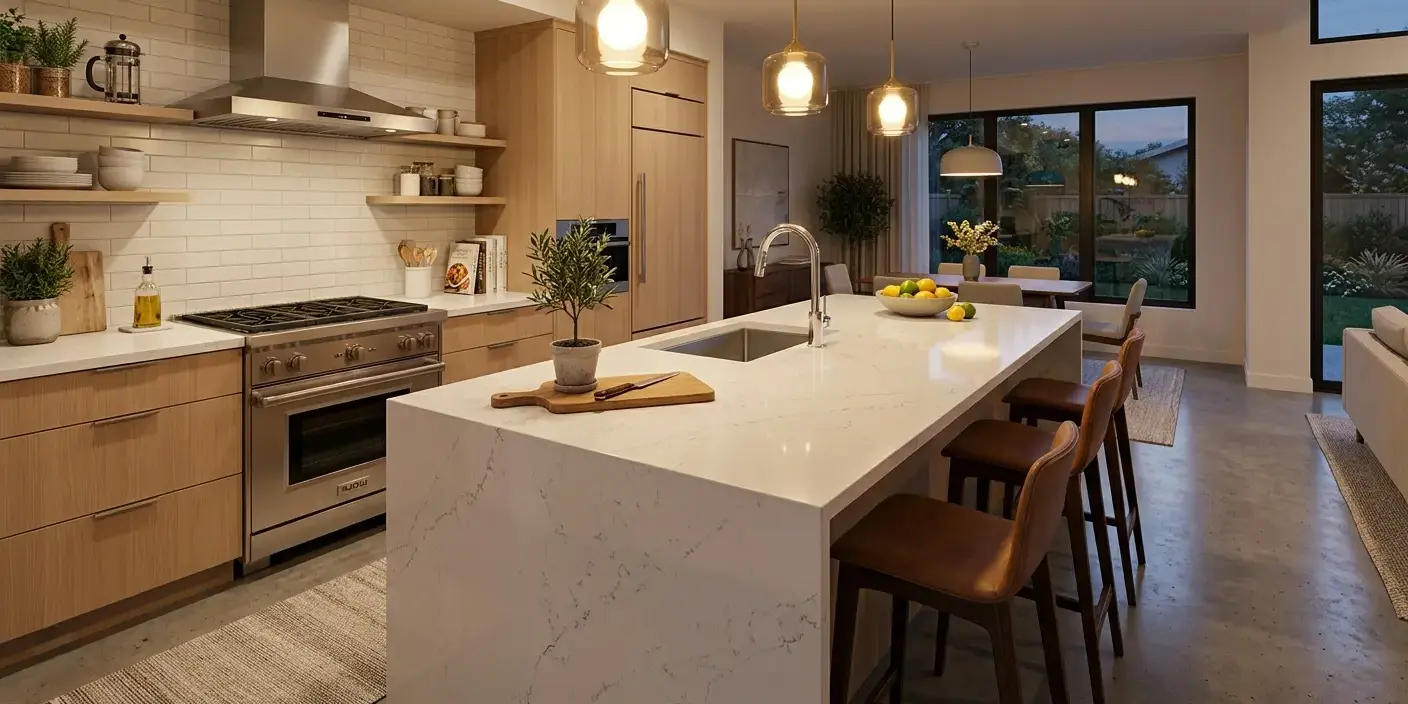 Conceptual rendering
Design That Moves With You: Layout Flexibility and Application Fit
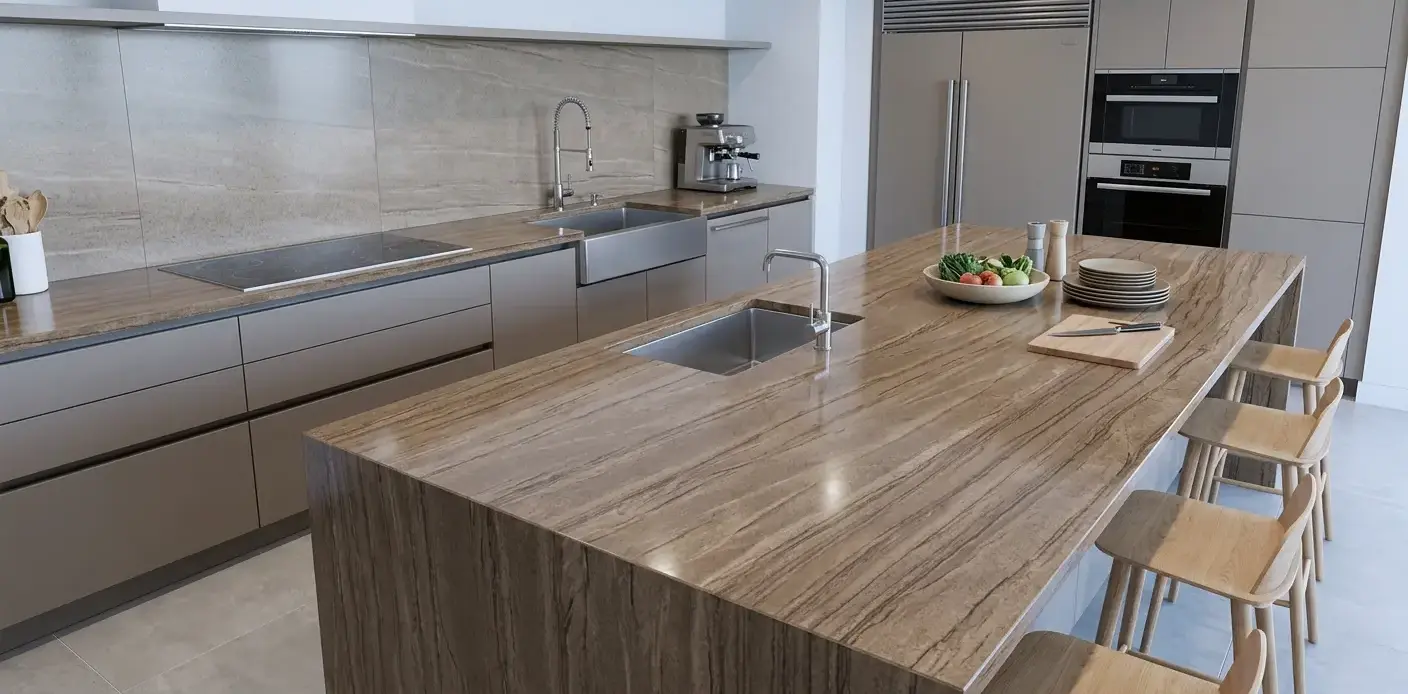
Large-format engineered stone slabs open layout possibilities that smaller tiles simply cannot achieve. Running a single slab horizontally across a kitchen island creates an uninterrupted surface with near-seamless transitions. Vertical layouts on bathroom walls produce bold, graphic veining effects that anchor the space with a sense of scale.
For kitchen countertops, honed quartz in white or gray with marble-like veining delivers a clean, timeless result. Polished porcelain in warm brown or tan tones brings depth and texture to outdoor bar countertops and patio surfaces. Linear veining reinforces a modern, structured aesthetic, while cloudy or soft patterns add organic warmth in transitional or classic interiors.
Herringbone and stacked arrangements work particularly well on accent walls and backsplash panels, extending the visual weight of the slab material beyond the horizontal surface. For bold large-format porcelain applications built for design-forward projects, explore the full range of Infinity Surfaces porcelain slabs at Nova Tile and Stone.
Why Engineered Stone Outperforms the Rest: Practical Surface Advantages
- Heat resistance: Porcelain tolerates high temperatures near cooktops and outdoor grills without warping or discoloring.
- Scratch resistance: Both porcelain and quartz resist surface scratches from everyday kitchen and bath use.
- Stain resistance: The near-zero absorption rate in both materials prevents juice, wine, oil, and grease from penetrating the surface.
- UV stability (porcelain): Porcelain holds color fidelity under direct sunlight, performing reliably in outdoor kitchens and patio settings over the long term.
- No sealing required: Unlike granite or natural marble, engineered stone surfaces skip the periodic sealing routine entirely.
- Consistent pattern and color: Engineered production delivers repeatable aesthetics across multiple slabs, critical for large countertop runs and matched wall applications.
- Low maintenance routine: A simple wipe-down with mild soap and water is all these surfaces need to stay clean and looking new.
Explore New Blog Posts and Insights
Discover the Latest Company Updates!
A Surface Investment That Holds Its Value
Choosing engineered stone for countertop is a decision that compounds in value over years of use. Resistance to chipping, etching, and staining means fewer repairs and no costly refinishing cycles. The non-porous composition limits bacterial growth, keeping kitchen and bathroom surfaces hygienically clean with minimal effort.
The timeless appeal of veined stone in neutral tones holds broad design relevance across years of evolving style trends, protecting your renovation investment. Understanding which material fits your specific use case makes all the difference in long-term satisfaction. The resource on Quartzite vs. Quartz Countertops from Nova Tile and Stone's expert blog offers a clear breakdown of material differences that directly affect durability and performance choices.
Engineered stone balances premium aesthetics with structural reliability, making it one of the most practical and visually enduring surface investments available today.
Explore Your Options and Build the Space You Deserve
Your next engineered stone is ready to be found. Browse a live slab inventory featuring porcelain and quartz in every color, finish, and veining pattern, and get personalized guidance from a team that understands stone inside and out. Schedule a free design consultation with Nova Tile and Stone's expert slab specialists and take the first step toward a surface built for how you actually live.
Looking for immediate assistance?
Give us a call!
(Available Mon-Fri 7:30am - 4:00pm PST)
Unlike most customer service lines, ours connects you with real people.
When you call, just press 1 for online shopping support, or 2 for local shopping support!
 Conceptual rendering
Frequently Asked Questions
An engineered stone is a manufactured surface made from natural minerals, primarily quartz crystals or porcelain compounds, combined with resins or fired under high pressure to form a dense, consistent slab. It replicates the appearance of natural stone while delivering improved resistance to stains, scratches, and moisture.
Porcelain is made from fired clay and minerals, making it UV-stable and suitable for both indoor and outdoor use, including kitchens, patios, and walls. Quartz is composed of approximately 90% crushed natural quartz bound with polymer resins, making it ideal for interior surfaces such as kitchen countertops and bathroom vanities. Porcelain performs better outdoors; quartz is preferred for refined indoor applications.
Porcelain engineered stone is rated for outdoor use because it resists UV exposure, moisture, and temperature fluctuations without degrading. Quartz is not recommended for outdoor applications because its resin binders can yellow or degrade under prolonged direct sunlight.
These slabs are available in honed and polished finishes. A honed finish produces a smooth, matte surface ideal for a natural, understated aesthetic. A polished finish delivers a high-gloss, reflective surface that intensifies veining detail and color depth.
No. Both porcelain and quartz engineered stone are non-porous, so they do not require sealing. This is a significant advantage over natural stone materials like marble and granite, which need periodic sealing to prevent staining and moisture absorption.