Quartzite and quartz countertops are not the same material. Quartzite is a natural metamorphic rock mined directly from the earth, while quartz is an engineered stone made from approximately 90% crushed quartz crystals combined with resins and pigments. Though the names sound nearly identical, their performance, maintenance requirements, and design flexibility differ significantly.
Here's the short answer most homeowners need to know: quartz countertops outperform quartzite in maintenance ease, crack resistance, color variety, and long-term value. Quartzite requires resealing multiple times per year and is vulnerable to staining even when sealed, while quartz is nonporous, requires no sealing, and holds up better under everyday kitchen conditions.
This guide breaks down the full comparison, covering cleaning, durability, color options, and care, so you can make a confident decision before investing in either countertop material.
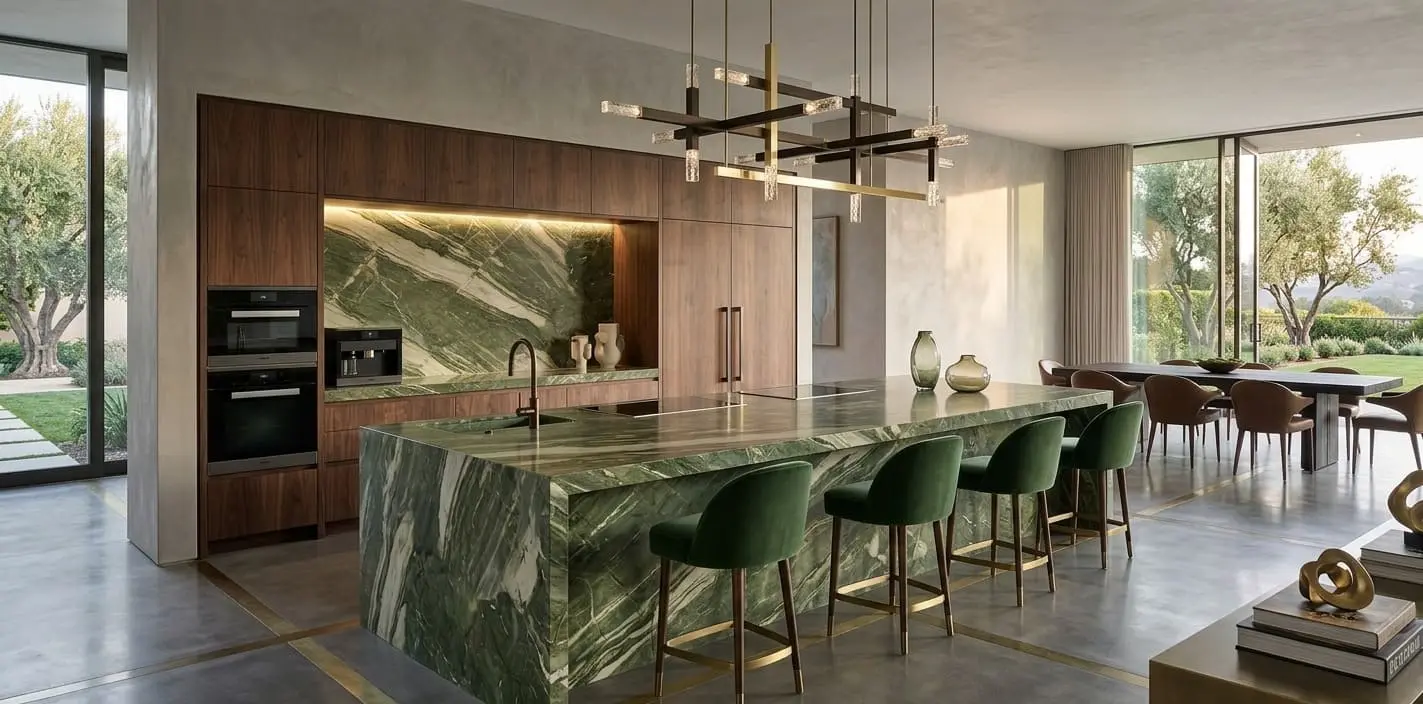
Understanding Quartzite Countertops
Quartzite is a naturally occurring metamorphic rock formed when sandstone or quartz-rich chert undergoes intense heat and extreme pressure deep within the earth. Its composition is predominantly quartz minerals, with the purest specimens containing very high concentrations of the mineral.
Its glassy, marble-like finish gives quartzite a striking visual appeal. No two slabs look exactly alike, making it a genuinely unique addition to any kitchen. However, raw quartzite is far too porous for practical kitchen use. Fabricators coat the surface with polyurethane, wax, or acrylic sealants to make it functional, a step that introduces ongoing maintenance responsibilities. Without proper sealing, quartzite will absorb liquids and food residue rapidly, leading to permanent staining and surface deterioration.
Explore our premium selection of expertly crafted quartzite slabs for countertops, kitchen islands, and luxury interior surfaces to find the right natural stone solution for your project.
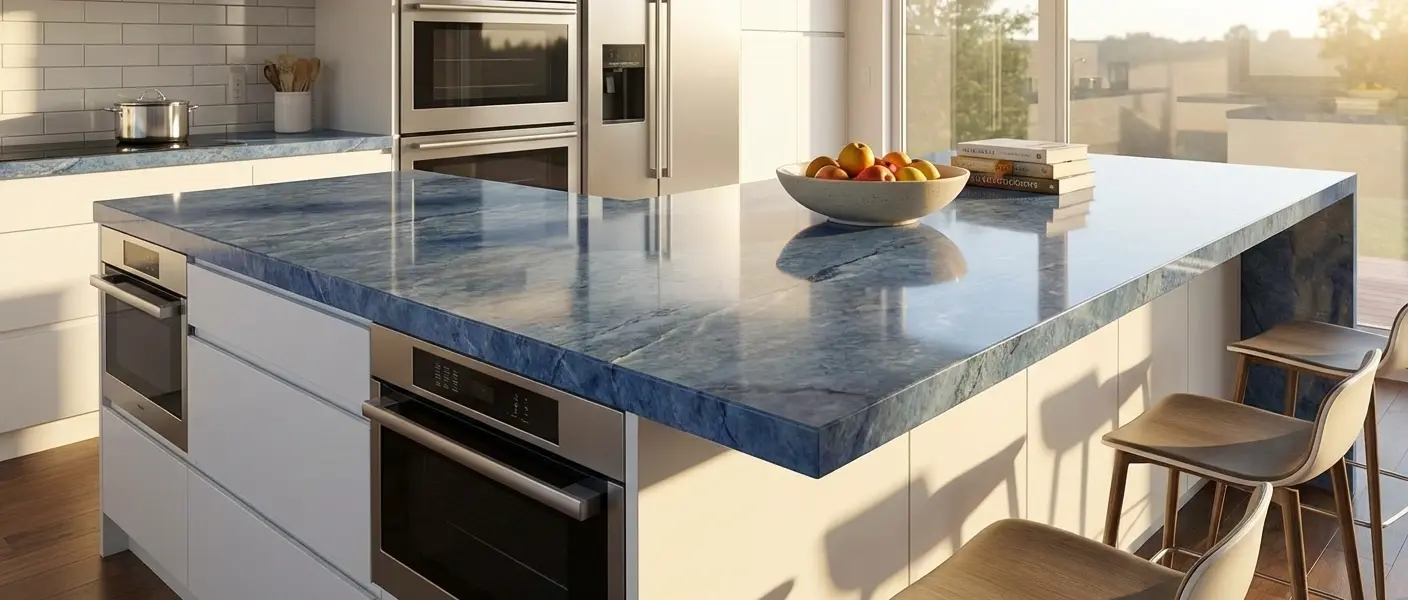
What Are Quartz Countertops?
Unlike quartzite, quartz countertops are crafted from engineered stone, which is a high concentration of loose quartz crystals bound together with resins and pigments. This engineered composition gives manufacturers precise control over the final product's appearance, strength, and consistency, advantages that natural stone simply cannot match.
Recent breakthroughs in stone manufacturing technology allow today's quartz surfaces to authentically replicate the look of natural granite, marble, and other premium materials. For homeowners who want the beauty of natural stone without the maintenance burden, quartz is the ideal solution.
Nova Tile and Stone's quartz slab for kitchen countertops are produced by blending rigorously inspected quartz minerals with polymer resins and pigments, poured into a mold, pressed, cured, heated, then gauged and polished. Every slab undergoes individual quality inspection before clearing production, resulting in a material that outperforms quartzite in both durability and aesthetics.
Learn more about engineered stone surface safety considerations and quartz countertop material standards while exploring our premium quartz collections, or apply for a trade account with Nova Tile and Stone for exclusive access to pricing, inventory updates, and professional project support.
Cleaning: Quartzite vs. Quartz
When it comes to day-to-day cleaning, these two materials operate on completely different terms.
Quartzite's protective sealant degrades over time and requires periodic replacement. Even a thinned coating loses its ability to repel liquids like red wine or tomato sauce. Act fast and wipe spills immediately with a damp cloth, then use mild dish soap for routine daily cleaning. Avoid harsh chemical cleaners, as these break down the sealant faster and leave the stone exposed and vulnerable.
Quartz countertops work very differently. Their nonporous surface resists liquid absorption, giving you considerably more margin for error. For routine maintenance, a soft cloth with warm water and a mild household cleaner is all you need to keep quartz surfaces looking pristine. Regardless of material, always avoid abrasive cleaning products or scrubbing pads on both surfaces, as these can permanently scratch and dull the finish.
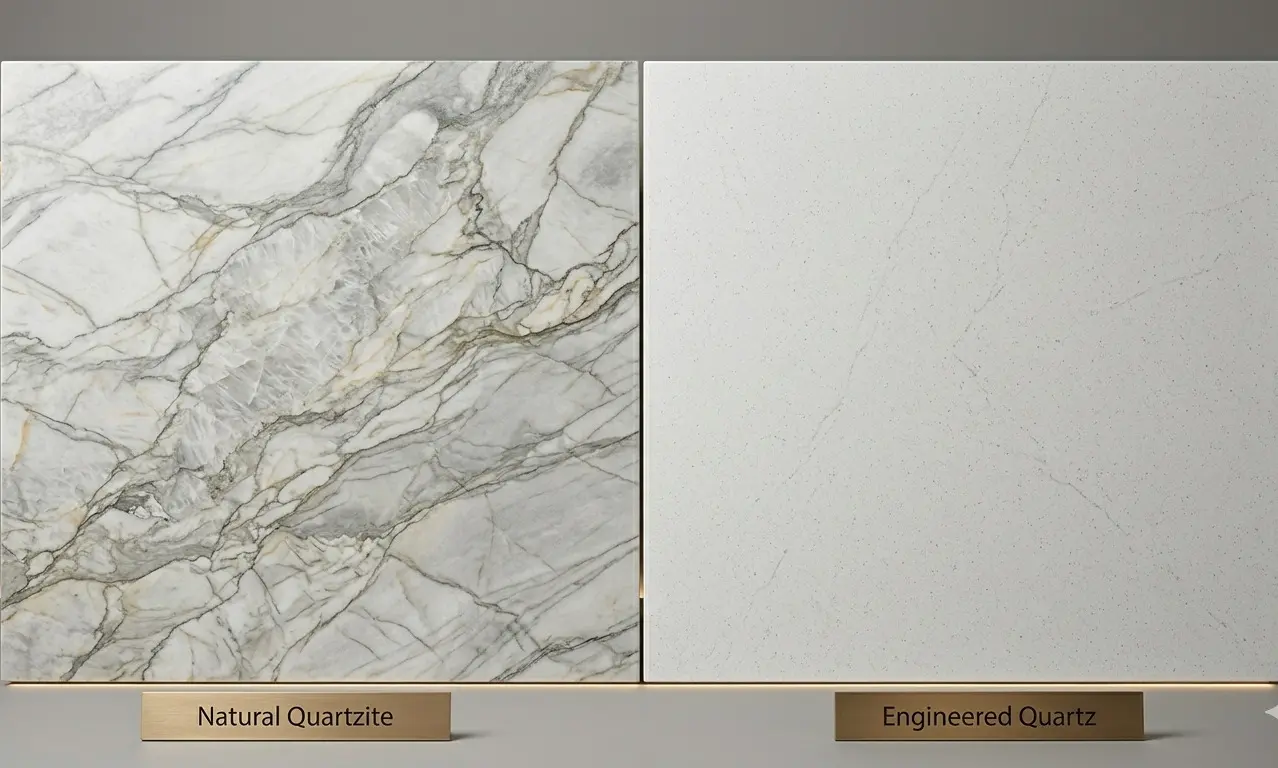
Maintenance: Quartzite vs. Quartz
Long-term maintenance is where the gap between quartzite and quartz becomes most apparent.
Quartzite countertops require resealing multiple times per year. Neglect this and you are looking at a stained, damaged surface that is difficult and costly to restore. Quartz countertops, on the other hand, require no sealing whatsoever, freeing homeowners from this recurring responsibility entirely.
While quartzite is technically harder than quartz, giving it a slight scratch resistance edge, that hardness also makes it more vulnerable to cracking under sudden impact. A crack in natural stone can require professional repair or full slab replacement. Quartz holds up better against impact and is far less prone to sudden fractures. Both materials handle everyday heat exposure well, but neither is fully heatproof. Always use trivets regardless of which surface you choose.
Color Options: Quartzite vs. Quartz
Color selection plays a major role in any kitchen design decision, and this is another category where quartz holds a clear advantage.
Quartz countertops offer a virtually unlimited color palette, including convincing imitations of marble, granite, and concrete. Whether your kitchen aesthetic leans modern, traditional, or minimalist, there is a quartz option that fits seamlessly.
Quartzite, bound entirely by nature's palette, typically presents in white-to-gray tones. Colors beyond that range only appear when additional minerals are present during natural formation, making them rare, harder to source, and often more expensive. For homeowners with a specific design vision, quartzite's limited color range can make achieving a cohesive kitchen aesthetic more challenging.
Why Quartz Comes Out on Top
The comparison is clear. Quartz wins across every practical category:
Customization and Appearance: Quartz unlocks a far wider range of colors, patterns, and finishes. Quartzite limits you to whatever the natural stone provides.
Easier Maintenance: Quartz requires zero sealing. Quartzite needs resealing multiple times annually, with prompt spill response required even between applications.
Better Crack Resistance: Despite being technically softer, quartz resists cracking and chipping more effectively. Use a cutting board consistently and the softness becomes a non-issue.
Smarter Long-Term Investment: Quartz enhances daily kitchen use and serves as a compelling selling point at resale. The lower maintenance burden and greater design flexibility make it the more practical and profitable choice overall.
Conclusion
The evidence strongly favors quartz for most homeowners. Quartzite offers undeniable natural beauty and a one-of-a-kind appeal, but that beauty comes with real trade-offs. Routine resealing, staining vulnerability, cracking risks, and limited color options all demand serious consideration before committing.
Quartz checks nearly every box a modern homeowner needs: stunning aesthetics, minimal upkeep, daily durability, and virtually unlimited design adaptability. Whether you are renovating your kitchen or preparing a property for resale, quartz countertops deliver the long-term value and everyday practicality that makes them the smarter investment. When it comes to quartzite vs. quartz, quartz consistently comes out on top.
Explore more premium surface options on our website for quartz countertops, natural stone slabs, and design inspiration, or shop locally at one of our four showroom locations to view materials in person and find the right fit for your project.
Frequently Asked Questions
What is the biggest practical difference between quartzite and quartz countertops?
Maintenance. Quartzite requires professional resealing multiple times per year to prevent liquid absorption and staining. Quartz, being nonporous, requires no sealing at all, making it considerably easier and less expensive to maintain in a high-traffic kitchen environment.
Can quartzite countertops stain even when properly sealed?
Yes. Even a properly applied sealant does not make quartzite completely stain-proof. As the coating gradually wears thin, porous areas become vulnerable to red wine, coffee, olive oil, and tomato-based sauces. Prompt spill cleanup is always essential with quartzite, regardless of how recently it was sealed.
Is quartz or quartzite better for resale value?
Quartz typically offers stronger resale value. Its low-maintenance nature, design versatility, and consistent durability make it universally appealing to prospective buyers. Quartzite's ongoing maintenance requirements are often viewed as a drawback during home evaluations, making quartz the safer long-term investment.
Which countertop material is more scratch-resistant, quartz or quartzite?
Quartzite is technically harder, giving it a slight scratch resistance advantage. However, quartz's superior resistance to cracking gives it a meaningful overall durability edge. Always use a cutting board with either surface. With that habit in place, scratch resistance becomes far less of a deciding factor.
Are quartz countertops completely heat-resistant?
Quartz tolerates moderate heat but is not entirely heatproof. Direct exposure to very high temperatures can damage the resin binders, causing discoloration or warping. The same caution applies to quartzite. For both materials, always use trivets or heat-protective pads when setting down hot cookware to preserve the surface long-term.