Calacatta Marble Polished
Calacatta marble polished is a premium natural stone finish defined by a high-gloss surface, a bright white base, and bold veining in gold, gray, and taupe tones. As a Calacatta marble natural stone, no two slabs share the same veining pattern or tonal variation, making each installation genuinely one of a kind. It is quarried from the Apuan Alps in the Carrara region of Italy, and is widely regarded as one of the most luxurious materials available for residential and commercial interiors.
The
polished finish is achieved through a multi-stage process using progressively
finer diamond abrasives, followed by an oxalic acid compound that reacts with
the stone's calcium carbonate to produce a high-gloss, reflective sheen. These
qualities distinguish it from honed, leathered, or specialty surface
treatments.
Calacatta marble polished slabs are commonly specified for kitchen countertops, bathroom vanities, shower surrounds, and feature walls. Its Mohs hardness rating of 3–5 reflects its calcite composition, which requires proper sealing and maintenance to preserve the surface over time.
What Makes Calacatta Marble Polished a Premium Choice
Not all white marble is equal, and Calacatta stands in a category of its own. The stone forms through metamorphism, a geological process in which limestone is subjected to intense heat and pressure over millions of years. The result is a dense, recrystallized calcite structure with a Mohs hardness of 3–5. Although Calacatta marble is softer than granite or quartzite, its visual depth and luminosity are unmatched by engineered alternatives.
Calacatta is frequently confused with Carrara marble. Carrara features a gray-white background with soft, feathery gray veining, while Calacatta presents a brighter white field with thicker, more dramatic veining in warm gold or deep charcoal tones. Because Calacatta is quarried from a more limited number of sites within the Apuan Alps, it commands a higher market value and is rarer than most other Italian marbles.
Design Applications
The clean, high-contrast aesthetic of this Italian marble integrates naturally into a wide range of design styles, from classical European interiors to minimalist contemporary spaces.
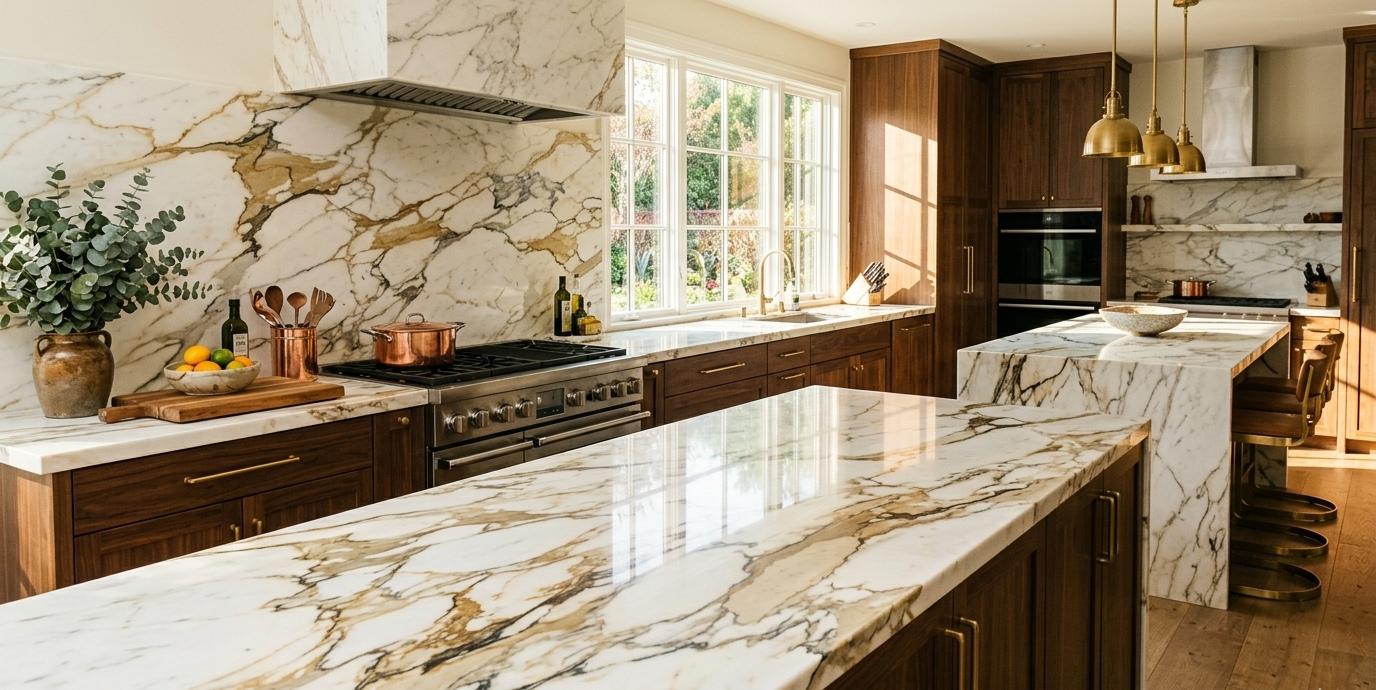
Kitchen Countertops and Islands: Calacatta marble island with a polished finish creates an immediate focal point in any kitchen. The reflective surface pairs well with cabinetry in white, charcoal, or warm wood tones. Because the finish shows water spots and fingerprints more readily than honed surfaces, kitchens with heavy daily use benefit from a consistent sealing routine and prompt cleanup of acidic substances such as citrus juice, wine, and vinegar.
Bathroom Vanities and Walls: Book-matched wall panels, where two mirror-image slabs are placed side by side, create a symmetrical veining pattern that transforms a shower surround or feature wall into a visually dramatic installation. The polished surface is easy to wipe clean and resists moisture when properly sealed.
Flooring: Large-format polished tiles add continuity and elegance to entryways, hallways, and open-plan living areas. A flat, stable substrate is required during installation to prevent cracking, and periodic resealing maintains stain resistance over time.
Fireplace Surrounds and Accent Features: It is also used for fireplace surrounds, stair treads, and decorative niches, where its bold veining adds a level of visual richness that requires no additional ornamentation.
From the quarries of Carrara, Italy, Calacatta marble polished delivers an unmatched combination of luminous shine, bold dramatic veining, and timeless sophistication, making every slab a one-of-a-kind statement piece.
Care and Maintenance
Because marble is composed primarily of calcite, it is vulnerable to acidic substances. Spills from coffee, wine, tomato-based products, and low-pH cleaning solutions can etch the polished surface, leaving dull marks that require professional re-polishing to correct. The following practices help preserve the finish:
- Seal regularly: Sealing frequency depends on usage, traffic levels, and the specific stone. Consult a stone care professional to determine the appropriate schedule for your installation.
- Use pH-neutral cleaners: Avoid bleach, vinegar, or ammonia-based products. Warm water and a pH-neutral stone cleaner are sufficient for routine maintenance.
- Blot spills immediately: Blotting rather than wiping prevents the spread of acidic substances that can etch the surface on contact.
- Use trivets and cutting boards: Direct heat and sharp utensils can scratch or dull the finish over time.
- Dry after cleaning: Standing water can penetrate microscopic pores and compromise the sealant layer.
With consistent care, Calacatta marble polished surfaces age gracefully, developing a patina that many homeowners find just as beautiful as the original finish.
Frequently Asked Questions
Calacatta marble is available in four main finish categories. A polished finish delivers a high-gloss, mirror-like surface that intensifies color and veining contrast. A honed finish is matte or satin in appearance, offering a softer look that is more forgiving in high-traffic areas, though it may absorb stains more readily if unsealed. A leathered finish uses abrasive brushes to create a subtly textured surface that reduces the visibility of fingerprints and water spots while preserving the stone's natural character. Specialty finishes, such as brushed or flamed, introduce distinct surface textures suited to specific design applications. Flamed finishes in particular are better suited to exterior or non-countertop uses due to their rougher surface.
Calacatta marble polished offers a level of visual depth and natural variation that engineered surfaces such as quartz or porcelain cannot fully replicate. Quartz is harder and more resistant to etching, making it lower maintenance, while porcelain is non-porous and highly durable. Calacatta marble, however, is the preferred choice where aesthetic authenticity, material rarity, and long-term investment value are the primary considerations.
Calacatta marble rates 3–5 on the Mohs hardness scale, reflecting its calcite composition. While softer than granite (6–7) or quartzite (7), it is sufficiently durable for most interior applications when properly installed and maintained.
Sealing frequency depends on the installation, usage levels, and the porosity of the individual slab. Consulting a stone care professional is the best way to determine the appropriate sealing interval for your specific surface.
Yes. It is commonly used in shower surrounds, wet room walls, and bathroom floors. Proper sealing is critical in wet environments to prevent water infiltration and staining. Grout lines should also be sealed, and adequate ventilation helps minimize prolonged moisture exposure.
Transform Your Space
Nova Tile and Stone offers an exceptional selection of premium slabs and tiles to suit a wide range of design visions and project scales. Whether you are redesigning a kitchen, renovating a master bathroom, or sourcing material for a custom commercial build, our stone specialists are available to guide you through slab selection, finish options, and material specifications.
Our four showroom locations, Reno, Sacramento, Minden, and Fernley are each stocked with a curated inventory of premium natural stone. Visiting a showroom allows you to view full-size slabs under natural and artificial lighting, assess veining patterns in person, and pair materials with tile, cabinetry, and fixture samples.