Calacatta Marble Kitchen Island
Calacatta Marble is a natural stone surface quarried from the Apuan Alps in the Carrara region of Italy. It serves as the centerpiece of a kitchen. It is defined by a bright white background with bold, sweeping veins of gray, gold, and taupe, and is widely regarded as one of the most luxurious materials available for residential kitchen design. Because each slab forms under unique geological conditions, no two pieces share the same veining pattern, making every installation inherently one-of-a-kind.
Homeowners and designers choose this stone for kitchen islands specifically, rather than perimeter countertops, because islands endure less daily wear from cutting and heavy cooking, allowing the dramatic beauty of the marble to remain the focus.
For homeowners planning a kitchen renovation, it is a choice that delivers both immediate visual impact and lasting value.
What Makes Calacatta Marble Kitchen Island Stand Out
Not all white marble is created equal, and Calacatta sits firmly at the top of the hierarchy. While Carrara marble, also Italian in origin, features a softer gray background and finer veining, Calacatta is known for its crisp white surface and thick, dramatic veins that command attention the moment you walk into a room.
Because the veining is so bold and defined, this stone is also well suited to bookmatching, a technique where two sequentially cut slabs are mirrored to create a symmetrical pattern. On a kitchen island, this creates a striking visual effect that reads as intentional and bespoke.
The rarity of the stone also plays a role in its appeal. Calacatta accounts for roughly 5% of marble produced from the Carrara quarries, while Carrara varieties make up the remaining 95%. Only a limited number of quarries within the Apuan Alps produce it, keeping supply tight and demand consistently high among luxury home projects. That scarcity, combined with its visual strength, is precisely why designers continue to reach for it across a wide range of interior styles.
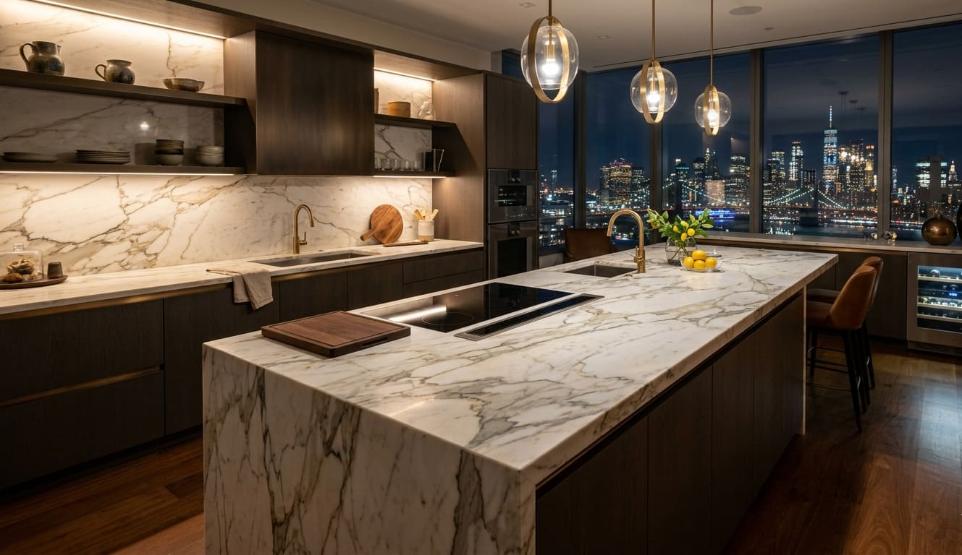
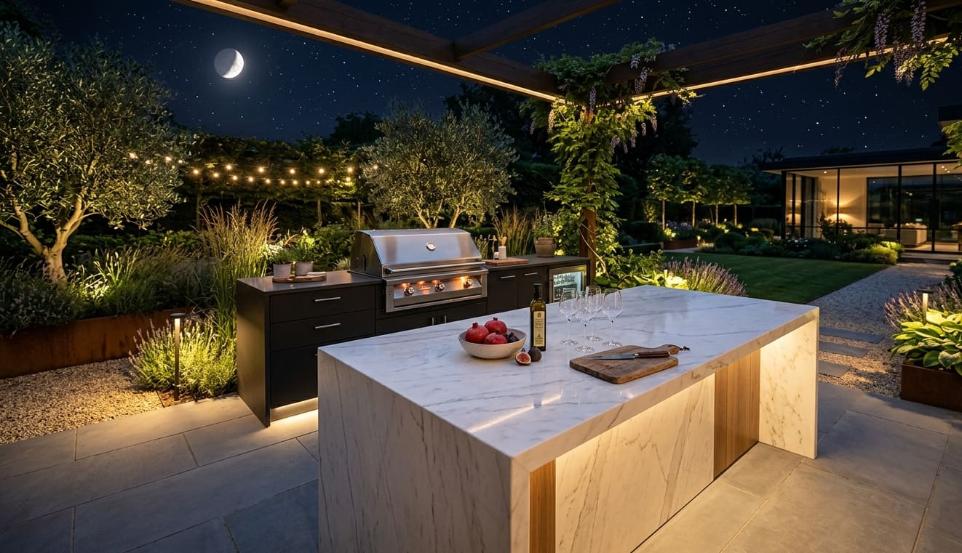
No two slabs are ever the same, making every slab is one-of-a-kind centerpiece.
Design Versatility: Styles That Work With Calacatta Marble
Calacatta Marble works across kitchen styles because its bold veining provides the visual anchor that allows everything else in the room to be tailored around it.
With dark cabinetry: Pairing the island with deep navy, charcoal, or forest green cabinets creates a strong visual contrast. The white of the stone grounds the space and prevents the palette from feeling heavy.
With light or natural wood tones: For a warmer aesthetic, this marble pairs well with soft oak or blonde wood cabinetry and creates a look that is classic without being cold.
With minimalist interiors: Because the veining carries so much visual weight on its own, the surrounding design can remain understated. Clean lines, handle-less cabinetry, and neutral walls allow the island to speak without competition.
Finish selection also shapes the final result. There are four options to consider:
Polished
A glossy, light-reflective surface that brightens the kitchen and offers the best resistance to staining.
Leathered
A subtly textured finish with a soft sheen that hides fingerprints and water spots well. Not all marble varieties can accept this finish, so confirm availability with your stone supplier.
Honed
A matte and smooth finish that conceals minor scratches and etching more easily, though it is more porous than polished and requires more attentive sealing.
Specialty
Finishes such as brushed, antiqued, and sandblasted offer unique textural effects for more distinctive design applications.
Beyond the finish, the edge treatment is another design
decision worth considering.
For maximum impact, a waterfall-edge island, where the slab continues vertically down the sides of the cabinetry, creates the effect of a continuous block of stone. Achieving a seamless result requires careful vein-matching, which is why working with an experienced stone supplier and installer matters.
Once the design decisions are made, understanding how to care for the surface is the next essential step.
Durability and Maintenance: What to Realistically Expect
Calacatta marble rates 3–4 on the Mohs hardness scale, which reflects its suitability for residential use with proper care. Like all marble, it handles moderate heat, but placing hot cookware directly on it repeatedly can cause discoloration or damage over time. Trivets are always recommended.
This stone is porous by nature. Without proper sealing, acidic liquids such as citrus juice, wine, and vinegar can penetrate the surface and cause staining or etching. Sealing frequency depends on use level and the specific slab; consult a professional stone care specialist for guidance tailored to your installation. A simple water test is a practical indicator: if water beads on the surface, the seal is holding.
For daily cleaning, use a pH-balanced stone cleaner or mild soap and warm water. Avoid abrasive pads, harsh chemicals, and acidic products, and wipe spills promptly. With consistent care, a marble can remain beautiful for generations. Seeing the stone in person is the best way to begin that investment with confidence.
Explore Our Slab Journal
Frequently Asked Questions
Both are Italian marbles quarried from the Apuan Alps, but with distinct visual profiles. Calacatta features a bright white background with thick, bold veining in gold, gray, and taupe. Carrara has a softer, slightly gray background with finer, more delicate veining. Calacatta is significantly rarer, accounting for approximately 5% of production from the Carrara quarries, which drives its higher price.
Yes, with the right approach. With a quality sealer applied and maintained, and with basic care habits such as using cutting boards and wiping spills promptly, this island is a practical and rewarding surface for daily kitchen life.
Sealing frequency depends on the specific slab, daily use, and sealer type. A water test is a reliable guide: if water beads on the surface, the seal is effective; if it absorbs into the stone, resealing is due. A professional stone care specialist can provide guidance tailored to your installation.
There are four finish categories to consider. A polished finish is glossy and reflective, showcases the depth of the veining, and offers the strongest resistance to staining. A honed finish is matte and smooth, conceals minor scratches and etching more easily, but is more porous and requires more frequent sealing. A leathered finish, created by running diamond-tipped brushes over a honed surface, adds subtle texture and a soft sheen, hides fingerprints and water spots well, and closes the stone's pores similarly to a polished surface. Note that not all marble varieties can accept this finish, so verify with your supplier. Specialty finishes such as brushed, antiqued, and sandblasted are also available for more distinctive design applications. The best choice depends on your lifestyle, maintenance preference, and design goals.
Nova Tile and Stone carries Calacatta marble slabs at all four showroom locations in Reno, Sacramento, Minden, and Fernley. Viewing slabs in person is always recommended, as no two pieces are alike and photographs rarely capture the full character of the stone.