A stone slab backsplash is a continuous panel of natural or engineered stone mounted behind a kitchen cooktop or sink, covering the wall in a single uninterrupted surface rather than individual tiles. It is one of the most effective ways to add visual weight, material richness, and a sense of cohesion to a kitchen renovation. Unlike tiled backsplashes, a slab format eliminates grout lines entirely, which simplifies cleaning and gives the space a cleaner, more architectural finish.
The most common materials used for this application include quartzite, granite, and large-format porcelain, each with its own visual character and practical considerations. Quartzite is valued for its refined veining and density. Granite is known for its natural mineral depth and familiarity in kitchen environments. Large-format porcelain offers a non-porous surface that closely replicates the look of natural stone with lower ongoing maintenance requirements. Choosing between them depends on the existing palette of the space, the desired finish, and how the surface will be used day to day.
Why Stone Slabs Are Replacing Traditional Tile Backsplashes
The shift toward stone slab backsplashes is not simply a matter of fashion. Homeowners and designers are drawn to the format for practical reasons as much as visual ones. A continuous stone panel eliminates the grout lines that collect grease and grime in a kitchen environment. The surface is easier to wipe down, and the overall appearance feels more intentional and curated.
Beyond maintenance, slab backsplashes offer a design advantage that smaller formats struggle to match. Each natural stone slab has natural variation in tone, veining, and movement, and that individuality is part of the appeal. When the same slab material is carried from the countertop up the wall as a backsplash, the result is a seamless, continuous visual flow that feels architectural rather than decorative. For a broader look at how natural stone performs across kitchen surfaces, This Old House offers a helpful stone countertop materials overview worth reviewing before making a final decision.
Quartzite Slab Backsplashes: Refined and Resilient
Quartzite remains one of the most sought-after natural stone materials for kitchen backsplash applications. Its fine-grained surface and subtle veining give it a visual refinement that reads as both elegant and grounded. The slab can perform well over time when properly maintained, and sealing is recommended to help preserve the surface.
In backsplash applications, quartzite pairs naturally with light wood cabinetry, matte hardware, and neutral countertop palettes. Softer white and grey quartzite varieties work well in kitchens that lean toward a clean, minimalist aesthetic, while warmer beige and gold-toned options add richness to transitional and traditional spaces. Our stone slab inventory includes options across this spectrum, with each slab offering its own natural variation in tone and veining.
Granite Backsplashes: A Timeless Option With Lasting Character
Granite has long been a trusted choice for kitchen surfaces, and its use as a backsplash material continues to hold strong. The speckled mineral patterns found in granite offer a visual complexity that is difficult to reproduce in engineered materials. Each slab is selected for its natural mineral character and variation, making every application unique to the space it occupies. Those exploring wall cladding options beyond granite may also find our natural stone backsplash page a useful reference for what is currently available.
Granite is a practical choice for the kitchen environment. The surface is strong, but edges and corners require extra care, and trivets and cutting boards are still recommended to protect the finish from heat and wear. In darker tones such as black, charcoal, and deep navy, granite backsplashes create a bold contrast against white or cream cabinetry. Lighter varieties with soft grey and white tones work well in kitchens that favor a quieter, more understated palette. Viewing slabs in person is one of the best ways to assess how a granite reads under your specific lighting conditions, and our Reno showroom carries a broad selection available to view and compare firsthand.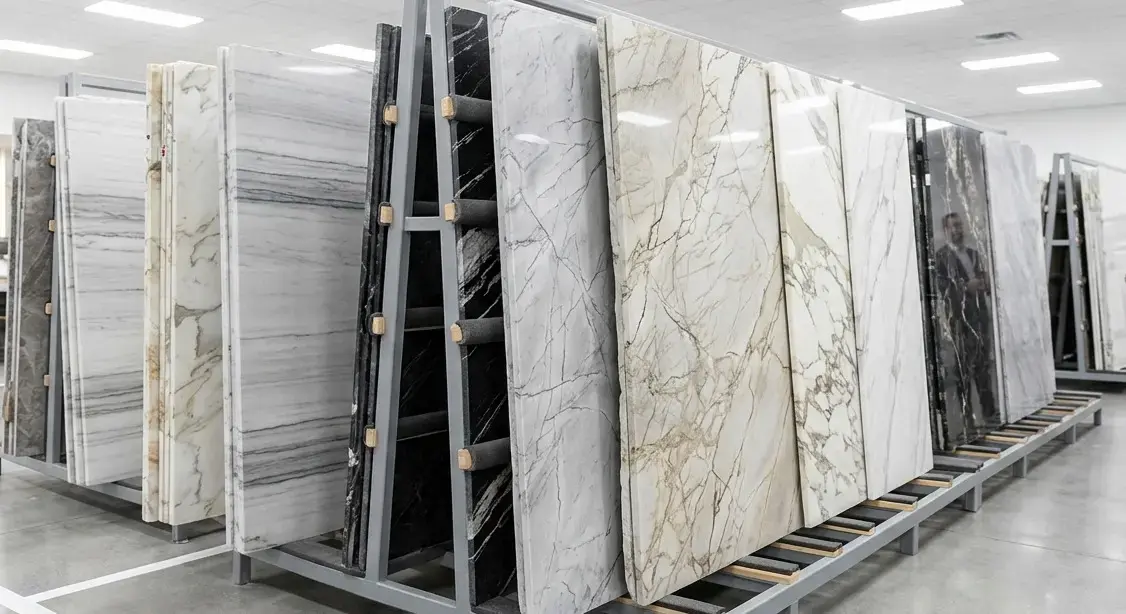
Large-Format Porcelain Slabs: Modern Performance Meets Natural Aesthetics
For those who want the visual impact of natural stone without the maintenance considerations that accompany it, large-format porcelain slabs have become a compelling alternative in backsplash design. These slabs are engineered to replicate the look of marble, quartzite, and other natural materials with a high degree of visual accuracy. The slab is non-porous, but regular cleaning is still recommended to keep it looking its best over time.
Our Infinity Surfaces porcelain slab collection includes large-format options in 6, 12, and 20 mm thicknesses, offering design flexibility across a range of kitchen styles and scales. The material is UV resistant, but performance may vary depending on color and finish, particularly in spaces with extended direct sun exposure. For those considering an engineered alternative with a refined surface character, our quartz backsplash page covers available options worth exploring alongside porcelain.
Popular series from this collection include Calacatta Viola, Calacatta Magnifico, Magellano, and Thunderstorm, each offering a distinct character suited to different design directions. Calacatta Viola brings rich violet veining against a creamy white base, lending a dramatic quality to backsplash applications paired with dark cabinetry or warm brass fixtures. Magellano offers a softer, more atmospheric aesthetic with cloud-like tonal movement that works well in contemporary and transitional kitchens. The Thunderstorm series introduces stormy grey tones with bold linear veining, well suited to industrial-leaning interiors. Calacatta Magnifico leans into classic white marble aesthetics with generous gold veining that pairs naturally with warmer finishes throughout the space.
Matching Your Backsplash Slab to Your Kitchen Style
The most effective slab backsplashes are those chosen in direct relationship to the countertop, cabinetry, and flooring already present in the space. When the backsplash material comes from the same family as the countertop, such as continuing a quartzite slab from the surface up the wall, the kitchen reads as a composed, cohesive environment rather than a collection of separate decisions.
For kitchens where the countertop and cabinetry are already established, the backsplash slab can serve as a complementary contrast. A dark slate-toned porcelain slab against pale cabinetry creates visual depth without overwhelming the space. A white quartzite with soft grey veining against darker lower cabinets keeps the upper portion of the kitchen feeling open and airy.
Finish choice also plays a significant role in how a slab backsplash reads within the space. Polished surfaces reflect light and can make a kitchen feel larger and brighter, but they tend to show fingerprints and water spots more readily. Matte and honed finishes are generally more forgiving in high-use kitchen environments, though care instructions should always be followed. Use Natural Stone offers a detailed resource on selecting the right stone finish that explains how different surface treatments affect both appearance and upkeep. For personalized guidance on narrowing down the right material and finish, book a free design consultation or find a showroom location near you.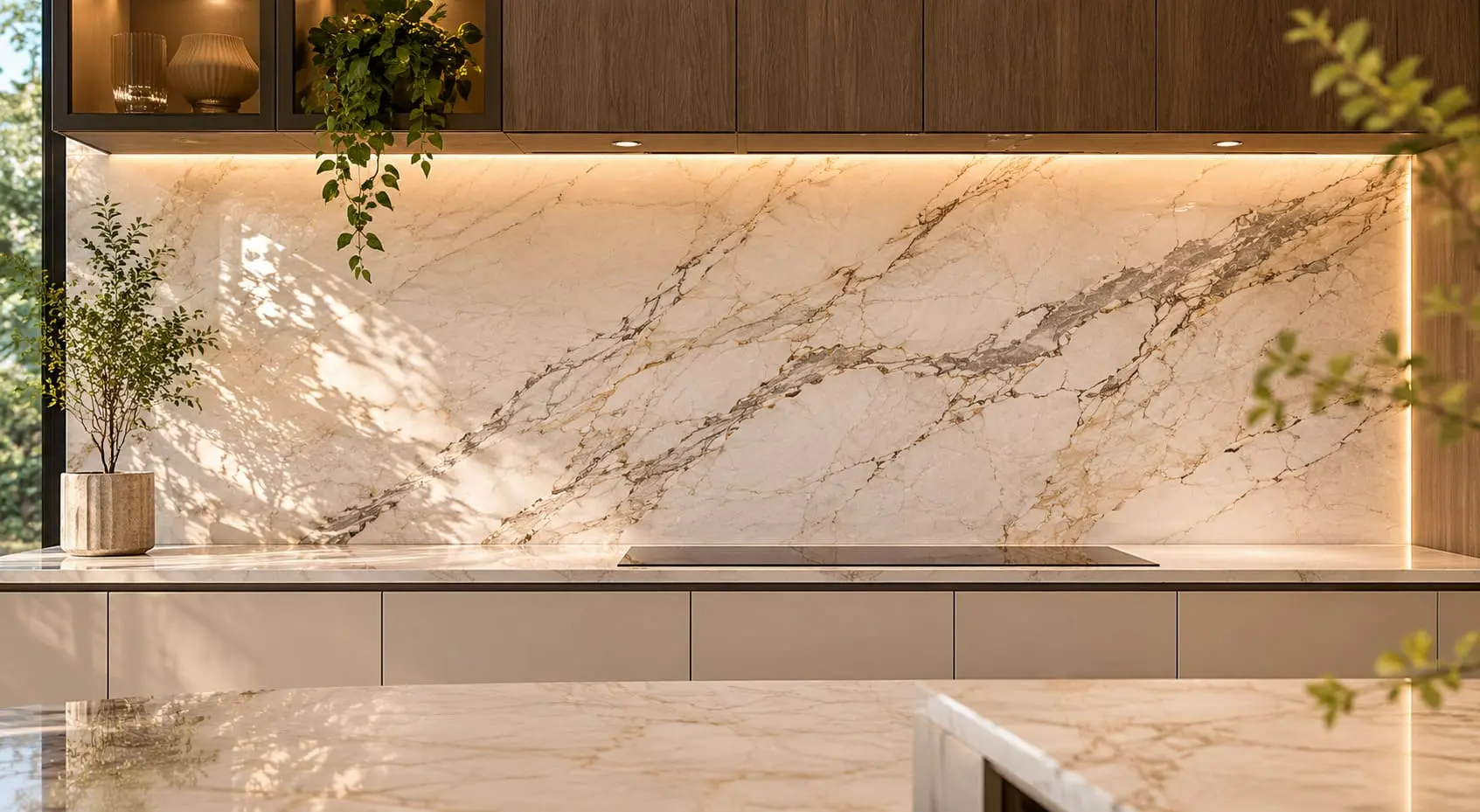
Slab Backsplash Trends Worth Watching
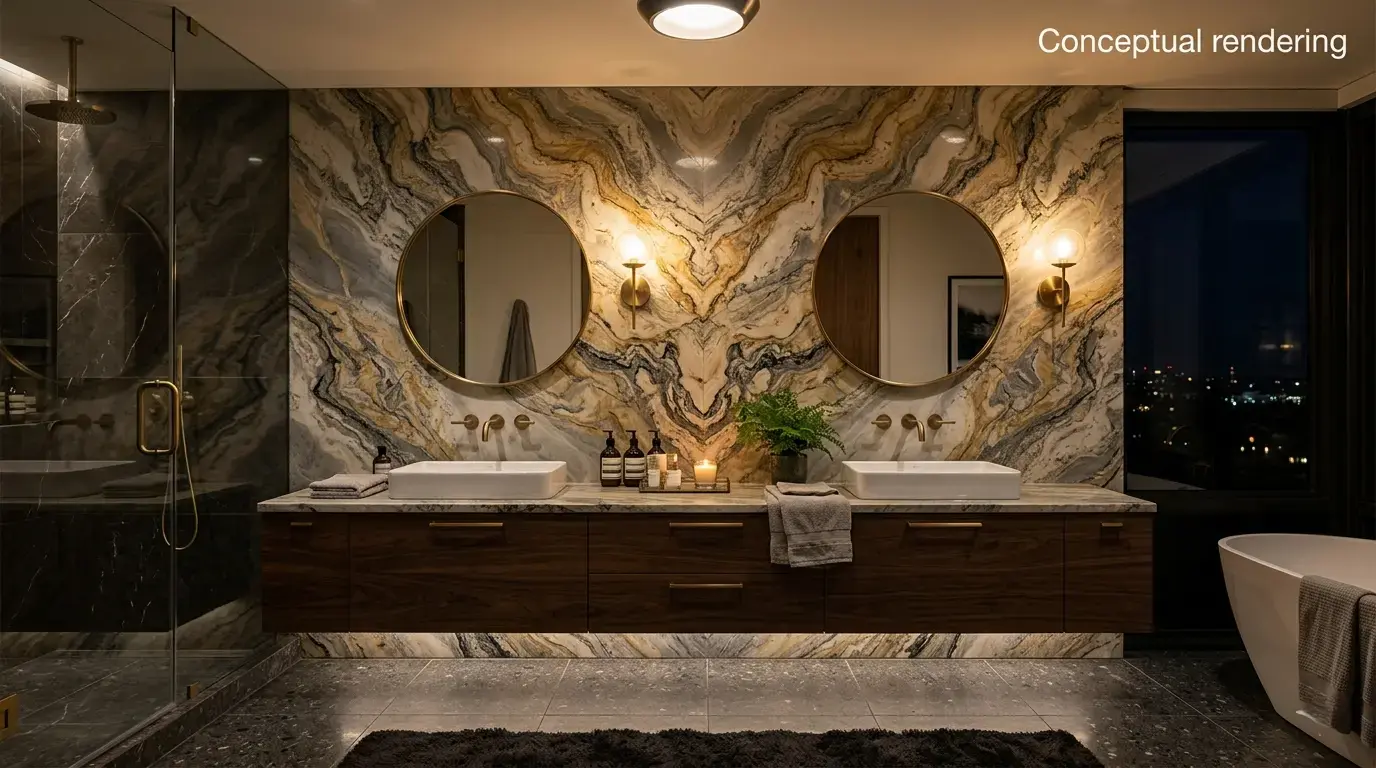
Several directions in slab backsplash design have gained significant momentum recently. Book-matched panels, where two mirrored slab sections are placed side by side to create a symmetrical pattern, have become increasingly popular in kitchens that extend the backsplash to full ceiling height. The effect is sculptural and draws considerable visual attention to the cooking area.
Fluted and textured stone panels are also appearing more frequently in backsplash applications, adding a three-dimensional quality to surfaces that were previously expected to be flat. These work particularly well in kitchens where the overall material palette is restrained, as the texture itself carries the visual interest.
The full-height backsplash, extending from countertop to upper cabinet or ceiling, has become one of the defining features of contemporary kitchen design. It gives the kitchen a gallery-like quality and makes the material choice feel more significant and considered. HGTV's roundup of kitchen backsplash design ideas offers a useful visual reference for how this trend is being applied across a range of kitchen styles.
Warm earth tones have also replaced the cooler greys that dominated interiors earlier in the decade. Slabs with sandy beige, terracotta-adjacent warmth, and soft brown veining are appearing frequently in kitchen renovations that aim for a grounded, organic quality. This shift pairs well with wood-toned cabinetry and unlacquered brass or matte black hardware. Those working within a tighter budget may also find value in browsing our overstock stone options for available slab selections at reduced pricing.
Conclusion
Stone slab backsplashes represent one of the most impactful ways to elevate a kitchen interior. Whether the direction is natural quartzite with its individual mineral character, classic granite with its enduring depth, or a large-format porcelain slab from collections like Infinity Surfaces, the format rewards thoughtful material selection. The slab can perform well over time when properly installed and maintained, but each application should be evaluated individually to ensure the right fit. The surface is stain resistant, but spills should be cleaned promptly to avoid staining. Exploring the full range of available stone options is a strong starting point for any kitchen renovation project. Design professionals and contractors sourcing materials for client work can apply for a trade account to access dedicated support and resources. Those ready to move forward with a specific material can also submit a slab quote request to get the process started. For those who want additional guidance, Nova Tile and Stone offers free design consultations to help identify the right material for any space, style, and budget.
Frequently Asked Questions
Quartzite and granite are both well suited to kitchen backsplash applications. Quartzite offers refined veining and can perform well over time when properly sealed and maintained. Granite is selected for its natural mineral character and is a practical surface for cooking environments, though trivets and cutting boards are still advisable to protect the finish.
Yes. Large-format porcelain slabs are commonly used in backsplash applications and offer a non-porous surface that simplifies cleaning. Collections like Infinity Surfaces include slab options that closely replicate the appearance of marble and quartzite, making them a versatile choice across a range of kitchen styles.
Polished finishes reflect light and can enhance the visual brightness of a kitchen, but they tend to show water marks and fingerprints more readily. Matte and honed finishes offer a softer appearance that is generally more forgiving in everyday use, though care instructions should always be followed to keep the surface in good condition over time.
Matching is not required, but selecting materials from a related color or tone family tends to create a more cohesive overall look. Continuing the same quartzite or stone from the countertop up the wall as a backsplash is a popular approach that gives the kitchen a composed, architectural quality. Contrasting materials can also work well when chosen thoughtfully.
Book-matching is a technique where two adjoining slab sections are cut and placed as mirror images of each other, creating a symmetrical veining pattern across the surface. It is well suited to full-height backsplash applications where the visual impact of the material is a primary design intention. The effect is particularly striking with natural stones that have bold or dramatic veining.