For Truckee, California homes, the most recommended materials are large-format porcelain tile for entries and mudrooms, granite or quartzite for fireplace surrounds, and granite, quartzite, engineered quartz, or sintered stone for countertops. These picks account for Truckee's 5,817-foot elevation and average snowfall of more than 200 inches a year.
Homeowners shopping for a Truckee remodel start with the same underlying question: which of these will actually last through a Sierra winter, not just look good in a showroom. Nova Tile and Stone put together the picks below with that in mind, covering the four spots where the wrong material shows its limits fastest: the entry, the fireplace, the kitchen counter, and the walk up to the front door. A vacation cabin and a full-time house don't always need the same answer here, so treat this as a shortlist to narrow from rather than a single verdict.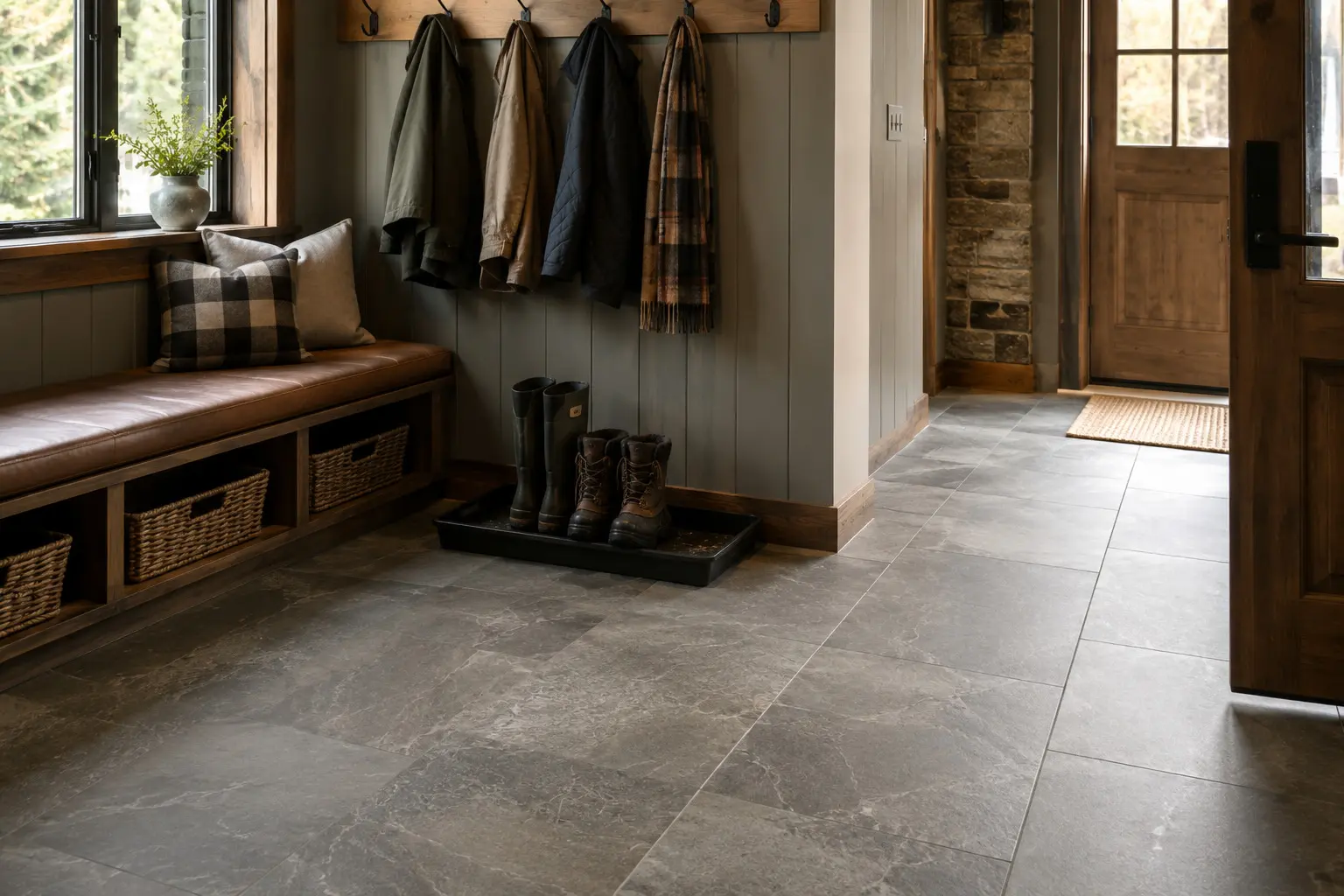
Entry And Mudroom Tile Built For A Truckee Winter
For an entry or boot room, the Mountain 24x48 honed slate look porcelain tile earns its place on this list mainly through footing: a matte surface grips better underfoot than a glossy one once boots come in wet, and the slate look reads as at home in an older cabin as it does in a newer build. Porcelain earns its keep here in a broader sense too, since it shrugs off the sand and de-icing salt that show up at the door for months on end, without asking for the resealing schedule natural stone would need in the same spot. A gray slate look isn't mandatory; an ivory or cream porcelain in the same large format performs comparably and simply reads warmer.
Format matters on its own, separate from color, since fewer seams mean less grout exposed to grit and salt over a season. Radiant floor heat is a common pairing with entry tile in cold, high-snowfall climates like this one, since a heated floor helps melt tracked-in snow rather than letting it pool, though the tile and the heating system need to be paired correctly from the start. One smaller detail worth flagging: lean toward a mid-tone or darker grout here if salt residue is a concern, since pale grout tends to show it faster than a darker one. A dedicated bench with hooks above the tile line extends the practical logic of the room further, giving wet gear somewhere to dry that isn't the floor itself.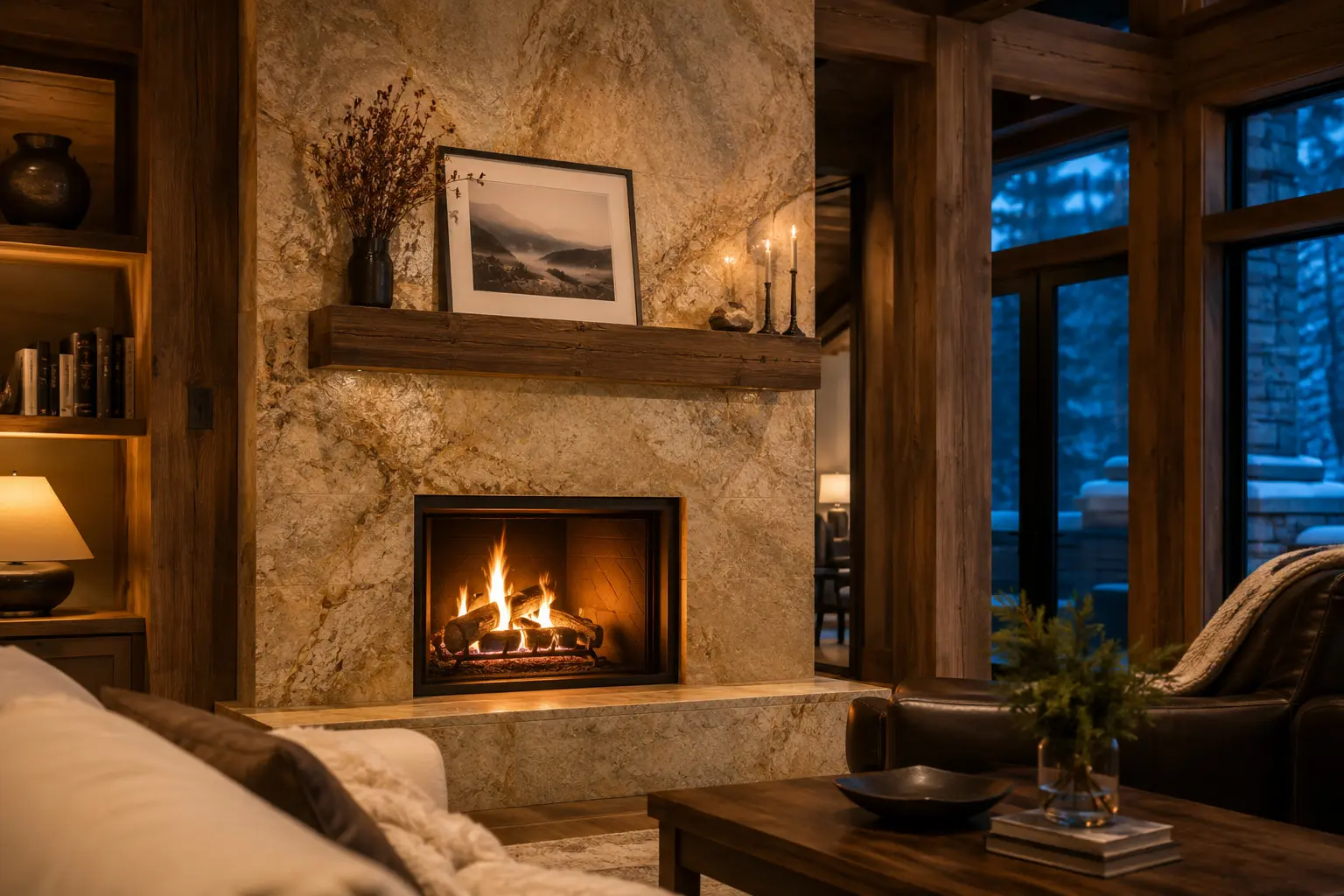
Fireplace Stone That Holds Up All Winter Long
Fireplaces see enough use in a Truckee winter, roughly October through May, that heat tolerance rules out a few otherwise appealing options. Granite and quartzite handle that kind of daily heat cycle well, which puts both ahead of marble here, though direct, sustained contact with very high heat is still worth avoiding close to any edge or seam. Marble can still work on a rarely used secondary fireplace, but its sensitivity to heat and to acidic ash residue makes it a riskier pick for the main hearth.
Within granite and quartzite, gold-toned selections suit a cabin's palette better than a stark white or black stone, especially set against exposed timber. Finish matters almost as much as color: a honed or leathered stone softens the glare of an open flame and hides a light dusting of ash more effectively than a polished one, a distinction covered in more depth in this guide to stone finishes. It's worth deciding on scale before shopping too, since a floor-to-ceiling surround makes a very different statement than a smaller stone panel paired with a wood mantel, and the latter is the more livable choice in a room where the fireplace has to share a wall with a television or built-ins. Slab veining varies piece to piece, so treat any photo as a general direction rather than an exact preview of what arrives.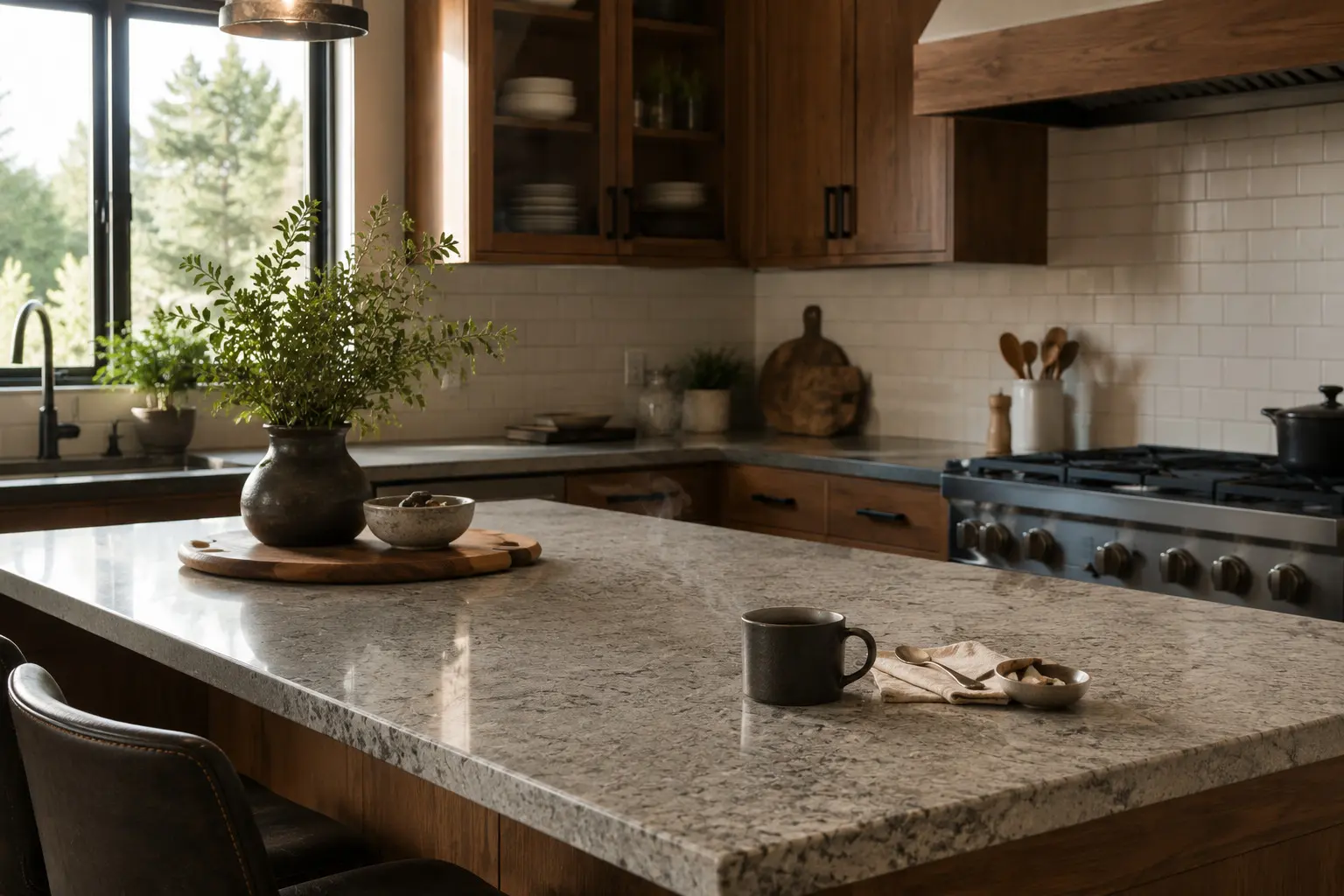
Countertops That Handle A Long, Damp Winter
Kitchen counters deal with a longer, damper heating season here than in most places, which changes how the usual granite, quartzite, and marble lineup ranks. Sealed granite handles that moisture reasonably well, quartzite edges out the other two on sheer wear resistance, and marble, while the softest-looking of the three, needs the most vigilance around anything acidic. Anyone who would rather skip an annual resealing routine has a real alternative in engineered quartz or sintered stone; both hold up well to daily cooking and cleanup without that routine, though prompt cleanup after spills still helps either one look its best.
Households weighing natural stone against an engineered option for health or environmental reasons can compare the two using this overview of environmental and health product labels for building materials. The natural stone countertop lineup is worth browsing side by side before settling on one, and the Natural Stone Institute publishes general sealing-schedule guidance worth a look regardless of which stone gets picked. Bathrooms face a version of the same problem: once the heat runs steadily for the season, a shower or vanity area sees near-constant condensation, and porcelain or another non-porous surface handles that better than natural stone does without diligent ventilation and sealing.
One backsplash pick worth pairing with any of the above is a matte porcelain subway tile in a cream or ivory tone. A matte finish hides cooking steam and splatter more effectively than a glossy one, the elongated shape keeps grout to a minimum in an already humid kitchen, and the warm tone plays well against a gold-flecked granite or quartzite counter instead of competing with it.
Walkway Stone For Truckee's Freeze And Thaw Cycles
The stretch of ground between the driveway and the front door takes a beating from freeze and thaw cycling that most exterior surfaces aren't built for, which is where outdoor travertine paving earns its spot on this list. Its natural texture holds footing on ice better than a polished surface would, a detail worth prioritizing over finish preference for this specific application, though no exterior surface eliminates the risk of slipping once ice forms. A tumbled or textured surface is the safer choice over a smooth one for an exterior walkway in this climate, since a reflective surface becomes more slippery once it ices over.
Resealing on a regular schedule still applies to any exterior stone in this spot, travertine included. Exterior stone options carried alongside it extend to pool coping, cladding, and pavers, so a walkway choice doesn't have to stop at the entry; a similar stone can just as easily wrap a patio edge or dress up a porch support somewhere else on the lot.
Getting A Personalized Recommendation
Everything above is a starting point built from general patterns, not a substitute for standing in front of the actual slab or tile, since Truckee's snow glare and shifting seasonal light change how a material reads once it's installed. The showroom that serves Truckee and the rest of the surrounding Sierra Nevada region is located in Minden, Nevada, a separate town in Carson Valley, at 2548 Business Pkwy, Minden, NV 89423. It can be reached at (775) 783-4970. Its free design consultation exists precisely to close the gap between a general pick and the right pick for one specific room. Directions to the showroom are available for anyone planning the drive in from Truckee.
That step earns its time most on the bigger commitments, a full countertop run or a fireplace slab, where correcting a wrong tone later costs far more than swapping out a mudroom tile would. Coming in with room photos, a note on window placement, and the existing cabinetry or trim color makes the visit noticeably more useful than walking in with just a general idea. The full catalog covers everything mentioned here and more, giving Truckee homeowners one place to compare before committing.
Conclusion
Strip away the specific products and the same principle runs under every recommendation above: pick the material for the job it has to do this winter, not the one it does in a showroom. Truckee's elevation and snow load don't change from room to room, so the same logic that picks an entry tile also applies to a countertop or a fireplace surround: what actually holds up through the season ahead, not what looks best in a single photo. Between porcelain and natural stone, neither one wins outright, since the better answer usually comes down to how much upkeep a household is willing to take on rather than which material photographs better. A full remodel and a single swapped-out mudroom floor follow that same logic either way.
Frequently Asked Questions
Large-format porcelain in a matte or honed finish is the top recommendation for a Truckee entry, mainly because it handles months of tracked-in moisture and de-icing salt without the periodic resealing natural stone would need in the same spot. That holds whether the home is a full-time residence or a weekend cabin, since the entry deals with the same tracked-in snow and salt either way.
Granite and quartzite are the go-to picks for a fireplace surround here, since both tolerate daily heat well, though very high, sustained heat close to an edge or seam is still worth avoiding. Pairing the fireplace stone's undertone with the kitchen countertop, rather than treating the two as separate decisions, is worth considering in an open floor plan, since both are often visible from the same sightline.
Granite, quartzite, and marble cover the natural stone side of the recommendation, while engineered quartz and sintered stone are the better picks for anyone who would rather skip an annual resealing routine. Engineered quartz also offers more consistent color from slab to slab, which matters more for a second home or rental that may change hands or get refreshed between guests.
It depends on the room. Porcelain wins wherever moisture and foot traffic are constant, think entries and bathrooms, while natural stone makes more sense somewhere its color and veining actually get noticed, like a kitchen counter or a fireplace face. Porcelain also follows design trends more directly, with new colorways released regularly, while natural stone's palette is set by geology and doesn't shift with trend cycles.
Booking a free design consultation is the fastest path there, since standing in front of an actual slab or tile board reveals things a photo simply can't, like how a color shifts under real light or looks against actual snow glare. A single visit typically covers more than one room's decision at once, since comparing an entry tile and a countertop slab side by side makes it easier to judge whether they'll actually look right together once both are installed.
Curious About Something Else?