Choosing between a slab and tile for a home project is a format decision, not just a material one. A slab, typically cut from natural stone such as granite, quartzite, or marble, covers a countertop or feature wall as one continuous surface with no grout lines. Porcelain, ceramic, or natural stone tile covers floors, walls, and shower surrounds as smaller repeated units with grout joints between each piece. The stone surface works best where visual continuity and seamlessness matter most. The other format works best where coverage, pattern flexibility, and moisture performance across larger areas are the priority.
This guide covers where each format tends to perform well in Minden and Carson Valley homes, and how to decide which one, or which combination of both, fits your specific project.
How Tile and Slab Differ as a Format
The most fundamental difference between a slab and tile is size and continuity. A slab is a single large piece of material, typically natural stone such as granite, quartzite, or marble, cut to cover a countertop, vanity surface, or feature wall in one uninterrupted span. Tile is a smaller unit, repeated across a surface with grout joints between each piece.
That distinction affects more than appearance. A slab surface has fewer joints, which means less maintenance around grout lines and a cleaner visual result. Tile introduces more lines across the surface, which can add texture and visual interest, but also requires more consistent upkeep to keep grout clean and sealed over time.
For countertops specifically, the natural stone slab inventory available in granite, quartzite, and marble offers each homeowner a surface with natural variation in veining, tone, and mineral movement that is unlikely to be replicated with engineered formats. Each slab is typically cut from a single block, which means the pattern flows continuously across the surface rather than repeating in a grid. The slab is durable, but proper care will help preserve its appearance over time.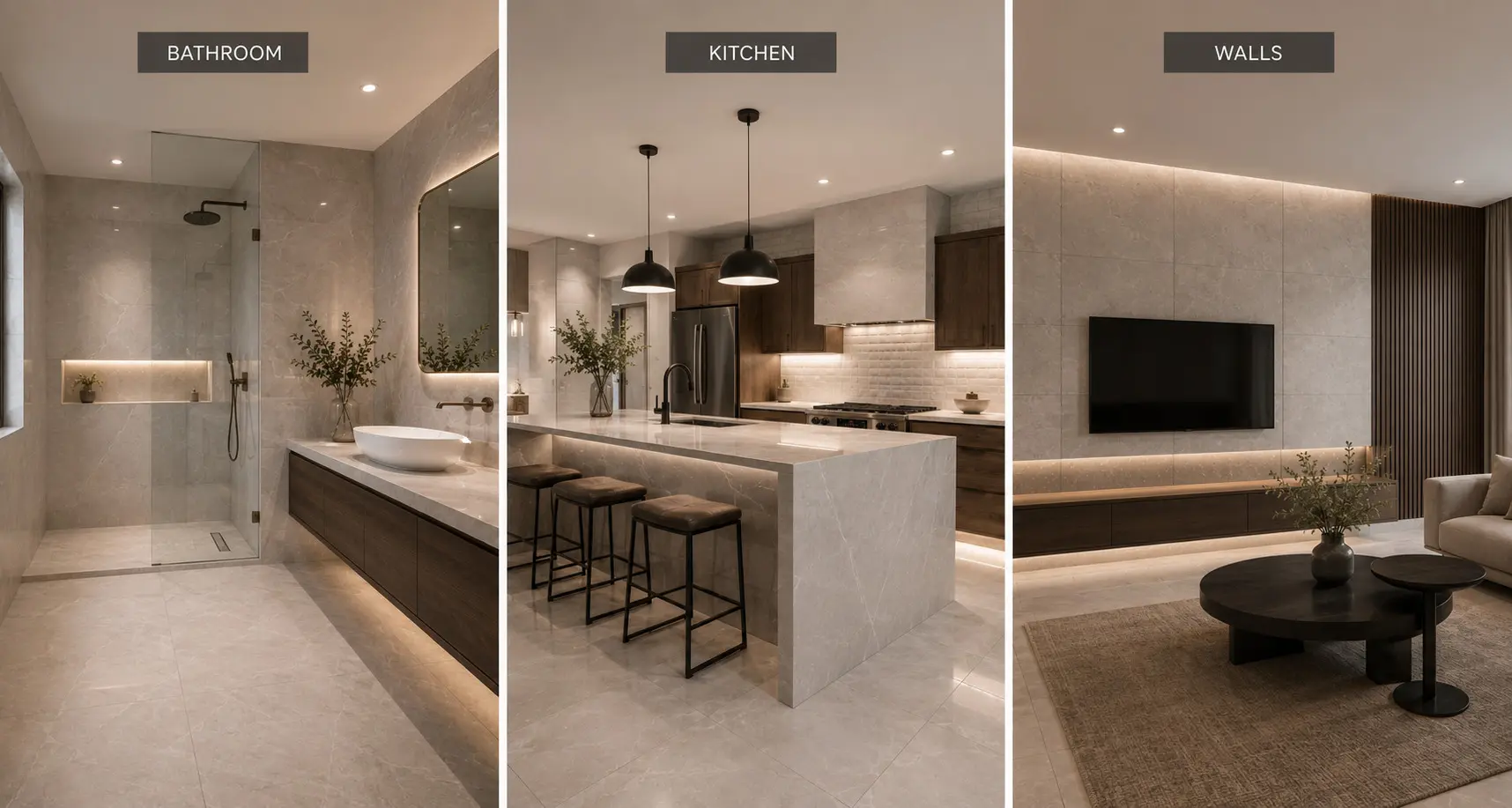
Tile Options for Minden Bathrooms, Kitchens, and Walls
Tile excels in applications where coverage, pattern variety, and moisture resistance matter more than seamlessness. In a bathroom, porcelain tile handles daily water exposure well because of its low absorption rate and dense composition. It is moisture resistant, but grout joints still benefit from sealing to prevent water from working behind the installation over time.
For walls and shower surrounds, tile gives you control over scale and layout that a slab does not. A large-format tile in a 24x48 format reduces visible grout lines and creates a cleaner wall surface, while smaller mosaic formats follow curved surfaces and drainage slopes more naturally on shower floors. The tile format by size you choose also shapes how a space reads visually, with larger formats making rooms feel more open and smaller formats adding texture and detail.
Subway tile remains one of the most consistently used formats across both kitchens and bathrooms. The elongated rectangular format works across a range of design styles and can be laid in a horizontal stack, a vertical run, or a herringbone pattern depending on the effect you want. Browsing tile styles before visiting in person helps narrow down which direction fits the existing design direction of the space.
According to Living Etc's expert comparison of stone vs tile for kitchen and backsplash surfaces, the most important difference between the two is ultimately about style and application, with both formats offering strong performance when specified correctly for the surface.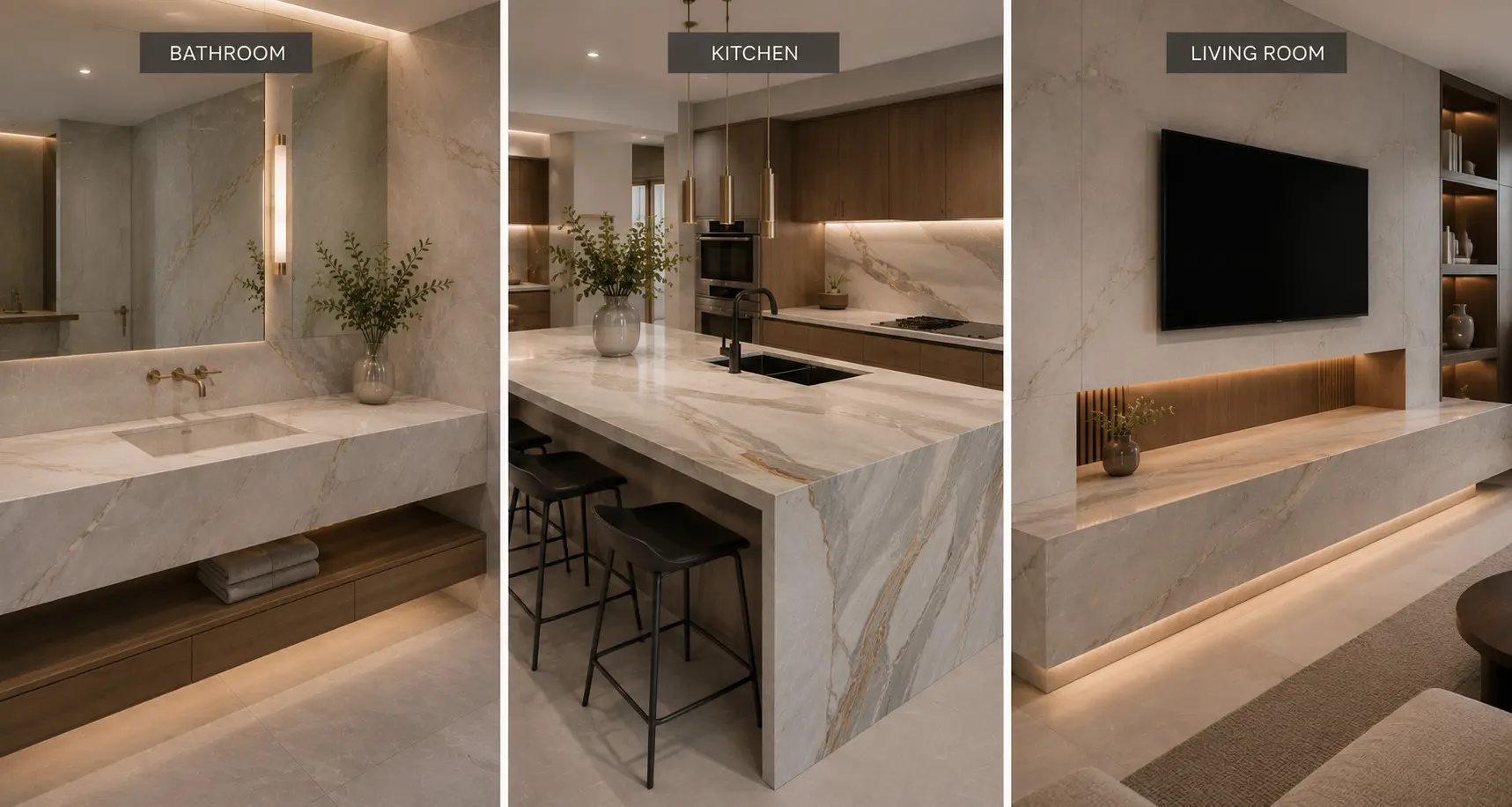
When a Slab Is the Stronger Choice
Slabs perform particularly well in applications where visual continuity and surface integrity matter most. A kitchen countertop cut from a single granite or quartzite slab carries the veining and movement of the stone across the full surface without a break. That uninterrupted character is difficult to achieve with tile, where grout lines divide the surface regardless of how closely the tiles are matched.
For bathroom vanity tops, a slab surface is easier to wipe clean and has no grout lines to maintain around the sink or countertop edge. The material is strong, but edges and corners require extra care during daily use. Natural stone slabs also bring each homeowner a surface that has its own individual character, with no two slabs likely to look identical because of the way the mineral structure forms naturally during the geological process.
Real Homes notes in their guide on choosing natural stone flooring and surfaces that natural stone is widely considered a long-term investment that can add lasting character to a property, though the right stone should be matched carefully to the application and expected maintenance level.
Feature walls and fireplace surrounds are other applications where a slab tends to read more powerfully than tile. A large-format stone slab installed vertically as a wall surface brings the full sweep of the veining into view as a single composition. Tile on the same wall would break the pattern into smaller repeated units. For design-led spaces where the stone itself is the focal point, slab is typically the better format. If you are working through a slab decision for a specific surface, booking a free consultation allows you to review actual slabs in person before committing.
When Tile Is the Stronger Choice
Tile earns its place in spaces where flexibility, coverage, and design customization matter more than seamlessness. In a kitchen backsplash, tile allows for pattern, color, and texture combinations that are not possible with a single slab format. A subway tile laid in a herringbone pattern above the range, paired with a larger-format neutral tile on the surrounding walls, creates a layered result that is more difficult to achieve with a slab format alone.
For floors, tile is generally the more practical choice across most of a home. A stone tile floor is durable and can carry the natural character of granite or quartzite in a format that covers large areas at a more manageable scale than slab. The surface is strong, but long-term performance depends on maintenance, and proper sealing is important particularly in kitchens and bathrooms where moisture is a daily factor.
Browsing the full tile collection before a project helps establish what formats, finishes, and materials are available, so decisions can be made with actual options in mind rather than from a limited sample view.
The countertop material comparison guide from Use Natural Stone provides a useful reference on how different surface materials compare in terms of durability, porosity, and maintenance requirements, which is helpful context when deciding whether tile or slab is the right fit for a specific application.
Pairing Slab and Tile in One Project
Many renovation projects benefit from using both formats together rather than committing entirely to one or the other. A kitchen that uses a granite or quartzite slab for the countertop and a porcelain tile for the backsplash creates a natural contrast between the continuous stone surface at the work area and the more expressive tile wall above. The two formats complement each other when the tones and finishes are selected to share a common visual thread.
In a bathroom, a quartzite vanity top paired with a large-format porcelain wall tile in a neutral tone creates a cohesive result where the stone leads and the tile supports. The slab surface varies naturally because of its veining, and the tile provides a clean, consistent backdrop that does not compete for visual attention.
For homeowners working through this kind of decision, visiting the showroom in Minden provides a chance to compare actual slab and tile materials side by side, review how they read together in real lighting, and confirm the combination before ordering. Nova Tile and Stone carries both slab and tile options, making it possible to evaluate the two formats in the same visit.
Conclusion
The decision between slab and tile is not about which format is better in general. It is about which format is better for the specific surface, space, and design goal of each project. Slabs bring continuity, natural character, and a surface without grout lines. Tile brings flexibility, coverage, and design range that slabs cannot match. Used together across the right applications, both formats contribute to a result that is both practical and well considered. Explore the full collection to get a sense of what is available before planning your visit to the showroom.
Frequently Asked Questions
A slab is a single continuous piece of material, typically natural stone, that covers the full countertop surface without grout joints. Tile is a smaller repeated unit with grout lines between each piece. A slab surface is generally easier to clean around the sink area and carries the natural veining of the stone without interruption, while tile allows for more pattern variation and can be a more practical option for certain surfaces.
Both can work well in a bathroom vanity application, but each has different strengths. A natural stone slab such as granite or quartzite provides a seamless surface that is straightforward to maintain and carries natural variation in tone and veining. Porcelain tile offers design flexibility and handles moisture well, but grout joints require consistent sealing to prevent water infiltration over time. The right choice depends on the design direction and how much maintenance the homeowner is prepared to manage.
Yes. Many projects benefit from combining the two formats. A common approach is to use a natural stone slab for the countertop and a porcelain or ceramic tile for the walls or floor. The slab provides a seamless surface at the focal point of the space, while tile allows for pattern and coverage across the larger surrounding areas. When selected with shared tones and complementary finishes, the two formats work well together.
Slab surfaces generally require less ongoing maintenance around joints because there are no grout lines to clean or reseal. However, natural stone slabs do require periodic sealing and prompt cleanup of spills to protect the surface. Tile is durable and the surface itself is easy to clean, but grout joints need regular sealing, particularly in wet areas like showers and kitchen backsplashes. Both formats are manageable with consistent care.
A useful starting point is to identify which surface needs the most visual impact and which needs the most practical coverage. Countertops and feature walls often benefit from a slab format because the continuous surface carries the full character of the stone. Floors and backsplashes tend to suit tile better because of the coverage required and the design flexibility tile provides. Viewing actual samples of both in the same lighting conditions before deciding helps confirm which combination reads best in the specific space.
Curious About Something Else?