Granite, quartzite, and quartz are three of the most common countertop materials for kitchens and bathrooms, but they differ significantly in composition, maintenance, and performance. Granite is a natural igneous stone that requires periodic sealing and offers wide color variation. Quartzite is a natural metamorphic stone known for hardness and marble-like veining; it also requires sealing but resists etching well. Quartz is an engineered surface made from crushed quartz crystals bound with resin, non-porous and seal-free, but sensitive to prolonged heat and UV exposure. For Minden and Carson Valley homeowners, the right choice depends on how the surface will be used, how much maintenance fits your lifestyle, and the visual character you want the space to carry.
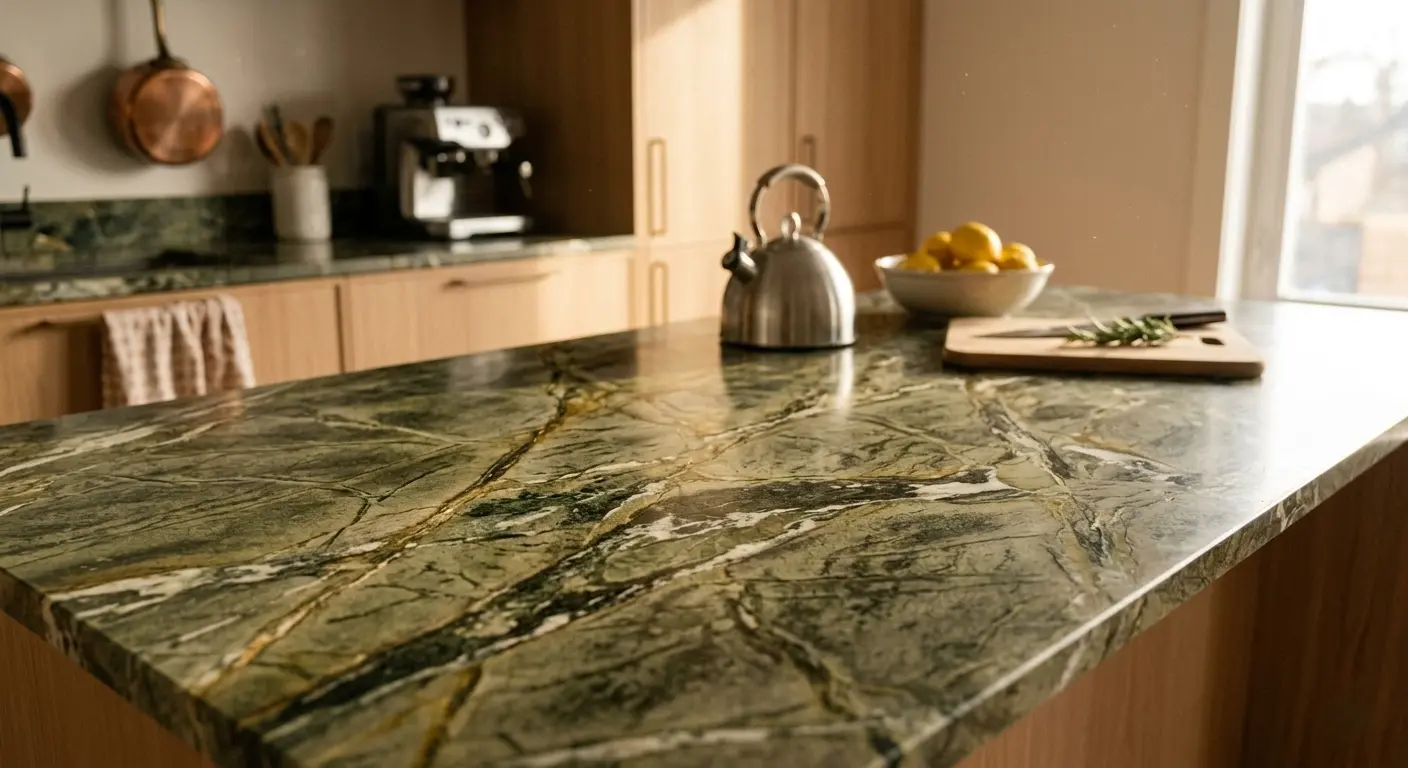
What Makes Granite a Reliable Choice
Granite is an igneous rock formed when magma cools slowly beneath the earth's surface. That process creates the crystalline structure responsible for its signature look: visible mineral deposits in quartz, feldspar, and mica that catch light and add depth across each slab. Each piece carries its own natural character, shaped by the conditions of its formation.
The surface is strong and built for lasting use, but proper care will help preserve its appearance over time. Polished granite delivers a reflective, formal look, while honed and leathered finishes offer a softer, matte character suited to casual or rustic interiors. Because granite is porous, it benefits from periodic sealing to protect against staining, but spills should be cleaned promptly regardless. The surface is scratch resistant, but cutting directly on it is not recommended.
Carson Valley homeowners often gravitate toward granite when they want natural movement and color variation that coordinates with warm cabinetry, wood flooring, or the earthy design sensibilities common in the region. The current natural stone slab inventory shows what granite varieties are available on the floor. For a broader look at how granite compares with engineered quartz on durability and maintenance, Use Natural Stone's countertop guide offers a clear, unbiased breakdown worth reading before your visit.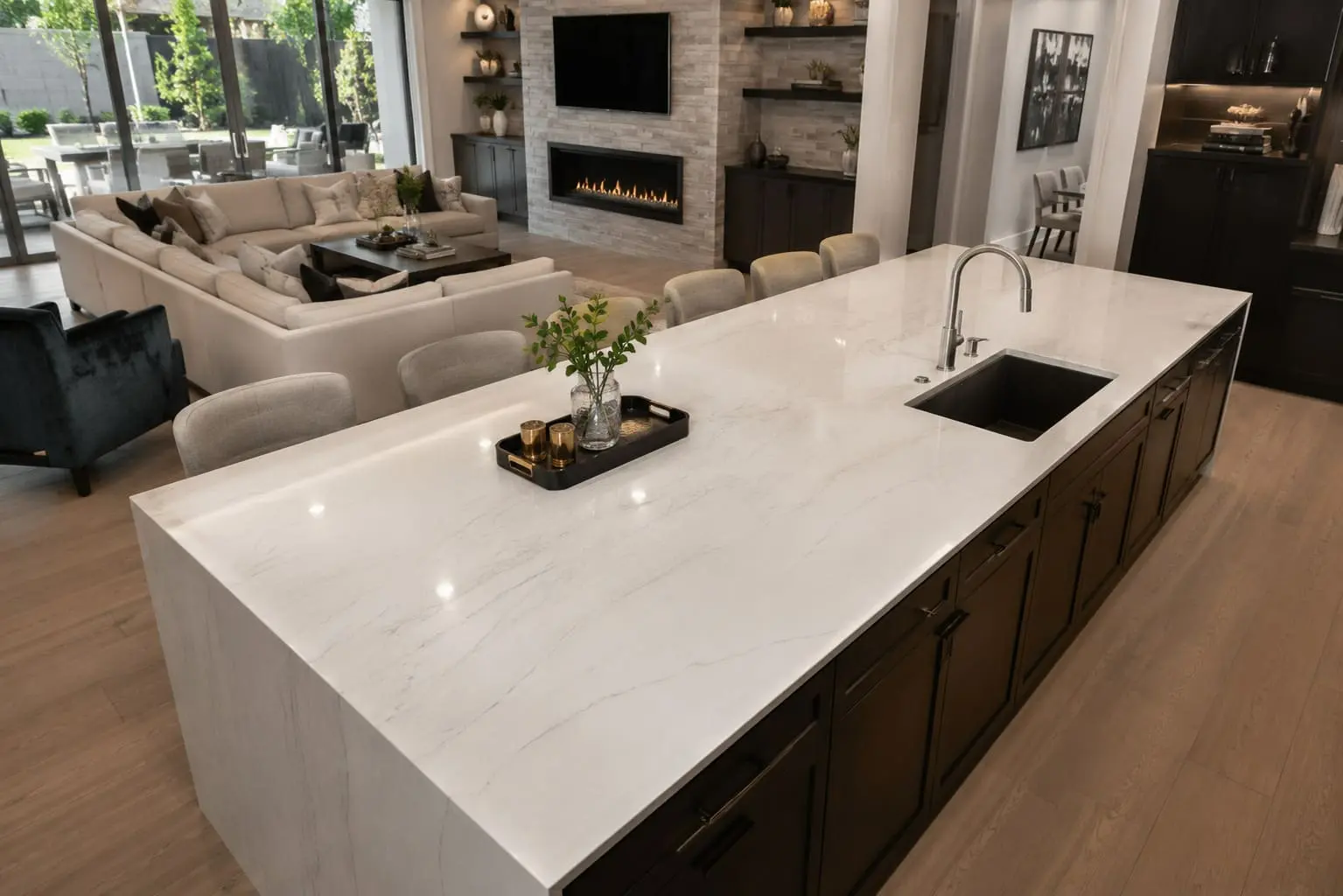
Understanding Quartzite and What Sets It Apart
Quartzite is a metamorphic rock that began as sandstone and was transformed under extreme heat and pressure beneath the earth's crust. That process fuses the sand grains into a dense, interlocking crystalline structure, producing one of the hardest natural stones used in residential countertops.
This is where confusion often arises. Quartzite and quartz are not the same material. Quartzite is 100 percent natural stone, quarried and cut into slabs. Quartz, by contrast, is an engineered product. Knowing that distinction upfront prevents mismatched expectations at the showroom.
Quartzite is durable and built for high-use areas, but misuse can still cause damage. It offers good resistance to wear, but long-term performance depends on maintenance and sealing. The surface is strong, but edges and corners require extra care during everyday use. Many homeowners choose quartzite specifically because it offers a marble-inspired aesthetic, with soft veining and lighter tones, without the sensitivity to acids and etching that marble requires.
One practical note: not every stone sold as quartzite in the market is true metamorphic quartzite. Some materials labeled that way are actually softer dolomitic hybrid stones that behave quite differently. For homeowners planning a quartzite kitchen island, it is worth asking for specifics about the material's composition, particularly if etch resistance matters for your application. You can also request a slab quote to get details on specific stones ahead of your visit. This Old House's countertop guide walks through natural stone performance clearly.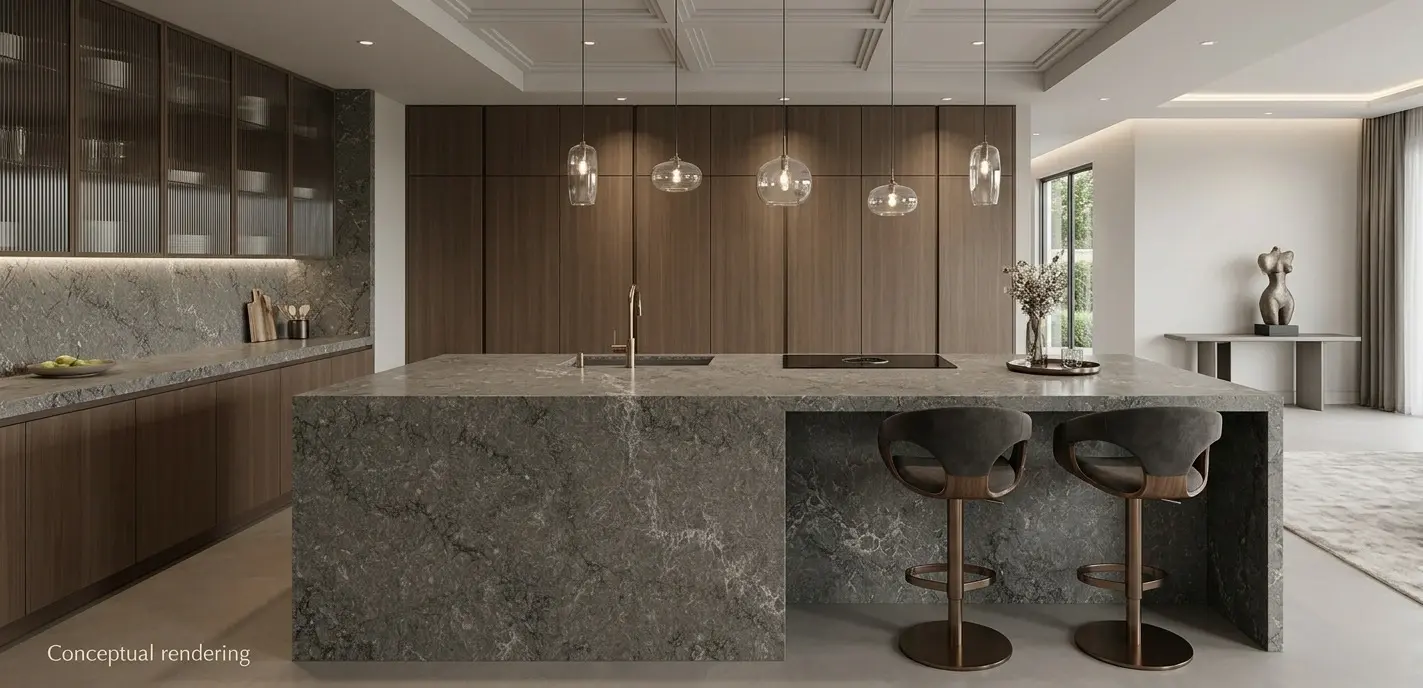
Quartz: The Engineered Alternative
Quartz countertops are manufactured surfaces composed of approximately 90 to 95 percent crushed quartz crystals bound with polymer resins and pigments. Because the material is engineered in a controlled environment, quartz offers consistent color and pattern across every slab. For homeowners who want a more uniform look or need to match countertops across a large kitchen, that consistency is a meaningful practical advantage.
The surface is non-porous, so quartz does not require sealing the way granite or quartzite does, but regular cleaning is still recommended. Stain resistance is one of its strongest qualities, but spills should still be cleaned promptly. The material is easy to maintain, though harsh cleaners should be avoided as they can degrade the resin over time. Quartz can handle normal kitchen heat, but direct contact with very hot items should be avoided, and trivets remain a sound habit.
In terms of design range, quartz is available in a wider variety of colors and patterns than most natural stones, including options that closely mimic marble, limestone, or concrete. For Minden homeowners renovating contemporary or transitional spaces, quartz can deliver clean, coordinated results with reduced maintenance. You can browse surfaces by style to see how engineered and natural options pair with different design directions.
For those comparing quartz and granite specifically, the Natural Stone Institute's granite variety guide explains the material's properties and performance characteristics from an industry standards perspective.
How to Think About Each Material for Minden Homes
The Carson Valley region draws a mix of homeowners: those renovating older ranch-style properties, those building in newer Douglas County developments, and those upgrading mountain-adjacent retreats. Each context points toward different surface priorities.
For kitchens with heavy daily use, granite and quartzite both bring strong durability suited to active cooking environments. Both can be considered for covered patios or outdoor kitchen surfaces when the application is properly evaluated. Granite tends to offer more variety in color and pattern, while quartzite leans toward lighter, more refined palettes suited to bright, open interiors.
Quartz is particularly well-suited to bathrooms, wet bars, and spaces where consistent color and minimal maintenance are the priority. Its non-porous surface handles regular moisture exposure well, though proper installation remains important regardless of which material is selected.
For homeowners working with a designer or contractor, our trade account program provides access to materials and pricing structures suited to larger-scale projects across the region.
Seeing the Difference in Person
Reading about materials only goes so far. The actual character of a slab, its veining depth, surface finish, and color temperature under different lighting only come through when you stand in front of the stone. A polished quartzite slab and a honed granite slab can look nearly identical in a photograph and feel completely different in person.
The Carson Valley showroom on Business Parkway carries natural stone slabs, porcelain and ceramic tile, hardwood, LVP, and other surface categories. Commission-free design support is available whether you arrive with full plans or a flooring sample. Booking a free design consultation is a straightforward way to compare materials under real conditions before committing to any surface.
Nova Tile and Stone also offers a sample program, allowing you to take physical pieces home and evaluate how each material looks alongside your actual cabinetry and lighting before deciding.
Conclusion
Granite, quartzite, and quartz each serve a distinct purpose and suit different homeowner priorities. Granite brings natural variation and proven durability. Quartzite offers refined, marble-like beauty with greater strength. Quartz provides consistency, low maintenance, and design flexibility. The right choice depends on how the surface will be used, how much maintenance fits your lifestyle, and the visual character you want the space to carry. Comparing slabs in person remains the most reliable path to a satisfying decision. Explore everything we carry before your visit.
Frequently Asked Questions
Quartzite is a naturally occurring metamorphic rock quarried from the earth. Quartz countertops are an engineered product made from crushed quartz crystals combined with resins and pigments. Quartzite has natural variation in veining and tone, while quartz offers a more uniform, controlled appearance. Both are durable, but they are fundamentally different materials with different maintenance needs.
Granite is a practical choice for high-use kitchen environments. It is strong, scratch resistant, and handles heat from everyday cooking well, but trivets are still a sound habit to protect the surface over time. Periodic sealing helps maintain stain resistance, and spills should be cleaned promptly. With consistent care, granite can perform well across decades of regular use.
Quartz does not require sealing because its engineered, non-porous surface resists moisture and staining without it. However, regular cleaning is still recommended to keep the surface in good condition, and harsh chemical cleaners should be avoided. Even without sealing requirements, quartz benefits from attentive day-to-day care.
Some materials labeled as quartzite in the market are actually dolomitic hybrids or marble-quartzite blends that behave differently from true metamorphic quartzite. True quartzite resists etching from acidic liquids better than these alternatives. When reviewing slabs, it is worth asking specifically about the stone's composition, especially if acid resistance or etch resistance is a priority for your application.
Quartz is generally not recommended for outdoor countertop applications. The resin component that gives quartz its non-porous character is sensitive to prolonged UV exposure, which can cause fading or surface changes over time. For covered outdoor kitchens or patio counters in the Carson Valley region, granite is a more suitable natural stone option, and each outdoor application should be evaluated individually based on exposure conditions.