AT A GLANCE
- All pavers move with the soil beneath them.
- Frost heave needs freezing, water, and frost-susceptible soil.
- In lab tests, added water raised heave about sevenfold.
- Sand-set pavers flex, so they crack less than slabs.
- Reset pavers raised over 1/8 inch (3 mm) before snow.
- Check for damage in spring, during or after rain.
IN THIS POST
- Why Do Pavers Shift or Sink in Cold Weather?
- Do Pavers Crack Like Concrete in Winter?
- How Do You Protect Pavers in Winter?
- How Do You Spot Winter Damage on Pavers?
- Will Heaved Pavers Go Back Down After Winter?
- Choosing Pavers for Cold Winters With Nova Tile and Stone
- Frequently Asked Questions
- Sources
Yes, pavers can shift or sink in cold weather, but they rarely crack from freezing alone. Most winter movement comes from frost heave, which happens when water in fine-grained soil beneath the paver base freezes and pushes the surface upward. A second round of movement often follows in spring, when the thawing soil softens and lets some areas settle.
A paver surface is made of individual concrete, porcelain, or natural stone units set over a compacted base, with sand-filled joints between each piece. Because the units are separate, the surface can respond to ground movement one piece at a time instead of as a single solid layer.
Below, we cover why pavers shift or sink in winter, when cracking does happen, how to prepare a paver patio, walkway, or driveway for the cold months, how to read any movement you find in spring, and what to do about it.
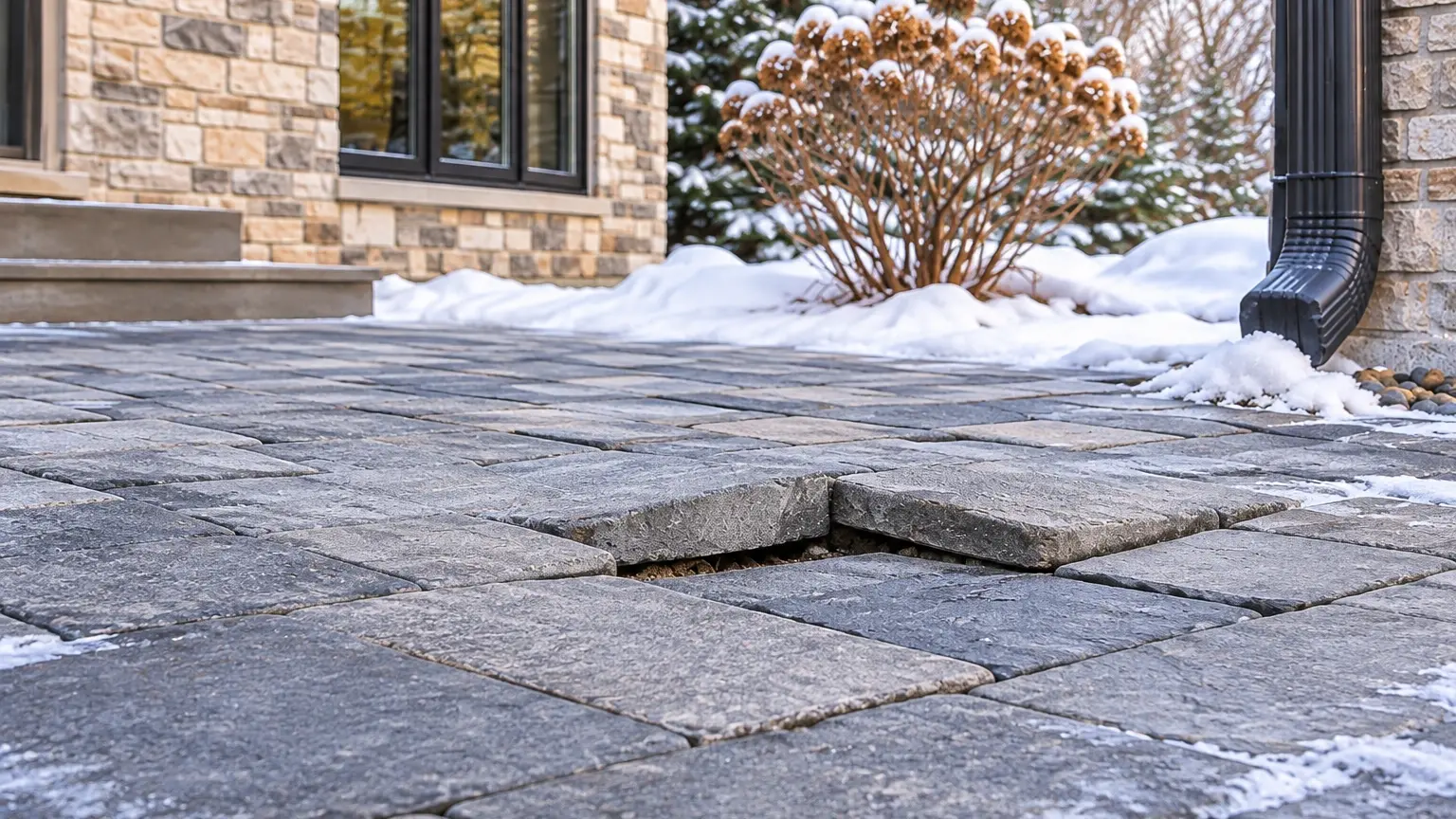
Why Do Pavers Shift or Sink in Cold Weather?
Pavers shift or sink in cold weather mainly because of frost heave and the thaw that follows it. Frost heave happens in the soil, not in the pavers, and it needs three conditions at the same time: frost-susceptible soil, freezing temperatures, and a supply of water.
Silts and other fine-grained soils tend to be the most frost-susceptible because they hold onto moisture and keep drawing water toward the freezing zone. As that water freezes, it forms layers of ice called ice lenses, which push the ground and anything resting on it upward. This tends to show up most in late winter and early spring, when temperatures swing above and below freezing and the frost line moves up and down.
When the ice in the soil melts, the ground can lose strength and stay saturated for a while. Areas that were lifted may then drop back unevenly, leaving some pavers higher or lower than the ones around them.
Water is what drives the whole process. In laboratory frost heave testing, soil with a free water supply heaved about seven times more than the same soil without one. That is why movement is most likely where water collects, such as low spots along the edges of a patio, areas near downspouts, and places where roof runoff drains onto the pavement.
Do Pavers Crack Like Concrete in Winter?
No, pavers are much less likely to crack in winter than a poured concrete slab, and shifting is far more common than cracking. A paver surface is considered semi-flexible. Each unit shares the load with its neighbors through the sand-filled joints, which allows the system to move with shifts in the ground and keep functioning even when some settling occurs.
That is the key difference from a poured concrete slab. A slab is rigid, so when the ground beneath it heaves unevenly, stress builds across one large piece until it cracks. Once a slab cracks, water can get into the gap, freeze, and widen it over the following winters. With pavers, the joints act as built-in relief points that help reduce the kind of cracking common in poured concrete, so the surface tends to become uneven rather than broken.
When individual pavers do crack or flake in winter, the cause is usually one of these:
- High water absorption. A unit that soaks up water can suffer surface scaling as that water freezes and thaws repeatedly.
- Poor support. A paver sitting over a void or a soft spot in the base can break under a car tire or heavy load.
- Impact. A paver lifted by frost heave can be chipped by a snowblower or plow blade.
- Harsh de-icers. Some ice melt chemicals can speed up surface wear, especially on concrete.
Material choice is something you can settle before installation. When comparing our pavers and exterior stone, check each product’s water absorption and whether the manufacturer rates it for freeze-thaw exposure.
How Do You Protect Pavers in Winter?
To protect pavers in winter, keep water moving away from them, keep the surface clean and level, and take care with snow removal. A little preparation in late fall can reduce both movement and surface wear.
- Clean the surface before snow arrives. Leaves and dirt left sitting through winter can stain the pavers, so a fall sweep is worth the time.
- Level anything that already moved. Uneven pavers create low spots where water pools and freezes into ice.
- Check your drainage. Make sure downspouts discharge away from paved areas and that water is not collecting along the edges.
- Remove snow promptly. Clearing snow before foot traffic packs it down makes ice less likely to form. Shoveling diagonally across the joint lines also helps keep the blade from catching paver edges.
- Go easy on de-icers. Spreading sand first adds traction, so de-icer can be saved for the spots where ice remains. Because the right de-icer depends on your paver material, check the care guidance for your specific pavers before winter starts.
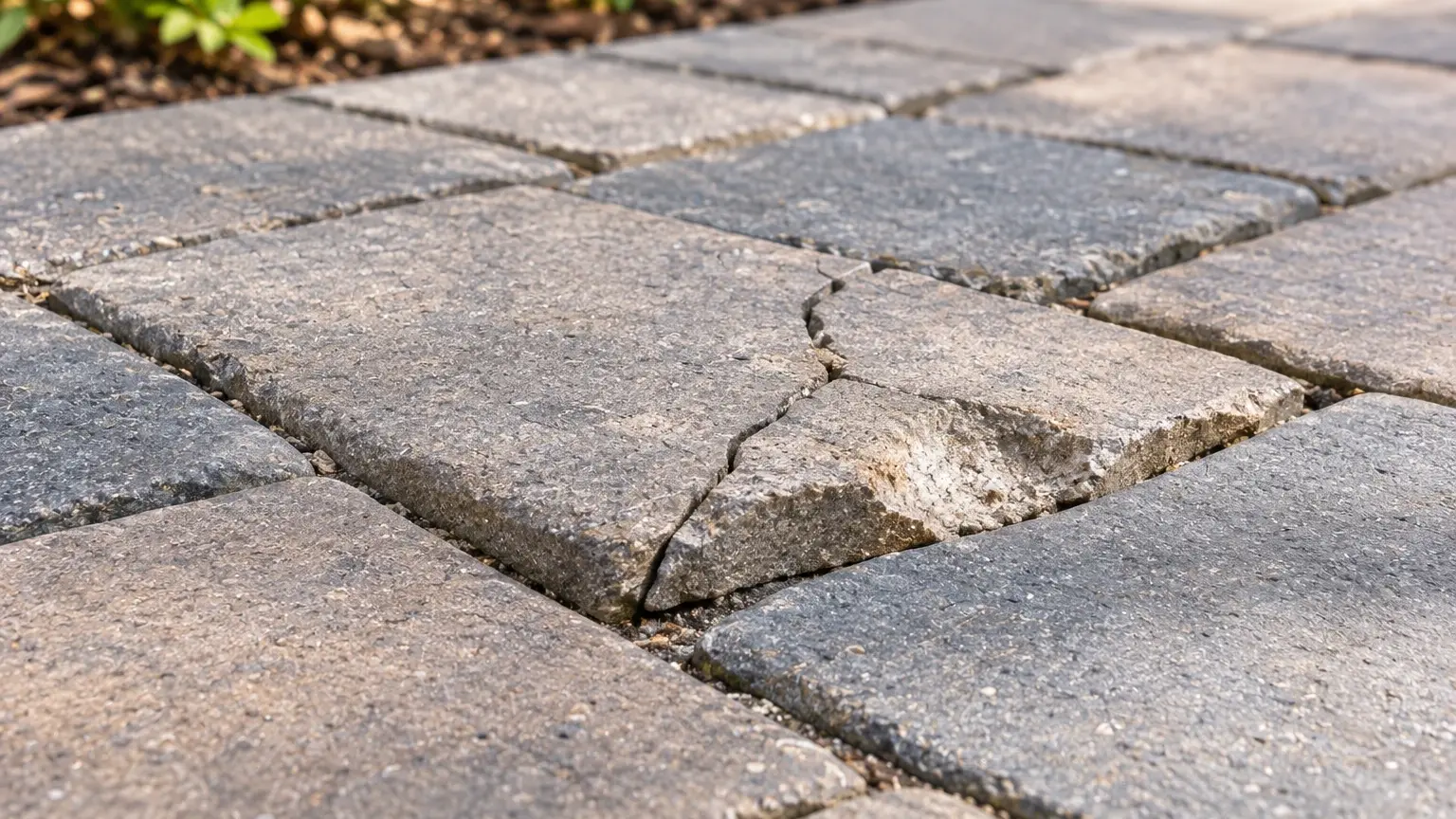
How Do You Spot Winter Damage on Pavers?
To spot winter damage on pavers, look for raised areas, sunken spots that hold water, joints that are widening near the edges, and units sitting higher than their neighbors. Each sign points to a different cause, and industry maintenance guidance groups these problems into distinct distress types that are easiest to read once the ground has thawed in spring.
Heave (raised areas). Sections that sit higher than the pavement around them are usually caused by frost heave in the soil below. Mild heave can be hard to see. Laying a long straightedge or string line across the surface shows it more reliably than looking.
Depressions (sunken areas). Low spots usually come from settlement of the base or the soil under it. Common causes include a base that wasn’t fully compacted, saturated soil, or bedding and joint sand that washed out. Water that sits in the same spot after rain, or ice that forms there in winter, is often the first clue.
Edge movement. When joints near the outer edge of a patio or walkway start to widen and pavers begin to tilt, the edge restraint has usually loosened or failed. This tends to show up within the first foot or two of the edge.
Individual pavers sitting high. A few units standing slightly above their neighbors often means the bedding sand beneath them has shifted. This can also be part of a larger heave or settlement problem.
Cracked or chipped pavers. Cracks with little to no opening generally do not affect how the surface performs. Pavers that are broken through or badly chipped can be replaced individually. If you no longer have spares on hand, you can compare paver sizes, colors, and finishes in person at our Reno, Minden, and Sacramento showrooms.
Before you decide something has moved, keep in mind that early morning and late afternoon shadows can make a surface look more uneven than it is. Chamfered paver edges add to that effect. Checking during or right after a rain makes real low spots easier to see, because water collects in them.
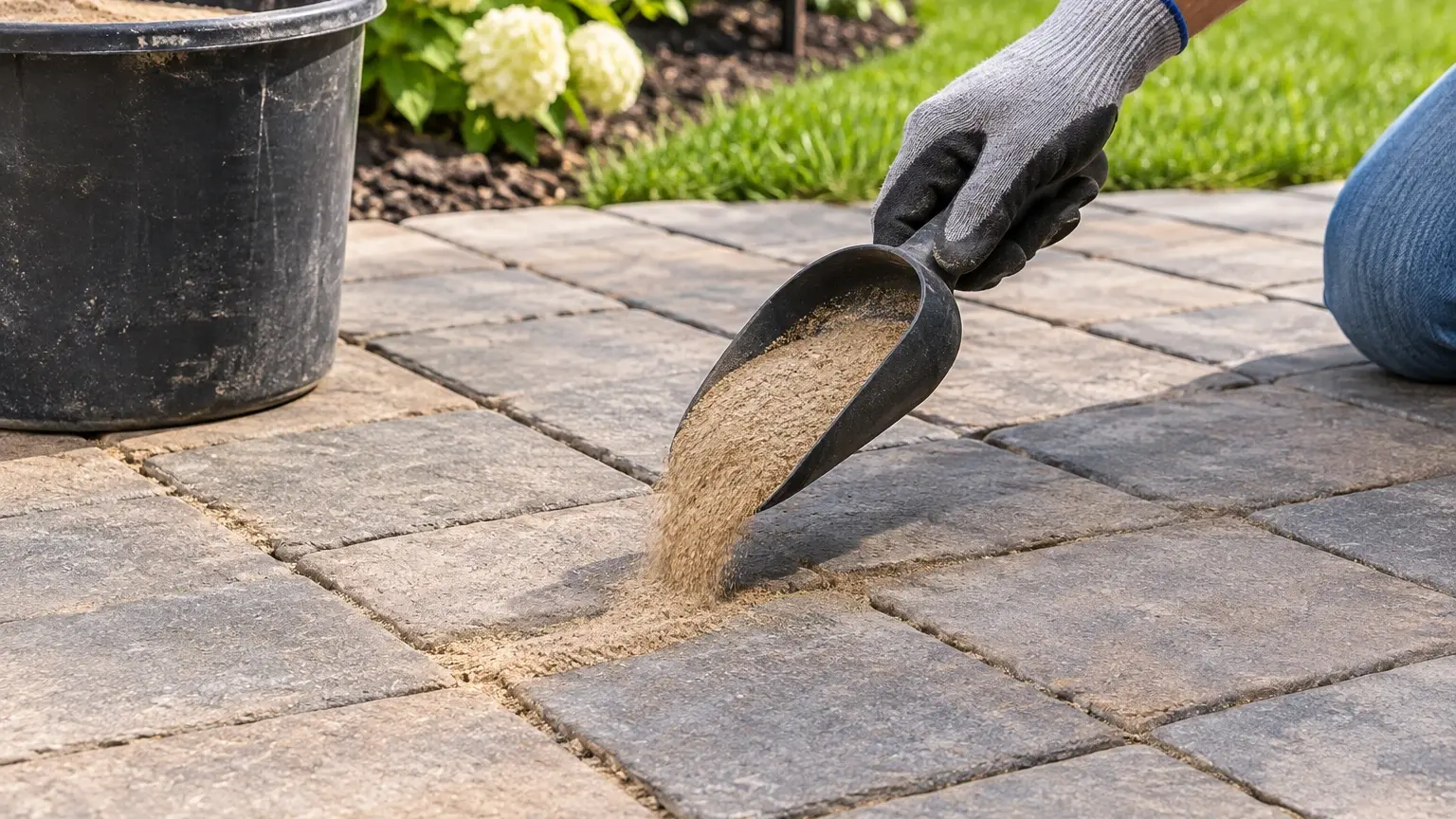
Will Heaved Pavers Go Back Down After Winter?
Sometimes. Heaved pavers can go back down as frost leaves the soil, so it is best to wait until the ground has fully thawed and dried before making repairs. An area that looks uneven in March may look different by May, but pavers that are still uneven after the thaw are unlikely to correct themselves.
Lasting movement usually points to a drainage or base issue in that spot rather than a problem with the pavers themselves. One of the practical advantages of a paver surface is that affected units can be lifted, the base corrected, and the same pavers set back in place. A qualified hardscape installer can assess whether the fix is a small reset or whether water needs to be redirected first.
A few habits make future repairs easier:
- Photograph the surface each spring from the same spots to track whether movement is stable or getting worse.
- Keep a few spare pavers from your original order for future repairs.
- Refill joint sand where it has washed out, which helps units stay locked together.
Choosing Pavers for Cold Winters With Nova Tile and Stone
Whether you are refreshing an older surface or planning a new patio, walkway, or pool deck in an area with cold winters, material choice is one of the decisions you can make with confidence before the project starts. Our Pavers and Exterior Stone selection includes porcelain pavers, natural stone options such as travertine outdoor paving, pool coping, and stacked stone in small to large formats. When you book a free design consultation, our team can walk you through options and go over the spec sheet details that matter for the conditions around your home. Because pavers can be lifted and reset, areas that moved can usually be brought back to level without starting over.
Frequently Asked Questions
No. Sealers can reduce how much water enters the paver surface and make stains easier to remove, but frost heave starts in the soil beneath the base, which a sealer does not reach.
Industry maintenance guidance recommends repairing pavers that sit more than about 1/8 inch (3 mm) above their neighbors before the snow season. Those raised edges are the ones most likely to chip during snow removal.
Yes, pavers can be cleared like any other pavement. Setting the blade to ride just above the surface and using plastic shovels or synthetic blade edges helps reduce scratching and chipping.
Sand improves traction and helps keep the joints filled. Sand left on the surface year after year can wear down the pavers, though, so it should be swept off each spring.
Pavers change in appearance over time from weather, wear, and staining, so replacement or stored spare units may not match the surrounding surface exactly. Scattering the replacements through the pattern, rather than grouping them together, makes the difference less noticeable.
Sources
- Concrete Masonry & Hardscapes Association, Operation and Maintenance Guide for Interlocking Concrete Pavement (PAV-TEC-006) | https://www.cmha.org/resource/pav-tec-006/
- Concrete Masonry & Hardscapes Association, Application Guide for Interlocking Concrete Pavements (PAV-TEC-010) | https://www.cmha.org/resource/pav-tec-010/
- Concrete Masonry & Hardscapes Association, Pavers vs. Concrete: Myths, Facts, and What Homeowners Need to Know | https://www.cmha.org/news-and-insights/pavers-vs-concrete-myths-facts-and-what-homeowners-need-to-know
- Concrete Masonry & Hardscapes Association, Top 3 Tips to Prepare Your Interlocking Concrete Paver Patio for Winter | https://www.cmha.org/news-and-insights/top-3-tips-to-prepare-your-interlocking-concrete-paver-patio-for-winter/
- Michigan State University and UNC Charlotte (National Science Foundation funded), Frost Susceptibility Evaluation of Clay and Sandy Soils | https://par.nsf.gov/servlets/purl/10430116
Note: Some images on this page may be conceptual renderings created to illustrate design possibilities and may not depict actual installations.