Hardscape is important because it is the permanent structure of a yard: the patios, walkways, steps, and stone walls that stay in place for decades while lawn, shrubs, and flowers grow, fade, and get replaced. It sets the layout every planting works around, shrinks the area that needs watering, and, when the stone suits the climate, holds up through years of sun and winter weather with routine care.
That is the secret to a yard that lasts: hardscape is the first decision, not the last. In dry climates, where outdoor watering can reach 60 percent of household water use, stone patios and paths in place of thirsty lawn do real, measurable work.
The pavers and exterior stone Nova Tile and Stone carries, from small and large format pavers to pool coping and stacked stone, cover the parts of a yard you will live with longest. They deserve the most thought up front, before a single plant goes in.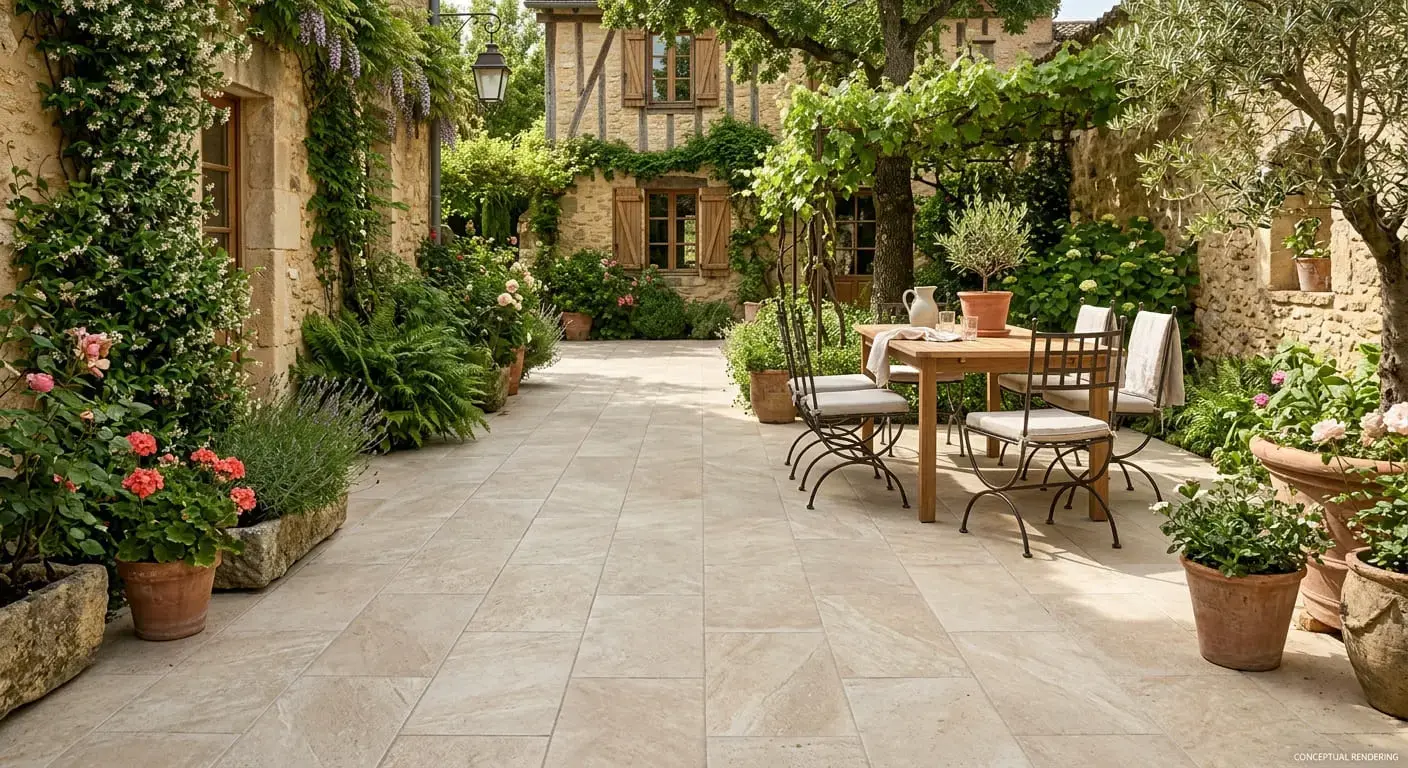
Why Does Hardscape Outlast the Rest of the Yard?
Stone outlasts almost everything else in a yard. Travertine has been quarried near Tivoli, Italy, since Roman times, and the Maryland Geological Survey notes it was used in parts of the Roman Colosseum.
People who build for the long haul treat the outside of a building differently from the inside. In a Use Natural Stone profile, architect Roger P. Jackson, whose firm designs temples for The Church of Jesus Christ of Latter-day Saints, explains that interiors can be remodeled as needed, while exteriors are held to a higher standard, which is why natural stone is so often chosen.
A home yard works the same way. The lawn, perennials, and patio furniture will turn over several times while the patio and paths stay in place, so those surfaces deserve the most thought and the most durable material, though each stone should still be evaluated for its spot.
Lasting doesn’t mean untouched. Plan on a rinse each season, periodic resealing for porous stone, and an eye on drainage, which is still lighter work than replanting a bed every few years.
The cost of a wrong call shows up differently, too. A struggling shrub can be swapped out in an afternoon, but a patio in the wrong spot or a stone that doesn’t suit the climate is something you live with every day you step outside.
So the real reason hardscape matters is time. It is the one part of the yard you choose for decades rather than seasons, and every other choice gets easier once it is set.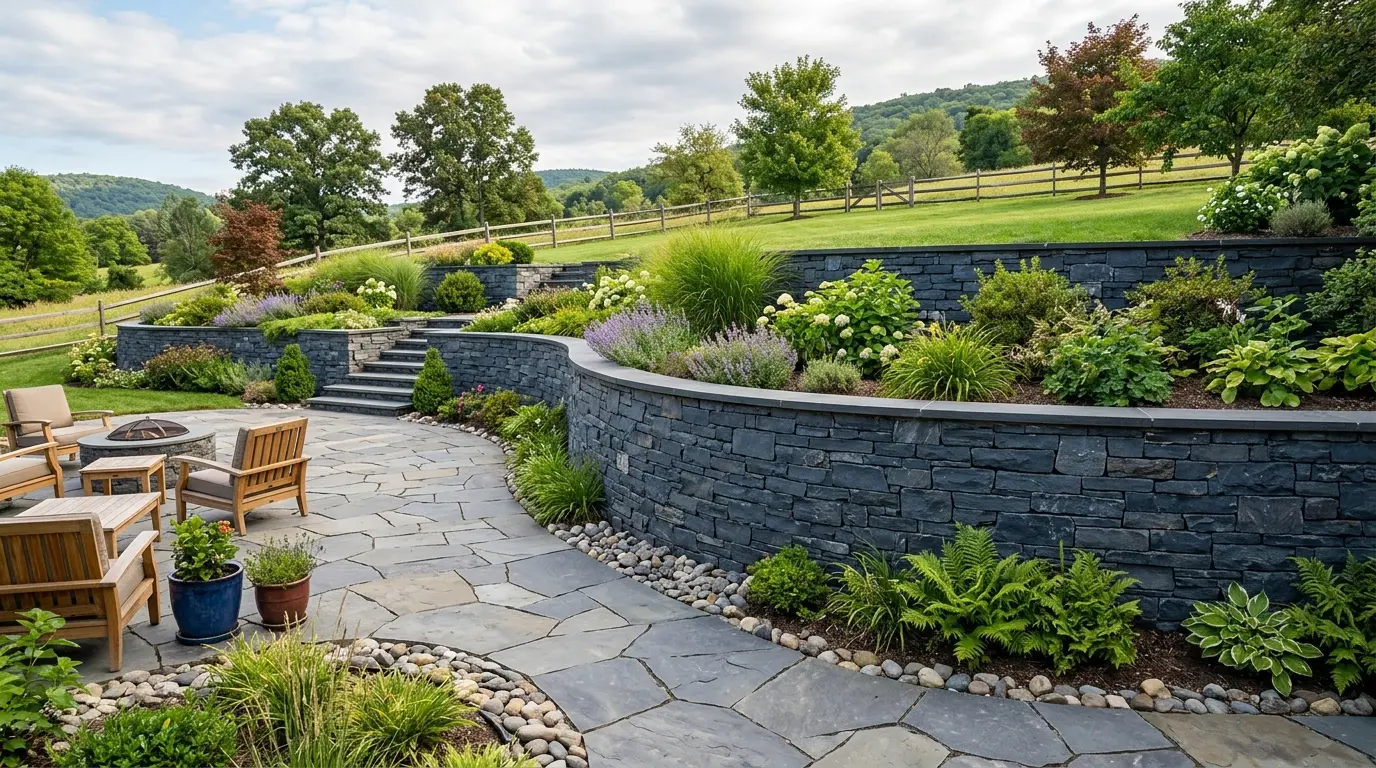
What Should You Plan First, Hardscape or Plants?
The order you plan in decides how well a yard holds together. A University of Florida landscape guide places selecting and arranging plants last, after the activity areas are located and designed, and it lays out planting beds along walkways, patios, and buildings because those edges are fixed.
Planning the other way around is how yards end up with a patio squeezed between shrubs or a path that skips the route people actually walk. Mark where you sit, eat, and cross the yard first, then size the stone to those spots before choosing a single plant.
Picture a typical backyard with a dining patio off the kitchen door, a path to the side gate, and a few steps down to the lawn. Drawn first, those three pieces of stone show you where the planting beds, the shade tree, and the lighting can go, instead of the other way around.
The same logic carries up to the house. Our exterior stone guide covers stone on facades, entrances, and columns, which helps once the hardscape plan reaches the front door and the walls beside it.
Why Does Hardscape Matter More in Reno’s Dry Climate?
Every square foot of stone is a square foot that never needs a sprinkler. The EPA’s water-smart landscaping guide puts outdoor use at about 30 percent of household water nationally, and as high as 60 percent in dry climates.
Northern Nevada, from Reno and Sparks to Minden and Fernley, sits firmly in that drier group. In its drought and water supply FAQ, the Truckee Meadows Water Authority notes that the average customer’s water use is approximately four times higher in summer because of outdoor watering. That makes trading a thirsty patch of lawn for a well-placed patio one of the most practical changes a yard in the region can make.
Stone also changes how a yard feels in July. The EPA’s cool pavements page cites an Arizona pilot study in which conventional asphalt reached surface temperatures up to 152°F at midday, while cool pavements stayed 10 to 16°F cooler. Those were treated street pavements rather than stone, but the principle carries over: lighter surfaces reflect more sunlight and stay cooler, so a light-colored stone near seating is worth considering in Reno and Sacramento summers.
None of this means paving the whole yard. The aim is to put stone where people actually walk and gather, let drought-tolerant plants fill the rest, and leave some planting near the patio so the space doesn’t feel like a parking lot on a hot afternoon.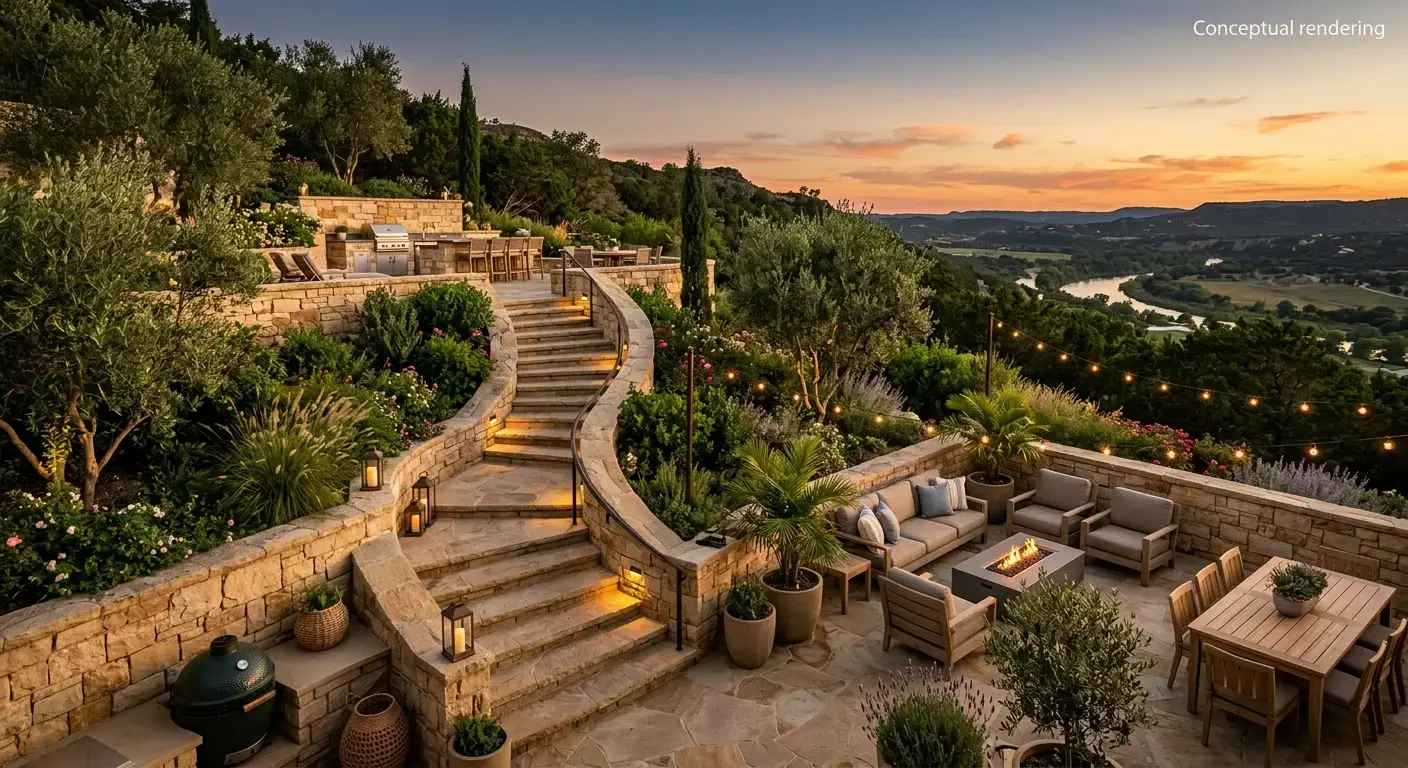
Choose Stone That Ages Well Where You Live
A yard only lasts as long as its stone suits the weather around it. Granite, quartzite, travertine, and exterior-rated porcelain pavers are all suited to outdoor floors, but they don’t age the same way in every climate.
Granite and quartzite are dense with low absorption, while travertine has natural pores that call for sealing. In the high-desert winters of Reno, Minden, and Fernley, pick a dense, exterior-rated travertine if you love that look, and know that Sacramento yards face far fewer hard freezes. Our natural stone exterior guide walks through how each of these stones handles outdoor exposure.
The finish matters as much as the stone on any surface people walk on. For patios, steps, and pool decks, choose a textured finish such as leathered rather than polished or glossy, which can get slick when wet or icy.
Exterior-rated porcelain pavers are the pick when you want one consistent color across a large patio, while natural stone brings variation from piece to piece. Porcelain is UV resistant, but performance may vary by color and finish, so judge the exact paver you plan to use rather than the category as a whole.
Serious projects test stone for freeze-thaw durability before approving it, soaking and freezing samples over and over to see how they hold up. A home yard deserves the same question on a smaller scale: will this stone handle our winters?
Asking it early costs nothing. Bring the question to a free design consultation, where you can see the stones in person and talk through which ones suit your yard, your sun, and your winters.
Conclusion
Once you know where the patio, paths, and steps go, the stone is the next decision, and it is the one to make before any planting. Pavers, pool coping, and stacked stone are easiest to judge in person at one of our four showrooms, where you can hold finalists up against photos of your house.
If your plan includes an outdoor kitchen, granite is the slab to start with, since it is suited to both outdoor use and food preparation, though a cutting board is always recommended. Our live slab inventory photographs every bundle on our floor, so you can narrow granite colors from home and then request a quote for the slab you like.
Bring your plan when you come in, even a rough sketch with the patio, paths, and steps measured. Our team works from plans, measurements, inspiration photos, or just an idea, and the more of the hardscape you have mapped, the faster the stone choice comes together.
Note: Some images on this page may be conceptual renderings created to illustrate design possibilities and may not depict actual installations.
Frequently Asked Questions
Hardscape is the built, non-living part of a yard: patios, walkways, steps, driveways, retaining walls, stone walls, and pool decks or coping. Softscape is the living part, meaning lawn, trees, shrubs, and flower beds. The two work together, but hardscape sets the fixed shape the plants grow around, and pavers, pool coping, and stacked stone walls all fall on that side.
Yes, landscape design guidance generally places plant selection after the patios, paths, and activity areas are laid out, because planting beds are drawn from those fixed edges. Deciding the stone first keeps you from fitting a patio around shrubs that were never planned for it. Mark seating, dining, and walking routes on a sketch, then fill in the plants around them.
It can, because every area paved in stone needs no irrigation, which matters in dry places like Reno, where the average household’s water use runs about four times higher in summer because of outdoor watering. Pairing stone with drought-tolerant plants stretches those savings further. The EPA puts outdoor use at about 30 percent of household water nationally and up to 60 percent in dry climates.
A well-chosen, properly installed stone patio can last for decades. How long depends on matching the stone to your climate and keeping porous stones like travertine sealed, and dense stones like granite and quartzite generally need less upkeep outdoors than more porous ones.
Dense, low-absorption stones such as granite and quartzite are generally the safer choice where winters bring freeze-thaw cycles. Travertine can work when you choose a dense, exterior-rated stone and keep it sealed, and exterior-rated porcelain pavers are another option for outdoor floors. Seeing the stone in person before committing helps confirm it suits your yard and your winters.