Stone veneer on a house exterior most often goes in four places: the full facade, a lower band of wall, the entrance, and porch or walkway columns. Natural stone veneer is a thin facing of quarried stone applied to an exterior wall without carrying the building's load.
The right spot for each stone depends on how closely people will see it. A facade reads from the street, where granite with even tones works well, while an entrance is seen at arm's length, where quartzite with visible movement or a leathered finish pays off. Travertine suits covered areas, such as a porch or covered entry.
Where the stone stops also decides whether it looks real. Stone that wraps outside corners and ends at a natural line, such as a window sill or an inside corner, reads as solid stone rather than a panel stuck onto the house. That is why we settle the location before choosing the stone.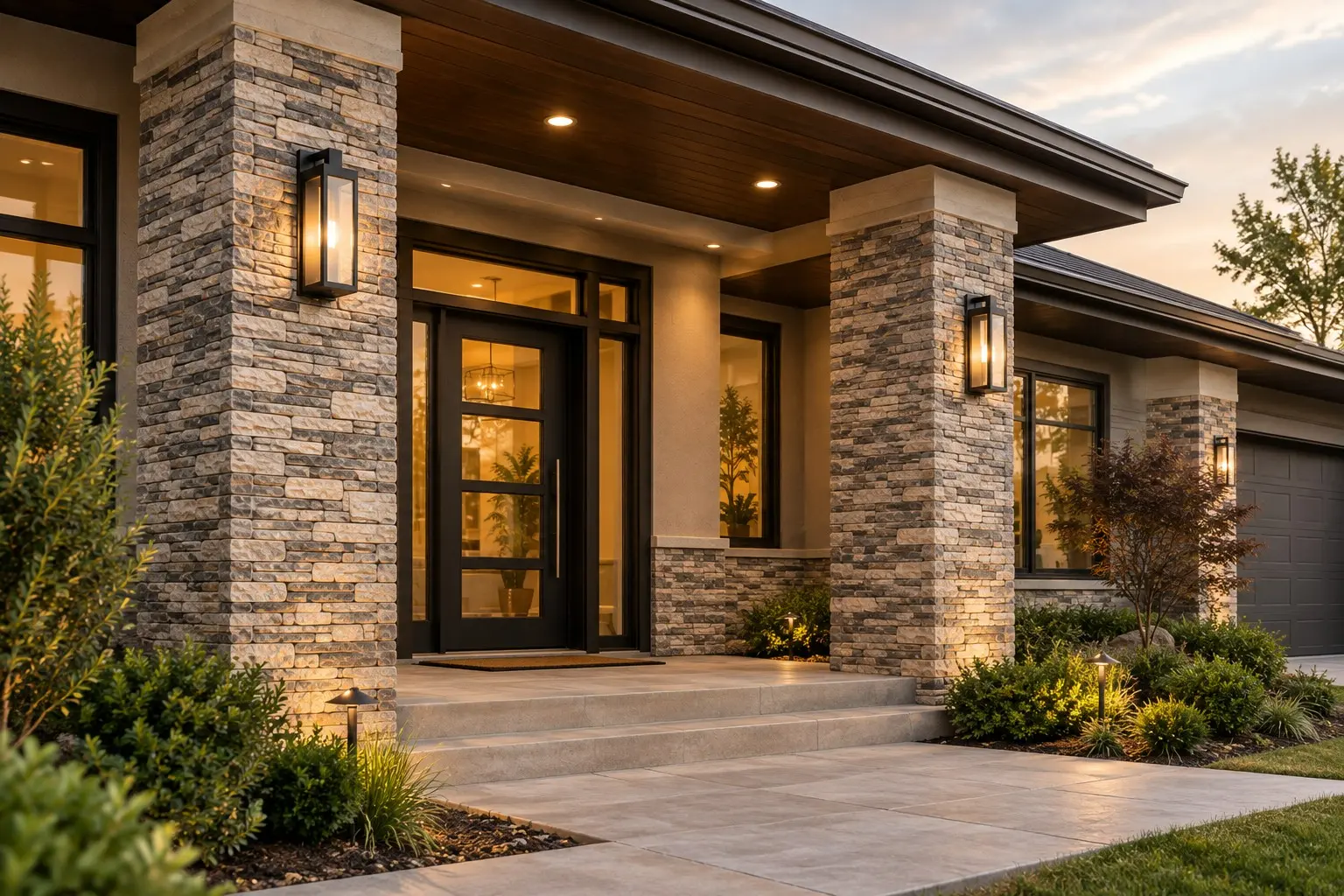
How Far Away Will People See the Stone?
Viewing distance is the most useful filter we know for choosing exterior stone. A full facade is seen mostly from the street, where fine veining is hard to pick out and the stone reads as one overall color and texture. Judge facade stone by tone, and keep that street view in mind as you browse our stone selection.
A lower wall band grounds the house visually and looks best when it ends at a line the eye already accepts, such as the bottom of the window sills. This band usually sits closest to soil and sprinklers, and our guide to natural stone for exterior walls explains how different stones handle outdoor exposure.
The entrance works the other way. Visitors stand within arm's reach of the stone around a front door, so movement, veining, and finish all earn their place here. If you only get one part of the exterior exactly right, make it the front door.
Columns are seen from every side as people walk past them, so a column wrapped on all four faces needs consistent color on each one. That makes batch matching especially important for column stone.
Try a quick test before choosing anything. Look at your house from the curb, then from the front step. What you notice from the curb is what the facade stone has to get right, and what you notice from the step is what the entry stone has to get right.
What the Wall Has to Handle First
Natural stone adds weight to a wall, so have a contractor or structural professional confirm the existing wall can carry it before any stone is ordered. That check comes before color, finish, or pattern.
Water is the other early concern. The bottom edge of the stone should stay clear of soil and mulch, and the wall should drain rather than trap moisture behind the facing.
Upkeep also differs across the house. A lower band near sprinklers needs different attention than a column cap that collects leaves, and the Natural Stone Institute's care guidance is a solid reference for cleaning methods suited to natural stone. Once the wall is cleared, schedule a showroom visit to start narrowing down the stone itself.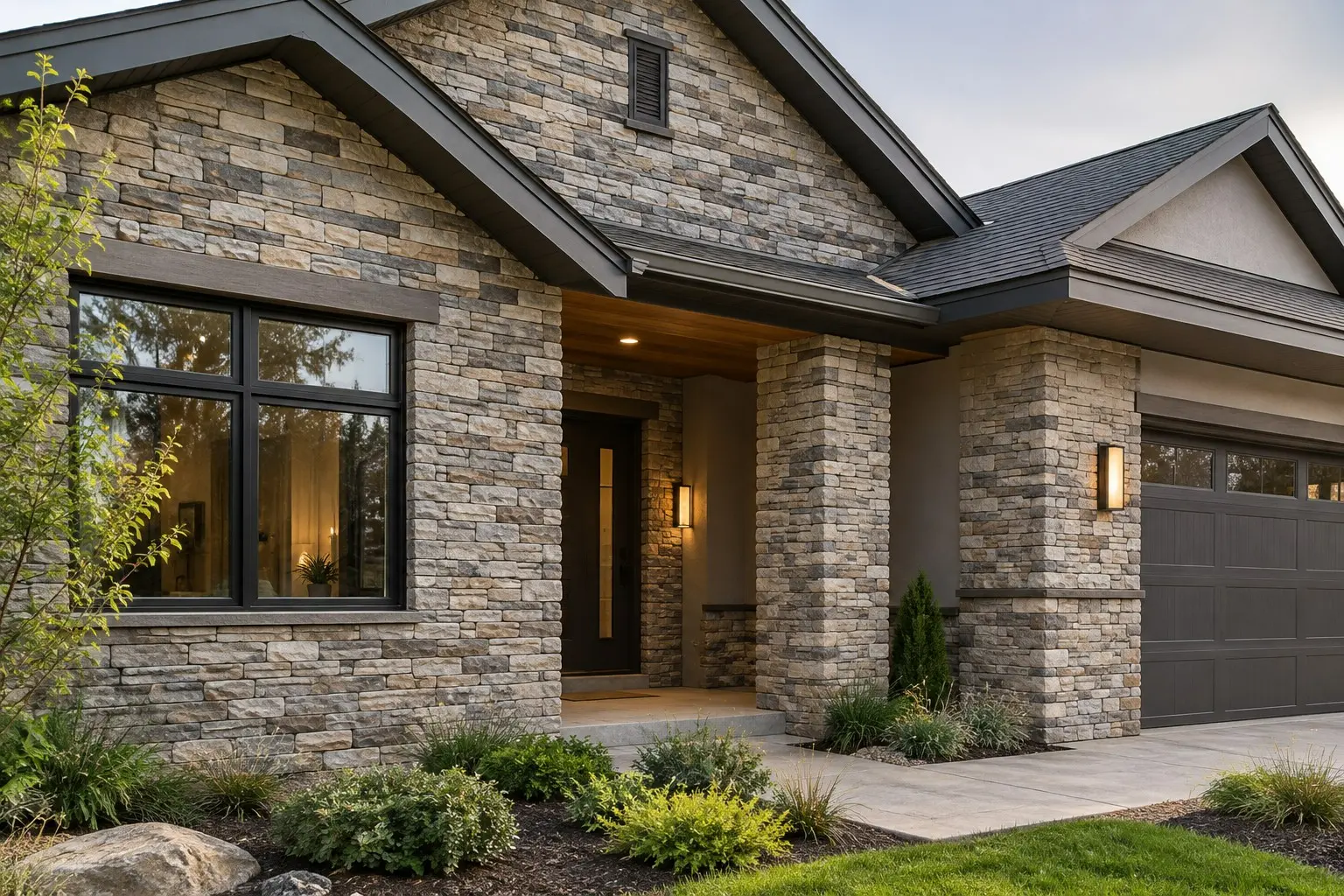
When Stone From Foundation to Eave Is Too Much
A full stone front suits homes with simple, strong shapes: one or two rooflines, a flat front elevation, and clean openings. On those houses, stone from foundation to eave looks deliberate and solid. Granite with even tones is a sensible starting point for the look, and you can see what we currently have in stock.
A home with multiple gables, bump-outs, and mixed window sizes is a different story. Covering every surface in stone tends to flatten that architecture, and the details that give the house character blur into one heavy mass. We think a partial application often looks better on these homes.
Picture a two-story house with stone on the lower story and siding above. The stone carries the visual weight at the base, and the upper story stays lighter. If you're weighing full versus partial, bring the question to a free design consultation and ask our team which of our stones suit exterior use.
Where the Stone Stops Decides Whether It Looks Real
One of the clearest giveaways of a poorly planned veneer is stone that ends flush at an outside corner. From the side, the thin edge of the stone shows, and the whole wall reads like a panel stuck onto the front of the house.
Stone should wrap outside corners and return along the side wall before it stops. The cleanest stopping points are inside corners, a change in wall plane, the underside of a window line, or the edge of a porch overhang.
Natural Stone or Manufactured Stone?
Manufactured stone veneer is cast and molded to imitate the look of stone, while natural stone veneer is quarried stone cut into thinner pieces. Use Natural Stone's guide to environmental and health product labels for natural stone describes natural stone as a single-ingredient material, while most other building materials need added ingredients and a more complex manufacturing process.
The difference also shows at the edges. Natural stone carries its color and texture through its full thickness, so a returned corner or cut edge shows the same stone as the face, which is a strong reason to choose real stone on a home's exterior.
Granite at a Distance, Quartzite Up Close, Travertine Under Cover
Our exterior stone options include granite, quartzite, and travertine, and each one earns its spot in a different part of the house.
Granite is a good fit for exterior stone applications. A granite with even, consistent tones holds together well across a full facade or lower wall band seen from the street, and it is the easier match across all four faces of a column. It is UV resistant, but performance may vary by color and finish, so see the specific stone in person before committing.
Up close is where quartzite with visible movement pays off, especially framing a front door. Stones sold as quartzite can vary, so confirm the classification of the one you choose. A quartzite with strong movement can also wrap a column, but only with pieces selected carefully so every face reads as one stone.
For a surface with texture but without the shine of a polished face, a leathered finish on quartzite or granite works well at the entry.
Travertine often comes in warm, earthy tones that sit comfortably beside stucco and wood siding. It is suitable for outdoor use, but installation must match the application. Its porous structure benefits from sealing, with periodic resealing to keep that protection in place, which is why we lean toward using it under a porch roof or covered entry.
In Northern Nevada's freezing winters, a covered location matters even more for travertine. Water that gets into a porous stone and freezes repeatedly can contribute to surface spalling or cracking, and sealing alone does not make a stone frost resistant.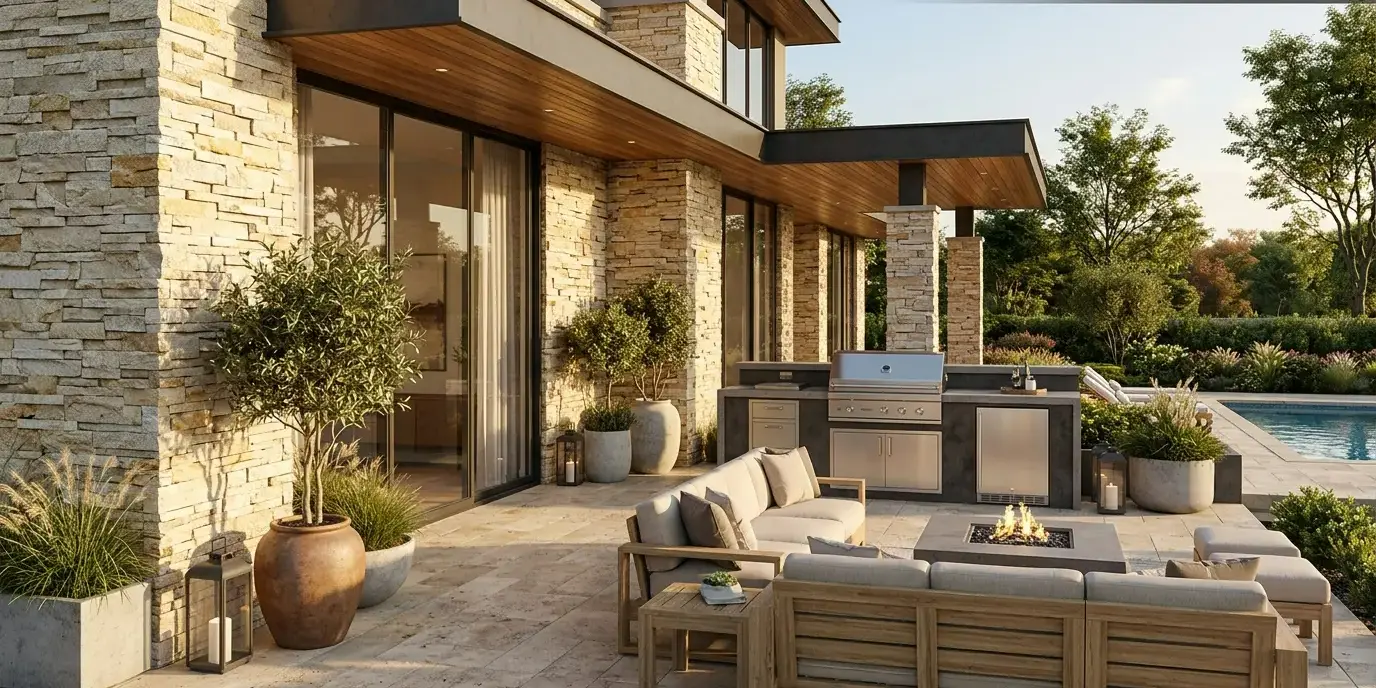
Here is how each area of the house lines up with the stones covered above.
Area of the House | Seen From | What Matters Most | Stone to Consider |
Full facade | The street | Overall tone and texture | Granite with even, consistent tones |
Lower wall band | The street and walkway | A clean top line and outdoor exposure near soil and sprinklers | Granite with even, consistent tones |
Entrance | Arm's length | Movement, veining, and finish | Quartzite with visible movement, leathered granite, or travertine at a covered entry |
Porch and walkway columns | Every side | Consistent color on all faces | Granite with even, consistent tones; quartzite with movement only with careful piece selection; travertine under a porch roof |
To see these stones in person, stop by our Reno or Minden showroom.
When Two Stones Share One House
Two stones on one exterior work when each has a clearly different job. A calm granite on the lower wall band with a more expressive quartzite around the front door creates a focal point without competition.
The pairing fails when two stones with similar tones meet on the same wall plane, because the small difference looks like a mismatch rather than a choice. Our rule is simple: touching stones should contrast clearly, and the change should happen at a corner or a shift in plane. Once you and our team have settled on the stones, you can request a quote for the project.
Conclusion
Natural stone varies in color and texture from one batch to the next. Ordering enough for the facade now and the columns next spring can leave two slightly different stones on the same house.
The pieces people forget are the side-wall returns at each corner and the back and side faces of every column. Those are easy to overlook in early estimates, and missing them can mean a second order later.
Batch variation and daylight both change how exterior stone looks, so the final call belongs in front of the actual stone. Visit our Sacramento or Fernley showroom, or any of our locations, with the list of areas you plan to cover, and the team at Nova Tile and Stone can help you narrow the choices.
Note: Some images on this page may be conceptual renderings created to illustrate design possibilities and may not depict actual installations.
Frequently Asked Questions
Tie the top edge to an existing line on the house, such as the bottom of the window sills, rather than choosing a height at random. A band that ends at a line the eye already recognizes looks intentional, while one that stops mid-wall can look unfinished.
Wrapping outside corners generally gives stone veneer a more natural finish. Stone that ends flush at an outside corner shows its thin edge from the side and looks applied rather than built. Returning the stone along the side wall to an inside corner or a change in wall plane gives the application a more solid appearance.
An entrance is viewed up close, so stones with visible movement and texture, such as a quartzite with movement or a leathered granite, suit an entry well. Viewing the actual stone in person helps confirm how its color and finish look at arm's length.
Manufactured stone veneer is cast and molded to imitate the look of stone, while natural stone veneer is quarried stone cut into thinner pieces. Natural stone carries its color and texture through its full thickness, so corners and cut edges show the same stone as the face.
Natural stone varies in color and texture from one batch to another, so stone ordered months apart can differ noticeably. Counting every area, including corner returns and all sides of each column, before ordering helps keep the whole exterior consistent.