A stone facade on a house is natural stone, such as granite, quartzite, or travertine, used on the exterior walls to add texture, character, and natural color variation. It lifts curb appeal by giving the front of a home surface depth and a natural finish that flat siding and paint do not have.
The best results come from choosing a stone that suits both the home and the way it will be used. Quartzite is a popular pick for bright, contemporary fronts, granite suits full facades and walls with heavy weather exposure, and travertine works well for veneer and column wraps, while the finish, color, and pairing with siding or stucco shape the final look.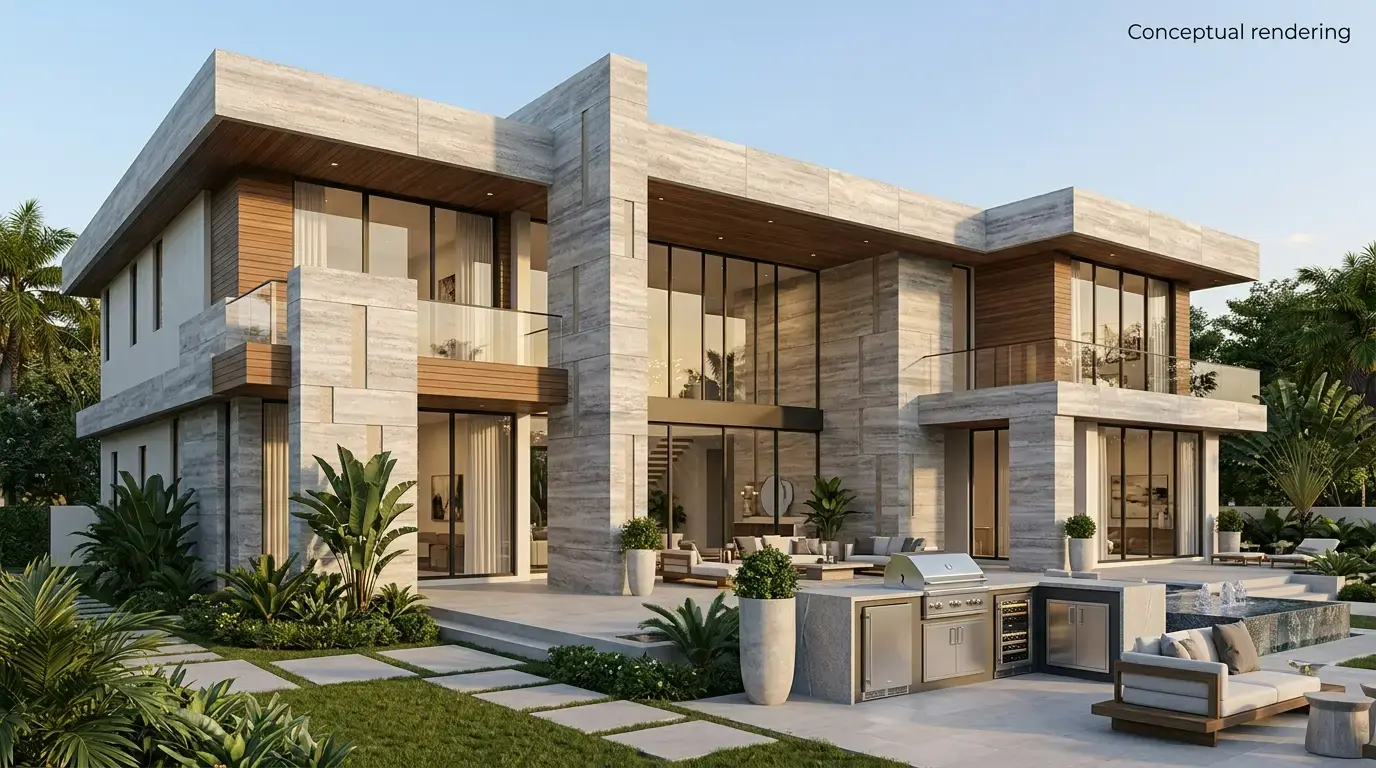
Why Stone Changes How a House Looks From the Street
Stone has something most exterior materials lack: real surface texture. As light moves across the house during the day, that texture creates small shadows and highlights, so a stone front looks different in morning light than it does in late afternoon.
Natural variation adds to the effect. Each piece of natural stone has its own variation in tone, veining, and movement, which gives a stone facade a less uniform look than a repeated, manufactured pattern.
Natural stone exteriors are valued for this lasting texture and character, along with their durability. You can browse our full material selection to see which stones are currently in stock before narrowing down the look.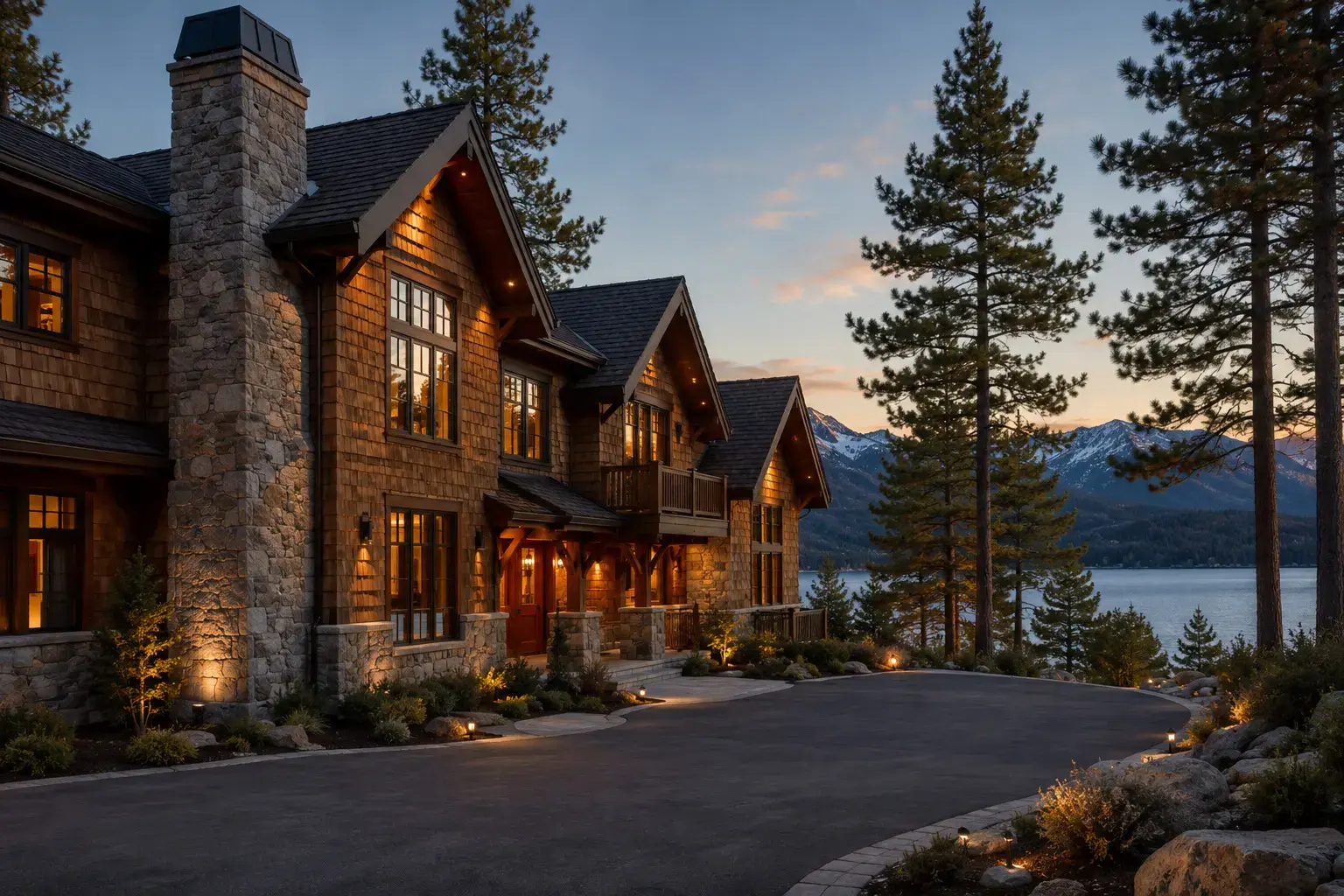
Which Natural Stones Work for a House Facade?
Granite, quartzite, and travertine are all used for exterior facades, walls, entrances, and columns, but each one has its own look and care needs. For real-world examples of finished stone exteriors, the Use Natural Stone archive of exterior stone projects is a helpful place to see how natural stone looks on completed homes and buildings.
Bright Quartzite for a Clean, Contemporary Front
Quartzite is frequently used for exterior wall cladding, and its subtle sparkle makes it a popular choice for bright, contemporary facades. A modern home with clean lines tends to pair well with stone in a consistent color, and quartzite fits that approach.
Large, regular cut pieces keep the look calm and simple. A busy, irregular pattern works against the straight lines of a modern home, while larger cut stone keeps the front looking orderly from the street.
Quartzite is dense with low absorption, so moisture penetration is generally limited, though standing water should not be left against the wall for long periods. One caution for trade readers: some stone sold as quartzite is closer to marble or dolomite in composition, and those stones are softer and more acid-sensitive, so they behave differently outdoors. Confirm the classification before specifying it for an exterior wall.
Speckled Granite for Full Facades and Exposed Walls
Granite has a speckled look and a dense, crystalline structure suited to facades, columns, and entry surrounds. It is a good fit for full facades and walls that take the most weather, since it is a hard stone with low absorption.
Granite is UV resistant, but performance may vary by color and finish. Compare your shortlisted colors in natural daylight before making a final choice.
Textured Travertine for Veneer and Column Wraps
Travertine forms through mineral deposition from water, which leaves natural pores and voids across its surface. That texture gives a house front a softer, more organic look than a smooth, dense stone.
Travertine is a good fit for exterior veneer and column wraps, but its porous structure means it needs sealing outdoors, with periodic resealing to keep that protection in place. It suits homeowners who value its texture and are comfortable with a sealing routine, and cold-climate homes call for extra care, covered in the maintenance section below.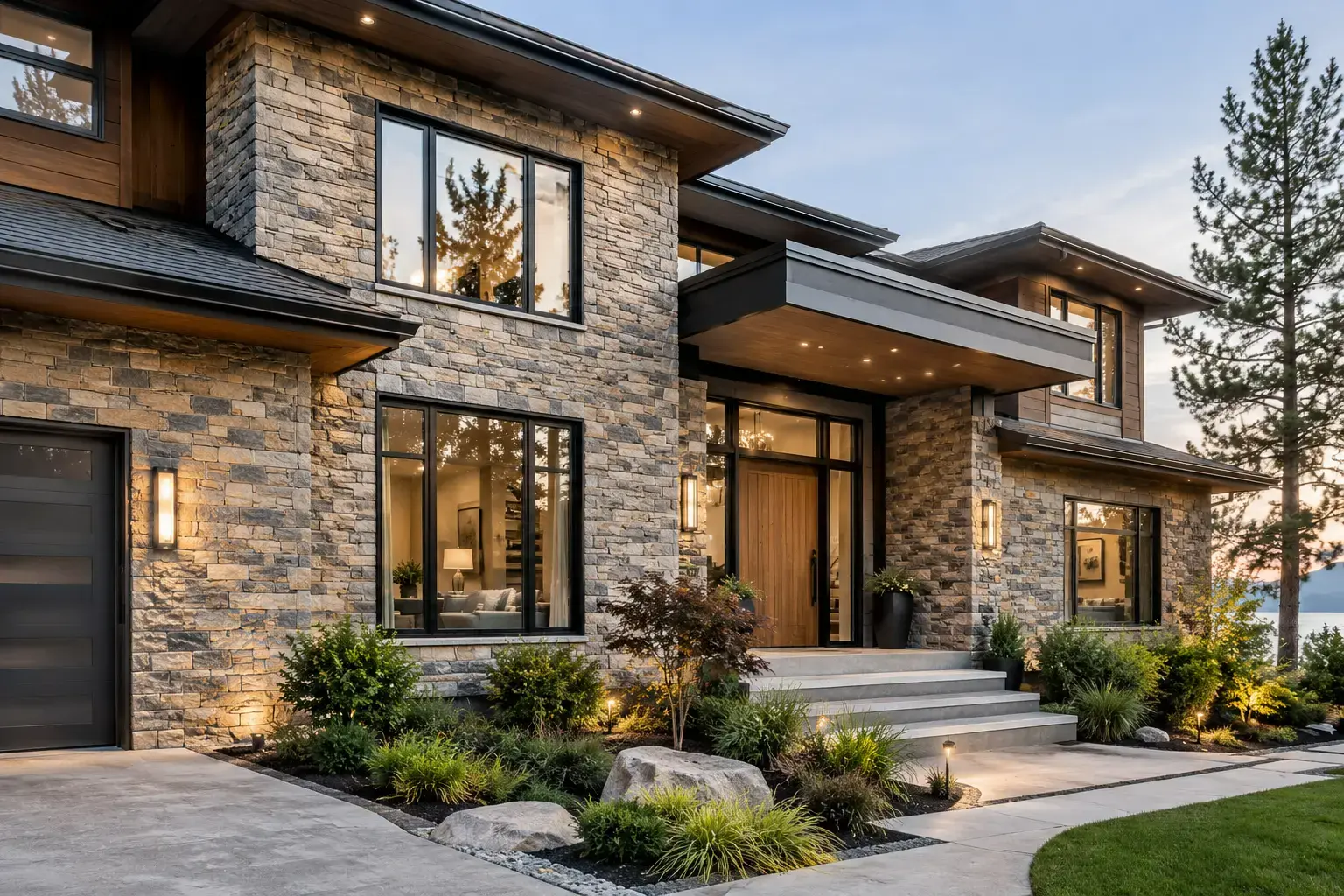
What Pairs Well With a Stone Facade?
Many stone house fronts are not stone from top to bottom. Stone paired with a band of siding or stucco is one of the most requested exterior stone applications we see, and that pairing shapes curb appeal as much as the stone itself.
With painted lap siding, choose a siding color a clear step lighter or darker than the main tone in the stone. When the two are too close in color, the stone and siding tend to blend together from the street.
With smooth stucco, the difference in texture does the work. A honed granite or quartzite beside white stucco creates a crisp contrast, while travertine beside a warm stucco tone gives a softer look.
With wood cladding, cool gray stone next to warm wood balances the two tones. Pairing a heavily patterned stone with a strongly grained wood tends to make both surfaces compete, so let one material be the quieter of the two.
Using one stone type across the front of the house keeps the design consistent. Our exterior stone guide to facades, entrances, and columns shows how a single stone can carry across several features of one home.
Which Finish and Color Work Best for a Stone Facade?
Honed and textured finishes are common choices for a stone facade, since they show the stone's natural surface with a low sheen. Flamed granite, a rough textured finish, is a frequent pick for exterior walls, and leathered is another low-sheen option.
Be careful with polish on travertine outdoors. Travertine is a calcareous stone, and acids, including acidic rain, can etch its surface, so a polished travertine facade can lose its shine over time.
A honed finish gives a quiet, matte look that suits most house styles, while a leathered finish lets the stone's texture stand out without a shine. Either one keeps the focus on the stone itself rather than on reflected light.
Color deserves a real-world check, because stone color shifts noticeably in direct sun versus shade. Photograph your house in the morning and again in late afternoon, then bring those photos, inspiration images, and rough measurements to a free design consultation.
The consultation runs about 45 minutes, which leaves time to compare stone tones against your roof, trim, and existing siding. A simple starting point is to match undertones, pairing warm-toned stone with a warm roof color and gray stone with a gray or charcoal roof.
Should You Use Thin Veneer or Full-Depth Stone?
A stone facade usually takes one of two forms. Full-depth cladding uses several inches of solid stone set with mortar and typically needs structural support built into the wall, while thin veneer is cut to roughly three-quarters of an inch to an inch and a half thick and adhered to a prepared surface.
Because veneer weighs a fraction of full-depth stone, it generally does not require the added footings or wall reinforcement that full cladding does. That makes it a common choice for renovations and additions.
Full cladding offers more depth and shadow line at the edges and corners, which some homeowners prefer on a main facade. On flat wall areas, the two look nearly identical once finished, so the choice usually comes down to the wall itself and the look you want at the corners.
How Do You Keep a Stone Facade Looking Good for Decades?
A stone facade is built for lasting use, but it is not maintenance-free. Plan the care routine at the same time you choose the stone, not after the first stain shows up.
Stone chemistry shapes that routine. The Natural Stone Institute sorts stone into calcareous types, made mainly of calcium carbonate and sensitive to acids, and siliceous types, made mainly of silicates such as quartz. Travertine belongs to the first group and granite and quartzite to the second, though acidic cleaners are not recommended for any of them.
The institute's care and cleaning guidance for natural stone also clears up a common misunderstanding. Sealers act as repellents, so a sealed surface becomes more stain resistant, not stain proof.
Climate matters just as much. Dense stones such as granite and quartzite generally hold up well through freeze-thaw cycles because they absorb very little moisture, but proper drainage still matters.
Travertine needs more attention in cold weather. Its pores can take on water that freezes, expands, and cracks the stone, so outdoors in cold climates it needs a dense, exterior-rated grade, careful sealing, and good drainage, and sealing alone does not make an unsuitable stone frost resistant.
That matters in the high desert around Reno, Minden, and Fernley, where winter nights regularly drop below freezing and exterior stone goes through repeated freeze-thaw cycles. Sacramento's milder winters put less freeze stress on a facade, but its strong summer sun makes color shifts between sun and shade more noticeable and increases glare on high-sheen finishes, which is another reason honed and leathered finishes work well there.
If sustainability is part of your decision, Use Natural Stone's explainer on environmental and health product labels for natural stone breaks down what those labels mean.
Conclusion
Start with the stone type, then narrow down to the exact piece. Our natural stone options for exterior facades, walls, and columns cover granite, quartzite, and travertine, and each one has its own porosity and finish range that affects how it performs outside.
Nova Tile and Stone stocks natural stone across the color range and finish options that residential exterior projects call for. When a slab catches your eye in our live slab inventory, write down the slab name, and note the bundle number if you have a specific one in mind, since the form you use to request a slab quote asks for both.
Before you shortlist anything, save three stone house fronts you love and note which of the three stones each one most resembles. If two or three point to the same stone, start there, and use the finish and color ideas above to narrow it down.
Note: Some images on this page may be conceptual renderings created to illustrate design possibilities and may not depict actual installations.
Frequently Asked Questions
A stone facade gives the front of a house surface depth and natural variation in tone that siding and paint alone do not provide, which is why many homeowners choose it to lift curb appeal. The final look depends on choosing a stone, finish, and color that suit the house and its existing roof and siding.
Granite, quartzite, and travertine are all used for exterior facades, walls, entrances, and columns. Quartzite is popular for bright, contemporary fronts, granite suits full facades and high-exposure walls, and travertine works well for veneer and column wraps with periodic sealing. In freeze-thaw climates, travertine needs an exterior-rated grade.
Yes. Thin stone veneer is a common choice for existing homes because it weighs far less than full-depth stone and generally does not require added footings, though every wall should be evaluated individually before a format is chosen.
It depends on the stone. Porous stones like travertine need sealing outdoors with periodic resealing, while dense stones like granite and quartzite typically need little beyond occasional cleaning with a mild, pH neutral product.
Stone color shifts noticeably in direct sun versus shade, so compare options against photos of your house taken at different times of day. Matching undertones is a simple starting point, pairing warm-toned stone with a warm roof color and gray stone with a gray or charcoal roof.