AT A GLANCE
- Porcelain pavers suit uniform, modern hardscapes, with consistent color in looks such as limestone, travertine, slate, concrete, and wood.
- Porcelain pavers absorb 0.5% water or less under the ANSI A137.1 standard, and many do not require sealing.
- Natural stone pavers such as granite, quartzite, and travertine suit projects where one-of-a-kind veining and color variation matter most.
- For freeze-thaw climates, porcelain pavers and dense granite are generally the more conservative choices, while travertine calls for more caution where de-icing salts are used.
- For raised decks and rooftop terraces, gauged porcelain pavers 20 mm (about 0.79 inch) or thicker are characterized for pedestal installation.
- For pool decks and wet walkways, porcelain or stone should carry an Exterior Wet slip-resistance classification and a finish rated for exterior floors.
IN THIS POST
- What are porcelain pavers?
- What types of natural stone pavers are available?
- How do porcelain pavers and natural stone differ in color?
- How do porcelain pavers and natural stone handle water and freezing?
- Are porcelain pavers and natural stone slippery when wet?
- How are porcelain pavers and natural stone installed outdoors?
- How do porcelain pavers and natural stone compare in maintenance and cost?
- What should you check on an outdoor tile or stone spec sheet?
- Which Nova Tile and Stone materials are rated for outdoor use?
- Conclusion
- Frequently Asked Questions
- Sources
Porcelain pavers are manufactured ceramic pavers that, according to the ANSI A137.1 standard, must have a water absorption rate of 0.5% or less, which gives them low porosity, consistent color, and predictable outdoor performance. Natural stone pavers are quarried rock such as granite, quartzite, and travertine. They offer one-of-a-kind variation, but their water absorption, strength, and freeze-thaw behavior depend on the specific stone and where it was quarried.
The better choice for a patio, walkway, or pool deck depends on four factors: the look you want, climate, wet-surface slip resistance, and installation method. Porcelain pavers are often favored for uniform modern designs, freeze-thaw climates, and, when gauged at 20 mm or thicker, raised pedestal decks. Natural stone is often chosen when authentic character matters most, provided the stone’s absorption and performance history suit the site. With either material, checking three spec-sheet items narrows the decision quickly: water absorption, an Exterior Wet slip-resistance classification, and a finish rated for exterior floors.
What Are Porcelain Pavers?
Porcelain pavers are porcelain units made for outdoor surfaces such as patios, walkways, and pool decks. Like all porcelain tile, they absorb very little water, and because they are produced in controlled runs, their color and pattern tend to stay consistent.
To carry the porcelain classification, a tile needs a water absorption rate of 0.5% or less when tested in accordance with ASTM C373. That low absorption is the main reason porcelain is often considered for outdoor surfaces that see rain, sprinkler overspray, and pool splash.
Many outdoor porcelain products are made to resemble limestone, travertine, slate, concrete, or wood, so homeowners can get a stone or timber look from a manufactured material. Because each piece comes from a controlled production run, color and pattern tend to stay consistent. This consistency suits clean, contemporary layouts and designs where indoor flooring continues out onto a patio.
The tradeoff is that porcelain imitates natural variation rather than having its own. On large surfaces, some people notice repeating patterns, especially in designs with fewer graphic variations. Laying several pieces out together before ordering helps you judge how a pattern reads at full scale. It also helps to compare stone-look porcelain with the stone it imitates.
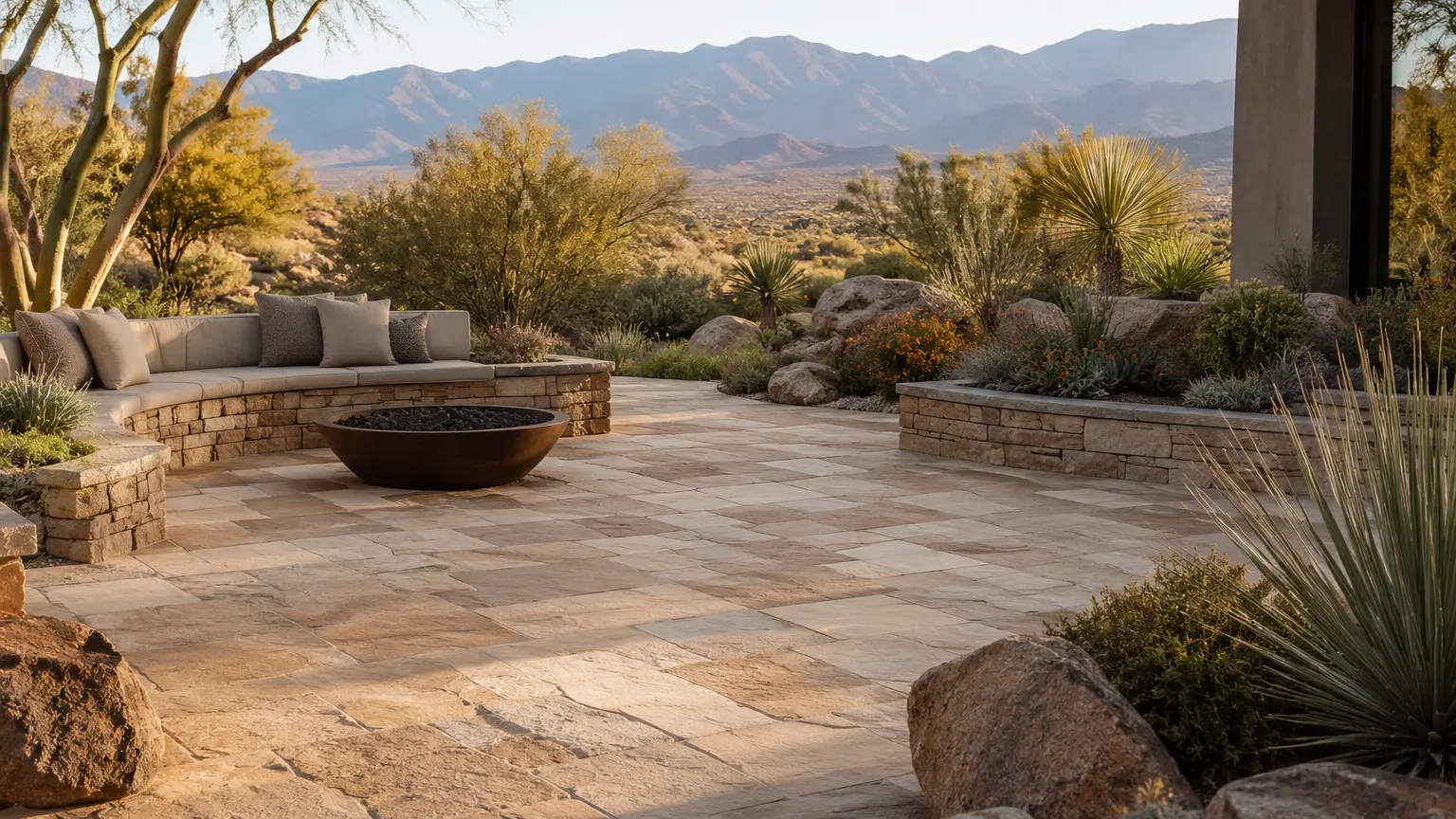
Browsing a live slab inventory shows how much veining and color can vary between slabs of granite and quartzite. If a specific slab catches your eye, you can request a slab quote by listing its name or bundle number.
What Types of Natural Stone Pavers Are Available?
Natural stone pavers commonly used outdoors include granite, quartzite, and travertine. Each is a different rock with its own mineral makeup, so look and performance vary by type:
- Granite: A dense stone that typically absorbs little water, which suits it to freeze-thaw climates.
- Quartzite: A hard stone whose specification sets a maximum water absorption of 1% by weight.
- Travertine: A more porous stone with natural surface voids that are usually filled before installation.
No two pieces are identical. Veining, color shifts, fossil marks, and surface texture all come from the rock itself, and many people choose stone because a patio built from it cannot be exactly reproduced. Stone also changes over time. Sun, water, and foot traffic can gradually soften edges and shift tones, which many homeowners see as part of its appeal.
Because physical properties differ so much between stone types, selection matters as much as style. ASTM publishes separate specifications for granite, marble, limestone, travertine, quartz-based stone, and other types. In 2025, ASTM also published a guide for exterior stone paving systems that covers selection, design, and installation.
How Do Porcelain Pavers and Natural Stone Differ in Color?
Porcelain pavers can look very uniform or noticeably varied depending on the product’s shade variation grade, while natural stone varies from piece to piece by nature. That difference also affects how well replacement pieces blend in during repairs.
How uniform a porcelain surface looks depends on the product. Porcelain tile is graded on a V0 to V4 scale for color and texture variation, and a higher number means more visible difference from piece to piece. Shading can also differ slightly between production runs, so order the full quantity from the same lot, along with extra pieces for future repairs.
Stone handles replacements differently. Because each piece already varies, a replacement from a later shipment often blends in more easily than a mismatched porcelain piece would.
How Do Porcelain Pavers and Natural Stone Handle Water and Freezing?
Porcelain pavers absorb very little water, and dense stones like granite perform similarly, while more porous stones like travertine absorb considerably more. Because absorbed water expands when it freezes, lower absorption generally means less risk of damage in climates with hard winters.
Beyond appearance, a key performance difference between the two materials is how much water each one takes in, which matters most where winters bring freezing temperatures. When water inside a material’s pores freezes, it expands and puts pressure on the surrounding material. An engineering review of paving options noted that greater absorption can signal more freeze-thaw distress. It also found that higher absorption raises the chance of salts crystallizing within the pores, which can weaken the surface.
That review compared travertine and granite directly, with several findings:
- Absorption: The travertine specification allows absorption of up to 2.5% by weight, while the granite under consideration measured 0.27%.
- Surface voids: Travertine typically has veins and voids at the surface that are filled with cement or synthetic materials before use. Those fillers can fail when water intrusion combines with repeated freeze-thaw cycles.
- De-icing salts: The review cited a stone industry recommendation against using travertine outdoors where de-icing salts or other chemicals are applied.
- Maintenance: Travertine needed more frequent sealing and filling to manage its natural porousness.
Absorption is a useful starting point, but it does not tell the whole story. Standard absorption testing does not assess void structure or composition, both of which can significantly affect durability. Properties can also vary between blocks taken from different areas of the same quarry. Horizontal surfaces, such as paving that holds standing water or snow, face a more severe exposure than walls. For stone going into a demanding climate, a long performance history in a similar environment is a strong indicator of how it will hold up, so ask your supplier about the stone’s track record.
This does not rule out travertine. Durability varies by source, and in climates with few hard freezes and no de-icing salts, these concerns carry less weight. Climate can help narrow the options before comparing individual products. At Nova Tile and Stone, we carry granite and quartzite rated for outdoor use, along with porcelain rated for outdoor floors and walls, so cold-weather projects have both natural and manufactured options. Our travertine is also rated for outdoor floors and walls, making it worth considering for patios and pool decks in milder climates. For any material, checking the specific product’s spec sheet before purchase confirms its absorption.
Are Porcelain Pavers and Natural Stone Slippery When Wet?
Either material can be slippery when wet, depending on its finish and texture, so a practical way to compare them is by wet slip-resistance classification rather than by material type.
In North America, hard-surface flooring is tested for dynamic coefficient of friction (DCOF) under the ANSI A326.3 standard. The standard sorts products into one or more of five product use categories based on slip resistance, including Interior Wet and Exterior Wet, and it provides informative possible areas of use for each category. Manufacturers assign these classifications using test results along with their own quality control criteria and experience with similar surfaces.
A classification is a starting point rather than a final answer. For walking surfaces, the right material depends on project conditions, including the type of use, traffic, expected contaminants, expected maintenance, expected wear, and the manufacturer’s guidelines.
How Are Porcelain Pavers and Natural Stone Installed Outdoors?
Porcelain pavers are typically installed on-ground over an aggregate base, raised on pedestals, or bonded to a concrete slab, while natural stone installation depends on the stone’s thickness, the base beneath it, and site conditions.
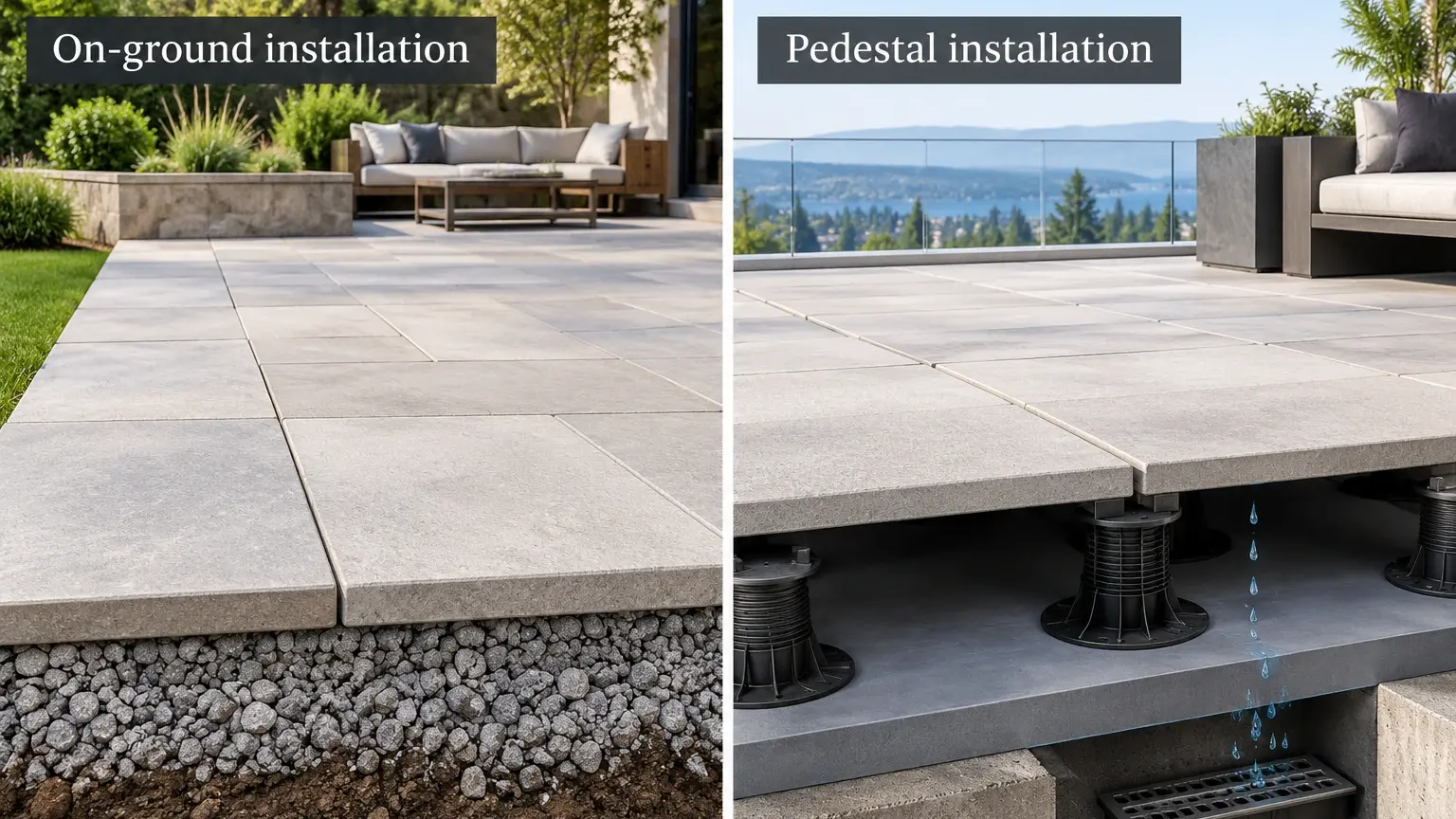
How a material will be installed can shape the choice as much as the material itself. In 2022, the ANSI A137.3 standard added definitions for gauged porcelain pavers, which are pieces manufactured at a nominal thickness of 20 mm (about 0.79 inch) or more. The update also defined two installation types:
- On-ground installation: Pavers are typically set over an aggregate base without adhesives.
- Pedestal installation: Pavers rest on adjustable plastic or metal supports over a slab or waterproofed deck. Open joints let rainwater pass through to a drain below, which is why pedestal systems often appear on rooftop terraces and elevated decks.
Because these pavers are often used in unbonded or raised applications, the standard’s developers gave particular attention to strength and impact criteria. Porcelain can also be bonded to a concrete slab with a mortar bed, which was the conventional approach for exterior tile before the paver specifications existed. With any method, the recommendations of the paver manufacturer and the installation product manufacturers should be followed closely.
Stone is installed with methods that depend on its thickness, the base beneath it, and site conditions such as drainage and expected loads. For either material, a qualified hardscape installer should evaluate the site and specify the setting system.
How Do Porcelain Pavers and Natural Stone Compare in Maintenance and Cost?
The biggest maintenance difference is sealing: many porcelain pavers don’t need it, while natural stone care depends on the type of stone. Both need routine cleaning and occasional joint upkeep.
After installation, the two materials differ mainly in the care they need over time. Both benefit from routine sweeping, rinsing, and prompt cleanup of spills from grills, planters, and fallen leaves. The joints between pavers, whether filled with sand or grout or left open, also need occasional attention.
The main difference is sealing. Because porcelain absorbs very little water, many manufacturers state that their outdoor products do not require sealing, so check the care instructions for the specific product. Stone care varies by stone type and absorption. Before applying any sealer outdoors, confirm with the stone supplier and the sealer manufacturer that the product is suitable for exterior use on that particular stone.
Over the life of the surface, materials, base preparation, installation, and upkeep all contribute to the total cost. Comparing complete quotes gives a clearer picture than comparing material prices alone.
What Should You Check on an Outdoor Tile or Stone Spec Sheet?
On a porcelain paver or stone spec sheet, three lines reveal the most about outdoor suitability: water absorption, slip-resistance classification, and whether the finish is rated for exterior floors.
The points above come together on the product data sheet, where three lines reveal a lot about outdoor suitability:
- Water absorption: This figure matters most when comparing stones, since ASTM limits differ by stone type. For example, the specification for quartzite sets a maximum absorption of 1% by weight, while the travertine specification allows up to 2.5%. Lower numbers generally mean less water entering the material.
- Slip-resistance classification: Look for an Exterior Wet classification or a wet DCOF value rather than a single dry number.
- Finish: Confirm that the listed finish is recommended for exterior floors, not only for walls and interiors. For stone, the finish plays a large role in traction, so it helps to check which finishes are intended for wet foot traffic before choosing one for a pool deck, outdoor shower area, or sloped walkway.
If a spec sheet does not list these details, they are worth requesting before an order is placed. We can also walk through absorption, slip-resistance ratings, and finishes for the materials we carry during a free design consultation at any of our showrooms.
Which Nova Tile and Stone Materials Are Rated for Outdoor Use?
At Nova Tile and Stone, we carry porcelain, granite, quartzite, and travertine rated for outdoor use, while marble is better kept for interior projects. Here is how each material we carry is rated:
- Porcelain: Suitable for indoor and outdoor floors and walls.
- Granite and quartzite: Suitable for outdoor use and UV resistant.
- Travertine: Suitable for outdoor floors and walls.
- Marble: Not designated for outdoor use, so it is better kept for interior projects.
Conclusion
Choosing between porcelain pavers and natural stone comes down to fit rather than a single winner. Porcelain trades natural variation for predictability. Stone trades predictability for character, and its performance depends on the specific stone and its source. Weighing that tradeoff against your climate, the way the space will be used, and the installation method planned for the site will point to the right surface. Once the material is chosen, a qualified installer can confirm the setting system.
Seeing materials side by side also helps. Nova Tile and Stone has showrooms in Reno, Minden, Fernley, and Sacramento, and free design consultations are available for planning outdoor projects.
Frequently Asked Questions
Porcelain pavers are a manufactured product made to a standard, so their performance and appearance stay consistent from piece to piece. Natural stone is quarried rock, so its properties and look vary by stone type and source, and every piece is unique.
It depends on the stone. Porcelain is capped at 0.5% absorption by definition. Dense stones can absorb a comparable amount or less, and one engineering review recorded a granite at 0.27%. Specifications for other stones allow higher limits: up to 1% for quartzite and up to 2.5% for travertine.
Low-absorption materials are generally the more conservative choice, since less water inside the material means less pressure when it freezes. Porcelain and dense stones such as granite are often considered for these conditions. Travertine calls for more caution where de-icing salts are used, and any stone’s track record in a similar climate is worth reviewing.
Porcelain pavers characterized for on-ground and pedestal installation are gauged at 20 mm (about 0.79 inch) or thicker. Thinner porcelain tile can still be used outdoors when it is fully bonded to a concrete slab, and your installer and the manufacturer’s recommendations should guide the final choice.
Check the spec sheet for an Exterior Wet classification under the ANSI A326.3 standard, which manufacturers assign based on slip-resistance testing and their experience with similar surfaces. A classification is a starting point, so surface texture, slope, expected contaminants, and maintenance should also be considered for the specific site.
Sources:
- ANSI Blog, “The Eminence of Porcelain Tile” | https://blog.ansi.org/ansi/porcelain-ceramic-tile-ansi-a137-1-astm-definition/
- ANSI Blog, “ANSI A137.1:2022 – Standard Specifications for Ceramic Tile” | https://blog.ansi.org/ansi/ansi-a137-1-2022-standard-ceramic-tile/
- BSI Knowledge, ASTM C1950/C1950M-25, Standard Guide for Selection, Design, and Installation of Exterior Dimension Stone Paving Systems | https://knowledge.bsigroup.com/products/standard-guide-for-selection-design-and-installation-of-exterior-dimension-stone-paving-systems
- “140 Broadway: Technical Review of Stone Selection,” NYC Landmarks Preservation Commission presentation materials (February 2019) | https://www.nyc.gov/assets/lpc/downloads/pdf/presentation-materials/20190205/140-Broadway.pdf
- Wiss, Janney, Elstner Associates, “Evaluating Stone Durability” (2016) | https://m.wje.com/assets/pdfs/articles/WJE-PRIMER-StoneDurability.pdf
- Floor Covering News, “TCNA introduces product use classification system” (February 2022) | https://www.fcnews.net/2022/02/tcna-introduces-a-product-use-classification-system/
- TileLetter, “Exterior tile installation with CUSTOM’s Mike Little” (November 2024) | https://www.tileletter.com/exterior-tile-installation-with-customs-mike-little/
- Floor Covering News, “ANSI ASC A108 committee approves new standard” (April 2022) | https://www.fcnews.net/2022/04/ansi-asc-a108-committee-approves-new-standard/
- Cornell University, Design and Construction Standards, Section 04 43 00 Stone Masonry (2017) | https://fcs.cornell.edu/sites/default/files/2019-10/044300_Stone%20Masonry.pdf
Note: Some images on this page may be conceptual renderings created to illustrate design possibilities and may not depict actual installations.