Pool coping, the cap stones that line the pool's edge, should match the deck pavers in material, finish, and tone, because the coping and the deck read as one surface once the pool is filled. The surest way to get that match is to choose both at the same time and from the same stone or porcelain.
Granite, quartzite, travertine, and porcelain are the four materials we point homeowners toward for exterior coping and decks. Pulling coping and pavers from one of these keeps color, texture, and cleaning routine consistent from the waterline to the edge of the patio, while a contrasting coping works only when the difference is bold and clearly intentional.
The sections below cover the decisions where a split choice shows up first: material, wet and winter conditions, finish, contrast, paver size, and care, plus a note on nearby slab surfaces. The last section covers how to compare both pieces in a single visit.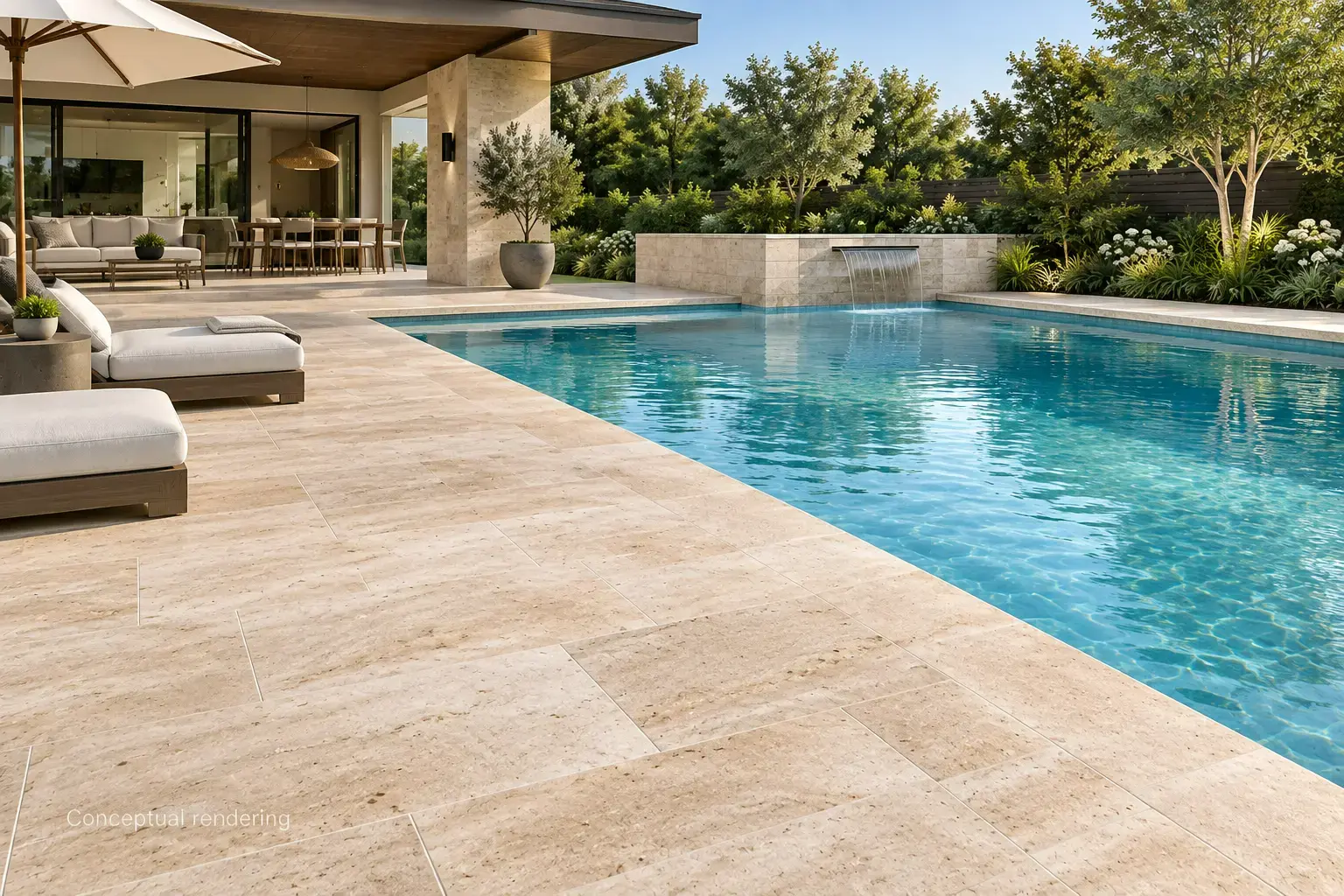
The Edge Is the First Thing Anyone Sees
One pool builder put the demand plainly. In a Use Natural Stone feature on backyard plunge pools, Karen Larson, co-founder of New Hampshire-based Soake Pools, said the request her team gets most often is natural stone on the outside of the company's plunge pools, with many clients carrying it onto the coping as well.
Plunge pools are smaller than a typical backyard pool, but the edge question is the same. The coping frames the water the way a mat frames a print, and a frame in a slightly different gray or beige than the deck behind it reads as a patch, not a border.
This is why we push homeowners to pick both pieces in the same visit. Our Pavers and Exterior Stone selection puts pool coping and small to large format pavers side by side, so the edge and the field can be compared before either one is ordered.
Stay in One Material Family
The most reliable way to get a matched edge is to pull coping and pavers from the same material. A travertine deck with travertine coping, or a porcelain deck with porcelain coping, shares one surface character from the first piece to the last.
Mixing families is where matches slip. Quarried stone carries its own veining and movement, while porcelain is manufactured to a consistent look, so a porcelain color held against natural stone rarely lines up exactly.
Picture a travertine deck that continues straight into a travertine water feature wall. That is the goal of a matched coping: one stone, read as one surface, from the waterline to the planting beds.
Marble is part of our indoor selection rather than our exterior range, so it stays off this list.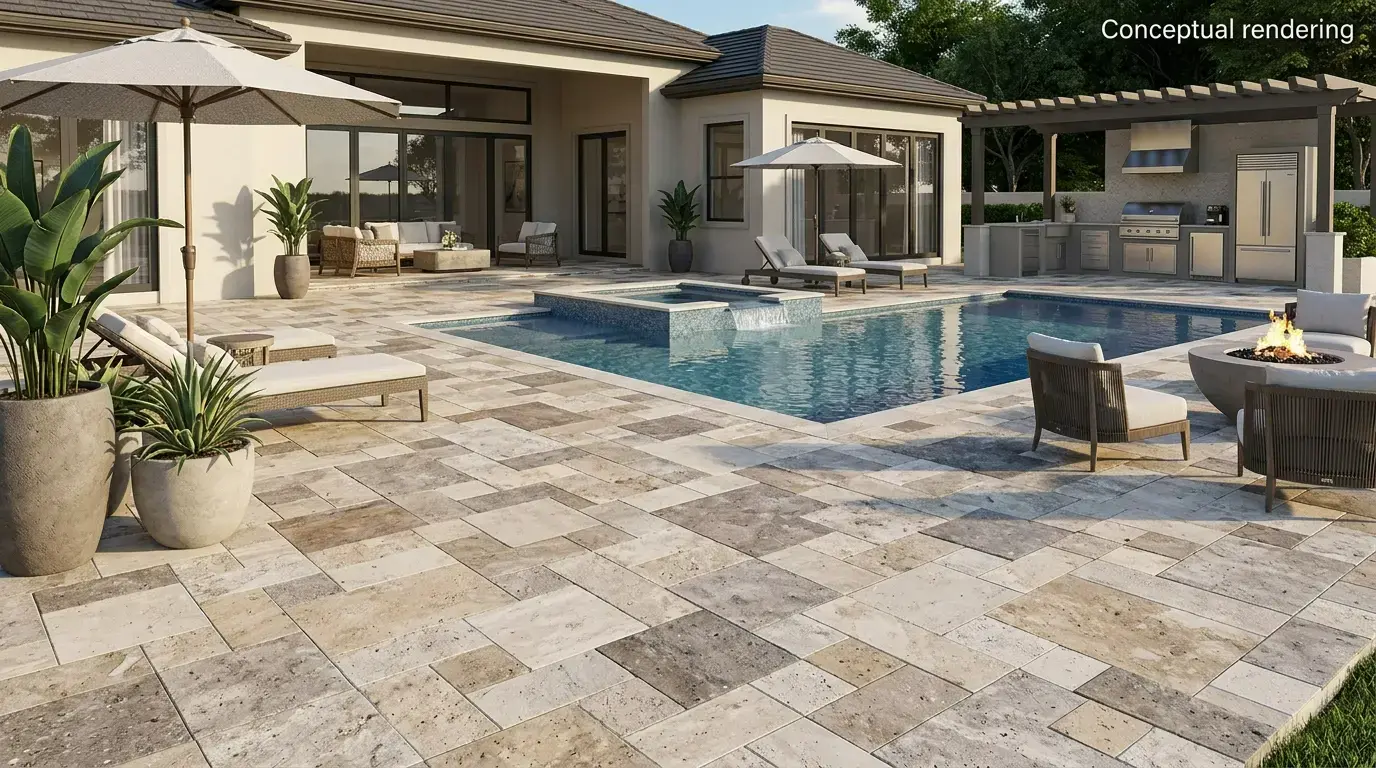
Wet Edges and Freezing Winters
A pool edge is wet for months and, near our Reno, Minden, and Fernley showrooms, frozen for part of the winter, so the material has to suit both. Our page on natural stone for exteriors notes that honed and textured surfaces offer more grip in wet conditions than a highly polished one, though any wet surface still calls for care.
Dense stones such as granite and quartzite generally hold up well through freeze-thaw cycles because they absorb very little moisture. Travertine is more porous and relies on periodic sealing to limit absorption. If you live with freezing winters, ask our team which travertine options suit your location.
For porcelain, the Tile Council of North America's definition of porcelain tile sets water absorption at 0.5 percent or less. The council notes that porcelain is usually frost resistant but not always, so check the manufacturer's rating for each product before committing to it outdoors.
Match the Finish Before the Color
Two pieces cut from the same stone can still look mismatched if one is polished and the other is honed, because the two finishes catch light differently. Since a honed or textured surface is also the better footing beside the water, we keep polished finishes away from the pool edge entirely.
Our recommendation is to settle on one honed or textured finish for both the coping and the deck first, then match color within it. A slightly different tone in the same finish blends far better than an exact tone in a different finish.
Contrast Only on Purpose
There is one exception to matching, and it has to be deliberate. A darker coping band around a light deck can frame the water like a picture border, but only when the difference is wide enough that nobody mistakes it for an ordering error.
The failure case is the near miss. Coping that is one shade off the deck looks accidental, while coping that is clearly darker or lighter looks designed, so either match the deck closely or contrast it boldly.
When you do contrast, keep it inside one material, such as a darker granite edge around a lighter granite field. Heat underfoot is the other check before committing to a darker band, so ask our team during your consultation how a darker stone feels in full afternoon sun, since pool edges are walked barefoot.
Plan Paver Size and Coping Together
Pavers range from small to large format, and that choice changes how the coping should look. A deck of large-format pavers has long, clean joint lines, and coping pieces that line up with those joints make the whole surface read as one grid.
A deck in a French pattern, which mixes several paver sizes, works differently. Here the coping becomes the one steady line in a busy field, so a single consistent coping piece around the whole pool is the better call than trying to echo the pattern at the edge.
One Material Means One Cleaning Routine
Matching coping and deck also keeps care simple. The Natural Stone Institute's stone care and cleaning guidance splits stone into calcareous types, which are sensitive to acidic cleaners, and siliceous types, which handle most acids better.
That split matters around a pool. Travertine is calcareous while granite and quartzite are siliceous, so a travertine coping band around a granite deck leaves you with two sets of rules for the same few feet of stone.
The same guidance recommends flushing outdoor pool and patio areas with clear water and using a mild bleach solution to remove algae or moss. With one natural stone from edge to field, that routine covers everything at once, and a porcelain pairing works the same way with a regular rinse for the surface and joints.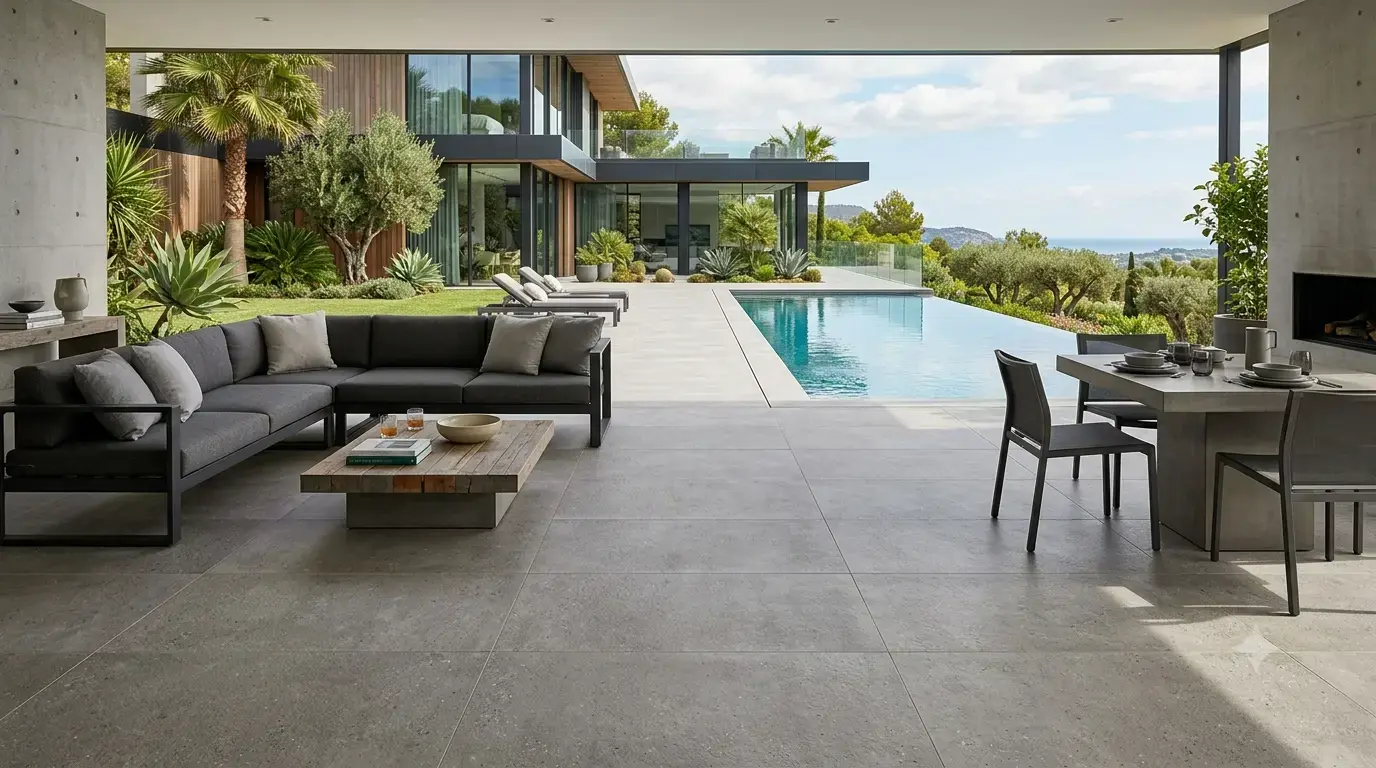
If a Slab Surface Sits Near the Pool
A granite or quartzite slab within sight of the water, such as a seating ledge or a wall cap, becomes a third piece of the same edge. We keep more than 500 slab bundles on hand across four locations, and our live slab inventory lets you look for one in the coping's color range.
Reserved slabs are held for three days so your fabricator can see the actual bundle, and you can request a slab quote for the specific slabs and bundle numbers you like.
Conclusion
For a pool, the coping's closest neighbor is the deck, so judge the two together, never one at a time. Seeing both in person also shows the full color range of each piece, which a product photo flattens.
The simplest way to do that is a free design consultation, a 45-minute visit you book online by choosing a showroom and a time. All four locations are listed on our showroom page for Reno, Minden, Fernley, and Sacramento, and contractors and designers are welcome to join the consultation.
Bring photos of the yard and the house exterior, since the coping and pavers also need to sit beside whatever stone or siding is already there. Our exterior stone guide for façades and accent walls notes that stone across the lower third of a house wall is one of the most requested applications, and when a house already has that stone, the coping is the natural place to repeat its tone.
Color also shifts noticeably between direct sun and shade, so take photos of the pool area in the morning and again in late afternoon and bring both sets to compare against the stone. At Nova Tile and Stone, that one consultation is where finish, color, and paver size for the edge and the deck get settled together, before anything is ordered.
Note: Some images on this page may be conceptual renderings created to illustrate design possibilities and may not depict actual installations.
Frequently Asked Questions
In most cases, yes. Coping in the same material and finish as the deck reads as one surface, while a contrasting coping works only when the difference is clearly intentional.
We point homeowners toward granite, quartzite, travertine, and porcelain, and each can carry both the coping and the deck. Marble stays in our indoor selection instead.
You can, but matching tone is harder because natural stone carries its own veining and movement while porcelain is made to a consistent look. Keeping both pieces in one material family is the simpler route to a matched edge.
Matching finish matters as much as matching color. Honed or textured finishes suit wet pool edges better than polished ones, and using the same finish on both pieces keeps the edge from reading lighter or darker than the deck.
The usual recommendation is to flush outdoor pool areas with clear water and use a mild bleach solution for algae or moss. Calcium-based stones such as travertine are sensitive to acidic cleaners, so confirm which type you have before choosing products.