At a Glance
- Travertine suits patios, pool surrounds, walkways, wall veneer, column wraps, and outdoor fireplaces.
- Skip it for outdoor kitchen counters.
- Use brushed or honed finishes underfoot, and smoother finishes on walls.
- French pattern feels relaxed, running bond feels modern, and herringbone works as a feature.
- In freezing winters, choose exterior-rated travertine, keep it draining well, and seal it regularly.
- Clean with a mild, non-acidic cleaner, and keep metal off the stone to avoid rust stains.
- Ask whether the stone’s natural holes have been filled before buying.
- Match the travertine tone to your walls and roof, not just the stone.
In This Post
- How Travertine Forms, and Why It Matters Outside
- Where Does Travertine Work Best Outdoors?
- Which Finish Should You Choose for Outdoor Travertine?
- Which Layout Pattern Suits Your Space?
- How Does Travertine Handle Winter and Sun?
- How Do You Keep Outdoor Travertine Looking Its Best?
- Questions to Ask Before You Buy
- Pairing Travertine With Your Home’s Style
- For Designers and Contractors
- See Travertine in Person
- Conclusion
-
Frequently Asked Questions
Outdoor travertine works best on patios, pool surrounds, garden walkways, wall veneer, column wraps, and outdoor fireplace surrounds, but it is not the pick for outdoor kitchen counters. To care for it, choose a brushed or honed finish for walking surfaces, seal it on a schedule suited to your climate, keep water draining away, and clean it with a mild, non-acidic cleaner.
Those steps matter because travertine has natural pores that can take in water, which matters on freezing Northern Nevada nights, and because acidic cleaners can dull its surface. The right finish, sealer, and cleaner keep both in check.
At Nova Tile and Stone, we plan travertine one surface at a time, starting with how each spot will be used, how much water reaches it, and how cold it gets in winter.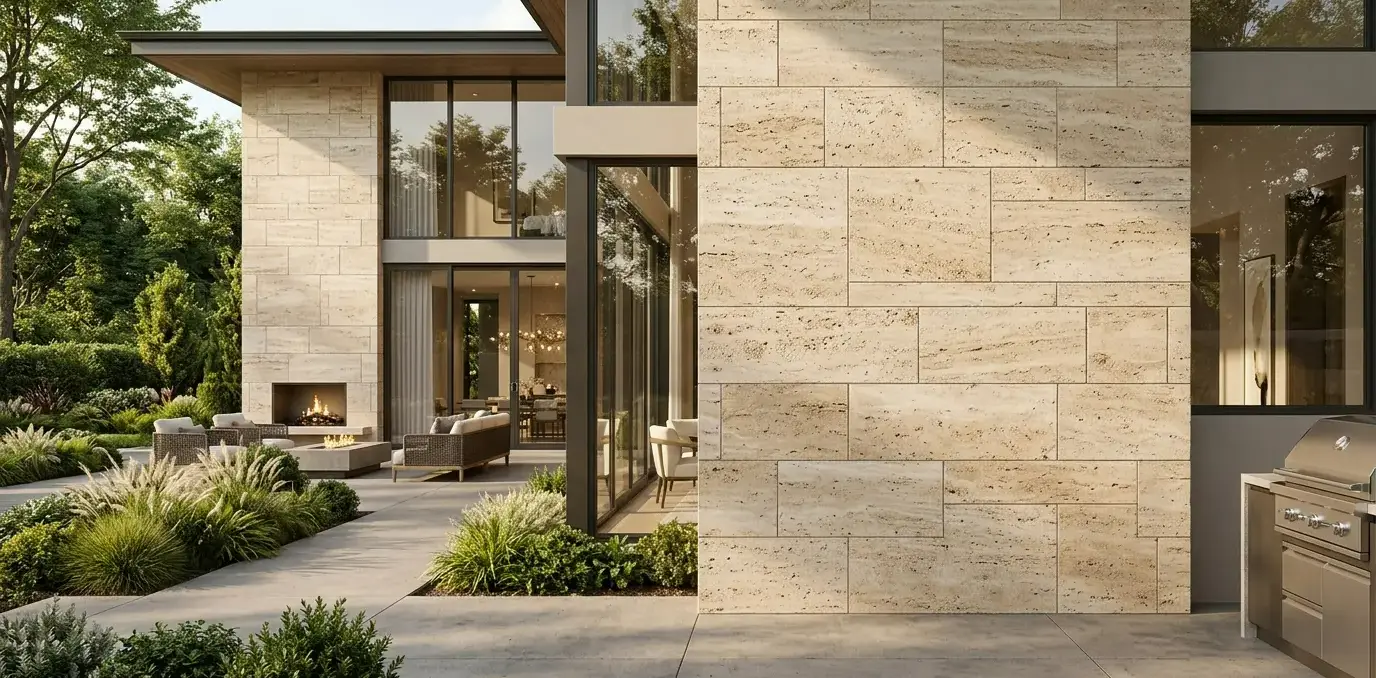
How Travertine Forms, and Why It Matters Outside
Travertine forms as minerals settle out of water over time, which leaves it with natural pores and small voids. Those openings are part of its character, and they are also why sealing and drainage matter outdoors.
The Natural Stone Institute’s guide to natural stone care explains that some stones are sensitive to acids and do best with mild, non-acidic cleaners. Travertine is one of them, which is why the care section below focuses on choosing the right cleaner.
Where Does Travertine Work Best Outdoors?
Patios and pool surrounds are where travertine is most at home. Its soft, warm tones suit relaxed outdoor living spaces, and a textured finish keeps the surface practical for bare feet and wet conditions.
Garden walkways, wall veneer, and column wraps are other strong fits. Our guide to natural stone for exteriors lists travertine among the stones used for walkways, veneer, and column wraps, and notes that suitability depends on the specific product and exposure.
Outdoor fireplace surrounds are another good fit. Travertine’s warm color sits well beside firelight, and matching the surround to the paving ties a seating area together.
Outdoor kitchen counters are the one spot we steer away from. Travertine is not a stone we recommend for food preparation surfaces, so it is better used on the floor, walls, or fireplace around an outdoor kitchen than on the counters themselves.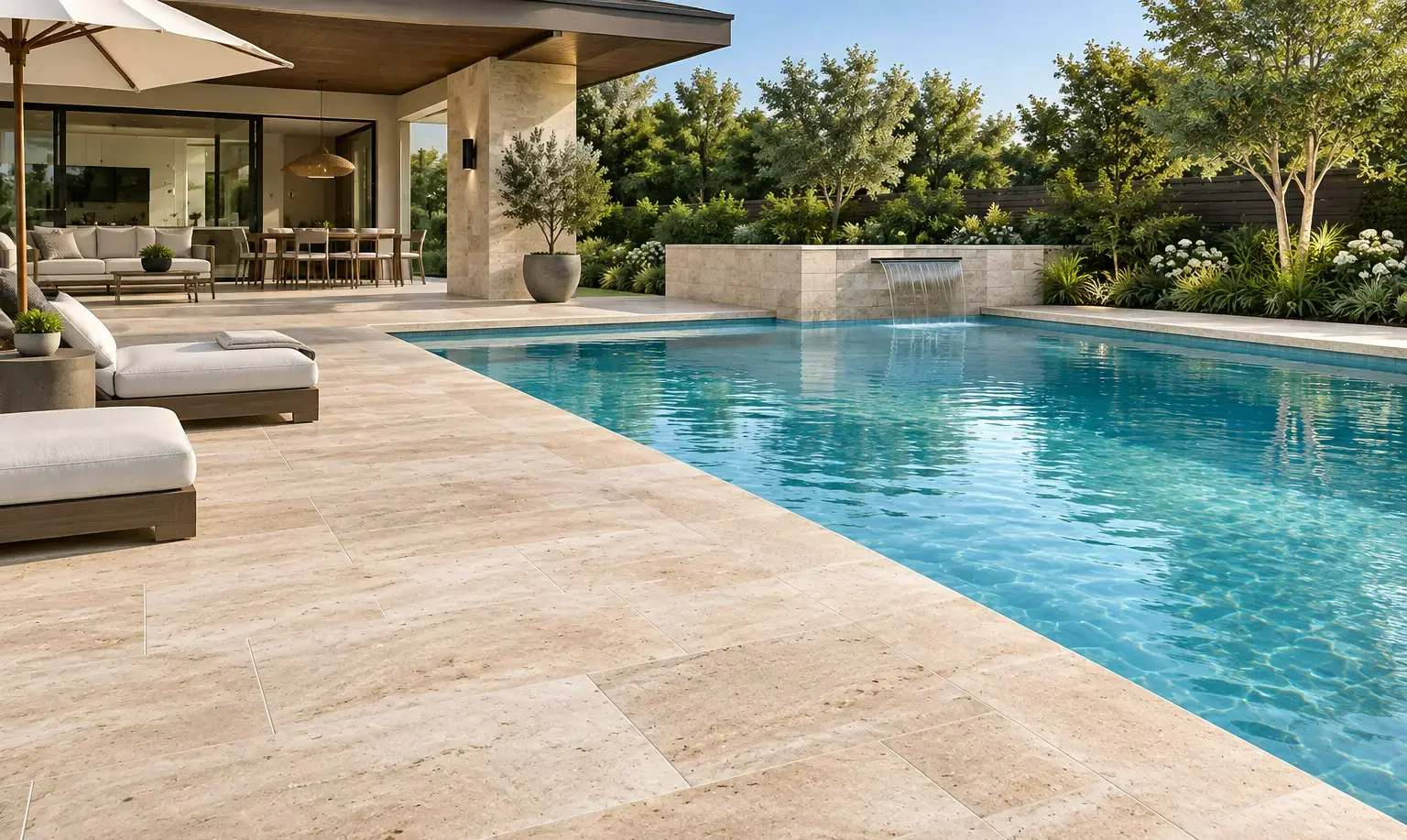
Which Finish Should You Choose for Outdoor Travertine?
For pool surrounds, steps, and walkways, choose brushed or honed travertine, and save satin or other smoother finishes for vertical surfaces like veneer, column wraps, and a fireplace surround.
That advice follows Use Natural Stone’s guide to selecting a stone finish, which notes that brushed finishes suit outdoor areas because their surface gives some traction when wet, and that honing takes away the shine and can add grip underfoot on many stones.
The same guide describes satin, a finish with a soft sheen instead of a mirror shine, as ideal for travertine surfaces, and notes that it helps hide minor imperfections and scratches.
Which Layout Pattern Suits Your Space?
Travertine paving can be laid in several patterns, and the layout changes how a patio feels as much as the color does. Our travertine paving options include French pattern, ashlar, running bond, and herringbone layouts.
A French pattern, which mixes several tile sizes, gives a relaxed, old-world look that suits large patios and pool surrounds. Running bond, with long pieces offset like brickwork, reads cleaner and more modern, and it can make a narrow side yard or walkway feel longer.
Herringbone adds movement and works well as a feature area, such as the landing outside a back door. Whichever pattern you choose, keep it consistent within each zone so the yard feels planned rather than pieced together.
How Does Travertine Handle Winter and Sun?
For homes in Northern Nevada, freezing nights are the main thing to plan for. Our natural stone exterior guide notes that porous stones can be more susceptible to cracking if water gets into the surface and freezes repeatedly.
The same guide explains that proper drainage and installation help reduce that risk, and that sealing does not make an unsuitable stone frost resistant. In practice, that means travertine for a cold-climate patio should be chosen for exterior use, laid so water drains off quickly, and sealed on a regular schedule.
Placement matters too. Shaded spots stay wet longest after snow and rain, so it pays to talk through the sunniest and shadiest areas of your yard before deciding where travertine goes.
In Sacramento, where long, hot summers matter more than hard freezes, sun exposure is the bigger question. How travertine handles strong sun varies from one stone to another, so for surfaces in all-day sun, ask how the travertine you are considering has held up in similar conditions. Our exterior stone guide covers how climate and exposure affect any exterior stone choice.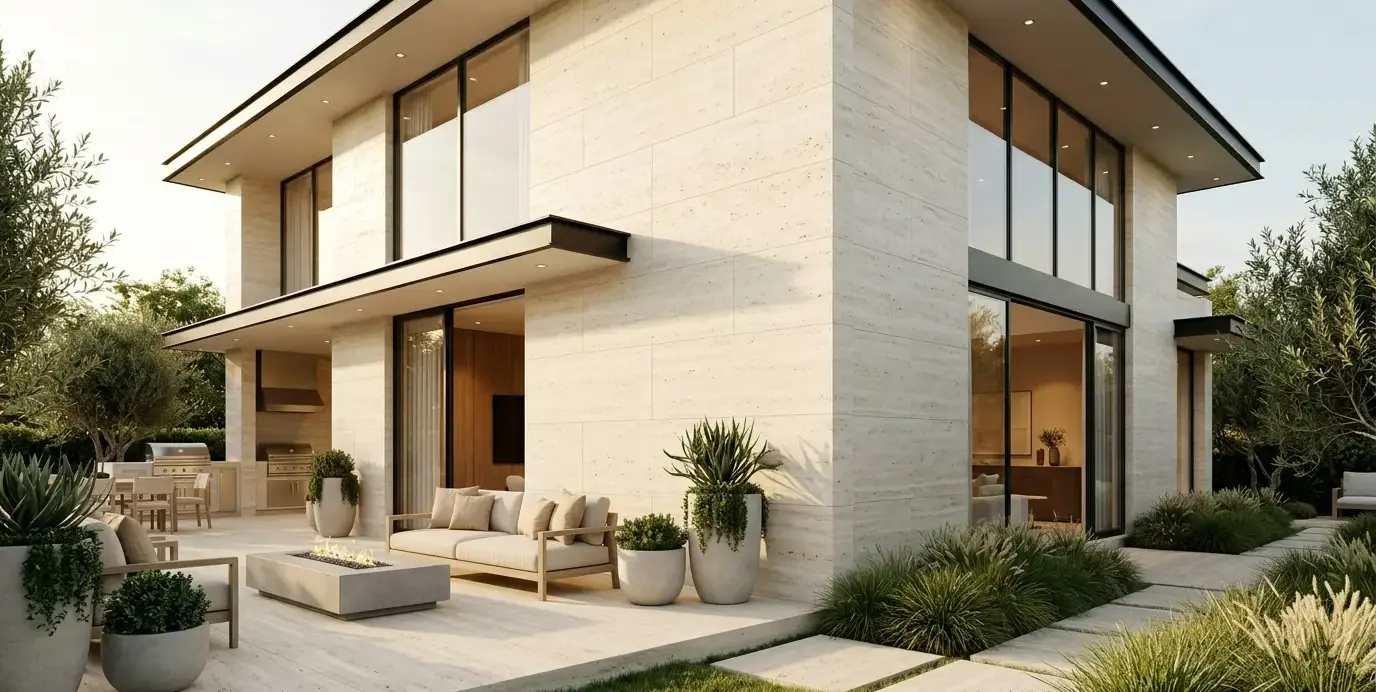
How Do You Keep Outdoor Travertine Looking Its Best?
Cleaning starts with the right product. The Natural Stone Institute recommends mild, non-acidic cleaners for acid-sensitive stones like travertine, and notes that products containing lemon, vinegar, or other acids may dull or etch them.
Two outdoor stains are worth knowing. The institute notes that organic stains from leaves, bark, or bird droppings often fade outdoors once the source is removed, as sun and rain bleach them out. Rust stains from metal furniture or flower pots are a different story, since deep rust can be very hard to remove, so put pads or feet under anything metal that sits on the stone.
Sealing keeps travertine’s pores from soaking up water and stains. Our natural stone exterior guide recommends resealing porous stone like travertine on a schedule suited to your climate, and suggests checking the surface periodically for water absorption as a simple way to tell when it is due.
Questions to Ask Before You Buy
A few questions help match the right travertine to the right spot. Ask whether the stone is suited to exterior paving or wall use, since suitability depends on the specific product.
Ask too whether the stone’s natural voids have been filled, and with what. Open holes can collect water and dirt, so it helps to know what you are getting before it goes on a patio or walkway.
Pairing Travertine With Your Home’s Style
Color is a big part of travertine’s appeal. It typically comes in warm beige, ivory, and walnut tones, and no two pieces match exactly, which adds to its charm across a large patio.
Those warm tones fit a range of exteriors. Ivory and beige travertine sit comfortably beside stucco, clay roof tile, and Mediterranean or Spanish-style architecture.
Walnut and deeper beige tones suit desert-modern and ranch homes, especially next to warm wood, rust-toned planters, and drought-tolerant landscaping. The darker tone also gives a patio more weight against pale walls.
For a cleaner, contemporary look, pair travertine with simple white or charcoal walls and keep the layout to one pattern across the space. Bring photos of your home’s exterior when you shop, since the right tone depends as much on the walls and roof as on the stone itself.
For Designers and Contractors
Contractors and designers can open a trade account for a dedicated rep, slab holds, commercial estimating with material takeoffs, and job-site delivery across Northern Nevada and Northern California.
For specification work, travertine is one of the stone types covered by the Natural Stone Institute’s industry-wide Health Product Declarations, according to Use Natural Stone’s overview of environmental and health product labels. When travertine pieces such as step treads, wall caps, or a fireplace surround are on the plan, a slab quote request is a good place to start.
See Travertine in Person
Photos flatten travertine’s pores and soft color shifts, so it pays to stand in front of the stone before deciding. Shortlist options from our live slab inventory, then bring a few photos of your yard in morning and afternoon light to a free design consultation.
Conclusion
Placed where it suits, finished for grip, sealed, and kept well drained, travertine can give a yard a warm, finished look for years. Our team at Nova Tile and Stone can help you plan it, surface by surface, at any of our four showrooms in Reno, Minden, Sacramento, and Fernley.
Note: Some images on this page may be conceptual renderings created to illustrate design possibilities and may not depict actual installations.
Frequently Asked Questions
Yes, in the right spots. Patios, pool surrounds, walkways, wall veneer, column wraps, and outdoor fireplace surrounds all suit travertine, as long as walking surfaces have a grippy finish and the stone is sealed and well drained.
It can, with the right planning. Porous stones can crack if water gets in and freezes repeatedly, so outdoor travertine should be suited to exterior use, laid so water drains quickly, and sealed on a regular schedule.
It depends on the finish. Brushed and honed travertine give more grip on wet pool surrounds, steps, and walkways, while smoother finishes are better kept to walls, column wraps, and fireplace surrounds.
There is no single schedule, because it depends on your climate and how much water the surface sees. Travertine is porous, so check it periodically and reseal when the surface starts absorbing water.
Use a mild, non-acidic cleaner. Avoid products with lemon, vinegar, or other acids, which can dull or etch travertine, and keep metal furniture and pots on pads to prevent rust stains.