Outdoor kitchen hardscape covers three zones: the paving underfoot, the island base and walls, and the countertop. Porcelain pavers, quartzite, and travertine suit the paving, granite and quartzite suit the island walls, and granite suits the countertop because it is suited to both outdoor use and food preparation.
Each zone faces different sun, water, and wear. That is why we match a material to each zone instead of running one favorite stone across the whole outdoor kitchen.
The 2026 U.S. Houzz Outdoor Trends Study surveyed homeowners upgrading outdoor structures such as decks, shade structures, and kitchens. Among them, 12 percent added or upgraded an outdoor kitchen. Of those kitchens, 95 percent were built from scratch, so every hardscape surface was a new choice.
Nova Tile and Stone supplies tile, natural stone, pavers, and slabs from four showrooms in Reno, Minden, Fernley, and Sacramento, and your contractor or fabricator handles the cutting and installation. Sun exposure in those areas shapes every hardscape choice, so this guide covers how to map the sun on your patio, where each stone and paver goes, and how to plan all three zones together.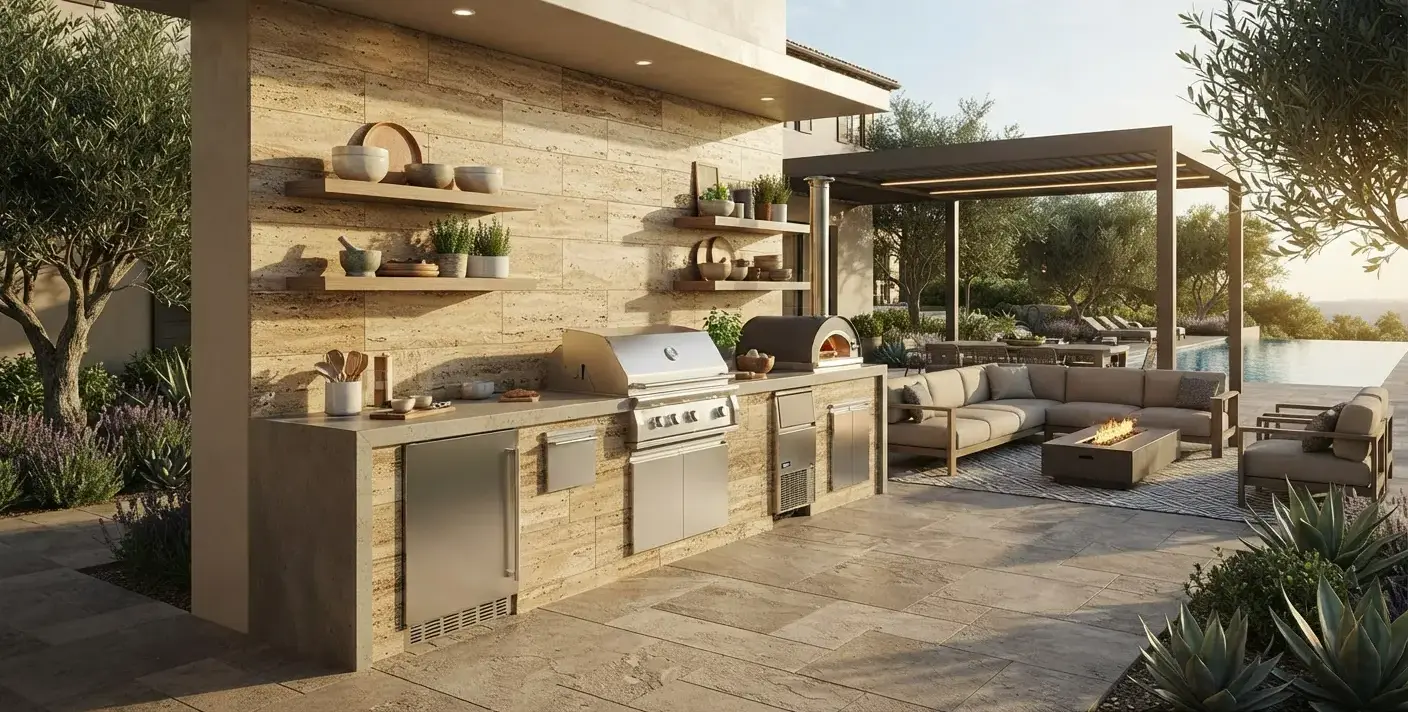
First, Map the Sun on Your Patio
According to the EPA, UV intensity rises about 6 percent for every kilometer of elevation above sea level. Reno, Minden, and Fernley sit between roughly 1.2 and 1.5 kilometers up. Applied to those elevations, the EPA's figure works out to roughly 7 to 9 percent more UV than at sea level under the same sky.
Sacramento sits close to sea level, so elevation adds little to the UV load in the valley. An unshaded, west-facing patio in Sacramento still sits in direct afternoon sun through the summer, and every hardscape surface on it has to handle that exposure.
Before choosing any material, check the planned kitchen spot on a summer day, once around midday and again in the late afternoon. Note which parts stay in sun and which fall into shade, so you know which zones face the most exposure.
Our guide on how natural stone holds up in exterior settings notes that direct sunlight is not typically a concern for natural stone, though long-term UV and temperature swings can cause gradual surface changes in some stone types.
For zones that sit in full sun all day, we lean toward granite and porcelain, which our product specs list as UV resistant, though performance can vary by color and finish. Quartzite and travertine suit outdoor use too, but our product specs don't list them as UV resistant, so we would place them where the paving gets some shade during the day.
Shade can also differ from one zone to the next. A pergola over the counter shifts that surface into partial shade while the paving beside it stays in full sun, so plan each material around the conditions its own zone actually gets.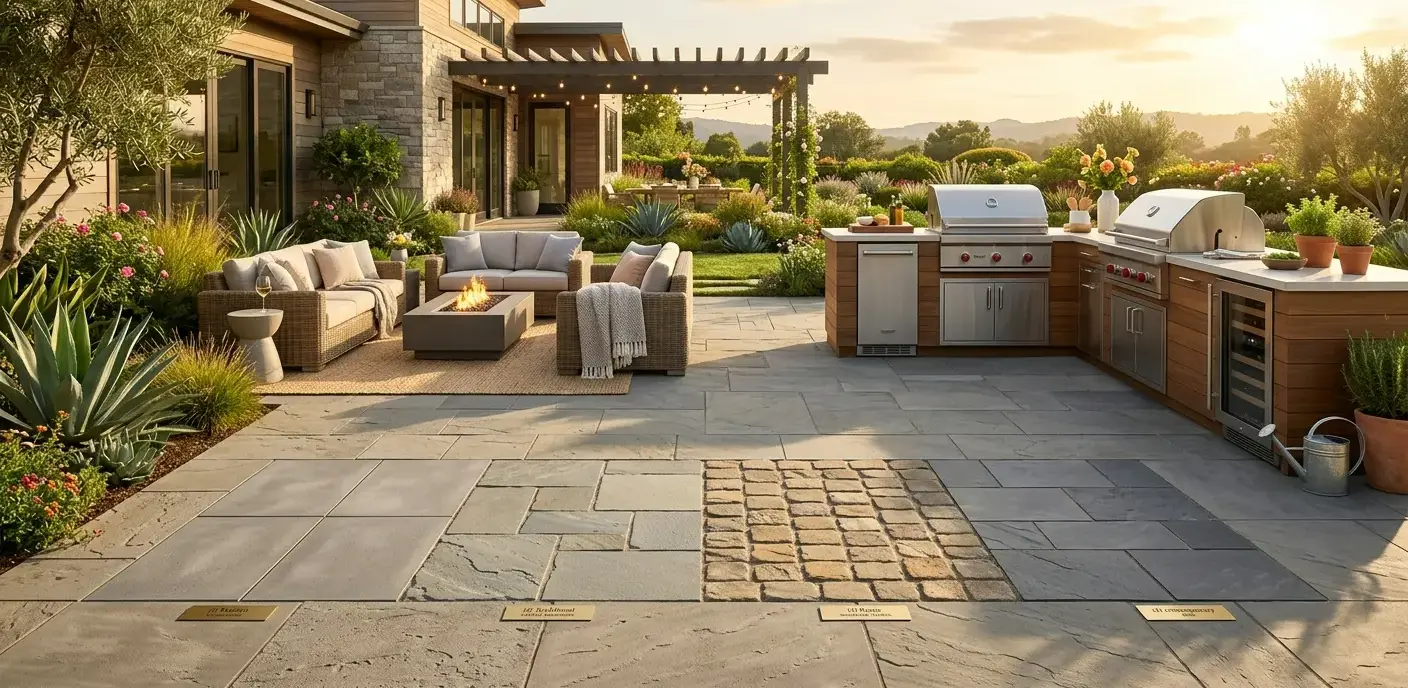
Paving Around an Outdoor Kitchen
The paving is usually the largest hardscape zone and the one that carries the foot traffic. The same Houzz study found that 85 percent of outdoor kitchens include a grill and 59 percent include a sink, so the paving near those stations has to deal with water and cooking spills.
Porcelain pavers, quartzite, and travertine are all good fits for outdoor floors. For paving in all-day sun, porcelain is the closest match to that exposure, while quartzite and travertine fit well where shade covers part of the day.
Porcelain resists fading, but prolonged exposure conditions should still be considered. A dark color in an unshaded spot takes the most sun, so look at it in daylight before choosing it for that part of the patio. Travertine is naturally porous and needs a sealing plan, while quartzite is a dense stone with low absorption.
We would treat finish as the key paving decision. Honed and textured surfaces tend to offer more grip when wet than a polished one, so we would keep polished finishes off the paving near the sink and grill.
Format is the next choice. Large-format pavers mean fewer joints across the floor, while smaller formats are easier to fit around the curve of a rounded island.
Color is worth settling early as well. Dark paving in full sun absorbs more heat than light paving, which matters for anyone walking barefoot from a pool to the grill. You can browse our full range of tile, stone, and pavers to compare tones side by side.
Decide early whether the kitchen paving continues across the whole patio or reads as its own pad. One paver running through both keeps the space calm and continuous, while a change of material at the kitchen edge marks the cooking area clearly.
Care for stone paving stays simple. The Natural Stone Institute's stone care recommendations call for a neutral cleaner and note that acidic products can dull or etch calcium-based stones such as travertine. All three paving materials are suitable for outdoor use, but their long-term performance depends on maintenance.
Stone for the Island Base and Back Walls
The island base and any back wall are the vertical part of the hardscape. In our view, this zone should tie to the house first and to the counter second.
If the façade already has granite or quartzite, repeat that stone on the island base. If the façade uses a different stone, choose granite or quartzite in a similar color so the island still reads as part of the house.
Both suit exterior walls, which keeps the vertical zone in materials rated for outdoor use. If the island base sits in full sun all day, granite is the safer choice, since our product specs don't list quartzite as UV resistant.
If the island base and the countertop both end up in granite, choose two different granites or two different finishes. That way the counter still stands out from the base instead of blending into it.
Thickness is the next decision for this zone. Our guide to exterior stone cladding and thin veneer covers the difference: veneer is cut to roughly three-quarters of an inch to an inch and a half thick, while full cladding runs several inches deep and brings more shadow at the edges.
Because veneer weighs a fraction of full-depth stone, it is a practical format for an island base. Full cladding fits a back wall where deeper edges and shadow lines are the look you want.
Island corners sit right where chairs, coolers, and grill carts pass. Granite and quartzite are strong, but edges and corners still need extra care, so ask your fabricator about an eased or rounded edge on the counter, where knocks are most likely. A free design consultation is a good place to compare veneer and full cladding before settling on a stone.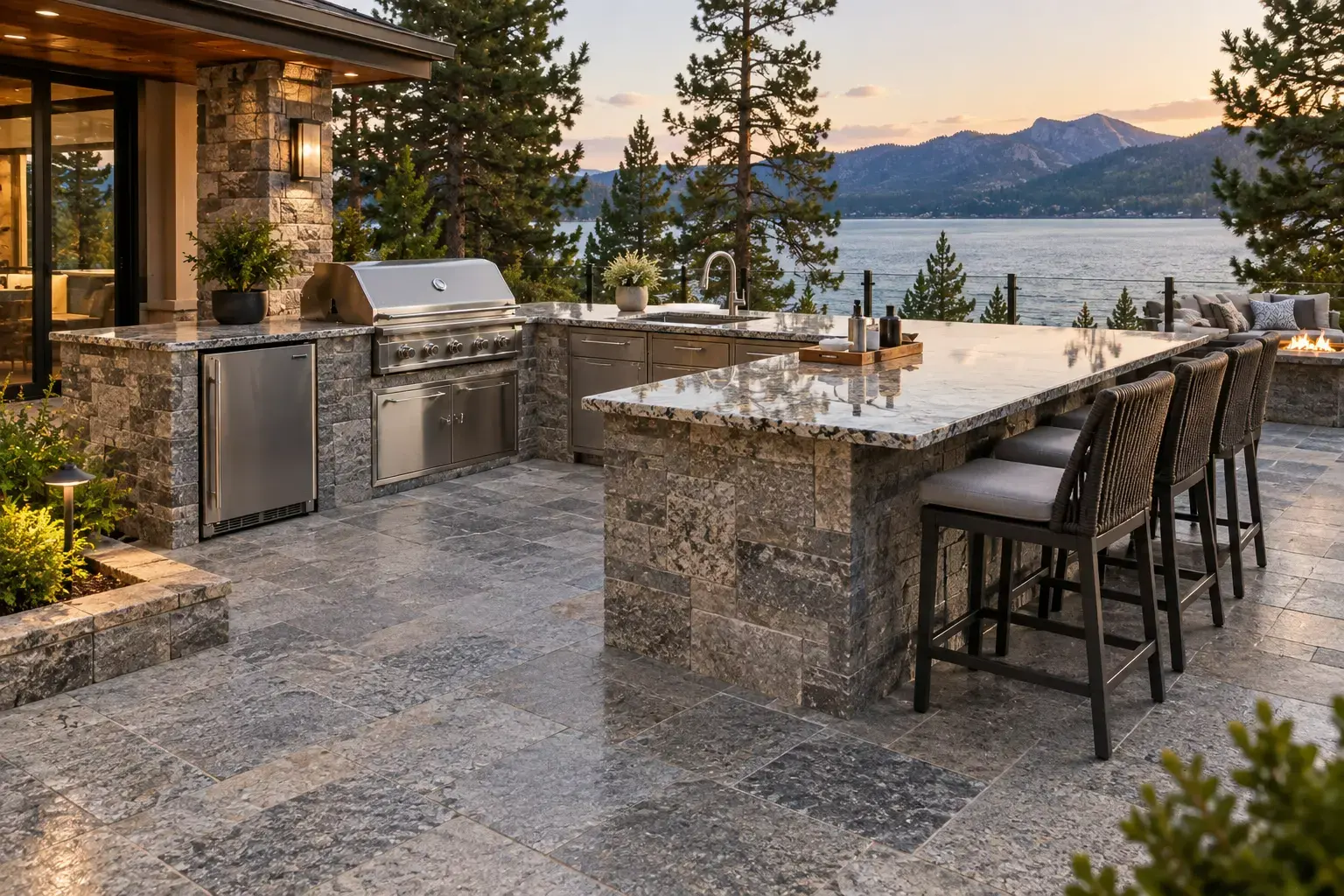
Choosing an Outdoor Kitchen Countertop
The counter is usually the smallest hardscape zone by area, but it has the most requirements to meet. It often sits in direct sun, handles food, and sits next to the grill.
One homeowner on Hometalk described a white quartz countertop that yellowed after six years, and blamed sunlight through a kitchen window rather than poor care. We don't recommend quartz for outdoor use, so it belongs indoors.
Quartz and quartzite sound alike, but they are different materials. Quartz is an engineered surface, while quartzite is a natural stone that forms when sandstone is transformed under heat and pressure.
Granite is suited to outdoor use, kitchen surfaces, and food preparation together, which makes it a good fit for an outdoor counter. The Natural Stone Institute's Use Natural Stone campaign features a video of a granite countertop going into a family's outdoor kitchen.
Granite is suitable for food preparation, but a cutting board is always recommended. It can handle normal kitchen heat, but direct contact with very hot items should be avoided, so plan a trivet spot beside the grill.
The serving end of the counter is where drinks get set down, so spills are likely at that end. Granite is stain resistant, but spills should be cleaned promptly.
You may have seen quartzite or other stones on outdoor counters elsewhere. We recommend granite for outdoor food-prep surfaces and use quartzite, travertine, and porcelain in the paving and wall zones, so if you have a different slab in mind for the counter, bring it up at your design consultation.
Putting the Three Zones Together
Lay all three zones out on one sketch before committing to any single material. The counter color, the paving tone, and the wall stone should read as one palette from the back door, not three separate purchases.
Zone | Stone and pavers that go here | Key decision |
Paving | Porcelain pavers, quartzite, travertine | Finish: honed or textured near the sink and grill |
Island base and walls | Granite, quartzite (granite for all-day sun) | Thin veneer or full cladding |
Countertop | Granite | A color that works with the paving and walls |
We would settle the zone with the fewest suitable options first. In an outdoor kitchen that is usually the counter, because granite is the slab we recommend for that job, while the paving and wall zones have a wider field of materials to choose from.
You can compare granite colors against your paving and wall choices in our live slab inventory.
Once you have slabs in mind, you can request a quote on specific slabs by name or bundle number and ask about reserving them. Reserved slabs are held for three days, which gives you time to compare paving and wall options against the actual slab.
Conclusion
The quickest way to turn this plan into a material list is one visit with your notes in hand. Bring a sketch of the kitchen layout, rough measurements, a photo of the house exterior, and your notes on which parts of the patio stay in sun and which get shade.
At one of our four showrooms, the team at Nova Tile and Stone can set granite slabs, pavers, and exterior stone side by side with you. That makes it easier to see the paving, island walls, and countertop as one palette before you commit to any of them.
Note: Some images on this page may be conceptual renderings created to illustrate design possibilities and may not depict actual installations.
Frequently Asked Questions
The paving underfoot, the island base and back walls, and the countertop are the main hardscape zones. Each one faces different sun, water, and wear, so each can be matched to a different material.
Porcelain pavers, quartzite, and travertine all suit outdoor floors. Near the sink and grill, a honed or textured finish tends to offer more grip when wet than a polished one.
Yes. According to the EPA, UV intensity increases about 6 percent per kilometer of elevation, so hardscape surfaces in Reno, Minden, and Fernley see stronger UV than the same surfaces at sea level.
No. Quartz is an engineered surface, while quartzite is a natural stone formed from sandstone under heat and pressure. We don't recommend quartz for outdoor use, while quartzite suits outdoor paving and walls.
We don't recommend quartz for outdoor use. Granite suits outdoor use, kitchen surfaces, and food preparation, though a cutting board is always recommended.