AT A GLANCE
- Hardscape design is shifting from cool gray to warm neutrals such as cream, beige, sand, honey, and caramel on patios, walkways, pool surrounds, and garden walls.
- Travertine, quartzite, and granite carry warm tones naturally and are suited to outdoor use, while stone-look porcelain gives a similar look with more uniform color.
- According to the ANSI A137.1 standard, porcelain tile has a water absorption rate of 0.5% or less, so it generally needs less upkeep than natural stone.
- A warm stone shows a yellow, peach, or golden cast when held next to plain white paper, while a cool stone leans blue, green, or gray.
- Honed stone finishes are smooth and matte and cut glare, while leathered finishes add a gentle texture that brings out natural color variation.
- In climates with freeze-thaw winters, denser stone with lower water absorption is generally a better fit for paving, and travertine is not recommended where de-icing salts are used.
IN THIS POST
- Why are hardscape design trends shifting to warm neutrals?
- What types of natural stone and porcelain are best for outdoor pavers?
- Natural stone vs. porcelain: which is better for outdoor use?
- How do you choose the right warm-neutral stone color for your outdoor space?
- Which stone finishes and textures work well outdoors?
- What are some warm natural stone patio and pool deck design ideas?
- How do you choose outdoor stone for your climate?
- How do you seal and maintain outdoor natural stone?
- Where can you see natural stone, porcelain, and pavers in person?
- Frequently Asked Questions
- Sources
Hardscape design is shifting away from cool gray toward warm neutrals: cream, beige, sand, honey, and caramel tones used on patios, walkways, pool surrounds, steps, and garden walls. Natural stone fits this trend closely because its color comes from the minerals it formed with, so each piece varies slightly in shade and the finished surface has depth rather than a single flat tone.
What makes a neutral “warm” is its undertone, the yellow, red, or brown cast beneath the main color, compared with the blue or green undertones found in many grays. Choosing the right stone means judging that undertone in real outdoor light and when wet, then checking how the material handles surface heat, freeze-thaw cycles, and traction on wet surfaces. The sections below walk through each of these steps.
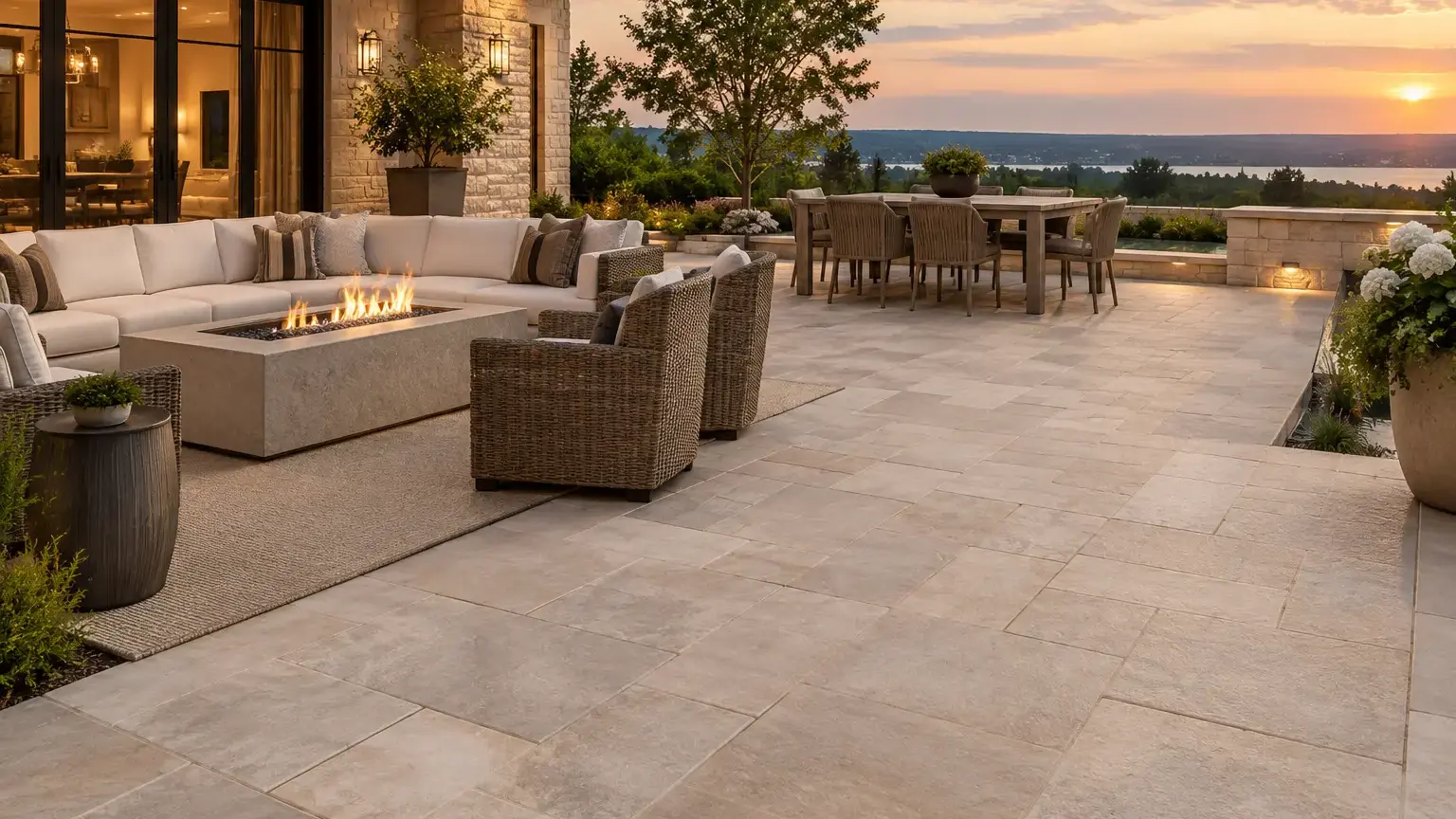
Why Are Hardscape Design Trends Shifting to Warm Neutrals?
Hardscape design trends are shifting to warm neutrals because tan, cream, and caramel stone blends with the bark, soil, and wood already found in most yards and connects outdoor spaces to the warmer palettes now common indoors. Recent coverage of outdoor design trends notes that designers are trading cool whites and grays for caramel, terracotta, and beige tones that blend into their surroundings. The same shift has been underway indoors, where warm, earthy wall colors have been replacing the cool grays that dominated for years. A few practical reasons help explain why it has carried outside.
It fits the landscape. Most yards already contain plenty of warm color: bark, mulch, dry grasses, clay pots, and wooden fences. Tan and cream stone tends to read as part of that setting, while a cool gray surface can look like it was placed on top of it.
It connects indoor and outdoor rooms. When the patio picks up a color family similar to the adjoining kitchen or living room, the two spaces feel designed together rather than separately.
It works with many home styles. Sandy and honey-toned stone can pair with white or dark siding, stucco, brick, and wood, which leaves room for future changes to paint or trim.
It suits how many people use their yards. Outdoor areas increasingly serve as places to cook, gather, and relax, and softer, earthier surfaces suit that slower pace.
What Types of Natural Stone and Porcelain Are Best for Outdoor Pavers?
Travertine, quartzite, and granite are natural stones that carry warm tones and are listed for outdoor use in our product specifications, and stone-look porcelain offers a similar look with more uniform color. Which one fits best depends on the look you want, how the area will be used, and your climate. To see the colors and patterns currently in stock, you can browse our live slab inventory, which includes granite, quartzite, and other natural stone. When a slab stands out, you can request a quote for it directly.
Travertine
Travertine is a form of limestone deposited by mineral springs. As spring water reaches the surface, carbon dioxide escapes and calcium carbonate precipitates out, a rapid process that leaves most travertine lightweight and porous. That porosity is the source of the small natural holes the stone is known for. Its colors typically range from ivory and beige to walnut brown, depending on the minerals present. Travertine was also a major building stone in ancient Rome and was used in the Colosseum.
Quartzite
Quartzite is a metamorphic rock that forms when quartz-rich sandstone is recrystallized under heat and pressure. In its pure form it is white to gray, and iron oxide and other minerals add pink, red, yellow, or gold tones, often in streaks that give the stone visible movement.
Granite
Granite is an igneous rock made mostly of quartz, feldspar, and mica. Feldspar has the largest influence on its color and can range from off-white to tan, pink, and brown, while darker minerals create the familiar speckled pattern. That speckling adds texture even from a distance, which helps a large paved area avoid looking flat.
Stone-Look Porcelain
Stone-look porcelain gives a more consistent appearance from piece to piece, which some homeowners prefer for large, uniform areas. According to the ANSI A137.1 standard, porcelain tile is defined by a water absorption rate of 0.5% or less.
We also carry pavers and exterior stone in a range of earthy tones for walkways, patios, and walls.
Natural Stone vs. Porcelain: Which Is Better for Outdoor Use?
Neither is better for every project: natural stone offers color variation that makes each piece unique, while stone-look porcelain offers more consistent color and lower water absorption, which generally means less upkeep. The right choice depends on the look you want and how the area will be used.
Appearance. Natural stone gets its color from the minerals it formed with, so shade and pattern shift from piece to piece. Porcelain reproduces the look of stone with more consistency, which suits large areas where you want an even field of color.
Water absorption. Porcelain is defined by its low absorption, as noted above, while natural stones vary. Travertine, for example, is naturally porous. Absorption matters most where winters bring freeze-thaw cycles, covered in the climate section below.
Upkeep. Natural stone may need sealing depending on the stone and how it’s used, while porcelain’s low absorption generally means less maintenance.
Traction. Both come in textured finishes, and slip resistance depends on the specific product and finish, so check each spec sheet for its exterior rating.
How Do You Choose the Right Warm-Neutral Stone Color for Your Outdoor Space?
To choose a warm-neutral stone, start with its undertone, then check how the color reads in outdoor light, when wet, and next to the parts of your home that won’t change. For tile, a take-home sample lets you run these checks in your own yard; for slabs, compare them in person before you decide. Two stones can both look “beige” in a showroom and still look quite different once installed, because their undertones differ. Spotting the undertone early helps you avoid a patio that clashes with your home or reads cooler than you expected.
Compare against plain white paper. Interior designers use this test for paint, and it works for stone too. Hold a sheet of white printer paper next to a tile sample or the slab you’re considering. A warm stone will show a yellow, peach, or golden cast against the white, while a stone that leans blue, green, or gray will read cooler outdoors.
Look at the veining and speckles, not just the background. In quartzite and granite especially, the overall impression often comes from the movement and mineral flecks. A cream background with gray veins can read cooler than you’d expect, while gold or rust-colored veining pushes it warmer.
Check it in your own outdoor light. Natural light changes color through the day. When the sun is low, in early morning and late afternoon, light is at its warmest and will emphasize golden tones. Midday sun is closer to neutral and shows the stone most accurately. Shade and overcast skies add a bluish cast that can make warm stone look duller. If you’re choosing tile, viewing a sample in each of these conditions shows you the full range of how the surface will look. For slabs, keep these shifts in mind when comparing colors indoors.
See how it looks wet. Rain, sprinklers, and pool splash will regularly change how an outdoor surface looks. A thin film of water reflects some light back into the surface, which is why surfaces look darker when wet. Splashing water on a tile sample gives you a quick preview of that change, which matters most around pools and in rainy climates.
Matching Stone to the Parts of Your Home That Won’t Change
Undertone also determines how well a stone pairs with the features you’re unlikely to replace soon. These are general starting points rather than fixed rules, and comparing the stone against the real surfaces, using a tile sample at home or photos of your roof, brick, and trim when viewing slabs, should be the deciding step.
Roof color. Brown, red, and terracotta roofs share warm undertones with most tan and cream stone. With a charcoal or blue-gray roof, a stone that mixes warm and cool minerals, such as a granite with both tan and gray flecks, can help bridge the two.
Brick and existing stonework. Compare the stone directly with any brick or stone already on the house. Look for a shared undertone rather than an exact match, since a near-match can look like an error while a related tone looks intentional.
Trim and window frames. Black frames and dark trim create stronger contrast against pale stone. White trim produces a lighter, softer look, and bronze or wood-toned frames reinforce an earthy palette.
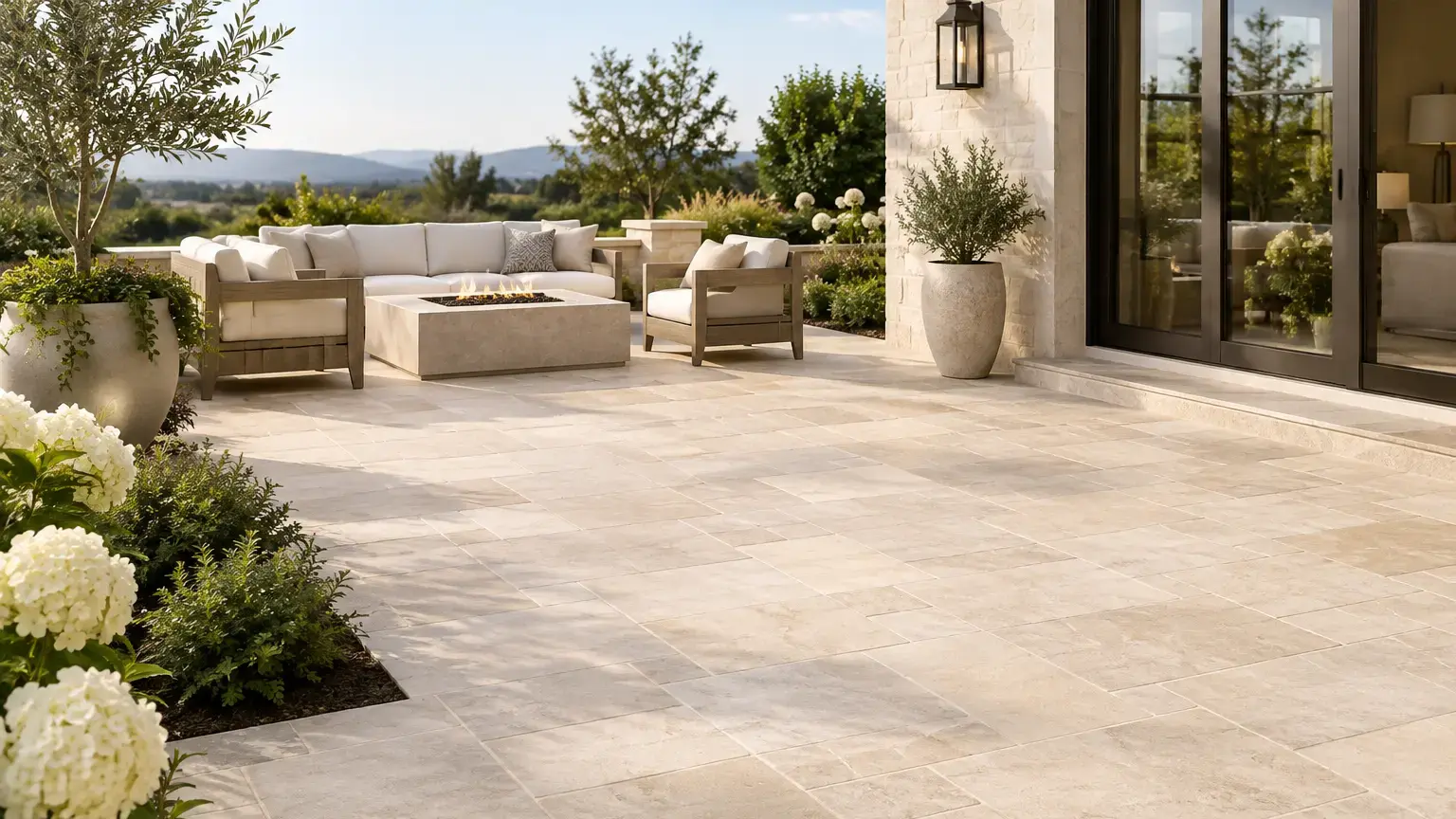
Which Stone Finishes and Textures Work Well Outdoors?
Honed and leathered finishes both suit warm-toned outdoor stone: honed is smooth and matte and cuts glare, while leathered adds a gentle texture that brings out the stone’s natural variation. A patio made entirely of one smooth, pale surface can look washed out in bright sun, so varying the surface keeps the eye moving.
A common approach is tone-on-tone design: keeping colors within one family while changing the surface, size, or material. A honed travertine floor next to a leathered quartzite wall, for example, stays visually calm because the colors relate, but it still has depth because the surfaces catch light differently.
Finish also affects traction, so confirm the exterior rating for the specific finish you choose.
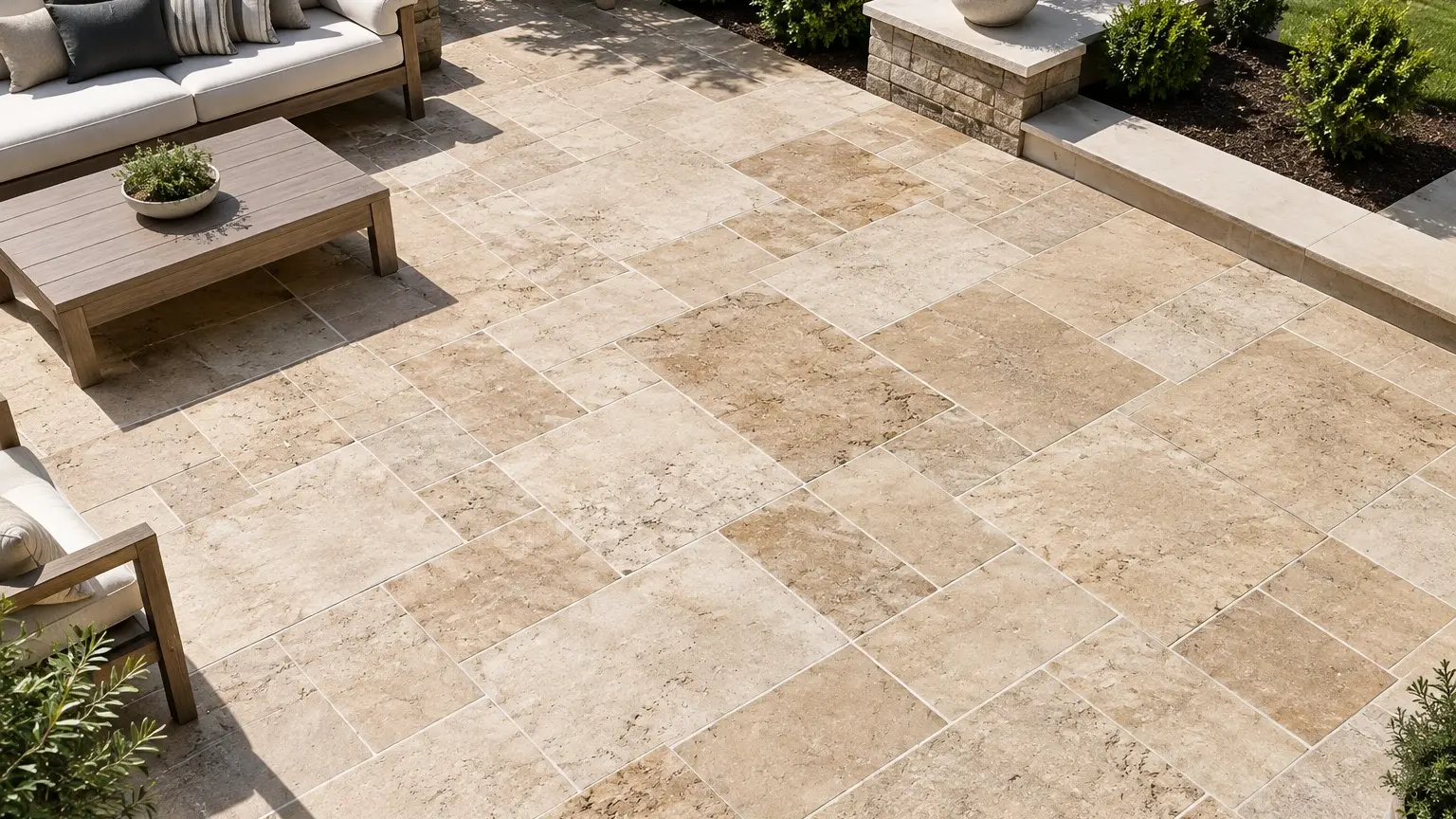
What Are Some Warm Natural Stone Patio and Pool Deck Design Ideas?
Popular warm-stone layouts carry the same stone from indoors to the patio, separate zones with related materials, use larger formats, bring stone onto walls and fire features, and frame lighter areas with a darker border. if you’d like help planning a layout of your own, you can book a free design consultation at our Home Design Centers in Reno, Minden, Fernley, and Sacramento.
Carry flooring from inside to out. Using the same stone, or a closely matched tone, on both sides of a patio door makes the outdoor area feel like part of the room, provided the stone is rated for exterior use.
Define zones with related materials. Separate dining, lounging, and fire areas with different stones or patterns that share an undertone, so the layout feels organized without looking disjointed.
Try larger formats. Bigger pavers mean fewer joints, which can make a patio look more open and continuous.
Bring stone up off the ground. A fireplace surround, garden wall, or planter face in warm stone adds height and structure. Vertical surfaces are seen up close, so they’re a good place for stone with stronger movement.
Frame with a deeper shade. A darker tan or caramel border can outline a lighter field, mark steps, or edge a pool, adding definition without introducing a new color.
How Do You Choose Outdoor Stone for Your Climate?
Weigh three performance factors alongside color: how hot the surface gets in the sun, how much water the stone absorbs if your winters freeze and thaw, and whether it is rated for exterior wet areas. These factors affect how the surface performs over time and are worth reviewing with your designer or installer. A stone that looks right in your light but absorbs too much water for your winters, or gets uncomfortably hot where people walk barefoot, is unlikely to suit the space over the long term.
Surface Heat
Lighter surfaces absorb less sunlight than darker ones. In thermal imaging research, a light-colored pavement segment measured about 30°F cooler than a dark one in the same conditions. The trade-off is that a lighter surface reflects more light back toward people and nearby walls, so glare is worth considering in very sunny spots. Actual temperatures also depend on the material, surface texture, and shade, so if people will walk barefoot on the surface, ask about heat when comparing options.
Freeze-Thaw and De-Icing Salts
Where winter temperatures swing above and below freezing, absorption becomes important. Water expands as it freezes, and stone that absorbs more water is generally more vulnerable to freeze-thaw damage. Denser stones with lower absorption are usually a better fit for paving in these climates, so ask for absorption data on any material you’re considering. De-icing salts are another factor: industry guidance recommends against using travertine for exterior paving where they’re applied, so in snowy areas it’s worth discussing alternatives for driveways and walkways that will be salted.
Slip Resistance
According to the ANSI A326.3 standard, manufacturers classify hard surface flooring into product use categories, including an Exterior, Wet category for outdoor areas. Check a product’s spec sheet for this classification or other slip resistance data before using it on a patio, path, or pool deck, and keep in mind that surface texture has a large effect on traction.
How Do You Seal and Maintain Outdoor Natural Stone?
Whether outdoor natural stone needs sealing depends on the stone and how it’s used, so that decision is best made with your installer. Sealers also vary in appearance: some are designed to leave stone looking natural, while color-enhancing types deepen its tone. If you like how the stone looks when wet, it’s worth asking whether an enhancing sealer suited to exterior use is an option. Porcelain’s low absorption means it generally needs less upkeep.
Where Can You See Natural Stone, Porcelain, and Pavers in Person?
You can compare natural stone, porcelain, pavers, and exterior stone side by side at our showrooms in Reno, Minden, Fernley, and Sacramento. Tile samples are available to take home for testing in your own yard, and we offer free design consultations if you’d like help weighing colors, textures, and specifications. Seeing stone in person makes it easier to judge its undertone and texture before you decide.
Frequently Asked Questions
Warm tones tend to blend with the soil, plants, and wood already found in most yards, and they echo the earthier palettes common in interior design. Together, these qualities give the outdoor space a more cohesive, relaxed feel.
Often not. Daylight shifts from warm to neutral to bluish depending on the time of day and shade, and moisture darkens most surfaces. Testing a sample outside, both dry and wet, gives a more realistic preview.
Generally, yes, since lighter surfaces stay cooler in the sun than dark ones. Keep in mind that very light surfaces can also produce glare on bright days.
It can work for some applications, but caution is warranted where de-icing salts will be used, since industry guidance advises against travertine paving in those areas. For salted driveways and walkways, a denser, less absorptive stone is usually the safer option.
It depends on the stone and where it’s installed, so it’s best decided with your installer. Natural-look sealers leave the stone’s appearance unchanged, while color-enhancing sealers deepen its tone. Porcelain typically needs less upkeep than natural stone.
Sources
- Porcelain Tile and Ceramic Tile: ANSI A137.1 Definition, American National Standards Institute. Supports the porcelain water absorption definition (0.5% or less).
- NTCA Technical Committee Chairman Presents New ANSI Standard, TileLetter (National Tile Contractors Association). Supports the ANSI A326.3 product use categories, including Exterior, Wet.
- Sandstone and Quartzite, Natural Stone Institute. Supports quartzite as a metamorphic rock formed from sandstone.
- 140 Broadway Plaza Presentation, NYC Landmarks Preservation Commission. Supports the link between higher absorption and freeze-thaw and salt damage, and Marble Institute of America guidance against travertine in exterior areas where de-icing salts are used.
- Travertine Deposition Summary, Geological Survey Bulletin 1444, U.S. Geological Survey (via NPS History). Supports how travertine forms and why it is porous.
- Cool Pavements, Lawrence Berkeley National Laboratory, Heat Island Group. Supports the surface temperature difference between light and dark pavement.
- Why Do Things Look Darker When Wet?, North Carolina State University. Supports why surfaces look darker when wet.
- Patio Paver Trends Taking Over 2026, House Digest. Supports the design trend toward caramel, terracotta, and beige outdoor tones.
Note: Some images on this page may be conceptual renderings created to illustrate design possibilities and may not depict actual installations.