Granite, quartzite, travertine, and porcelain are the four materials rated for exterior use. Only three of them, granite, quartzite, and porcelain, also carry a UV-resistant rating; travertine is the one exception. It's still fully suited to outdoor patios, walls, and fireplace surrounds, just not the ones that sit in full sun all day.
The broader "outdoor-rated" label doesn't decide how a material performs on an exposed facade, an open surround, or any other spot that takes full, unblocked sun most of the day. The UV rating does. A UV-resistant material holds its original tone over time. One without that rating can visibly lighten or shift after repeated seasons of direct exposure.
Granite, quartzite, and travertine each have their own hardness, care, and pattern tradeoffs worth understanding in full, covered in our granite vs. quartzite vs. travertine breakdown. What that comparison doesn't answer is what to do when none of the three quite fits a specific spot, and that's usually where porcelain comes in.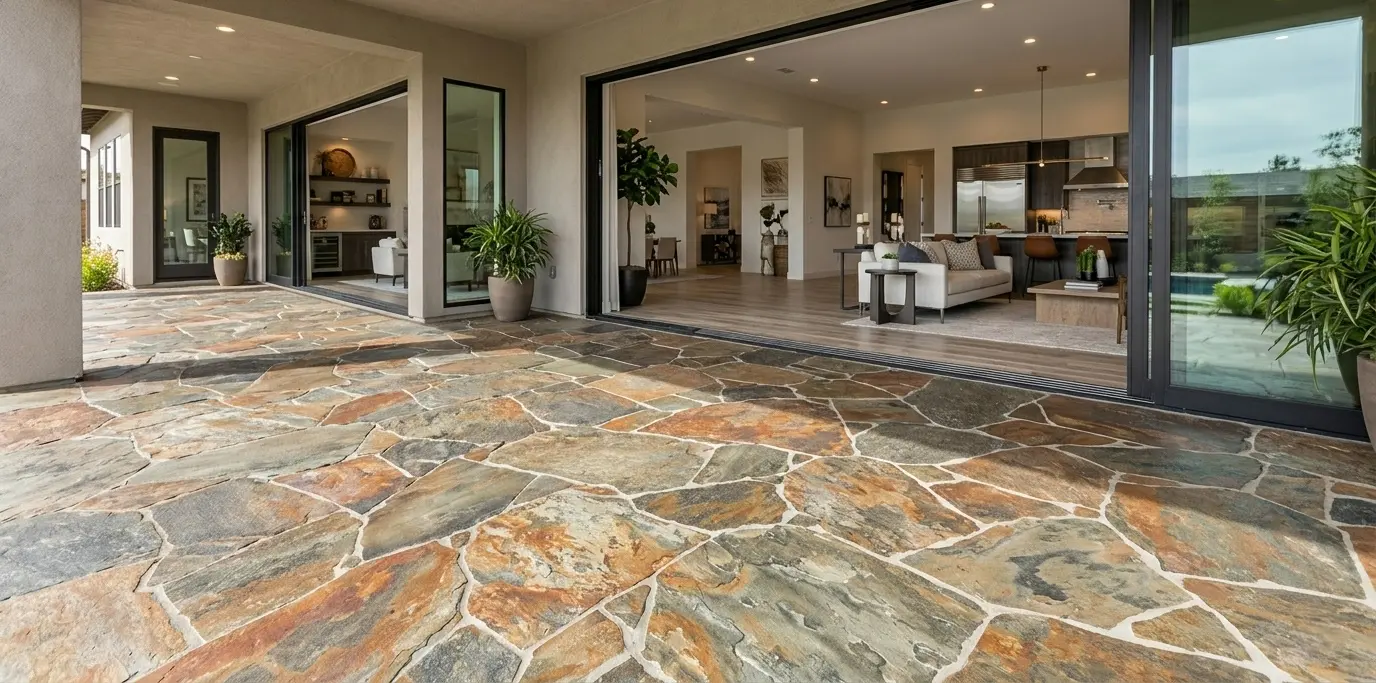
The Difference Between Outdoor-Rated and Sun-Ready
Outdoor-rated mostly describes how a material handles moisture, temperature swings, and general exterior wear. UV resistance answers a different question entirely, whether direct sunlight changes the material's color or surface finish over time, and treating the two as interchangeable is where most exterior stone decisions go wrong.
Use Natural Stone takes a broader look at exterior material performance, listing UV resistance and solar reflectance alongside freeze-thaw tolerance and absorption rate as separate factors in how a material performs outdoors, distinct from whether it's rated for outdoor use in the first place. Treating "outdoor" as a single checkbox skips that distinction entirely, and it's the single most common shortcut homeowners take when comparing options quickly.
A color photo, even under good showroom lighting, can't show which materials hold their color outdoors and which don't, something easy to miss while browsing the full range of tile, slab, and exterior stone options.
Comparing four outdoor-rated materials at a glance, a homeowner can easily assume they all perform the same way on an open facade or a covered patio. They don't, and the difference shows up exactly where the sun hits hardest and longest across a full day.
Granite and quartzite are quarried; porcelain is manufactured and fired at high temperatures. All three carry the UV-resistant classification regardless of origin, which is the distinction that matters most for what follows.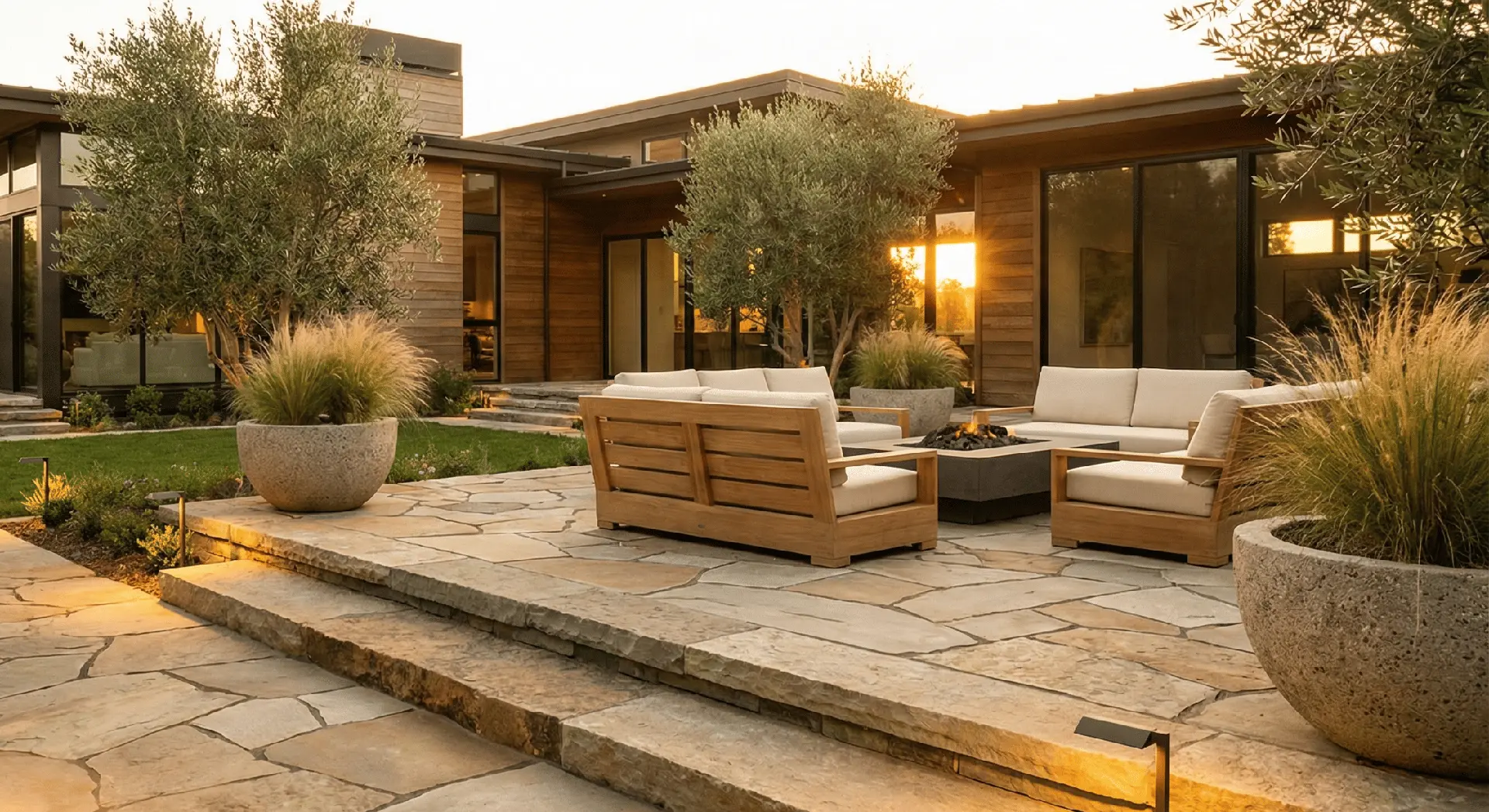
Granite, Quartzite, and Porcelain Handle Direct Sun
Granite is a good fit for exterior stone applications, from facade cladding to fireplace surrounds to accent walls in full sun, and it carries a UV-resistant rating. Performance can still shift a little by color and finish.
Patios, walkways, and accent walls in full sun all suit quartzite well too, and its UV resistance holds up on a surface that gets no shade at all during the day.
Porcelain is the one material in this group that isn't quarried at all, and that's exactly why it closes a gap the other three can't. It's UV resistant, manufactured for consistent sizing and color from piece to piece, and available in finishes that mimic granite, quartzite, and even travertine.
A travertine-look porcelain slab gives anyone drawn to that warm tone the same color in an exposed, shade-free spot, without the UV risk the real stone carries there. The same logic covers matching an existing granite or quartzite installation years later: natural stone lot availability shifts at the quarry, and a manufactured look-alike doesn't carry that same risk.
Checking what's on the floor right now shows which of those look-alike porcelain options are currently available.
Roof cover matters as much as the material itself. A surface with no overhang, pergola, or tree canopy offering any relief takes the most sustained direct sun of any spot on a property, which is exactly where granite, quartzite, or porcelain earn their keep over a material without the same UV rating.
Where Travertine Still Fits (And Where It Doesn't)
Travertine belongs in that same outdoor-rated group, working well for patio flooring, accent walls, and fireplace surrounds. A shaded patio or a partially covered wall suits it better than a spot that takes full, unblocked sun all day, every day, for months at a stretch, since travertine sits outside the UV-resistant group covered above.
Outdoor pool and patio areas also collect algae and moss over time, regardless of material. The Natural Stone Institute's care guidance recommends a clear-water flush with a mild bleach solution to manage that kind of buildup. General upkeep like this applies across natural stone. It carries a little more weight here, on a material already working with less built-in sun protection than the others.
Whether a specific patio or wall actually gets enough shade for travertine to make sense, or whether a travertine-look porcelain makes more sense instead, is worth confirming before ordering. A free design consultation with Nova Tile and Stone can walk through that exact question for a particular spot.
Why Porcelain Solves a Problem Natural Stone Can't
A multi-year exterior project runs into a problem granite, quartzite, and travertine all share: a quarry's lot availability shifts over time, so a slab ordered for a later phase might not match the vein pattern or tone of what went in during an earlier one, even from the same material.
Porcelain sidesteps that risk entirely. It's manufactured to a consistent color and pattern run, so a facade section or an accent wall added years later can still match what's already in place, something no quarried stone can fully guarantee.
Comparing a look-alike porcelain finish against the natural stone it's meant to match is easiest in person, and the Minden or Fernley showroom, whichever's closer, keeps both side by side for exactly that kind of comparison.
Consistency like that doesn't make porcelain the right call everywhere. It's the answer for specific situations: an exposed wall that needs travertine's warmth without the UV risk, or a project that has to match a slab ordered years earlier, where natural stone's greatest strength, its individuality, becomes a liability instead.
Large-format runs benefit the same way. A long facade or an extended accent wall built from quarried stone needs pieces cut from compatible lots to avoid visible tone breaks along the run. A manufactured porcelain run holds the same color and pattern from the first piece to the last, regardless of how long the wall ends up being.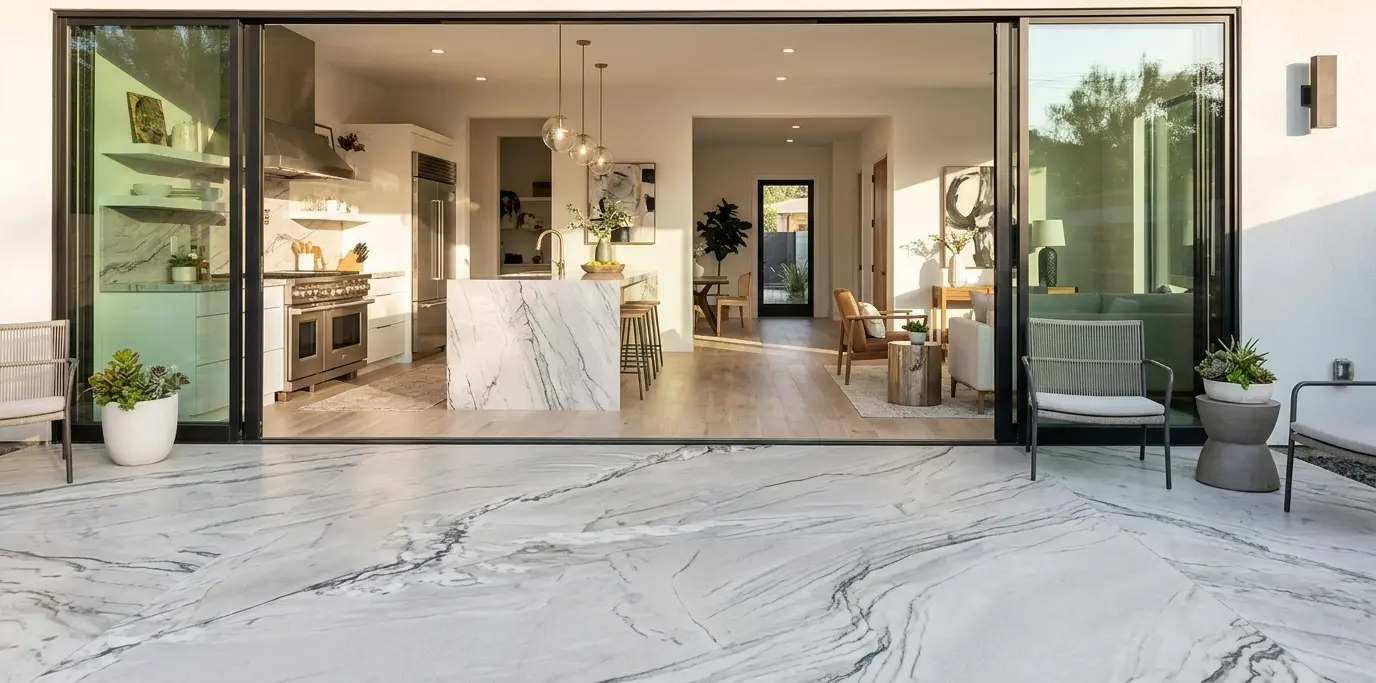
Matching Material to the Actual Spot in the Yard
The mistake isn't picking travertine. It's picking it for a wall or surface with zero shade, where a UV-resistant option, whether that's granite, quartzite, or a porcelain equivalent, would have made more sense from the start.
Seeing color and finish under actual outdoor light matters more than a showroom photo can convey. Viewing the actual slab in person is the only way to get a true read before anything's finalized.
The Reno and Sacramento showrooms are also worth checking for anyone closer to that side of the area, and finding whichever showroom sits nearest takes just a minute on the showroom locations.
Sun exposure also shifts with the seasons. A wall shaded through most of summer by a tree's canopy can sit in near-constant winter sun once the leaves are gone, which is worth factoring in for anything expected to look consistent year-round.
Conclusion
Before finalizing any exterior stone choice, the question that matters most is how much direct, unblocked sun the spot actually gets across a full day, not just at the moment of measuring or picking a sample under showroom lighting. That answer, more than the material's name or its look, determines whether granite, quartzite, travertine, or a porcelain equivalent is the right call for that particular corner of the yard.
Once that's settled, requesting a slab quote is the direct next step toward getting the right material sourced for that spot.
Note: Some images on this page may be conceptual renderings created to illustrate design possibilities and may not depict actual installations.
Frequently Asked Questions
Yes. Granite carries a UV-resistant rating, though how it holds up over time can still vary somewhat by color and finish, so checking a sample in actual sunlight is worth doing before committing to a full installation area.
Travertine simply doesn't carry the same UV-resistant classification as granite, quartzite, and porcelain. It still performs well outdoors in shaded or partially covered spots, just not in full, unblocked sun the way the other three do.
Yes. Porcelain is available in a travertine-look finish along with granite-look and quartzite-look options, making it possible to get a similar appearance with UV resistance built in.
Often, yes, more reliably than natural stone can match itself. Because porcelain is manufactured to a consistent run, a look-alike porcelain addition tends to match more predictably than sourcing a new natural stone slab from the same quarry lot years later.
Viewing slab material in person under real outdoor light gives the clearest sense of natural variation, more than any photo can offer. A free design consultation can also help match a specific material to a specific spot's sun exposure.