Granite, quartzite, and travertine are all suited to exterior stone applications, but each performs differently outdoors. Quartzite is the hardest of the three, typically rating 7 to 8 on the Mohs scale, and holds up best under constant direct sun and heavy foot traffic. Granite rates close behind at 6 to 7 and is also UV resistant, making it a strong match for pool decks, walkways, and outdoor walls in full sun.
Travertine is noticeably softer than both and isn't rated for UV resistance the way granite and quartzite are, yet it stays cooler underfoot around pools and takes to pattern layouts like the classic French pattern more naturally than a single large-format slab. None of the three is a universal best choice: the right one depends on how much sun and traffic a specific patio, pool deck, or walkway sees.
Which Handles Direct Sun Best: Granite, Quartzite, or Travertine?
Geologists split most exterior building stone into two broad families: siliceous stone, which includes granite and quartzite, and calcareous stone, which includes travertine. This breakdown of stone paving durability lays out why siliceous stone tends to hold up better under heavy exterior traffic and harsher sun exposure, while calcareous stone is generally better matched to more controlled outdoor settings.
That single distinction explains most of what separates these three stones once they are installed outdoors. It also explains why Nova Tile and Stone carries all three across our full range of exterior stone and pavers rather than pushing one as the universal answer.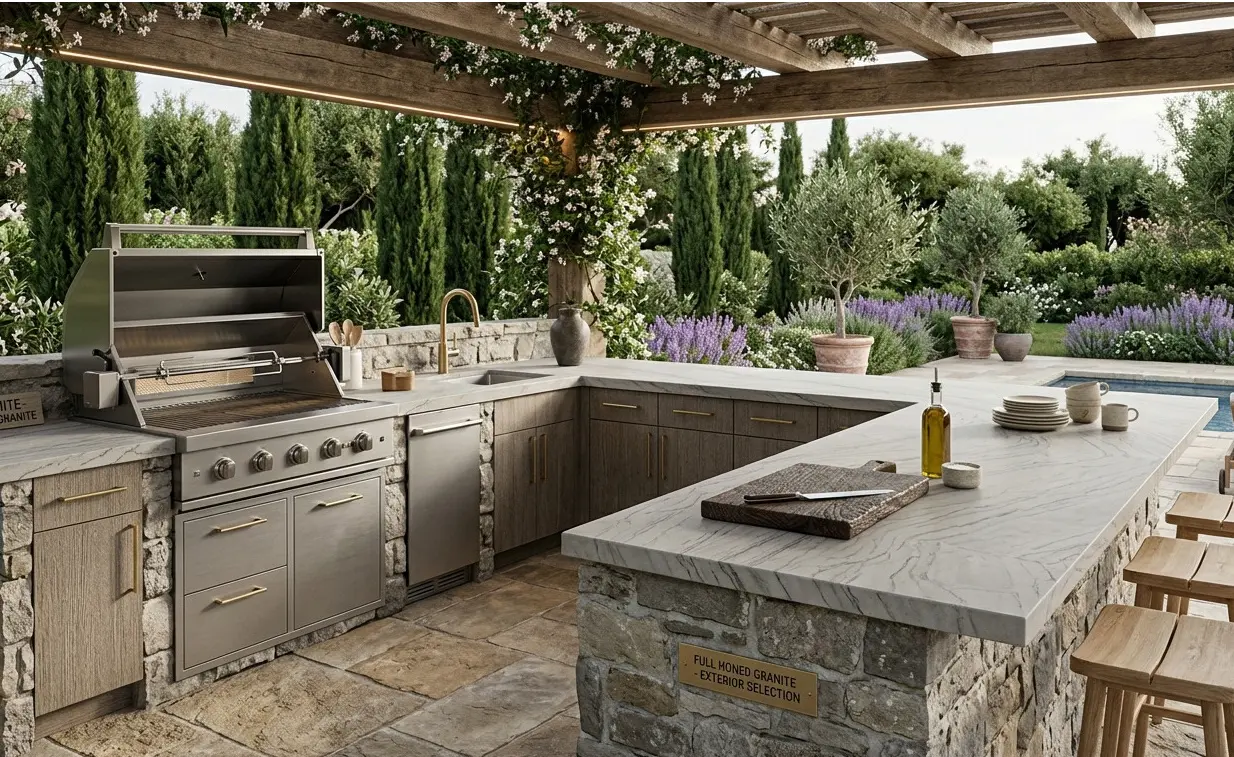
Granite Handles the Toughest, Sunniest Spots
Granite typically sits between 6 and 7 on the Mohs hardness scale, dense enough to resist scratching from pool furniture, foot traffic, and years of exposure. It is also UV resistant, though performance still varies by color and finish, so a dark granite in full desert sun behaves differently than a lighter one.
Titanium granite works well in that role: a dark gray to near-black base with silver, white, and gold veining that reads consistently under direct light rather than washing out. For an outdoor kitchen or bar area next to a patio, that same material extends from the decking into the adjoining surface, keeping the look consistent across the whole footprint.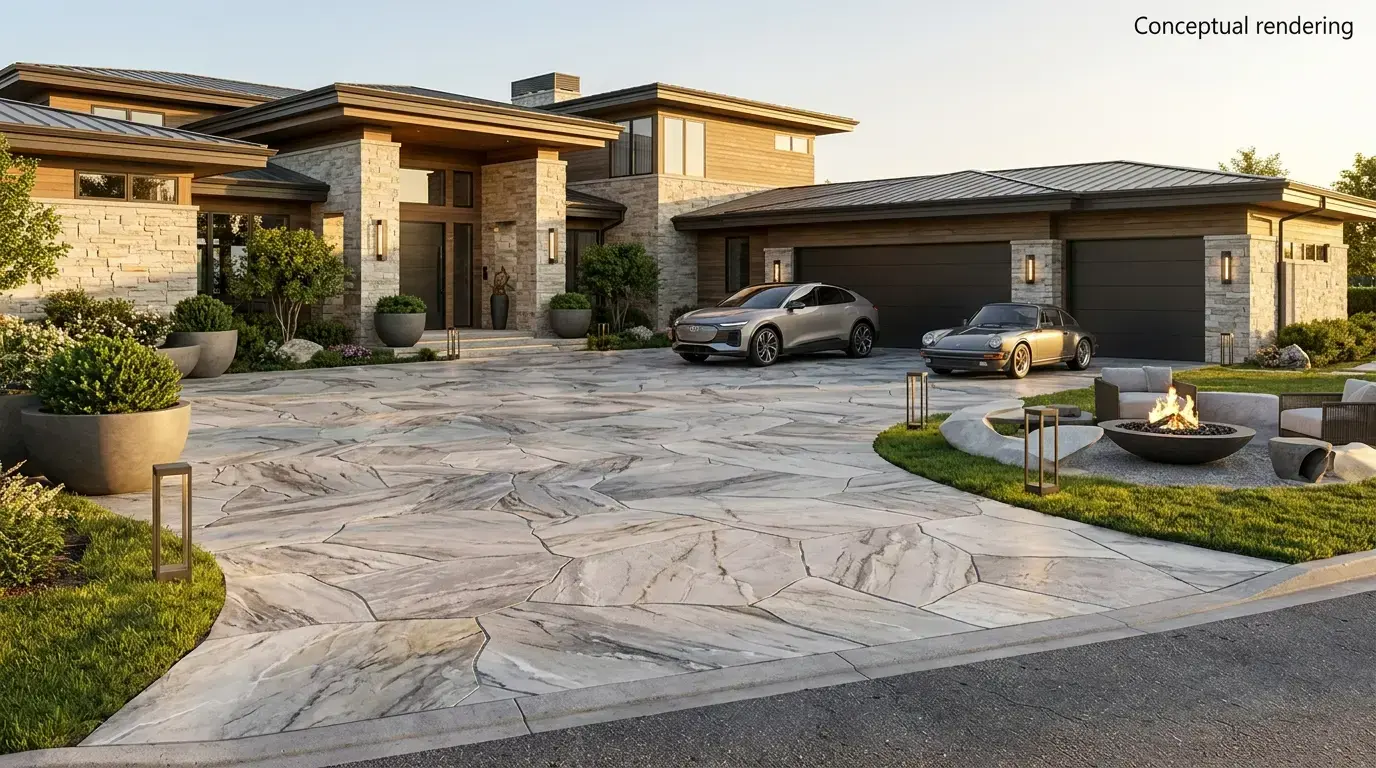
Quartzite Raises the Bar on Hardness
Quartzite forms underground under enough heat and pressure to outclass most other natural stone on hardness. Zermatt quartzite, for example, rates 7 to 8 on the Mohs scale, harder than granite and dense enough that moisture absorption becomes far less of a concern.
That hardness does not remove the need for thoughtful color selection under UV exposure, since Zermatt quartzite is UV resistant but still varies in fade performance by tone and finish. For areas exposed to freezing temperatures, confirm the selected quartzite product’s water absorption and freeze-thaw suitability, along with the installation requirements. A leathered finish adds texture, but it does not by itself establish wet slip resistance. Confirm that the selected product and finish are suitable for pool surrounds.
Travertine Trades Hardness for Pattern and Comfort
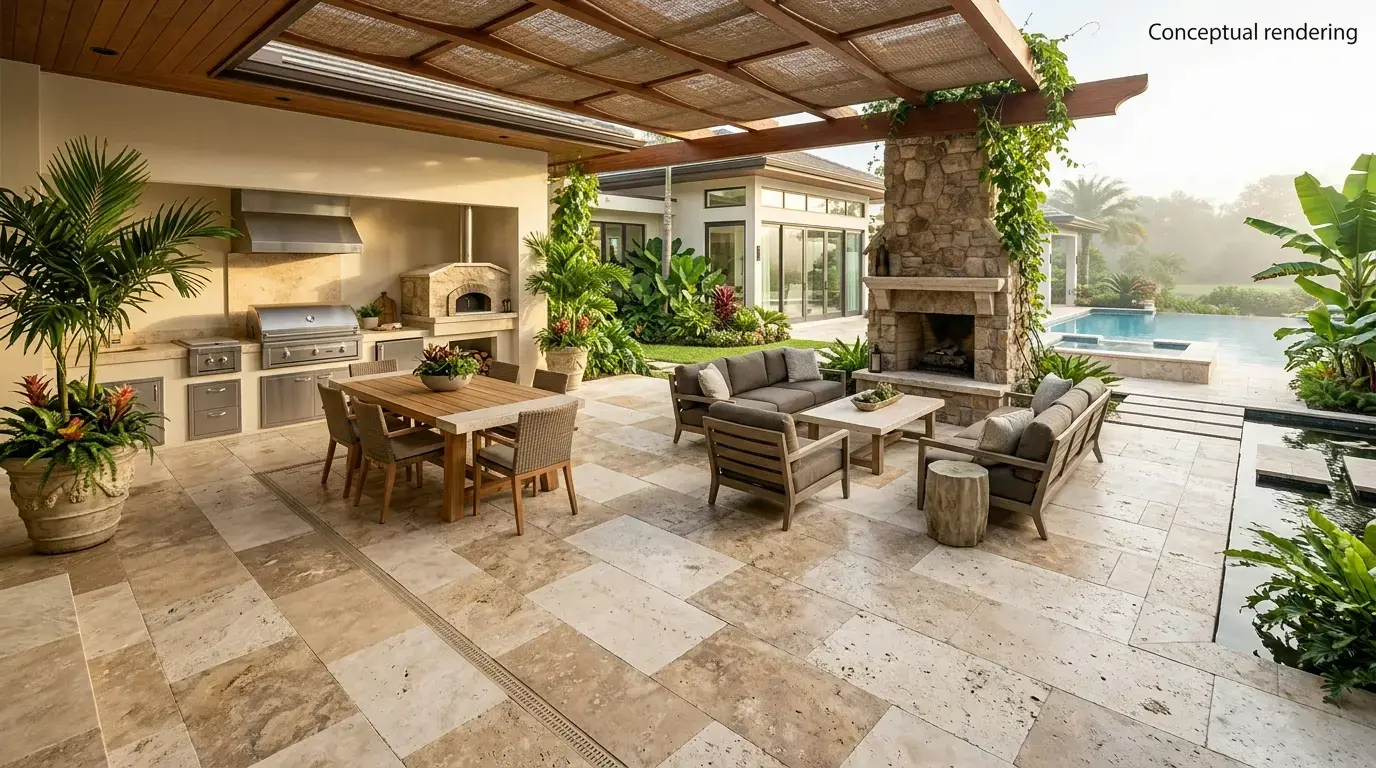
Travertine is noticeably softer than granite or quartzite on the Mohs hardness scale, and it is not rated for UV resistance the way the other two are. Homeowners who choose it anyway are not ignoring that. They are prioritizing something travertine does that the harder stones do not.
Travertine comes from quarry regions including Tivoli, Denizli, Kashan, and Veracruz, and each origin carries its own tonal range, from cooler silvers to warmer walnut and gold. Water absorption runs 1 to 3 percent, which is why sealing on a regular schedule matters more here than it does for the denser stones.
Surface temperature varies with color, finish, and sun exposure. For pool surrounds, confirm the selected travertine’s wet slip resistance rather than relying on a honed or leathered finish alone.
Matching Finish to the Job in Front of You
The finish matters as much as the material once these three stones are up for comparison in a specific space. A polished surface intensifies color and suits a vertical accent wall, but it is not the finish anyone should choose for a walking surface next to a pool.
Honed and leathered finishes show up more often on horizontal exterior surfaces across all three stones for that reason. A polished granite or quartzite slab reflects light in a way that can be genuinely dazzling on a wall, but underfoot on a wet pool deck, that same shine turns into a slip hazard nobody wants. Travertine rarely gets a full polish outdoors at all, since its honed and leathered options already carry the tactile, slightly matte look most homeowners associate with the stone in the first place.
Slab size plays into this decision too. Large-format quartzite runs, cut without visible seams, tend to suit long, open patio spans, while travertine's classic French pattern layout, mixing several tile sizes into one interlocking arrangement, fits smaller courtyards and pool surrounds where a bit of visual rhythm reads better than one continuous slab. It helps to see the actual color and finish in person rather than judging from a photo, which is part of why we keep our current slab inventory updated online alongside what is physically on the showroom floor.
Fireplace Surrounds Ask a Different Question Than Decking
All three stones work as fireplace surrounds, but the deciding factor there is rarely hardness. Outdoor fireplaces come in enough configurations, wood burning, gas, and everything built around a specific footprint, that the range of outdoor fireplace styles is worth a look before locking in a stone choice, since the surround needs to fit the fireplace type as much as the yard. Confirm the selected stone’s thermal limits and follow the fireplace manufacturer’s clearance and installation requirements.
Granite's density and quartzite's color stability both suit a fireplace surround that sits in full sun for most of the day. Travertine's warmer tones and softer texture tend to read better around a fireplace shaded by a patio cover, where UV exposure is less of a factor to begin with. If you are weighing options at this stage, booking a showroom appointment lets a design consultant walk through slab options against your actual fireplace dimensions.
What Ongoing Care Looks Like for Each Stone
None of these three stones is maintenance-free outdoors, but the maintenance looks different for each. Granite is non-porous enough that regular cleaning is usually sufficient, though periodic sealing still helps it resist staining over years of exposure. Basic granite cleaning outdoors comes down to mild soap and a soft cloth, favoring that over anything abrasive that could dull the surface over time.
Quartzite follows a similar low-maintenance pattern given its density. Travertine’s sealing needs depend on the specific product, finish, sealer, and exposure. Follow the stone supplier’s and sealer manufacturer’s care instructions to determine when resealing is needed.
Deciding Which Stone Fits Your Exterior Project
The honest answer to granite, quartzite, or travertine depends on what a specific patio, pool deck, or walkway actually demands. A full-sun pool deck with heavy foot traffic points toward quartzite or granite. A shaded patio built around pattern and warmth points toward travertine.
A simple way to narrow it down: rank how much direct sun the space gets, how much foot traffic it sees, and how much you care about pattern and texture versus a uniform surface. Heavy sun and heavy traffic push toward quartzite first, granite second, with travertine reserved for shaded or lighter-use areas where its softer profile is less of a tradeoff.
Comparing actual slabs side by side is more useful than comparing specs on a page. That is why Nova Tile and Stone keeps granite, quartzite, and travertine together under one exterior stone selection rather than splitting them across separate lines, whether you are closest to our Reno, Minden, Sacramento, or Fernley showroom.
Once you have settled on a slab, requesting a quote on that exact piece is the fastest way to see where your project stands.
Note: Some images on this page may be conceptual renderings created to illustrate design possibilities and may not depict actual installations.
Frequently Asked Questions
Granite and quartzite are both rated UV resistant, though performance still varies by color and finish. Travertine is not rated for UV resistance, so its coloring can shift in appearance over time in direct sun, which some homeowners view as a bonus rather than a flaw.
Travertine can be suitable for pool surrounds when the specific product and finish are approved for that use. A honed or leathered finish does not by itself establish wet slip resistance. Confirm suitability for wet areas, including the effect of any sealer.
Quartzite is the hardest of the three, often rating 7 to 8 on the Mohs scale compared to granite's 6 to 7. Travertine is considerably softer than both, which is part of why it needs more regular sealing outdoors. That extra hardness makes quartzite a strong choice for high-traffic patios and pool surrounds.
All three can be considered for outdoor fireplace surrounds, provided the selected product is suitable for the expected heat and weather exposure. Confirm the stone’s thermal limits and follow the fireplace manufacturer’s clearance and installation requirements.
Resealing frequency depends on the specific stone, finish, sealer, and exposure. Follow the stone supplier’s and sealer manufacturer’s care instructions rather than applying a fixed schedule to all exterior installations.