Yes, travertine pavers get hot in direct sun, like every paver. How hot they get depends largely on how much sunlight the surface reflects, which is closely tied to color, rather than on the stone’s name alone. The same rule applies to any paver, whether it is travertine, granite, quartzite, or porcelain.
That runs against much of what homeowners read online, where travertine is often described as a stone that stays cool. Independent research supports part of that idea, but it points first to a simpler rule: lighter, more reflective surfaces run cooler than darker ones.
This guide covers what the research actually measured, which popular claims hold up and which do not, and how to compare pavers for a sunny patio or pool deck before you buy. It is written for homeowners in Sacramento and Northern Nevada planning pavers that will spend summer afternoons in full sun.
Key takeaways:
- Every paver warms up in direct sun, and travertine is no exception.
- In a peer-reviewed study of concrete paving, light colors warmed up 5 to 6°C (about 9 to 11°F) less on average than dark ones.
- One Japanese study found travertine’s structure helped, but it tested an Okinawan limestone sold as travertine.
- Compare light and dark options side by side in natural daylight before you buy.
What Actually Decides How Hot a Paver Gets
The Heat Island Group at Lawrence Berkeley National Laboratory, a U.S. Department of Energy lab, puts it plainly: dark pavements get hot in the sun because they absorb 80 to 95 percent of sunlight. The property that matters is solar reflectance, the share of incoming sunlight a surface bounces back, measured on a scale from 0 to 1, or 0 to 100 percent.
The same lab shows infrared and regular photos of one road with a light section and a dark section side by side. In that comparison, the light section measured about 17°C (30°F) cooler than the dark section.
The EPA’s heat island program reports a similar gap. In an Arizona pilot study, conventional asphalt reached surface temperatures up to 152°F at midday, while cool pavements, in this case reflective coatings applied over asphalt, stayed 10 to 16°F cooler.
Reflectance is not fixed, either. Berkeley Lab also notes that concrete pavement tends to darken with tire and grease stains as it ages, falling from a solar reflectance of 30 to 50 percent when new to 20 to 35 percent when aged, a reminder that a surface’s condition can change how much sunlight it reflects.
Paving also covers more ground than most people assume. The lab estimates pavements make up about one third of urban surfaces, drawing on a case study of Sacramento, which is why the lab treats paving as a major contributor to urban heat.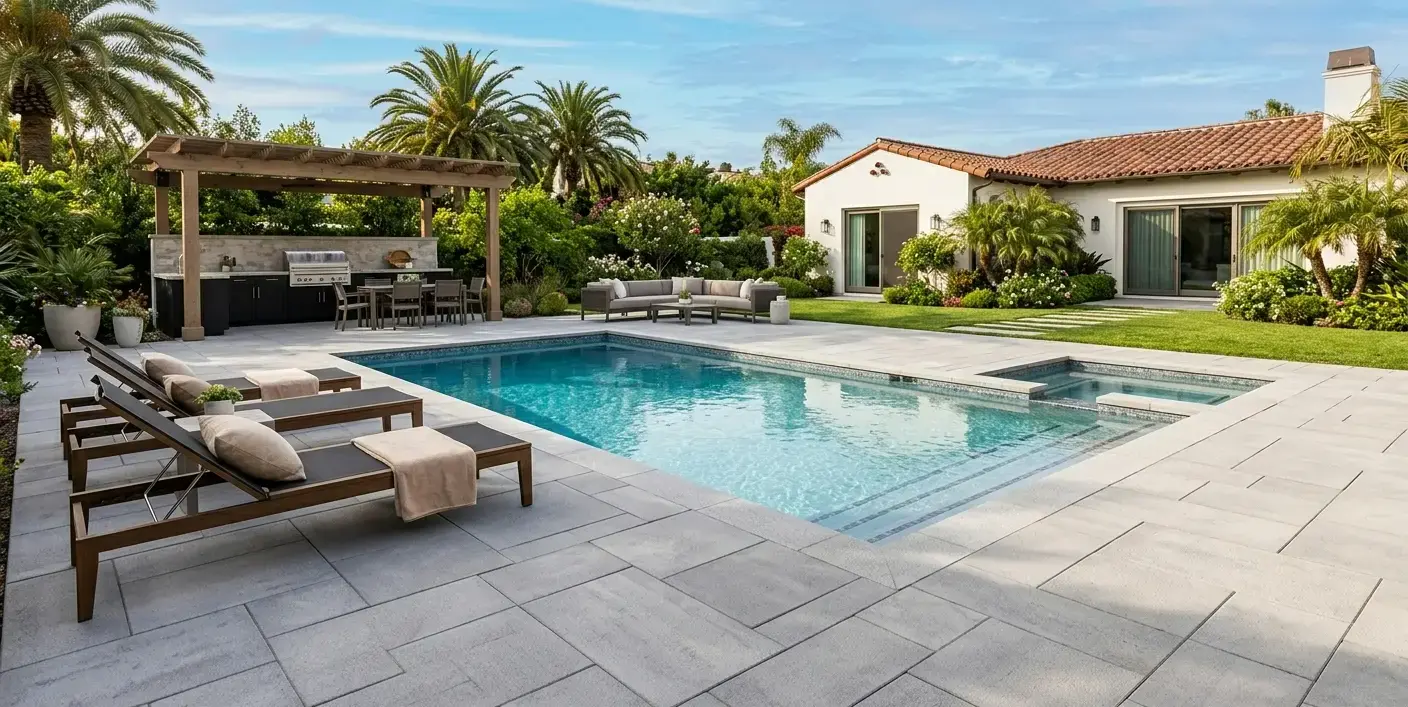
What One Peer-Reviewed Study Measured on Light and Dark Paving
In a peer-reviewed study, researchers in Budapest, publishing in the journal Geographica Pannonica in 2019, measured the surface temperature of real urban materials during spring and summer campaigns in 2018 and 2019. Among concrete pavements, they found that light-colored surfaces warmed up 5 to 6°C less on average than dark-colored ones, a gap of roughly 9 to 11°F.
That study measured concrete paving, not travertine, and the distinction matters. It shows color moving surface temperature by several degrees within one type of material. Applying the same logic, a cream travertine paver and a charcoal one should not be expected to feel the same in afternoon sun.
Color is also less fixed than it looks on a sample board. Our exterior stone guide points out that stone color shifts noticeably in direct sun versus shade, so judge a paver’s tone outdoors rather than under showroom lights.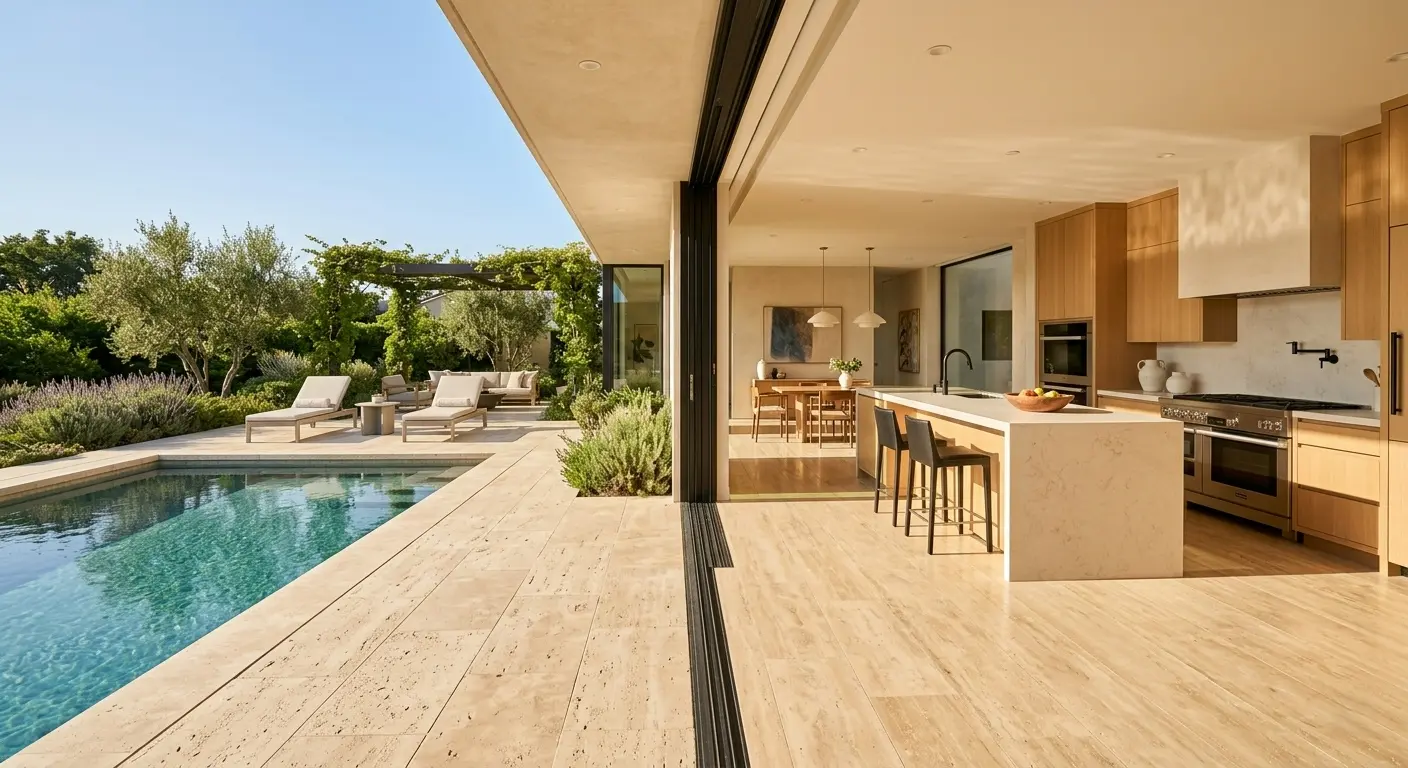
What the Research Says About Travertine Itself
Search this topic and you will find claims that travertine stays cool because of its porous structure, or because it draws coolness up from the ground. Most of the temperature figures we found came from stone sellers or from articles that do not explain how they were measured, and we found nothing supporting the idea that it draws coolness from the ground.
The EPA’s heat island guidance names solar reflectance, thermal emissivity, and heat capacity as the properties that determine how materials reflect, emit, and absorb the sun’s energy. ASTM’s guidance on surface heat adds that surfaces with low emissivity cannot radiate heat to the sky effectively. In other words, color is not the only factor, which is why the question of travertine’s structure is worth asking.
The pores themselves are real. Our guide to natural stone for outdoor surfaces notes that travertine forms through mineral deposition from water and has natural pores and voids.
The structure claim has more behind it. Researchers in Japan at the National Institute for Environmental Studies compared “Katsuren travertine,” a limestone rich in tiny marine fossils mined on Okinawa, with concrete blocks in full sun. When they painted the concrete to match the travertine’s color and reflectance, the travertine still came out ahead on the researchers’ heat measurements, and the authors concluded that thermal properties such as heat capacity contributed alongside reflectance.
That research has limits worth knowing. It is a single study, and the painted-concrete comparison ran in November, when sunlight is weaker than in summer. Katsuren travertine is also a different stone from the spring-deposited travertine described on our natural stone page, and we have not found independent testing that compares imported travertine pavers with granite, quartzite, or porcelain of the same color.
Our position: travertine’s structure may give it a modest edge over concrete of a similar tone, but color is the factor the research shows most consistently, and it is the one you choose directly. Choose by tone first, then let texture, finish, and look decide the rest.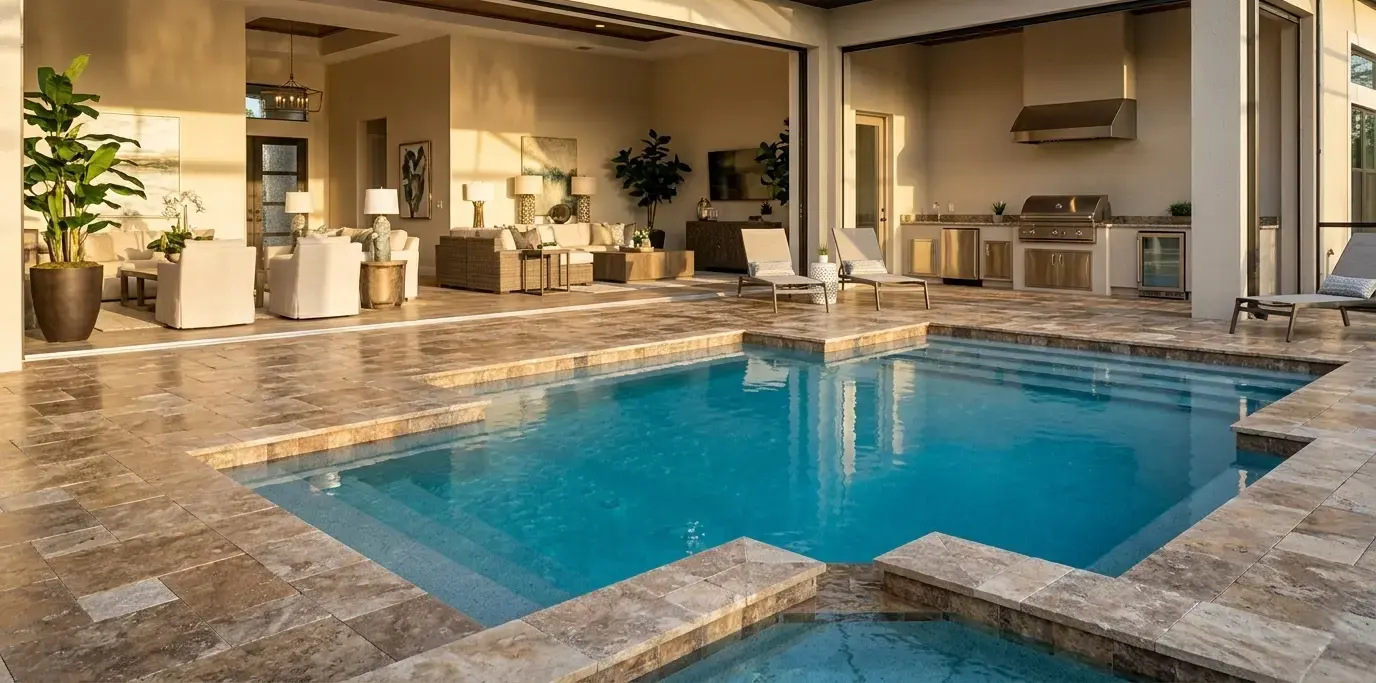
How to Compare Pavers for Heat Before You Buy
One number designed for this kind of comparison is the Solar Reflectance Index, or SRI. ASTM International’s E1980 practice explains how to calculate SRI from a surface’s measured solar reflectance and thermal emittance, producing one figure that rates a surface’s temperature against black and white reference surfaces.
That figure is not always available. The EPA notes there is no official standard or labeling program for cool paving materials, so do not expect to find an SRI value on every product sheet.
Without data, tone is your best guide. Because lighter, more reflective pavers run cooler, comparing tones side by side is a practical stand-in for comparing heat. When you browse our full material selection for pavers, shortlist a light option and a darker one, and look at them in daylight where you can, since stone color shifts outdoors.
Keep the time of day in mind as well. The EPA’s Arizona figures were measured at midday, so picture how the space will be used in the middle of the day, not just in the cooler morning hours.
Choosing a Paver Material From Our Selection
Granite, quartzite, travertine, and outdoor-rated porcelain pavers are all good fits for outdoor floors, which leaves you free to choose a paver by color rather than by material name. Porcelain also comes in looks such as travertine look and limestone look, so a pale travertine appearance is not limited to natural stone.
In Reno, Minden, and Fernley, heat is only half the picture. Our natural stone guide notes that more porous stones such as travertine can be more susceptible to cracking when water gets into the surface and freezes repeatedly, so ask about freeze-thaw suitability as well.
For a sunny pool deck or patio, our advice is simple: start with the lightest tone you like the look of, then narrow by finish and texture. The studies above measured surface temperature, not how a paver feels to bare feet, so treat a lighter tone as extra margin rather than a guarantee of comfort in peak afternoon sun.
Darker stone still earns a place in shaded areas and accent borders that stay out of the strongest afternoon sun. The EPA lists improved comfort in spaces where people gather or children play among the benefits of cooler pavements, which describes many backyards with a pool.
The same color rule applies to the stone around your pavers that you sit on or lean against. Granite is a good fit for outdoor use, and our slab inventory lets you compare granite options for a seat wall or bar-height ledge before you request a quote on the slabs you shortlist.
Conclusion
Seeing pavers in person makes it easier to narrow your options. Nova Tile and Stone carries pavers, pool coping, and exterior stone, so you can visit one of our four showrooms in Reno, Sacramento, Minden, or Fernley and compare options side by side.
If you would like help building that shortlist, book a free design consultation and bring photos of the space with a note on where the afternoon sun lands. Leave with a shortlist of two or three tones that suit the way your deck or patio is used.
Note: Some images on this page may be conceptual renderings created to illustrate design possibilities and may not depict actual installations.
Frequently Asked Questions
Yes. Like any paver, travertine pavers warm up in direct sun, and how hot they get depends largely on how much sunlight they reflect, which is closely tied to color. Lighter, more reflective pavers run cooler than darker ones.
Possibly, at the same color. One field study found a Japanese limestone sold as “Katsuren travertine” came out ahead on the researchers’ heat measurements against concrete painted to match its color and reflectance, though that stone differs from typical imported travertine. Compare light options of each side by side in daylight.
Lighter colors. In a peer-reviewed study of concrete pavements, light-colored surfaces warmed up 5 to 6°C (about 9 to 11°F) less on average than dark-colored ones.
SRI, or Solar Reflectance Index, is a single number calculated under ASTM E1980 from a surface’s solar reflectance and thermal emittance. It rates how hot a surface gets against black and white reference surfaces, though pavers are not always sold with an SRI value.
Granite, quartzite, travertine, and outdoor-rated porcelain pavers are all good fits for outdoor floors. For a deck in full sun, pick the lightest paver tone you like and compare options side by side in natural daylight before you decide.