AT A GLANCE
- Concrete, clay brick, and natural stone are the three common paver types.
- Concrete pavers are factory-made from cement, aggregate, and color pigment.
- Concrete pavers come in many shapes, colors, and finishes.
- Clay brick pavers are kiln-fired, so their color runs through the unit.
- Natural stone pavers include granite, quartzite, limestone, and travertine.
- Brick pavers rated Class SX are made for freezing weather.
IN THIS POST
- What Are the Three Common Types of Pavers?
- What Are Concrete Pavers Made Of?
- What Are Brick Pavers Made Of?
- What Are Natural Stone Pavers?
- What Do Paver Ratings Mean?
- Do Pavers Fade Over Time?
- Which Paver Type Is Better?
- Which Pavers Work for Patios, Walkways, and Driveways?
- Conclusion
- Frequently Asked Questions
- Sources
The three common types of pavers are concrete pavers, clay brick pavers, and natural stone pavers. Concrete pavers are molded from cement, aggregate, and pigment. Clay brick pavers are made from clay and shale fired in a kiln. Natural stone pavers are cut from quarried rock such as granite, quartzite, or limestone.
Concrete pavers come in many shapes, colors, and finishes, though their surface can change with wear over time. Clay brick pavers tend to keep their original color because it is fired through the whole unit. Natural stone pavers offer variation in color and texture from piece to piece.
Each paver type is also rated in its own way. According to the ASTM C936 standard, interlocking concrete pavers must meet minimum requirements for strength, absorption, abrasion, and freeze-thaw durability. Clay brick pavers are rated for weather exposure and traffic level. In ASTM standards, natural stone has no single paver standard, so each type of stone is evaluated on its own.
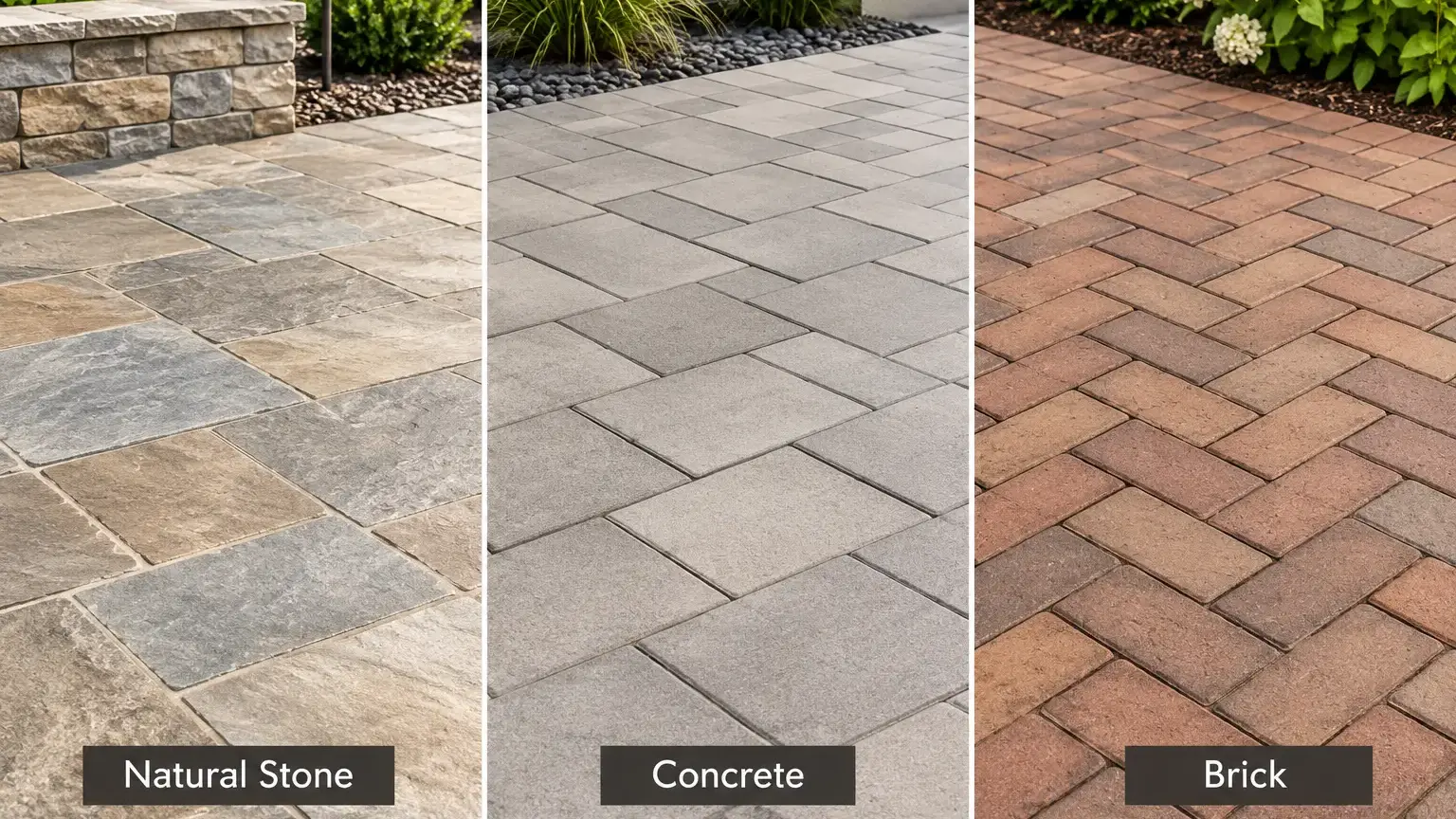
What Are the Three Common Types of Pavers?
Concrete, clay brick, and natural stone are the three most common paver types. Whatever the material, all three are laid as individual units with joints between them rather than poured as one continuous slab.
That shared trait is the main difference between pavers and poured concrete. A poured slab is rigid, while pavers form a surface that can flex with ground movement. It also makes repairs simpler. With interlocking concrete pavers, individual units can be lifted, the base adjusted, and the same pavers put back in place.
What Are Concrete Pavers Made Of?
Concrete pavers are made from cement, sand and gravel, and usually color pigment. They are formed in factory-controlled conditions by machines that press and vibrate the mix, which produces dense, strong pavers that can be molded into many shapes.
Concrete pavers also come in a wide range of colors and surface finishes, including smooth, textured, tumbled, and polished looks. This variety makes it easy to match concrete pavers to different home styles, including designs made to look like brick or stone.
What Are Brick Pavers Made Of?
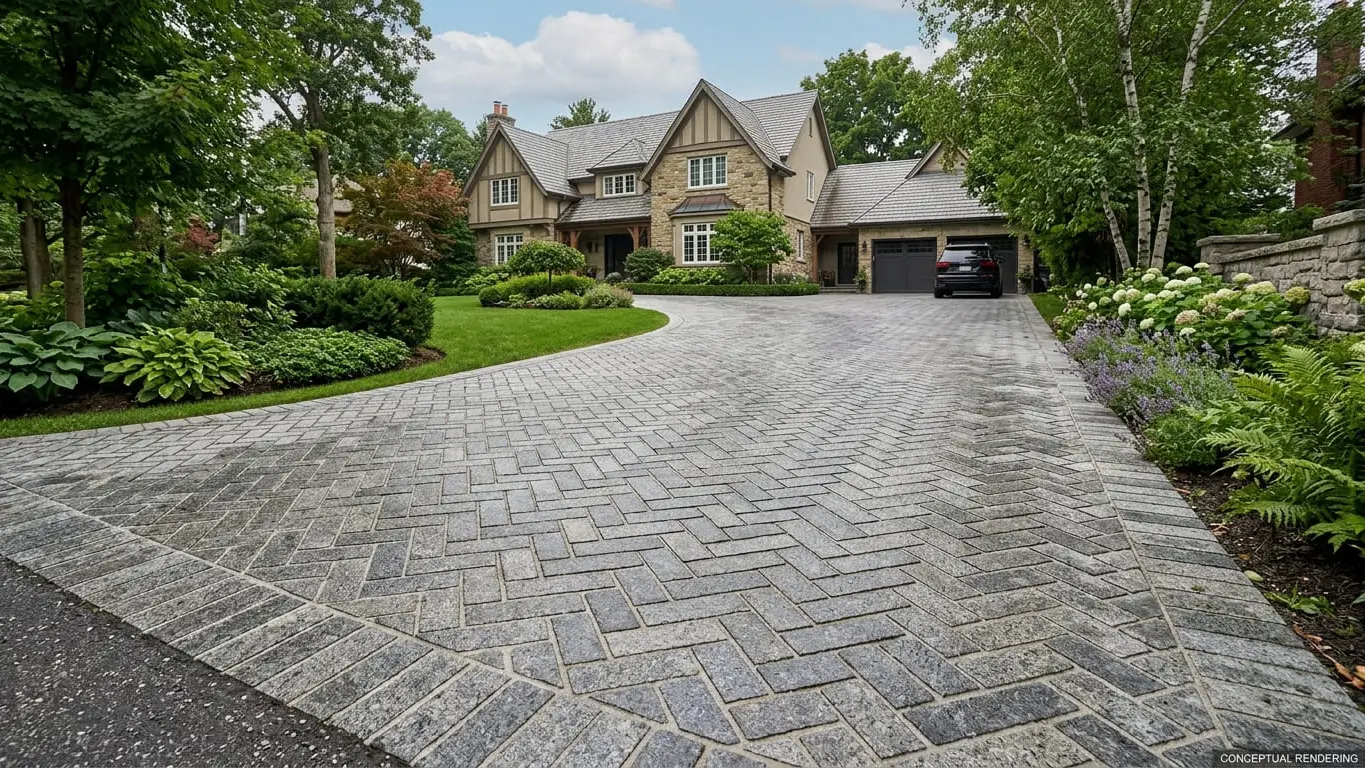
Brick pavers are made from clay and shale fired at high temperatures in a kiln. Unlike concrete pavers, their color comes from the raw clay rather than added pigment. Because the color is fired through the body of each paver, it doesn’t sit only at the surface.
Brick pavers are typically rectangular. Designs come from the pattern rather than the paver’s shape, with layouts such as herringbone, running bond, and basket weave. Their color range comes from natural clay and shale, which gives brick its warm, earthy tones.
Brick has a long track record as a paving material and suits traditional and historic architecture especially well.
What Are Natural Stone Pavers?
Natural stone pavers are cut from quarried rock, most commonly granite, quartzite, limestone, travertine, slate, and sandstone. They can be sawn into neat rectangles and squares for a tailored look, or split into irregular flagstone shapes for a more organic surface.
Unlike concrete and brick, natural stone has no single paver standard. Each stone type has its own standard, so granite, limestone, and travertine are each evaluated separately. Two stones that look alike can perform quite differently outdoors, so it helps to ask how a stone has been tested before choosing it for paving.
What Do Paver Ratings Mean?
Paver ratings tell you what kind of weather and traffic a paver was made to handle. Clay brick pavers have the clearest system, since they are rated for weather exposure and traffic level.
Two brick ratings are especially useful for homeowners:
- Class SX: made for areas where pavers may freeze while wet, such as places with cold winters.
- Type I to Type III: a traffic scale. Type I handles the heaviest wear, such as driveways, while Type III is meant for light foot traffic, such as home patios.
Concrete and natural stone don’t use these labels. For those materials, check the product’s data sheet or ask the supplier what outdoor uses the product is suited for.
Do Pavers Fade Over Time?
Some pavers can change in appearance over time. Concrete pavers are the most likely of the three to change color. Clay brick generally holds its color because it is fired through the unit, while natural stone’s color depends on the type of stone.
- Concrete pavers: Foot and vehicle traffic expose concrete pavers to dirt, stains, and wear, which can change how the surface looks over time. Sealers can enhance color, help limit fading, and protect against stains, though they need to be reapplied after a period of wear. Concrete can also develop a whitish haze called efflorescence, which is a cosmetic issue rather than damage.
- Clay brick pavers: Because the color is fired through the unit, chips tend to be less noticeable on brick. Brick can show the same kind of white haze, and it is also generally cosmetic.
- Natural stone pavers: Natural stone gets its color from its own minerals rather than added pigment. How a stone weathers depends on the type of rock, so when you request a slab quote, it’s worth asking our team which stones are suited to outdoor use.
Which Paver Type Is Better?
No single paver type is better for every project. Concrete offers many shapes and finishes, brick keeps its color with a traditional look, and stone gives natural variation from piece to piece. The table below lays out the main differences.
Feature | Concrete Pavers | Clay Brick Pavers | Natural Stone Pavers |
How it’s made | Molded in a factory | Fired in a kiln | Quarried and cut |
Color source | Added pigment | Natural clay | Natural minerals |
Over time | Can change with wear | Tends to hold color | Color comes from the stone |
Shapes | Many shapes and finishes | Mostly rectangles | Cut shapes or irregular |
Look | Clean or textured, many styles | Classic and traditional | Natural and one of a kind |
Price depends on more than the material. Location, pattern, thickness, color, and site conditions all affect what a paved area costs, so compare current pricing on the specific products you are considering.
Porcelain pavers are also worth knowing about as a fourth option. We compare them with natural stone in a separate post: Porcelain Pavers vs. Natural Stone for Hardscape Projects.
Which Pavers Work for Patios, Walkways, and Driveways?
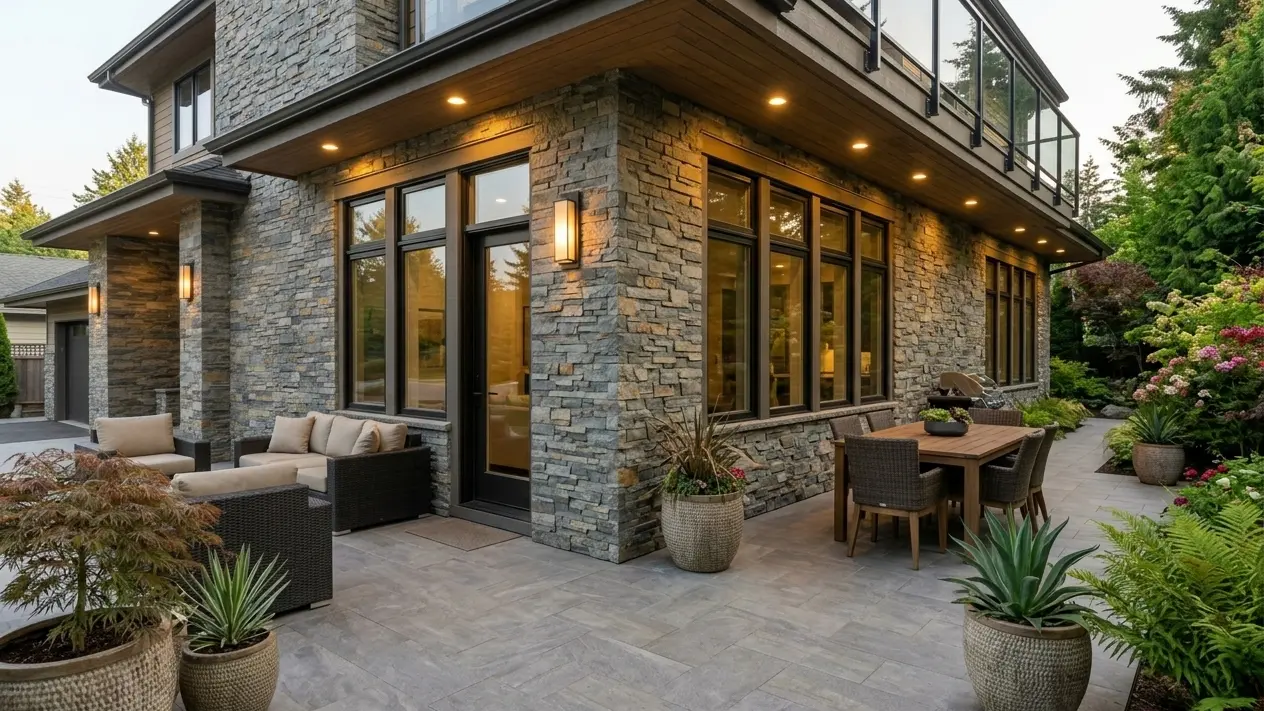
All three paver types can work for patios and walkways, where the choice depends mostly on look and budget. Driveways need pavers made to handle vehicle traffic.
Patios: Concrete offers many shapes, colors, and finishes. Brick fits traditional homes and patterned layouts, and natural stone suits spaces where a varied, organic surface is the goal.
Walkways: Busy walkways see more wear than patios, so choose pavers suited to regular foot traffic. Concrete pavers, walkway-rated brick, and sawn stone are all common choices.
Driveways: For concrete, choose interlocking pavers made to the ASTM C936 standard. Driveways with regular vehicle traffic typically use thicker pavers. For brick, look for pavers rated Type I. For natural stone, confirm that the stone and its thickness can handle the weight of vehicles.
Conclusion
Concrete, clay brick, and natural stone each suit different goals. Concrete pavers offer a wide range of shapes, colors, and finishes, clay brick pavers offer lasting color and classic patterns, and natural stone pavers bring one-of-a-kind variation to every surface. Whichever material you prefer, choosing a paver suited to your climate and the traffic the surface will carry is a practical way to narrow the choice.
At Nova Tile and Stone, we carry pavers and exterior stone for outdoor projects, including granite, quartzite, and travertine suited to outdoor use, as well as porcelain rated for exterior applications. Free design consultations are available if you’d like help comparing colors, finishes, and formats for your patio, walkway, or driveway.
Frequently Asked Questions
The three common types are concrete, clay brick, and natural stone. Concrete pavers are molded in a factory, clay brick pavers are fired in a kiln, and natural stone pavers are cut from quarried rock such as granite, quartzite, or limestone.
It depends on the material. Concrete pavers are often sealed to enhance color, help limit fading, and protect against stains, and the sealer needs to be reapplied over time. Clay brick pavers don’t need a sealer to keep their color, since the color is fired through the unit. Whether natural stone needs sealing depends on the specific stone and where it is used.
In many cases, yes. With interlocking concrete pavers set on sand, a damaged paver can be lifted out, the base adjusted, and a paver set back in place without redoing the whole surface.
For clay brick, look for Class SX, which is the rating for pavers that may freeze while wet. For concrete and natural stone, ask the supplier whether the product is suited to freezing and thawing.
Yes, when they are rated for it. Brick pavers rated Type I are made for heavy-wear areas such as driveways.
Sources
- ASTM C936/C936M, Standard Specification for Solid Concrete Interlocking Paving Units | https://webstore.ansi.org/standards/astm/astmc936c936m24
- Concrete Masonry & Hardscapes Association, Pavers vs. Concrete: Myths, Facts, and What Homeowners Need to Know | https://www.cmha.org/news-and-insights/pavers-vs-concrete-myths-facts-and-what-homeowners-need-to-know/
- Concrete Masonry & Hardscapes Association, Tech Note PAV-TEC-010: Application Guide for Interlocking Concrete Pavements | https://www.cmha.org/resource/pav-tec-010/
- Concrete Masonry & Hardscapes Association, Tech Note PAV-TEC-005: Cleaning, Sealing and Joint Sand Stabilization of Interlocking Concrete Pavement | https://www.cmha.org/resource/pav-tec-005/
- Brick Industry Association, Clay Pavers | https://www.gobrick.com/learn-about-brick/clay-pavers
- Brick Industry Association, Technical Note 9A: Specifications for and Classification of Brick | https://www.gobrick.com/media/file/9a-specifications-for-and-classification-of-brick.pdf
- Natural Stone Institute, ASTM International Standards | https://www.naturalstoneinstitute.org/stoneprofessionals/astm/
Note: Some images on this page may be conceptual renderings created to illustrate design possibilities and may not depict actual installations.