At a Glance
- Granite, quartzite, travertine, and porcelain are the outdoor picks.
- Where yards freeze, start with granite, quartzite, or porcelain.
- In full sun, choose granite or porcelain in a lighter color.
- Use honed or leathered finishes where people walk.
- Porcelain needs the least upkeep, and travertine needs the most sealing.
In This Post
- Which Stones Are Approved for Outdoor Use?
- Which Stone Holds Up Best Where Yards Freeze?
- What Changes in Full Afternoon Sun?
- Which Finish Is Safer Where Water Sits?
- How Much Upkeep Does Each One Need?
- Conclusion: What Should You Bring to a Design Consultation?
- Frequently Asked Questions
The best exterior stones for home patios, walls, and walkways are granite, quartzite, travertine, and porcelain. Granite and quartzite are dense natural stones that hold up to freezing nights with periodic sealing, travertine adds warm texture where water drains away quickly, and porcelain is the easiest of the four to maintain because it typically needs no routine sealing.
Exterior stone is natural stone or porcelain made for outdoor floors, walls, patios, walkways, and fireplace surrounds. The right one for a given spot depends on three things: how much direct sun it gets, whether it freezes, and where water sits.
Climate shows why those questions matter. Reno, home to one of our four showrooms, averages about 122 nights a year at or below freezing and about 65 days at 90 degrees or hotter, according to National Weather Service climate normals for 1991 to 2020. At Nova Tile and Stone, those four are the outdoor-approved materials in our selection, and our advice is to pick among them by exposure first and color last.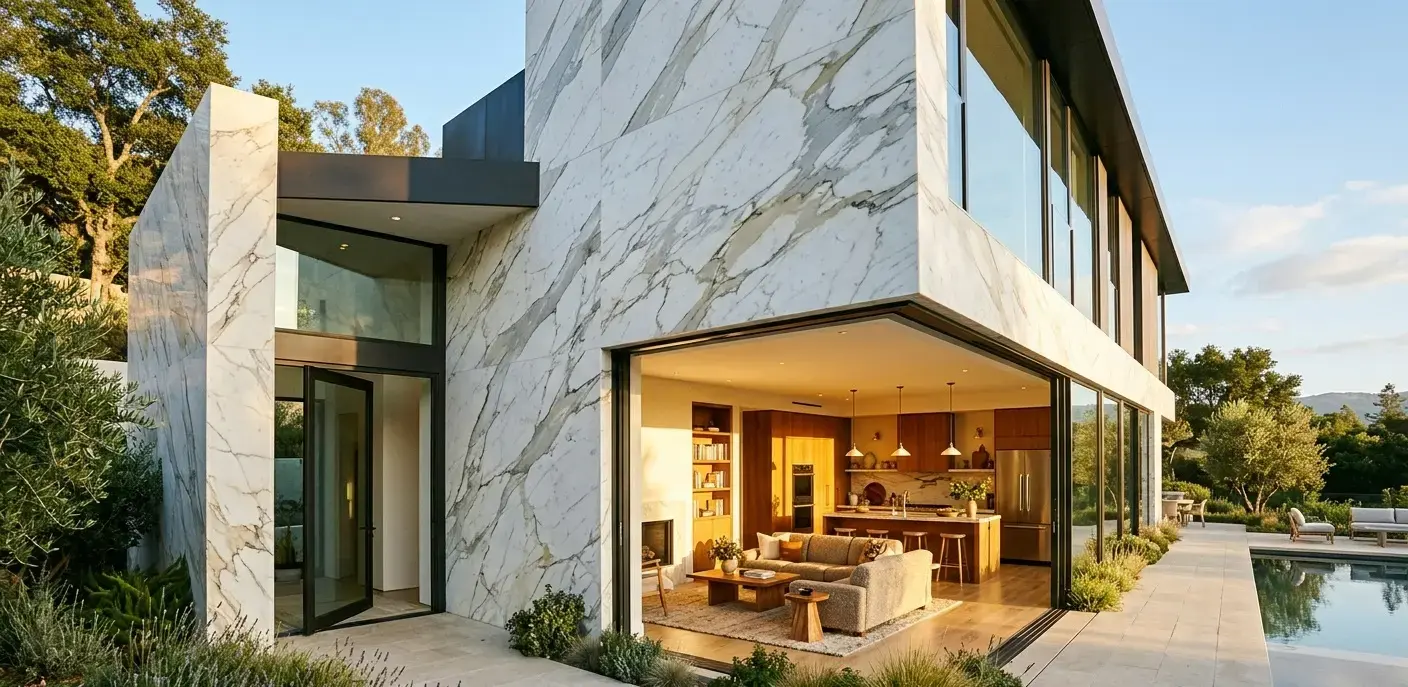
Which Stones Are Approved for Outdoor Use?
Granite, quartzite, and travertine are natural stone, and each is a good fit for exterior stone applications on floors, walls, and fireplaces. Porcelain is engineered rather than quarried, and it is a good fit for the same outdoor jobs.
Material | Type | Yards that freeze | All-day sun | Wet walking surfaces | Sealing | Best outdoor spots |
Granite | Natural stone | Strong choice; dense and absorbs little water | UV resistant, varies by color and finish; lighter colors tend to stay cooler | Honed or leathered finish | Periodic | Open patios, steps, pool edges, sunny walls |
Quartzite | Natural stone | Strong choice; dense and absorbs little water | Confirm the product’s sun rating; lighter colors tend to stay cooler | Honed or leathered finish | Periodic | Patios, steps, pool edges, walls |
Porcelain | Engineered | Strong choice; absorbs 0.5 percent or less (confirm frost rating) | UV resistant, varies by color and finish | Check the ANSI A326.3 use classification | Typically none | Patios, pool decks, low-maintenance areas |
Travertine | Natural stone | Only where water drains fast | Confirm the product’s sun rating | Honed or leathered finish | Most frequent of the four | Walls and covered areas; open patios in Sacramento once the sun rating is confirmed |
Marble, dolomite, and quartz are indoor materials in our selection and should come off an outdoor shortlist, however good each looks inside.
Quartz and quartzite are easy to mix up. Quartzite is quarried natural stone that suits outdoor use, while quartz is an engineered slab that stays inside. The names differ by three letters, and the answer for a patio is the opposite.
Format follows the job. Exterior materials come in different formats, such as slabs, tile, and pavers, so ask which formats your chosen material comes in before planning a wall and a path together. Our guide to natural stone for exteriors explains how each natural stone forms, and the live slab inventory shows what is in stock today.
Which Stone Holds Up Best Where Yards Freeze?
For a yard that freezes, start with granite, quartzite, or porcelain. Water is the reason: it soaks into a surface, freezes, expands, and works on the material from the inside.
A Natural Stone Institute course on testing natural stone explains that a stone that readily absorbs water can be more susceptible to damage in freezing weather. Granite and quartzite are dense stones that take in little moisture, which makes them the natural stones we recommend first for open patios, steps, and pool edges in Reno, Minden, and Fernley.
Travertine is a different case because it has natural pores and voids. It is suitable for outdoor use, but installation must match the application, and sealing does not turn a porous stone into a frost-proof one. In a yard that freezes, our position is simple: put travertine where water runs off quickly, such as a wall or a covered area, and keep it out of low spots where meltwater pools.
Porcelain’s case rests on one number. By definition, porcelain tile absorbs 0.5 percent water or less, as the Tile Council of North America explains. The council adds a caution worth remembering: low absorption usually means frost resistance, although not always, so ask to see the manufacturer’s frost rating for the exact product.
Orientation changes the answer as much as the city does. A wall sheds water quickly, while a patio, step, or pool edge can hold it in joints and low spots. That makes the ground the harder job, and it is where a dense stone or porcelain pays off first.
Mild-winter areas such as the Sacramento Valley see far fewer freezing nights than Reno. That gives travertine more room in warmer climates, on open patios as well as walls, once the product’s sun rating is confirmed.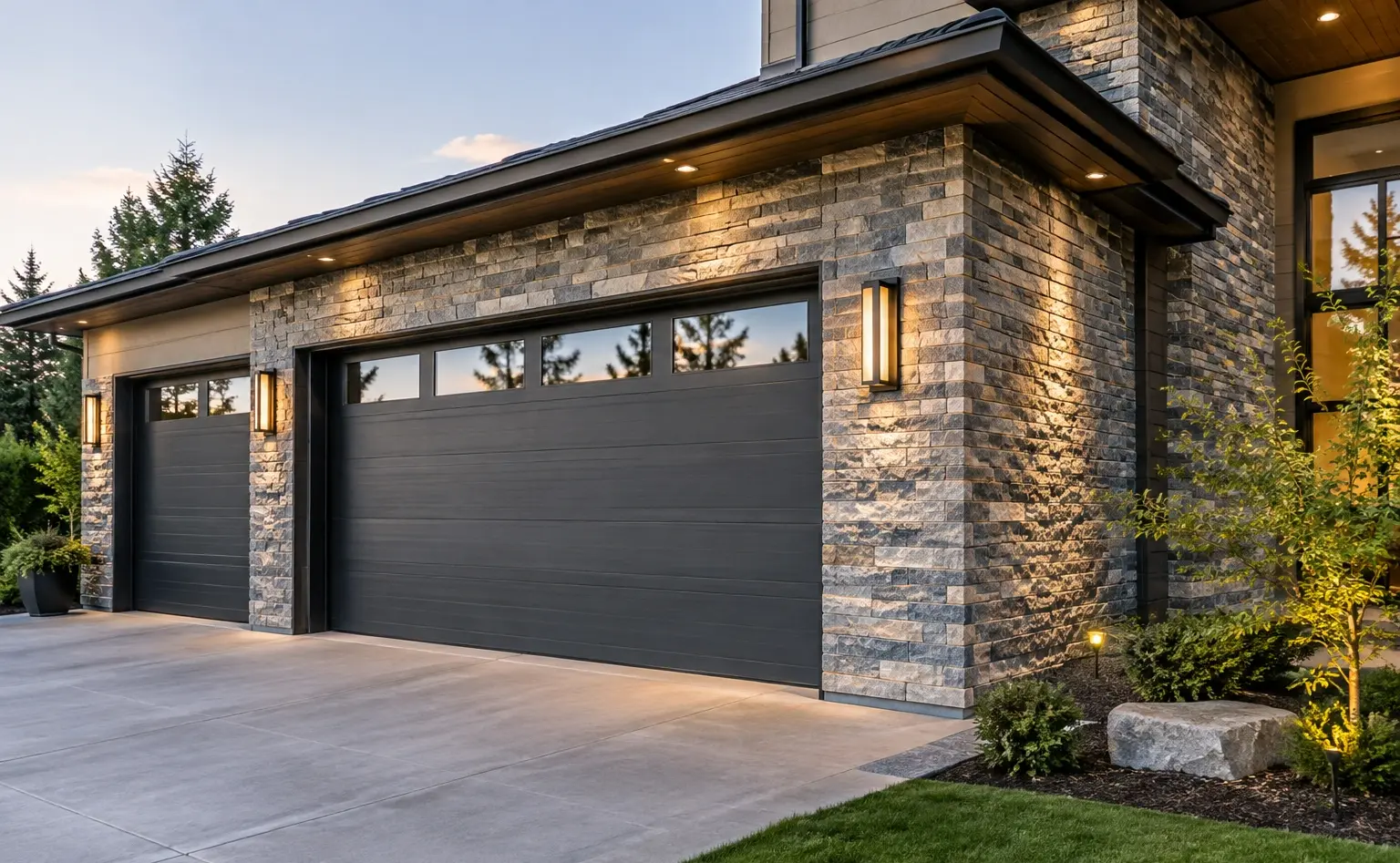
What Changes in Full Afternoon Sun?
Sun narrows the list in a different way. Granite and porcelain are the first choices for a south-facing or west-facing wall and for any unshaded patio. Both are UV resistant, but performance varies by color and finish.
Quartzite and travertine need one extra step. For either stone, confirm the specific product’s sun exposure rating with a specialist before it goes in an all-day-sun location. Our page on stone for home exterior finishes compares finishes and sealing needs for all four materials.
Color plays a part too. Darker stone absorbs more heat than lighter stone in long summer afternoons, which matters on a pool deck or a patio walked on barefoot. For those spots, a lighter granite, quartzite, or porcelain tends to stay more comfortable underfoot.
Finish matters as much as material once the sun is involved. A polished face throws glare in direct light, while honed and leathered finishes cut it down. On a wall that faces the afternoon sun, we would choose honed or leathered every time.
Showroom lighting looks nothing like midday sun in July, so take phone photos of the spot at midday and compare them against options from our tile and stone selection. Natural stone slabs vary in tone and veining from one to the next, so choose the actual slab in person and not from a photo.
Which Finish Is Safer Where Water Sits?
Skip polished stone on anything walked on outdoors. Honed and leathered finishes give more grip in wet conditions, and polished surfaces belong on vertical faces away from foot traffic.
Reno records only about 7 inches of precipitation in a normal year, according to National Weather Service climate normals. With that little rain, sprinklers, snowmelt, hoses, and pools often decide where a patio in a dry climate stays wet. Walk the area after the sprinklers run and note where water sits, because those spots set the finish for the whole surface.
Slip resistance has a national standard. ANSI A326.3 measures the dynamic coefficient of friction, and the Tile Council’s overview of that standard notes that it includes product use classifications. For outdoor porcelain, ask which ANSI A326.3 use classification the manufacturer lists, since it shows the kinds of areas the product is rated for.
More texture is not automatically better. The Natural Stone Institute course points out that a heavily textured surface adds grip but also catches more dirt. Choose enough grip for the wettest spot and plan on rinsing it.
All four materials are moisture resistant, but standing water should not be left for long periods. The quickest way to judge grip is by hand, so compare a honed and a leathered face side by side at our Reno, Sacramento, Minden, or Fernley showroom.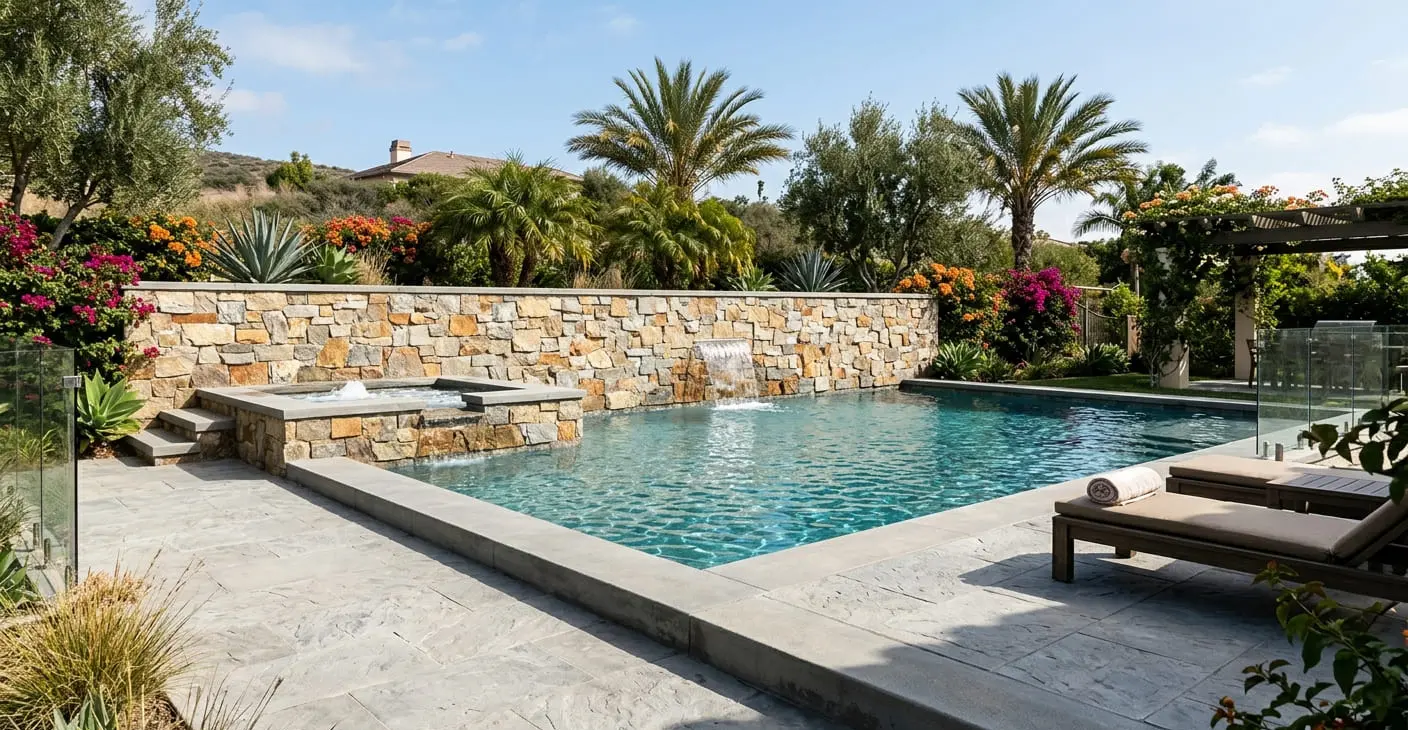
How Much Upkeep Does Each One Need?
Porcelain needs the least upkeep of the four exterior materials. It absorbs very little water, but regular cleaning is still recommended, and it typically needs no routine sealing.
Granite, quartzite, and travertine need periodic sealing, and travertine needs it most often because it is the most porous of the three. No fixed calendar applies. The Natural Stone Institute’s care and cleaning guide advises asking the stone supplier or sealer manufacturer how often to reseal, and notes that sealing makes stone more stain resistant, not stain proof.
Travertine carries one more care point. The Natural Stone Institute course groups it with calcareous stones, which are vulnerable to acids, even mild ones like lemon juice. Beside an outdoor dining table or under a citrus tree, spills should be cleaned promptly and harsh cleaners should be avoided.
Be honest about habits before choosing. A homeowner who will not reseal on schedule should pick porcelain, while one who wants real stone variation and accepts the upkeep should pick granite or quartzite for exposed areas.
For routine outdoor care, the same guide suggests flushing patio and pool areas with clear water and dealing with algae or moss as soon as it appears. Plan that routine along with the purchase, because sealed or not, outdoor stone still needs regular cleaning.
Conclusion: What Should You Bring to a Design Consultation?
Three notes make the decision faster. Write down how many hours of direct summer sun the spot gets, whether it freezes at your address and where water sits, and whether people will walk on the surface. Add phone photos taken at midday and rough measurements.
A free design consultation runs about 45 minutes, and those notes help a specialist at Nova Tile and Stone narrow four materials to one or two. Once a slab is chosen, request a slab quote using the slab’s name.
Note: Some images on this page may be conceptual renderings created to illustrate design possibilities and may not depict actual installations.
Frequently Asked Questions
Quartzite. It is a quarried natural stone that is suitable for outdoor use, but installation must match the application. Quartz is an engineered slab meant for indoor surfaces and is not a fit for patios, exterior walls, or other outdoor projects.
Yes. Granite, quartzite, and porcelain suit both freezing and mild climates. Travertine has more freedom where freezing nights are rare, such as the Sacramento Valley, while in colder areas like Reno it belongs where water drains away quickly.
Honed and leathered finishes give more grip in wet conditions than polished stone. For outdoor porcelain, check the ANSI A326.3 use classification the manufacturer lists.
Marble is an indoor material in our selection and is not recommended for exterior projects. For a marble look outdoors, ask about marble-look porcelain.
No. Sealing helps reduce how much moisture travertine absorbs, but it does not make a porous stone frost-proof. In a yard that freezes, use travertine where water runs off quickly, such as walls and covered areas.