Seven outdoor hardscape ideas are worth planning a yard around: a patio, pool decking and coping, walkways, entry steps, a fire feature, a seat wall, and an outdoor kitchen. Hardscape is the permanent, built part of a yard, made from natural stone, porcelain pavers, and coping. It should be laid out before any planting because it sets where people sit, walk, cook, and gather.
The patio carries the most weight. A patio is wanted by 86 percent of home buyers, tied with a laundry room as the most requested feature in the National Association of Home Builders’ 2024 buyer preference study. Yet a patio placed without a plan ends up too small, in the wrong spot, or cut off from the rest of the yard.
The ideas below are ranked by how much each one shapes the rest of the yard, with the layout pattern, finish, and stone that suit each zone.
1. The Patio: The Hardscape Everything Else Connects To
A well-planned patio is sized for the furniture you own, placed where the house opens onto the yard, and laid in a pattern that suits its size. It ranks first because every other piece of hardscape connects to it: walkways lead to it, the fire feature sits beside it, and the outdoor kitchen usually shares one of its edges.
Size it for the furniture you actually own plus room to walk around it, not for whatever space is left after the lawn. A dining table for six and a lounge set need two separate zones, and squeezing both onto one undersized surface leaves neither one comfortable.
Layout matters as much as size. A French pattern, which mixes three or four rectangle and square sizes, breaks up a large patio so it reads as textured rather than as one flat expanse. On a smaller patio, a running bond in a single format keeps the space calm and makes it feel wider.
Granite, quartzite, and travertine are all good fits for exterior stone applications, and our overview of natural stone for exteriors compares how each one behaves outside. Porcelain is another good fit for outdoor flooring when you want more consistent color from piece to piece than natural stone offers.
Plan for upkeep from day one. The Natural Stone Institute’s care and cleaning guidance recommends flushing outdoor patio and pool areas with clear water and using a mild bleach solution for algae or moss, so a shaded patio needs a finish you’re willing to clean.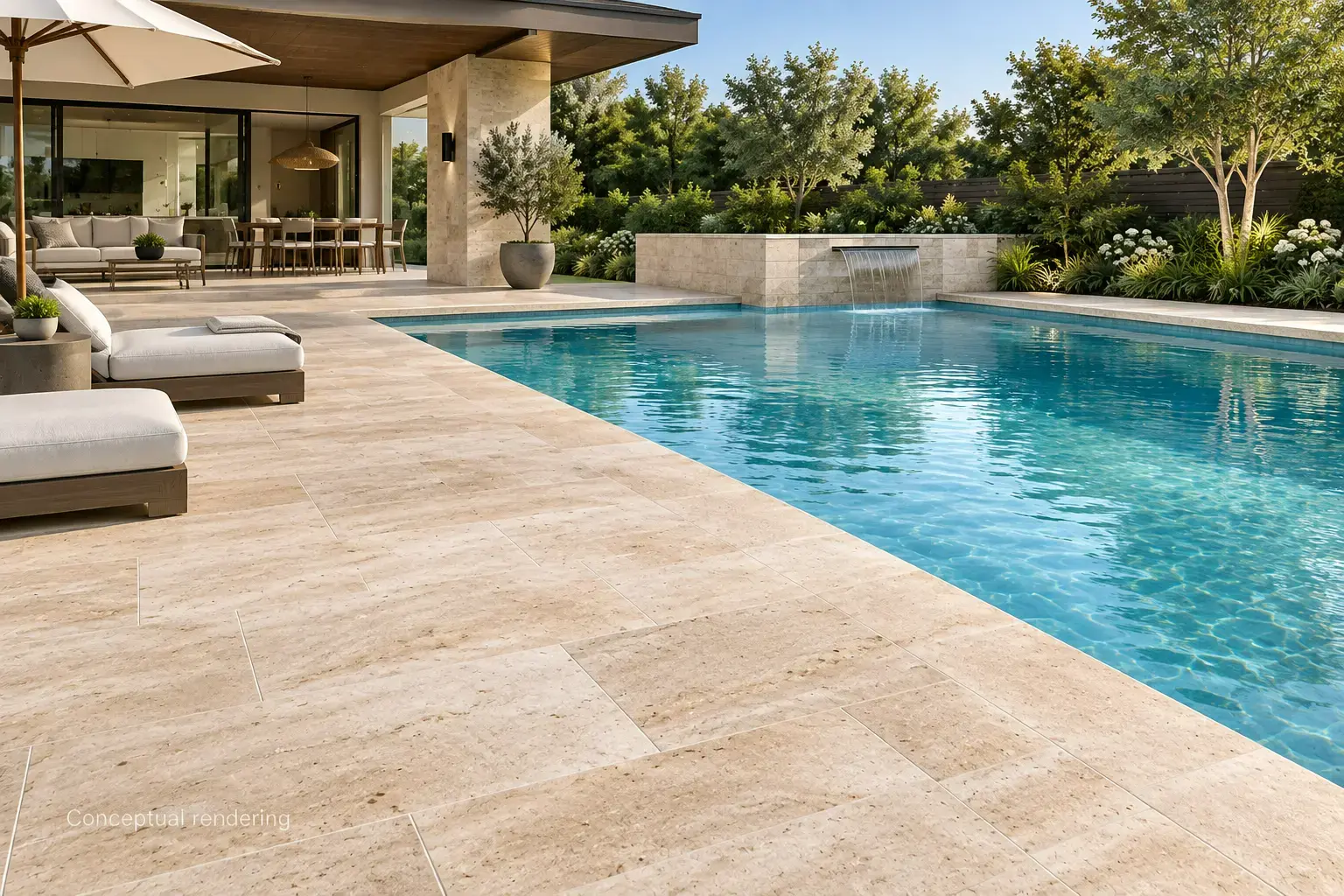
2. Pool Decking and Coping That Tie the Water to the Yard
A good pool deck carries the same stone, or a close match, from the patio to the pool edge, uses a finish with grip, and frames the water with coping chosen on purpose. That continuity decides whether the pool feels connected to the patio or stranded in the middle of the lawn.
Coping is the detail people notice most because it frames the water. A coping stone in a contrasting tone draws a crisp line around the pool, while a matching tone lets the deck flow straight to the edge, so pick one approach on purpose rather than by default.
Heat and pool chemicals narrow the material list. In a Use Natural Stone feature on poolside surfaces, one pool designer favors granite and quartzite because both are durable and don’t hold much heat, while another warns that soft marble breaks down quickly around salt and pool chemicals.
Marble isn’t suited to outdoor use to begin with, so leave it inside. Travertine is a popular pool deck stone and is suitable for outdoor use, but its natural pores call for sealing and periodic resealing.
Pool coping is part of our pavers and exterior stone selection, and you can see exterior stone options in person at our showrooms before you settle on a deck and coping pairing.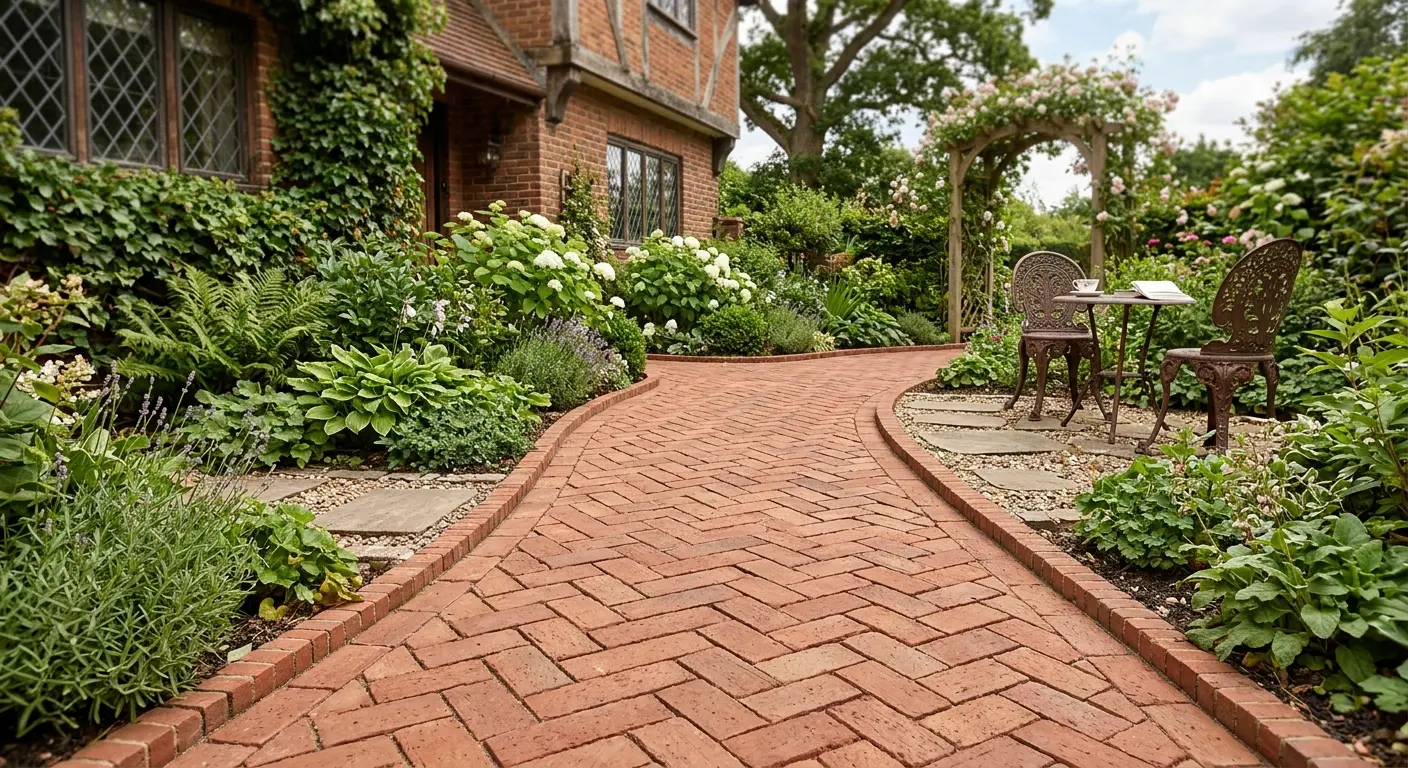
3. Hardscape Walkways and Paths That Direct Traffic
Paths are where layout patterns matter most. A running bond laid lengthwise pulls the eye down a narrow side yard and makes it feel longer, while herringbone sets pieces at angles and adds movement to a short, wide path.
Ashlar, a staggered mix of rectangles, suits a path that needs to relate to a French pattern patio without copying it exactly. That small shift signals the move from a place to sit into a place to walk.
Width comes before pattern. A path two people can walk side by side gets used, while a narrow strip squeezed between planting beds gets walked around, so trace the routes people already take across the yard and put stone on those lines.
Finish matters more on a path than almost anywhere else. The U.S. Access Board’s guide to floor and ground surfaces requires accessible walking surfaces to be firm, stable, and slip resistant, and it points out that loose gravel rarely qualifies without binders and repeated maintenance.
That is a strong argument for cut stone or pavers over loose fill on any path people use daily. Choose a textured finish for exposed paths, and keep honed stone to covered areas. Wet stone still calls for care whatever the finish.
4. Entry Steps and a Front Approach That Match the Backyard
The front approach is the one piece of hardscape every visitor uses. Too many homes end up with a finished backyard and a front walk that looks like it belongs to a different house.
Carrying the backyard stone, or one that shares its tone, around to the front steps makes the whole property look like a single design. It also simplifies material choices, since one stone family covers both ends of the yard.
Steps raise the stakes on finish. A Natural Stone Institute study of stone walking surfaces found that polished finishes, on average, fell short of the wet traction benchmark set for interior floors, and it notes that exterior stone is nearly always supplied in textured finishes.
That makes a textured tread the right call for front steps, paired with consistent step heights and good lighting at the door. Save polished stone for indoor floors, not the first surface guests step onto in the rain.
Stone at the entry doesn’t have to stop at ground level. Our guide to exterior stone for entrances, columns, and accent walls shows how a doorway surround or column wrap can echo the step stone, tying the vertical and horizontal surfaces together.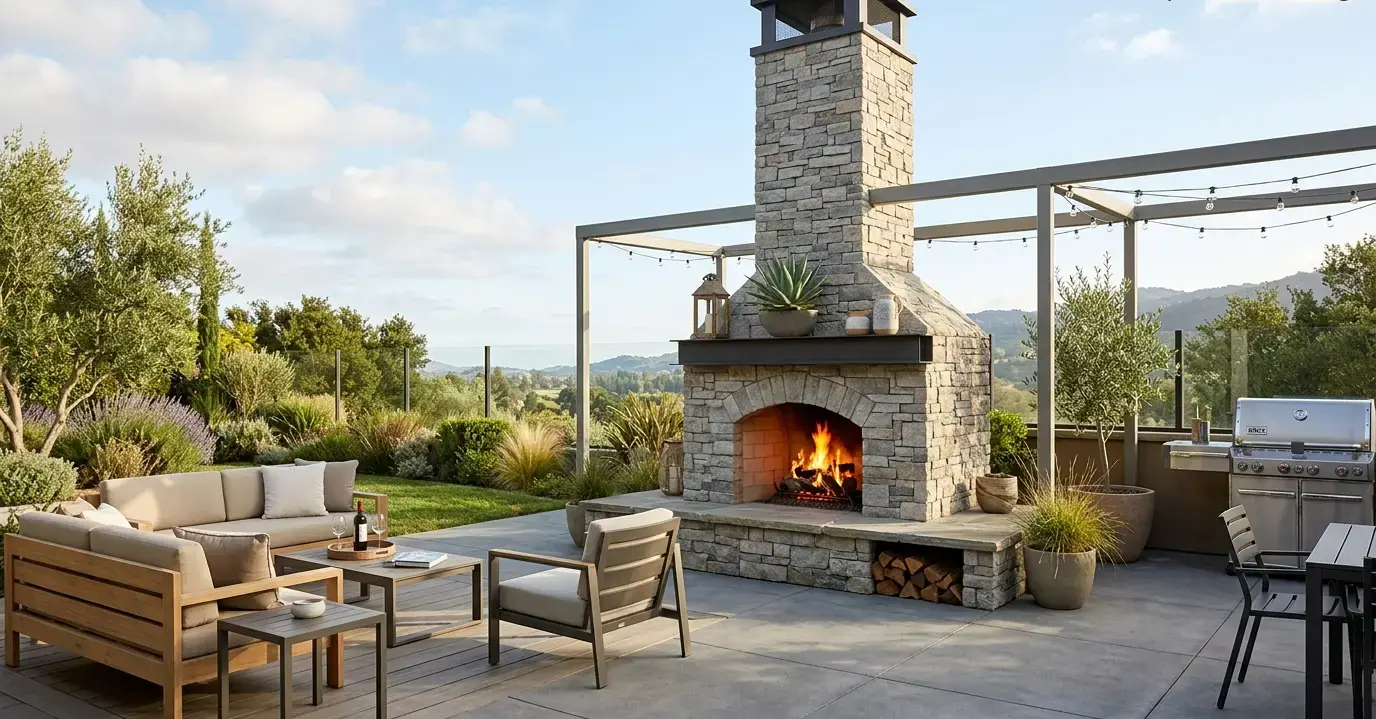
5. A Fire Pit or Outdoor Fireplace as the Evening Anchor
A fire feature stretches the hours a yard gets used into cool evenings, which is why it deserves a fixed spot in the plan rather than a portable bowl dropped on the lawn. Set it just off the patio, not in the center, so the seating circle doesn’t block the route from the house to the rest of the yard.
The surround and hearth need a material that fits both outdoor and fireplace use. Granite, quartzite, travertine, and porcelain all qualify, and our live slab inventory shows the granite and quartzite slabs currently on hand, which makes it easy to compare options for a hearth or surround.
Granite, quartzite, and travertine handle heat better than many surfaces, but direct flame contact should still be avoided. A gas fire table also puts different demands on the surrounding stone than a wood-burning fireplace, so match the material and finish to the specific feature.
Quartz stays out of this zone entirely, since it isn’t suited to outdoor or fireplace use. Pull the hearth stone from the same family as the patio instead, so the fire feature reads as part of the hardscape rather than an add-on.
6. A Stacked Stone Seat Wall That Does Two Jobs
A seat wall earns its spot by solving two problems at once. It gives guests a place to sit without adding more furniture, and it marks the edge of the patio or fire area so the space feels finished instead of trailing off into the grass.
Placement beats length. A short wall that wraps one side of the fire pit or follows the curve of the patio does more work than a long one standing alone in the yard, and it leaves the other sides open for traffic.
Stacked stone is part of our tiles and stone offerings, and its layered face gives a seat wall depth and shadow that a plain block wall lacks. Top it with a smooth granite or quartzite cap that echoes the patio stone, which gives people a comfortable place to sit and ties the wall visually to the surface around it.
7. An Outdoor Kitchen That Extends the Patio Hardscape
A well-placed outdoor kitchen sits on the patio edge closest to the house, where a short trip to the indoor kitchen keeps it practical, and away from the main seating so smoke drifts elsewhere. It ranks last because it should be planned around the patio, pool deck, and paths.
Treat the kitchen as an extension of the patio hardscape, not a separate island in the lawn. Running the patio stone under the cooking zone, or switching to porcelain or quartzite flooring in a matching tone, keeps the kitchen visually tied to the rest of the yard.
Leave a clear route between the kitchen, the dining table, and the back door, since that path carries the most traffic when the grill is on. A kitchen squeezed into a corner of the patio blocks that route and pulls the seating zone apart.
Granite is the stone to choose for an outdoor counter. It holds up to sun, though UV performance can vary by color and finish. Granite is also suitable for food preparation, but a cutting board is always recommended, and the Use Natural Stone guide to granite care adds trivets and prompt spill cleanup to the routine.
Once you’ve narrowed down a granite, you can request a slab quote with the slab names you like, and reserved slabs are held for a short time while you bring in your fabricator.
What Hardscape Stone Works Best in Reno, Sacramento, Minden, and Fernley?
Climate decides which stone holds up outdoors. In Reno, Minden, and Fernley, winter freeze-thaw cycles are the real test, and dense granite and quartzite generally handle them well because they absorb very little moisture. Porous travertine needs a sealing plan there, and sealing alone does not make an unsuitable stone frost resistant.
In Sacramento, summer heat matters more than frost, so lighter-toned granite or quartzite earns its place around pools, since pale stone tends to stay cooler in full sun than dark stone. Our showrooms in all four cities carry exterior stone you can see in person before you choose.
Conclusion
Draw the yard with the patio, pool deck, paths, entry steps, fire feature, seat wall, and outdoor kitchen in place, even if the kitchen is five years away. Leaving room for it now takes a pencil line, while tearing up a finished patio later to make room takes a crew.
Bring that sketch to a free design consultation at our Reno, Sacramento, Minden, or Fernley showroom, and our team at Nova Tile and Stone can help match stone, finish, and layout to each zone on it.
Note: Some images on this page may be conceptual renderings created to illustrate design possibilities and may not depict actual installations.
Frequently Asked Questions
Hardscape is the fixed, nonliving structure of a yard, including patios, pool decks, walkways, steps, seat walls, and fire features built from stone, pavers, or porcelain. It sets the layout that planting and furniture follow.
Travertine is a popular pool deck stone and is suitable for outdoor use, but its natural pores call for sealing and periodic resealing. In freeze-thaw climates like northern Nevada, porous stone needs extra care, so check the specific travertine before committing.
Porcelain is suitable for outdoor patios when you choose pavers made and rated for exterior use rather than indoor floor tile. It is UV resistant, though performance may vary by color and finish, and it offers more consistent color from piece to piece than natural stone.
Granite, quartzite, travertine, and porcelain all suit an outdoor fire pit surround. Granite, quartzite, and travertine handle heat better than many surfaces, but direct flame contact should still be avoided, and quartz is not suited to outdoor or fireplace use.
Polished stone can be slippery when wet, so textured finishes are the better choice for pool decks, paths, and steps, with honed stone best kept to covered areas. Even with a textured finish, wet stone still calls for care.