Black Quartzite
Black Quartzite is a natural stone with one of the highest hardness ratings available in residential surfaces, reaching Mohs 7 and above. It forms through the metamorphic transformation of sandstone under intense geological heat and pressure, producing a stone that is denser, harder, and more wear-resistant than most alternatives in the same visual category. It is a premium choice for modern kitchen countertops, luxury bathroom vanities, and high-impact indoor surfaces where both performance and appearance must hold up over time.
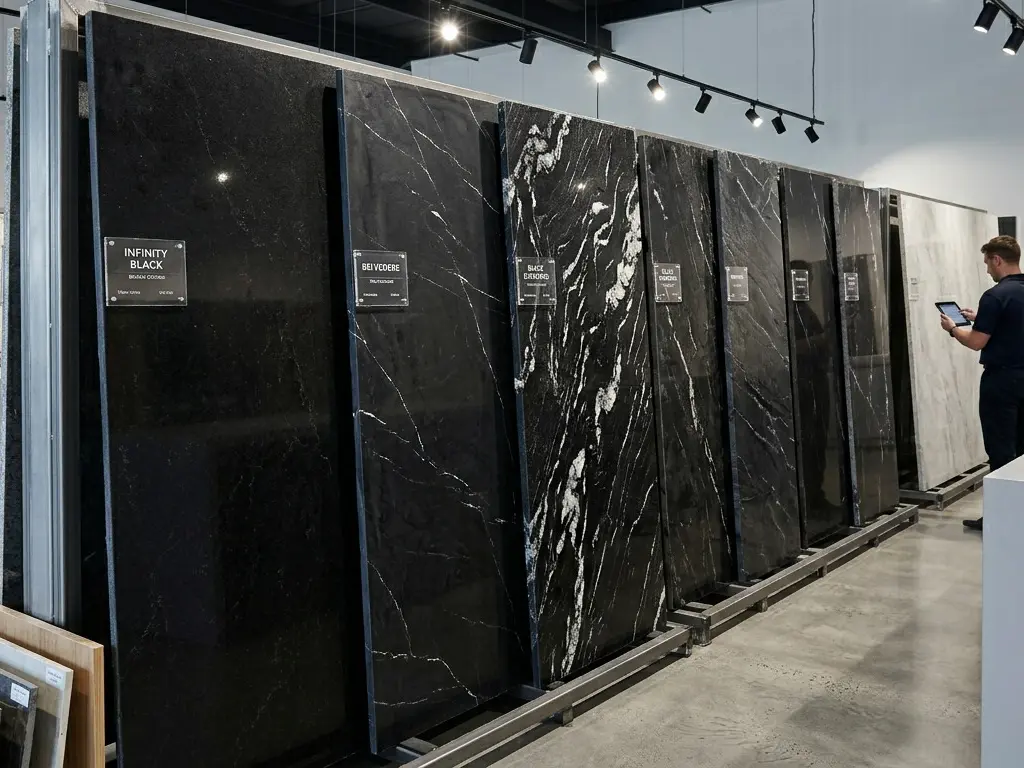
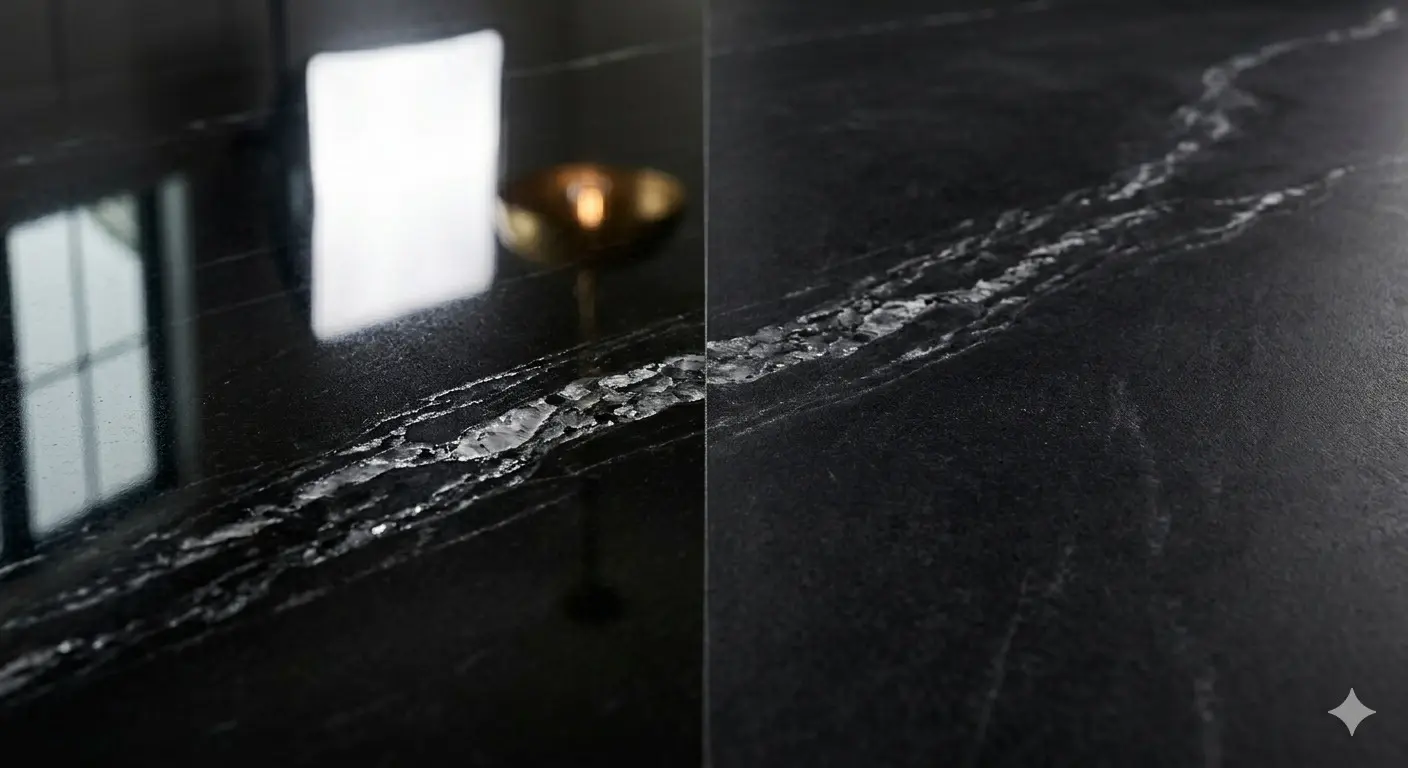
This stone is available in polished, honed, and leathered finishes. Each finish changes how the deep black base reads in different lighting and environments. At Nova Tile and Stone, four showroom locations carry natural stone slabs you can evaluate in person before committing, which matters significantly when selecting a stone whose vein movement and black depth vary from slab to slab.
Black Quartzite Delivers Hardness That Marble and Limestone Cannot Match
Black Quartzite sits at Mohs 7 or higher on the hardness scale, which places it well above marble (Mohs 3 to 4) and significantly above limestone. That difference in hardness translates directly into real-world durability at the countertop level. Scratching is far less of a concern with quartzite than with softer natural stones, and the material holds up under the kind of repeated daily contact that kitchen countertops experience constantly.
Where standard tile layouts divide a countertop into small segments separated by grout lines, a quartzite slab delivers one continuous surface. That seamless format is both easier to clean and more visually powerful, particularly when the stone features dramatic veining that needs uninterrupted space to express itself. You can explore the full range of slab formats available at the natural stone countertop page for a broader comparison of material options.
For an expert breakdown of how quartzite compares to quartz in terms of hardness, porosity, and cost, Bob Vila's quartzite vs quartz guide is one of the more thorough and accurate resources available.
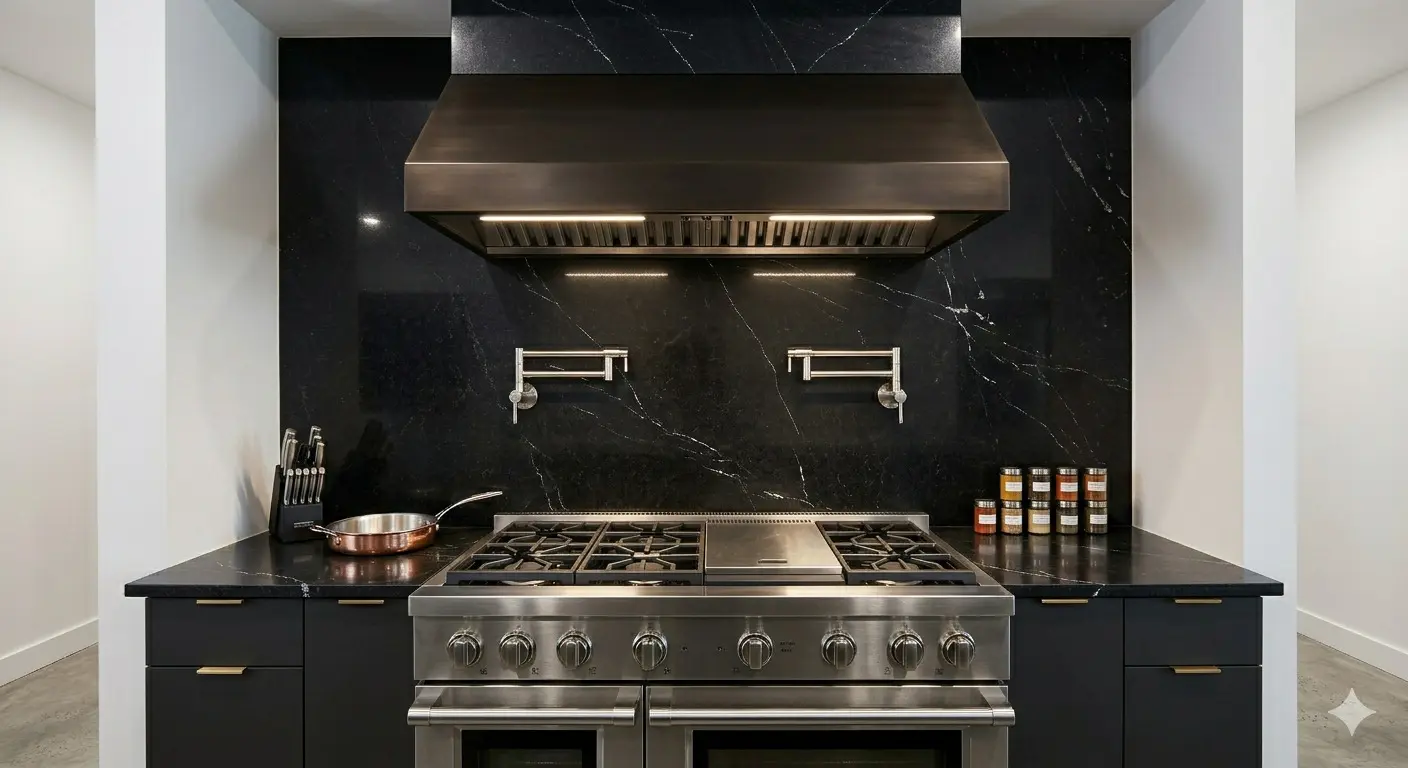
From Kitchen Islands to Accent Walls, This Stone Earns Its Place
Black Quartzite is not a material that blends in. Its deep black tones and veining draw attention in any room, and the finish choice determines how bold or restrained that effect becomes. The stone is suitable for indoor floors, walls, kitchen countertops, bathroom vanities, and fireplace surrounds. It performs well in UV-exposed indoor spaces and is suitable for high-use areas, but proper installation and sealing should always follow the manufacturer's recommendations.
Understanding how finish type changes the stone's behavior across different spaces is important before selecting. The right application starts with knowing what each finish delivers in daily use.
Where Black Quartzite Works Best
- Kitchen countertops and islands: The Mohs 7+ hardness handles daily kitchen contact better than marble or travertine. Honed or leathered finish is preferred in kitchens because polished surfaces can show water spotting more visibly in high-use areas.
- Bathroom vanities: Polished finish is the most common choice for vanities. The reflective quality of the black surface under bathroom lighting creates a high-contrast, editorial look. Proper sealing protects against moisture and cosmetic absorption.
- Fireplace surrounds: Black Quartzite is well suited for indoor fireplace surrounds. The stone's heat resistance is strong, but direct contact with open flame areas should be avoided. The visual weight of the black tone makes it a commanding frame for fireplace features.
- Accent walls and feature panels: Vertical slab installation on a dining room or living area feature wall delivers the same seamless, dramatic effect as countertop applications, without the daily wear considerations.
Layout Options for Slab Format
The slab format of Black Quartzite gives designers and homeowners significant layout flexibility compared to tile. Horizontal bookmatched panels on a kitchen backsplash or bathroom wall create a symmetrical vein pattern. A single continuous slab across an island or vanity top keeps the focus on the stone's natural movement. For floor use in dry residential spaces, honed finish is strongly preferred over polished to reduce slip risk.
You can also visit the Black Quartzite Countertop page to see available varieties including Infinity Black, Belvedere, and Black Diamond, each with distinct veining character and finish options. If you are in the Northern Nevada area, the Reno showroom is a convenient place to view slabs in person.
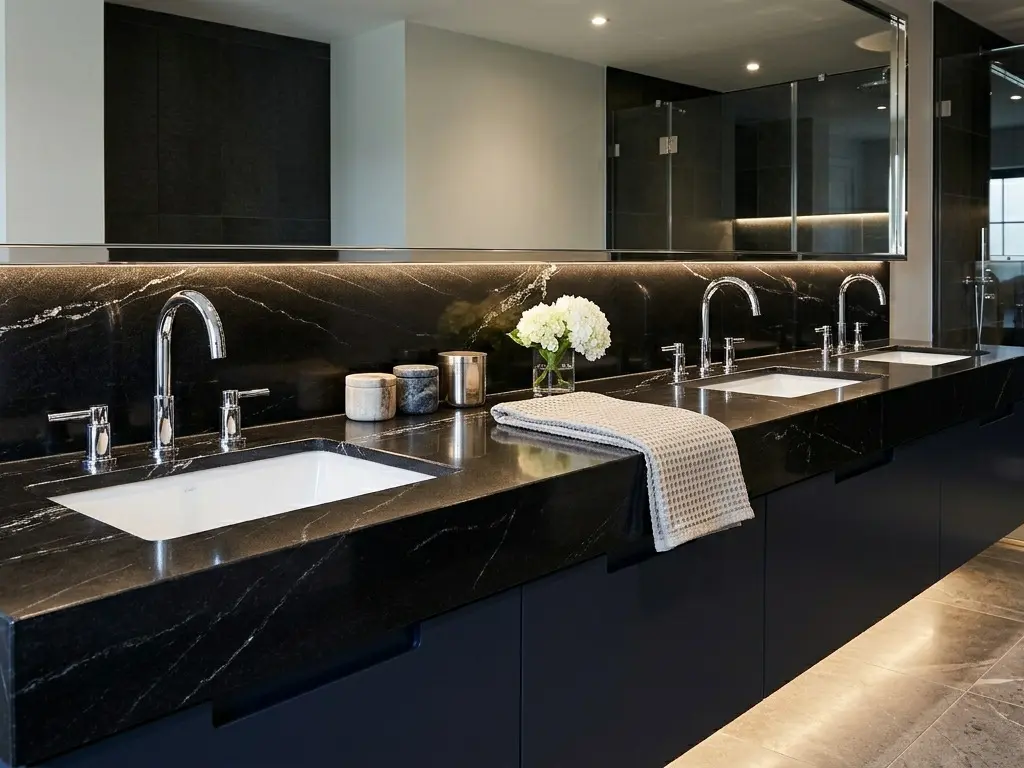
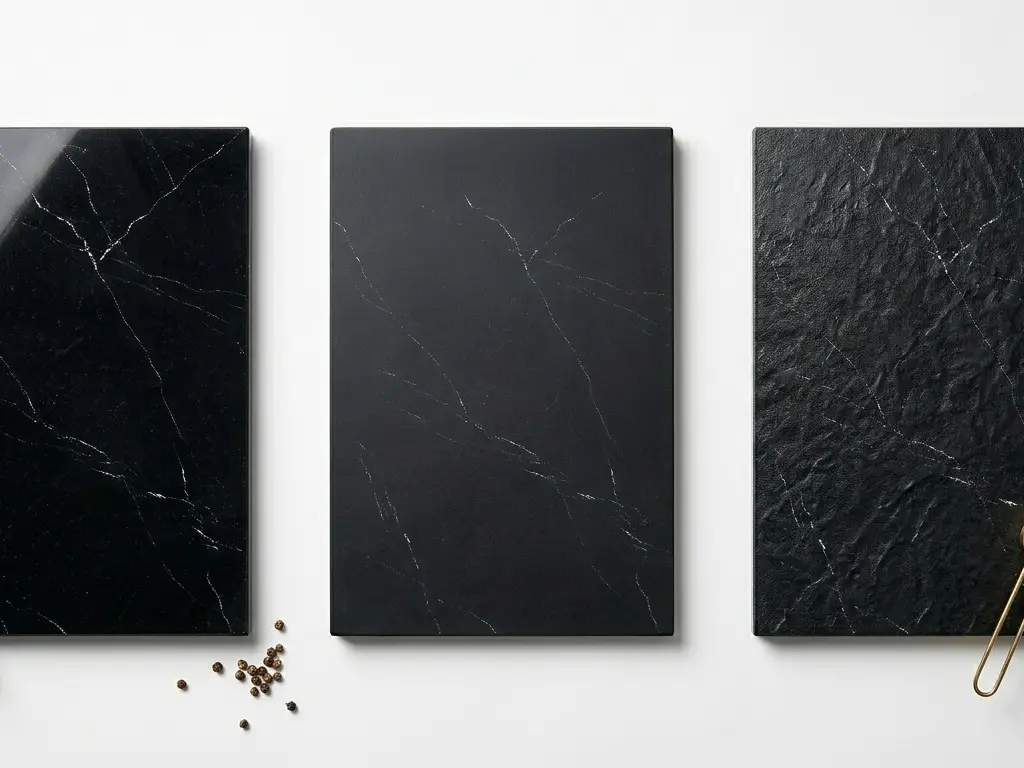
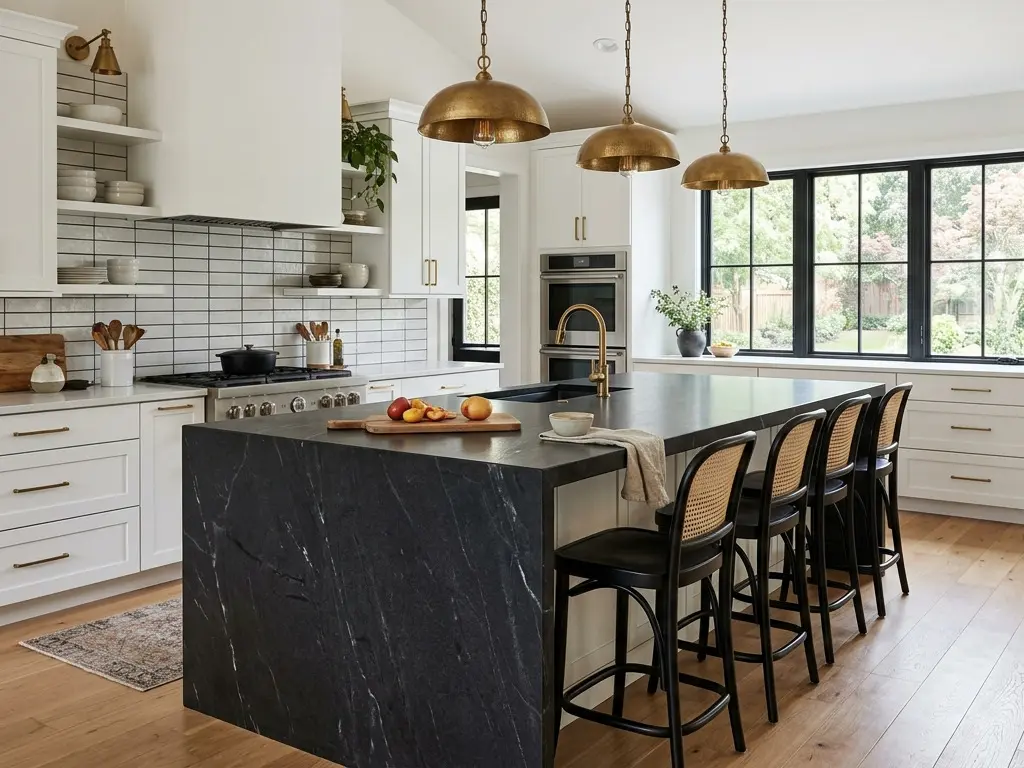
Built Harder, Lasts Longer: Real Performance for Real Spaces
Black Quartzite's performance advantage over softer natural stones is measurable and consistent. These practical benefits reflect what the stone actually delivers under daily residential use, including the conditions that matter most in kitchens and bathrooms.
The Natural Stone Institute's care resource is recommended reading for anyone planning a quartzite surface, covering sealing, cleaning products, and long-term maintenance specific to natural stone.
Practical Benefits
- The slab is durable with Mohs 7+ hardness, but proper care and periodic sealing will help preserve its surface quality over the long term.
- The surface is highly scratch resistant, but cutting directly on the stone is still not recommended; always use a cutting board to protect both the surface and your utensils.
- The material is moisture resistant when sealed, but standing water should not be left on the surface for extended periods, particularly near seams and edges.
- The stone is suitable for high-use kitchen countertops, but very hot cookware should not be placed directly on the surface as thermal shock can still occur.
- The slab is UV resistant for indoor applications, but performance in sustained direct sunlight should be evaluated per the specific slab and finish.
- The stone is suitable for food preparation areas, but a cutting board is always recommended.
- Honed and leathered finishes handle daily kitchen contact better than polished, which can show water spots and etching from acidic liquids more visibly.
- Avoid abrasive cleaners; pH-neutral products protect the stone surface and extend the life of the sealant.
- The slab performs well in humid spaces including bathrooms, but sealing on a regular schedule is still required to maintain moisture resistance.
Why Black Quartzite Is One of the Smartest Long-Term Surface Investments
Natural stone surfaces are not all equal in how they perform over ten, twenty, or thirty years. Black Quartzite sits in the upper tier of natural stone durability, which is why it consistently appears in high-end residential kitchens and bathrooms where the expectation is longevity, not replacement.
The stone resists fading, but prolonged exposure conditions should still be considered in placement decisions. The material is built for lasting use, though each application should be evaluated individually based on the space, finish, and maintenance commitment involved. One of the most valuable qualities of this stone is that its aesthetic does not require trend cycles to remain relevant. Deep black with dramatic veining is a design choice that holds across decades of shifting styles.
From a financial standpoint, quartzite vs granite cost comparisons consistently show that premium natural stone surfaces command higher perceived property value than engineered alternatives, and quartzite in particular is seen as an upgrade material by real estate appraisers and buyers alike.
The blog post Granite VS. Marble Slabs: Durability, Style And Engineered Stone Slabs from Nova Tile and Stone covers how quartzite-class hardness compares to softer stone categories in real renovation contexts, which is useful reading before finalizing a material decision.
For those comparing dark stone options across material types, the Black Natural Stone Countertop page offers a helpful side-by-side of how different black stones perform in the same application categories.
Frequently Asked Questions
Yes, significantly. Black Quartzite rates at Mohs 7 or higher, while marble rates at Mohs 3 to 4. That difference means quartzite is considerably more resistant to scratching, etching, and daily surface wear than marble, making it a stronger choice for busy kitchen countertops.
Yes. Despite its high hardness, quartzite is still a natural porous stone and benefits from regular sealing. Most quartzite surfaces should be sealed once or twice a year depending on use intensity and finish type. Polished surfaces tend to need slightly more attention than honed or leathered in high-contact areas.
Honed or leathered finish is generally preferred for kitchen countertops because both finishes are more forgiving of daily use than polished. Polished finish is striking but shows water spots and fingerprints more readily in a kitchen environment.
Black Quartzite has strong UV resistance and is more suitable for outdoor use than marble, but outdoor applications should still be evaluated carefully. Performance depends on climate conditions, installation method, and how regularly the stone is sealed. Always confirm outdoor suitability with your supplier for the specific slab you select.
Black Quartzite is a 100% natural stone, quarried and cut from the earth with no additives. Black quartz countertops are engineered, made from crushed minerals mixed with resins and pigments. Quartzite is generally harder and more heat-resistant than engineered quartz, but engineered quartz requires less maintenance because it is non-porous.
Your Black Quartzite Project Starts with Seeing the Actual Slab
Black Quartzite is a stone that rewards in-person evaluation. The depth of the black tone, the veining intensity, and how the finish reads under different lighting conditions are things no product image fully captures. Visit any of our showrooms in Reno, Sacramento, Minden, or Fernley to browse current inventory with our team.