Choosing the right surface material is one of the most impactful decisions you will make during a renovation. Whether you are weighing engineered stone slabs against natural options or comparing two classic minerals side by side, the choice shapes how your space looks and performs for decades. Granite and marble have dominated interior design for generations, yet each brings a distinct personality and set of trade-offs. This guide breaks down durability, aesthetics, maintenance, and cost so you can walk into your next project fully informed and confident.
Why Your Countertop Material Affects Everything in the Room
Surface material is not just a visual choice. It influences daily habits, cleaning routines, resale value, and even how family members interact with a space. A well-chosen slab ties together your kitchen island, bathroom vanity, and living areas into a cohesive, functional design.
Key reasons material selection matters:
- Longevity: Hard surfaces resist chips, cracks, and staining at different rates.
- Resale appeal: Natural stone consistently ranks among the top features buyers look for.
- Heat and moisture tolerance: Kitchens and bathrooms demand surfaces that handle steam, spills, and hot pans.
- Maintenance commitment: Some stones require annual sealing; others are nearly maintenance-free.
- Design flexibility: Veining, color range, and finish options vary widely between stone types.
Countertops around a kitchen island see heavy daily use: chopping, baking prep, and casual dining. The material you select must hold up to that reality. Similarly, a bathroom vanity top is exposed to water, cosmetics, and cleaning products every single day. Understanding how each stone behaves under these conditions is essential before committing to a purchase.
Explore the full slab collection to compare natural and engineered options side by side before making a final call.
Granite vs. Marble: Design Ideas for Every Room
Kitchen Island: Bold Pattern vs. Quiet Elegance
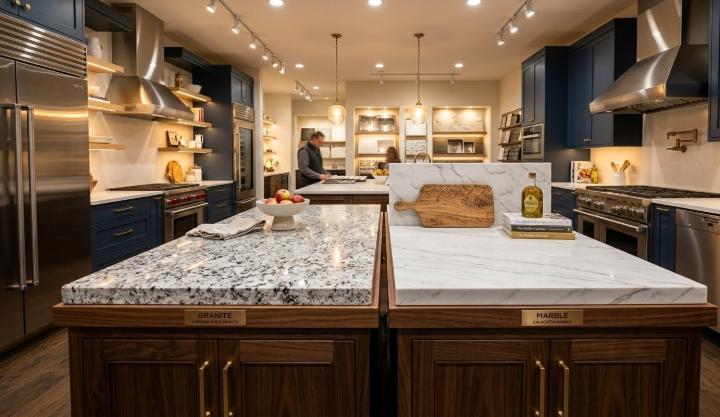
Granite arrives in an extraordinary variety of speckled and swirling patterns. Deep blues, forest greens, warm golds, and stark blacks are all available from a single natural source. When installed on a kitchen island, a dramatic granite slab becomes a focal point that anchors the entire room.
Marble offers something more restrained. Its pale backgrounds and flowing grey or gold veining project a soft, classical confidence. A polished marble finish on a kitchen island reads as effortlessly upscale without competing with cabinetry or fixtures.
Practical tip: Pair dark granite islands with white or warm-toned cabinetry to let the stone breathe visually without overwhelming the room.
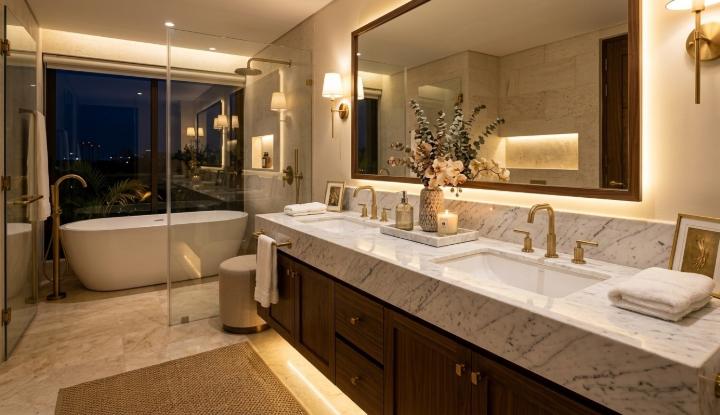
Bathroom Vanity: Hygiene, Humidity, and Style
Moisture is the primary enemy in any bathroom environment. Granite's tighter grain structure makes it less porous than marble, so water and cosmetics are less likely to seep in and cause staining around a bathroom vanity. This gives granite a practical edge in high-humidity spaces.
Marble, on the other hand, rewards homeowners who commit to regular sealing. A properly maintained marble vanity top develops a soft patina over time, which many designers consider a desirable quality rather than a flaw. For a spa-inspired retreat, this lived-in refinement is exactly the aesthetic some people want.
Learn how to clean marble countertops properly to extend the life of your installation regardless of which room it occupies.
Natural Stone Slabs for Living Spaces and Feature Walls
Beyond kitchens and bathrooms, both stone types translate beautifully to fireplace surrounds, accent walls, and bar tops. Natural stone slabs used as feature walls introduce texture and organic variation that no paint or wallpaper can replicate. Granite offers a chunkier, more dramatic visual weight. Marble delivers refined elegance suited to formal living areas or primary bedroom retreats.
Budget and slab size also factor into material choice for larger installations. Granite typically allows more lenient budgeting on wide feature walls without sacrificing visual impact. Marble, used selectively on a single accent panel or fireplace surround, delivers maximum effect at a controlled cost. Thinking strategically about placement helps stretch your investment further without compromising the overall design intention.
Granite vs. Marble at a Glance: Comparison Table
Feature | Granite | Marble |
Hardness (Mohs Scale) | 6 to 7 | 3 to 5 |
Porosity | Low to moderate | Moderate to high |
Heat Resistance | Excellent | Good |
Scratch Resistance | Very good | Fair |
Stain Resistance | Good with sealing | Needs consistent sealing |
Typical Cost per Sq Ft | $40 to $100 | $50 to $150 |
Aesthetic | Bold, speckled, varied | Veined, soft, classical |
Best Application | Kitchens, outdoor use | Bathrooms, formal spaces |
Maintenance Level | Low to moderate | Moderate to high |
Pros and Cons: Side-by-Side Reality Check
Granite
Pros:
- Extremely durable under daily kitchen conditions
- Wide color and pattern selection from natural quarries
- Naturally heat-resistant, which is ideal near stovetops
- Holds up well in outdoor kitchen environments
- Relatively affordable compared to premium marble
Cons:
- Heavier material requires reinforced cabinetry support
- Inconsistent veining can make matching slabs difficult
- Seams may be visible on larger countertop runs
Marble
Pros:
- Timeless, sophisticated aesthetic that ages gracefully
- Cool surface temperature suits pastry and dough prep
- Unique veining patterns create one-of-a-kind surfaces
- Pairs seamlessly with luxury bathroom vanity designs
- Increases perceived home value in high-end markets
Cons:
- More susceptible to etching from acidic foods and drinks
- Requires more frequent sealing than granite
- Higher cost at the premium end of the market
- Softer surface scratches more easily under heavy use
How to Choose the Right Stone: A 5-Step Guide
Step 1: Define the room and its demands. A kitchen island faces much harder daily use than a bathroom vanity. Identify how the surface will be used before narrowing your options.
Step 2: Set a realistic maintenance expectation. If you prefer a lower-maintenance routine, lean toward granite or consider engineered stone slabs, which require minimal upkeep.
Step 3: Review the Natural Stone Institute's care guidelines. Understanding long-term care requirements helps you avoid costly mistakes after installation.
Step 4: Order samples before committing. Viewing stone in your own home under your lighting conditions is essential. What looks right in a showroom may feel different alongside your cabinetry and flooring.
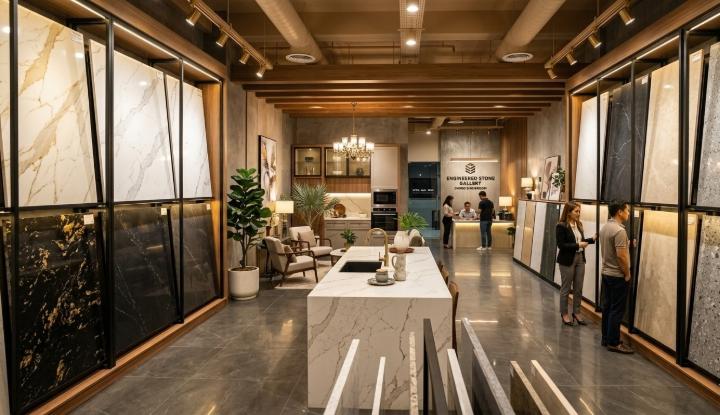
Step 5: Consult a stone specialist. Professional guidance on thickness, edge profiles, and finish options ensures the final result aligns with both your design vision and practical needs. Visit a local showroom to see full-slab displays in person.
Finding the Right Stone Partner for Your Project
Selecting the stone is only part of the process. Working with a knowledgeable supplier streamlines everything from sample selection to final delivery. Our stone and tile resource hub connects homeowners, designers, and contractors with an extensive inventory of granite, marble, and engineered stone slabs in a variety of finishes and formats.
Trade professionals can apply for a trade account to access exclusive pricing and project support. Whether you are outfitting a single bathroom vanity or sourcing material for a full residential build, working with a dedicated team saves time and reduces costly specification errors.
Serving the greater region, our Reno showroom, Minden location, Fernley, and Sacramento showroom carry full slab displays so you can experience scale, texture, and color before placing your order.
Conclusion
Both granite and marble offer genuine beauty and long-term performance when properly selected and maintained. Granite wins on durability and practicality, making it the stronger candidate for active kitchens and high-traffic countertops. Marble excels in refined settings where aesthetics lead the decision and a consistent care routine is realistic.
For homeowners seeking the visual appeal of natural stone with reduced maintenance demands, engineered stone slabs offer a compelling middle path. They replicate the look of granite and marble while delivering consistent patterning, improved stain resistance, and simplified upkeep.
Ready to explore your options? Schedule for free design consultation and visit one of our showrooms to find the surface that fits your home, your style, and your life.
Frequently Asked Questions
Is granite or marble better for kitchen countertops?
Granite is generally the stronger choice for kitchen countertops due to its higher hardness rating, better heat resistance, and lower porosity. It handles daily cooking activities with fewer maintenance concerns than marble.
How often should marble countertops be sealed?
Marble countertops should be sealed every 6 to 12 months depending on usage levels and the porosity of the specific stone. High-traffic kitchen surfaces may require more frequent attention than a lightly used bathroom vanity.
What are engineered stone slabs made from?
Engineered stone slabs are manufactured by binding crushed quartz or other natural minerals with resin under high pressure. The result is a non-porous, highly durable surface that mimics the look of natural stone without requiring sealing.
Can marble be used outdoors?
Marble is generally not recommended for outdoor applications. Freeze-thaw cycles, UV exposure, and consistent moisture accelerate deterioration. Granite or porcelain slabs are better suited for outdoor countertops and feature walls.
How do I choose between granite and marble for a bathroom vanity?
Consider your cleaning habits and the overall style of the space. Granite requires less maintenance and resists moisture better, making it a practical pick. Marble suits a spa-inspired design where regular sealing fits naturally into the care routine.