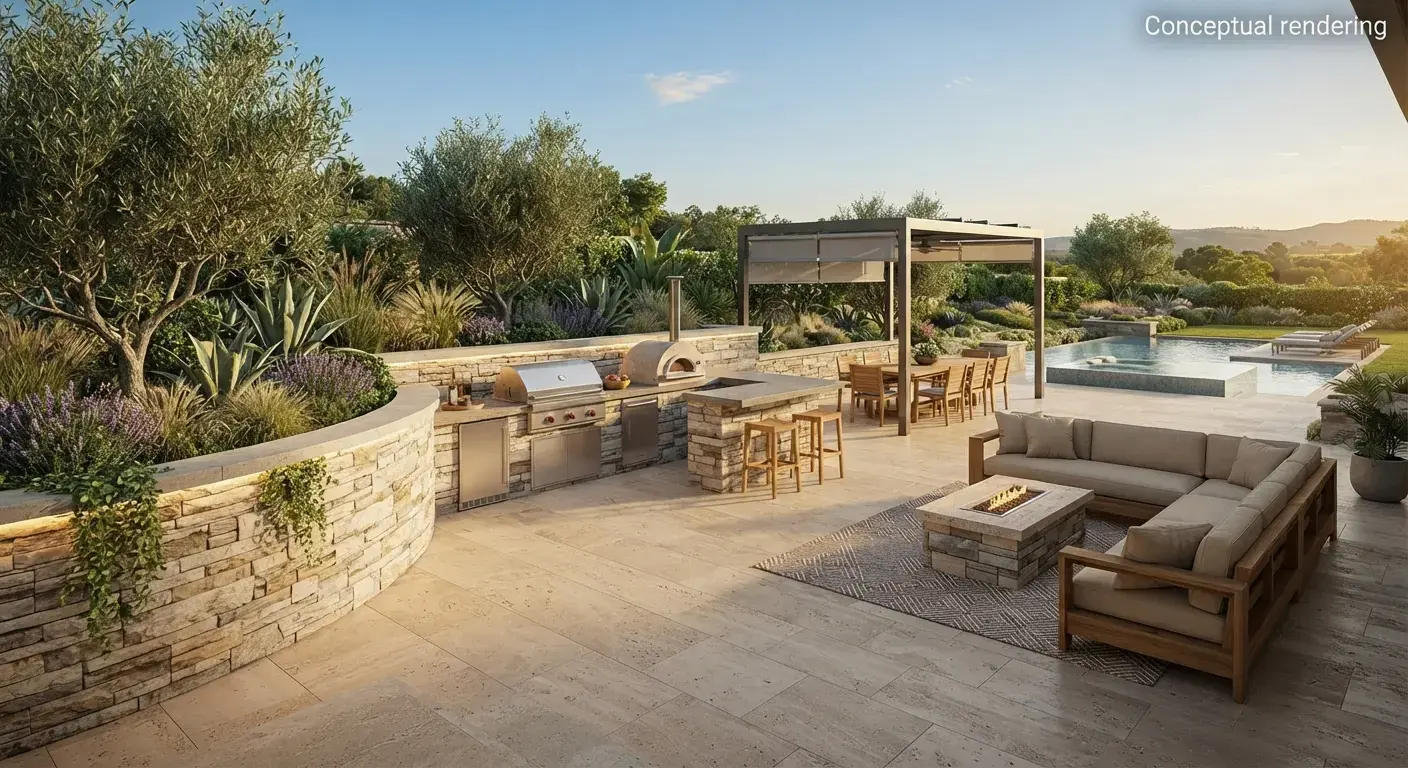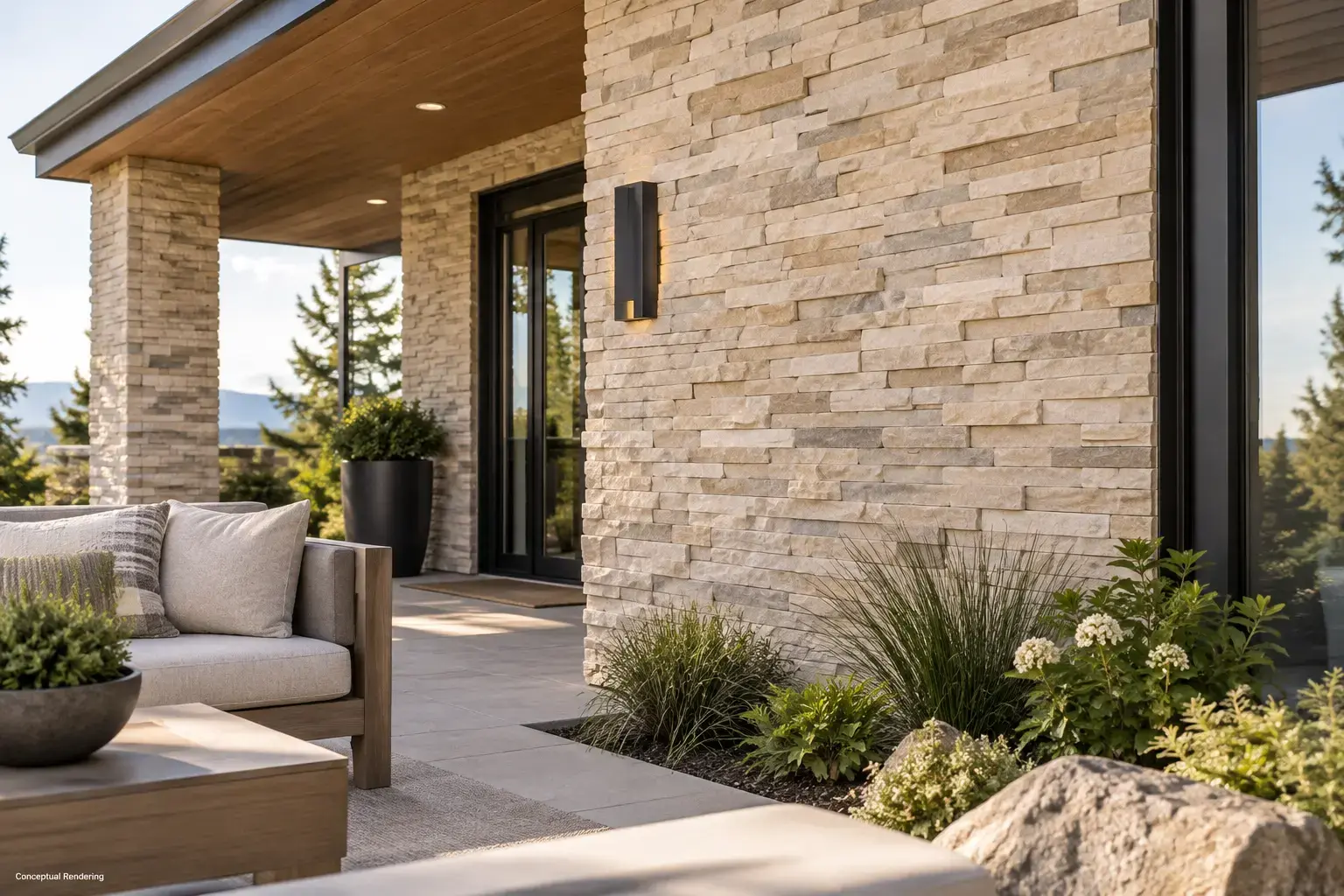
Beige-colored ledger stone is a natural stone wall cladding made of thin, split-face strips arranged in modular panels, commonly cut from travertine, limestone, sandstone, or quartzite. Common shades range from cream and ivory to sand and soft gold. Beige ledger stone is used on interior and exterior walls, such as fireplace surrounds, accent walls, and home facades, to add natural texture in a neutral tone.
How Beige Ledger Stone Panels Are Made
Also called stacked stone or ledger panels, this cladding is produced by trimming individual pieces and fixing them together in staggered courses to form a single panel. Many panels have stepped, interlocking ends that let one panel fit into the next like puzzle pieces. This design can help the wall read as a continuous, random pattern. The split face of each strip gives this style of cladding its rough texture and depth.
Natural Stone Types Available in Beige Tones
Beige panels are commonly cut from several types of natural stone:
Limestone
A calcium-based sedimentary stone available in cream and off-white panels.
Sandstone
A sedimentary rock offered in beige panels.
Quartzite
Available in cream-toned panels, with some products carrying a frost-resistant rating.
Travertine
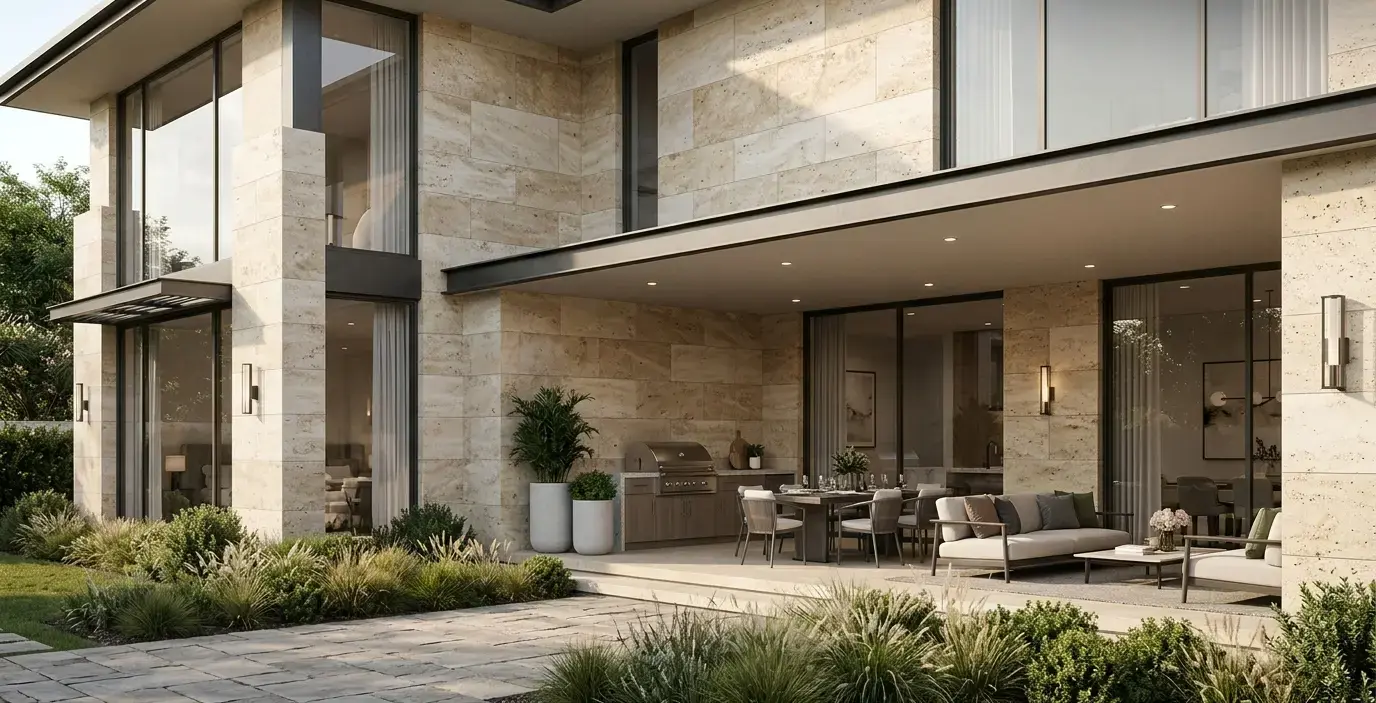
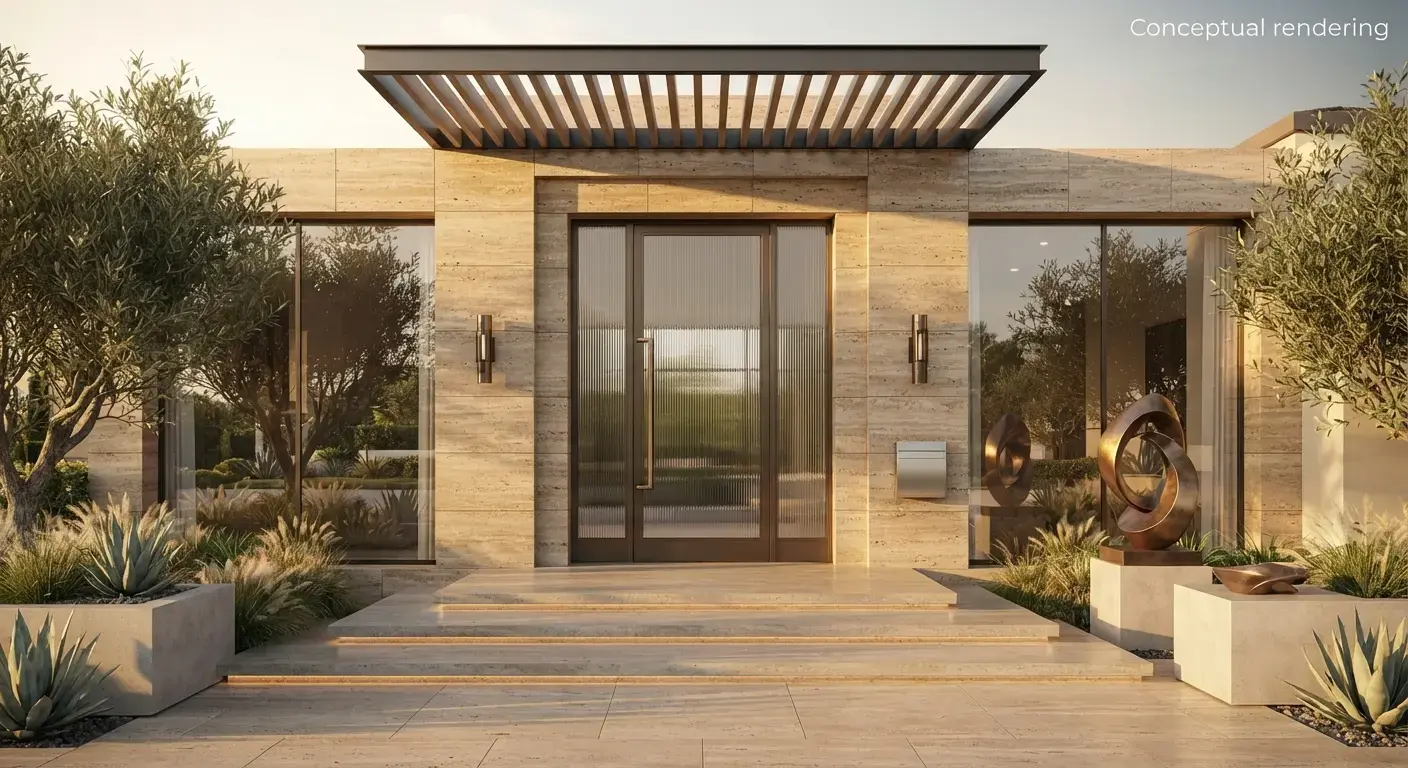
A form of limestone made mostly of calcium carbonate, with a naturally pitted, porous surface. It is frequently offered in beige and cream panels.
Because these materials differ in composition and porosity, two panels with a similar color can perform differently in the same setting. At Nova Tile and Stone, we carry ledger panels that can be compared side by side at our showrooms in Reno, Minden, Fernley, and Sacramento, where differences in rock type and color can be easier to see in person.
Fireplace, Accent Wall, and Exterior Applications
Indoors, beige ledger stone is often used on fireplace surrounds, living room accent walls, entryways, and bathroom accent walls. Outdoors, panels rated for exterior use can be applied to barbecue islands, outdoor kitchens, columns, planters, garden walls, and home facades.
Design Ideas and Color Pairings
Beige ledger stone can be combined with several materials and finishes. Options to consider include:
- White oak, walnut, or other medium-tone woods for a consistent warm palette
- Matte black hardware, light fixtures, or window frames for contrast against the light surface
- Warm white, greige, sage green, or terracotta paint on adjoining walls
- Smooth porcelain or honed flooring to balance the textured wall
Coverage is another design decision. Panels can run floor to ceiling to create a focal wall, or they can be applied at partial height, such as a wainscot, for a smaller area of texture.
Panel Sizes, Thickness, and Corner Pieces
With a color in mind, the next consideration is panel size. The 6 x 24-inch panel is a common format, with a nominal coverage of 1 square foot per panel. Smaller 4.5 x 16-inch mini panels are also manufactured, along with some larger formats. Many 6 x 24-inch panels are roughly 5/8 to 3/4 inch thick, although thickness and weight vary by material and manufacturer.
L-shaped corner pieces are designed to wrap outside corners so both sides show a finished face instead of a cut edge. Corner pieces are typically sold separately from flat panels, so a materials estimate should include both the flat wall area in square feet and the number and height of outside corners. Contractors, designers, and architects working on larger projects can apply for a trade account, which includes commercial estimating with material quantities, pricing, and lead times.
Sealing and Long-Term Care
Sealing guidance differs between manufacturers. Some recommend a penetrating sealer to help protect the finish and color, while others state that their natural panels do not require sealing. Follow the care instructions provided for the specific product.
On exterior walls, a white, powdery deposit called efflorescence can appear when moisture dissolves water-soluble salts and carries them to the surface, where the water evaporates and leaves the salts behind. It can form on natural stone, brick, concrete, and stucco. The powdery form can often be brushed away, and identifying and reducing the moisture source is a commonly recommended first step in managing it.
Note: Some images on this page may be conceptual renderings created to illustrate design possibilities and may not depict actual installations.
Explore Our Exterior Stone Articles
Frequently Asked Questions
It depends on the product. Some natural ledger panels are rated frost resistant, while others are labeled for outdoor use only in areas without freeze-thaw cycles. For locations with freezing winters, look for a panel whose specifications state frost or freeze-thaw resistance.
It can be. Many natural ledger panels, including some travertine and sandstone products, list fireplace surround use in their specifications. As with exterior ratings, this approval varies from one product to another.
A pH-neutral cleaner formulated for natural stone is commonly recommended. Vinegar and acid-based cleaners are best avoided on travertine and limestone, since acids can react with calcium carbonate and leave dull, etched marks.
Natural ledger panels are cut from quarried stone. Look-alike panels in similar colors are also made from cement-based manufactured veneer and porcelain. Cement-based panels can fade with prolonged sun exposure, while natural panels get their color from the stone itself rather than from added pigments.
Not exactly. Each panel has natural variation in shade, veining, and texture, and manufacturers generally describe this variation as a natural characteristic rather than a defect.