Allure Quartzite Polished Slabs: Specs, Strength, and Stone Pedigree
Allure Quartzite is a metamorphic natural stone formed when sandstone undergoes intense geological heat and pressure over millions of years. It is primarily sourced from quarries in Brazil, where the geological conditions produce some of the world's most sought-after quartzite patterns. Quartzite commonly rates around 7 on the Mohs hardness scale, making it harder than marble and comparable to many granites. This can support everyday scratch resistance, while proper sealing helps reduce moisture-related staining risk.
Standard slab thickness is available in 2cm (¾ inch) and 3cm (1¼ inch), covering both countertop and wall cladding applications. The polished finish enriches the cream and beige tones and sharpens the definition of the gray and blue veining. Compared to marble, Allure is significantly harder and more resistant to etching from acidic substances. Compared to engineered quartz, it offers a living, non-repeating pattern that no factory process can replicate. Travertine and limestone may share a warm palette, but neither matches the density or pattern depth that quartzite delivers.
Infinite Layout Potential for Every Room
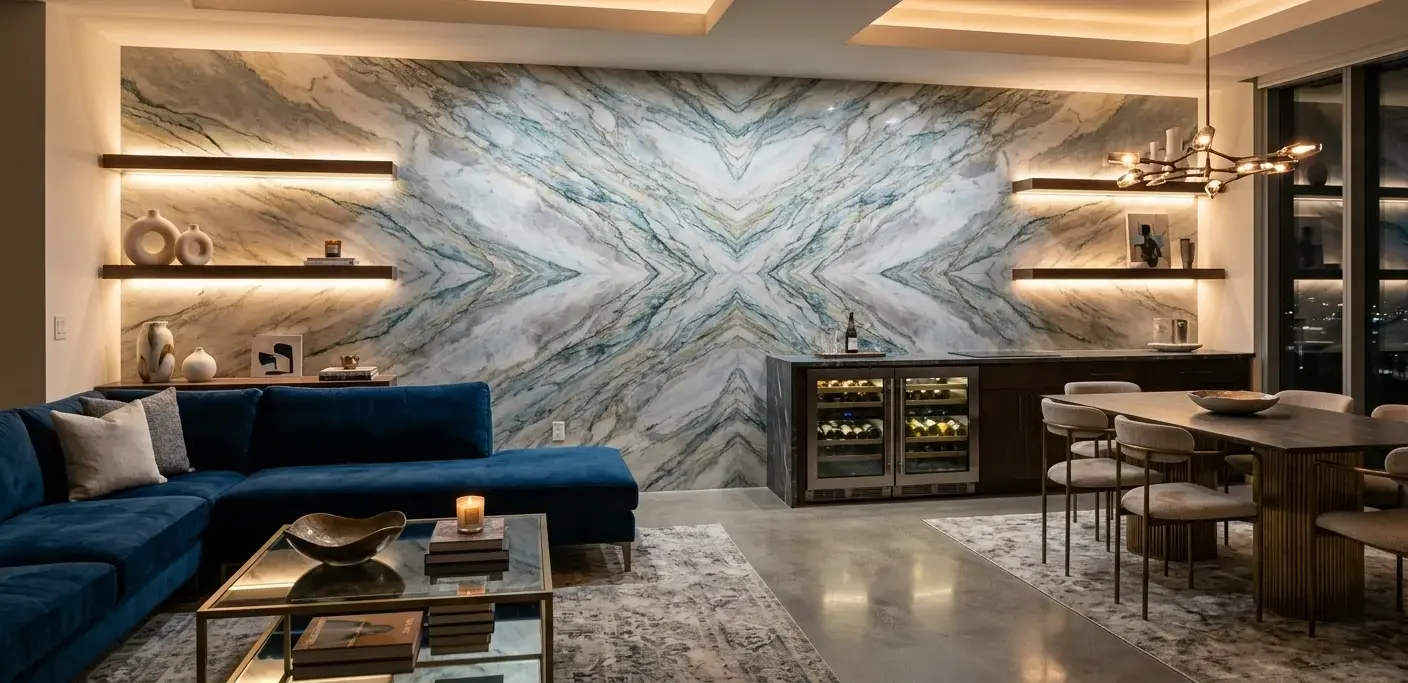
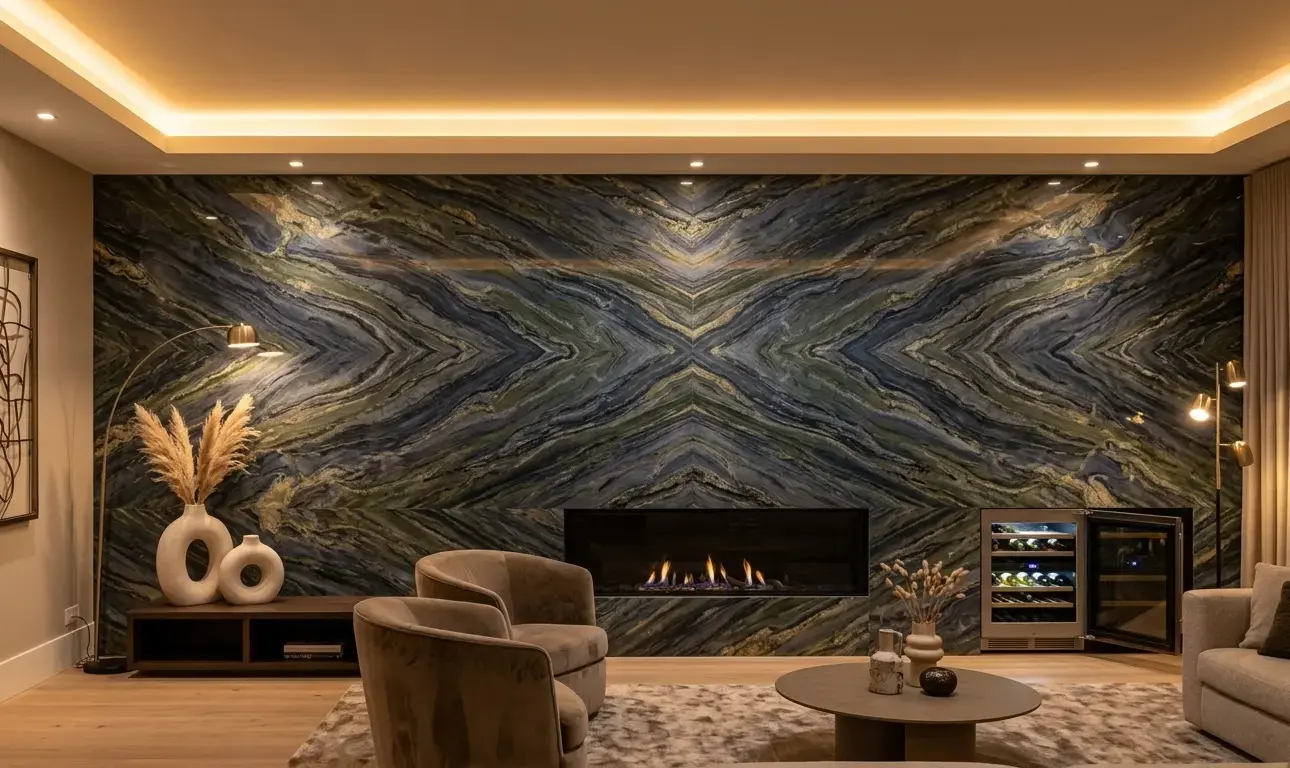
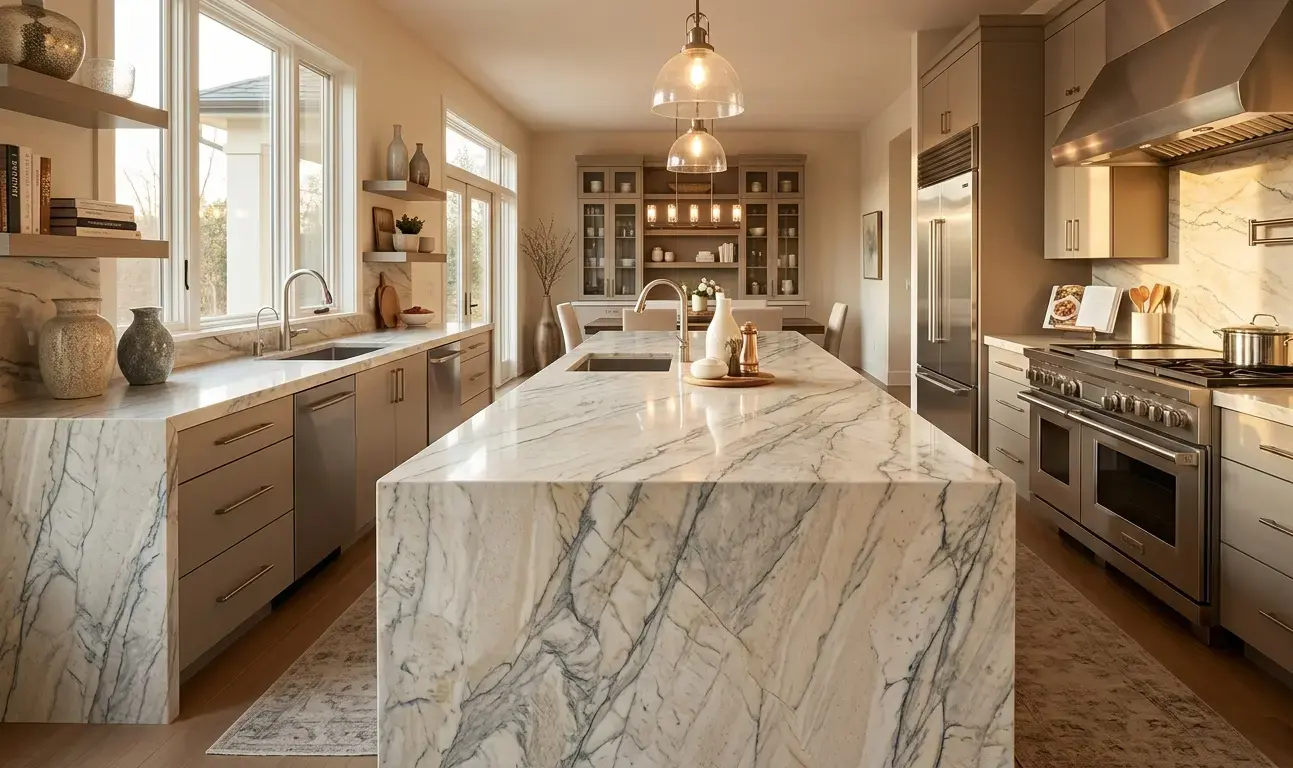
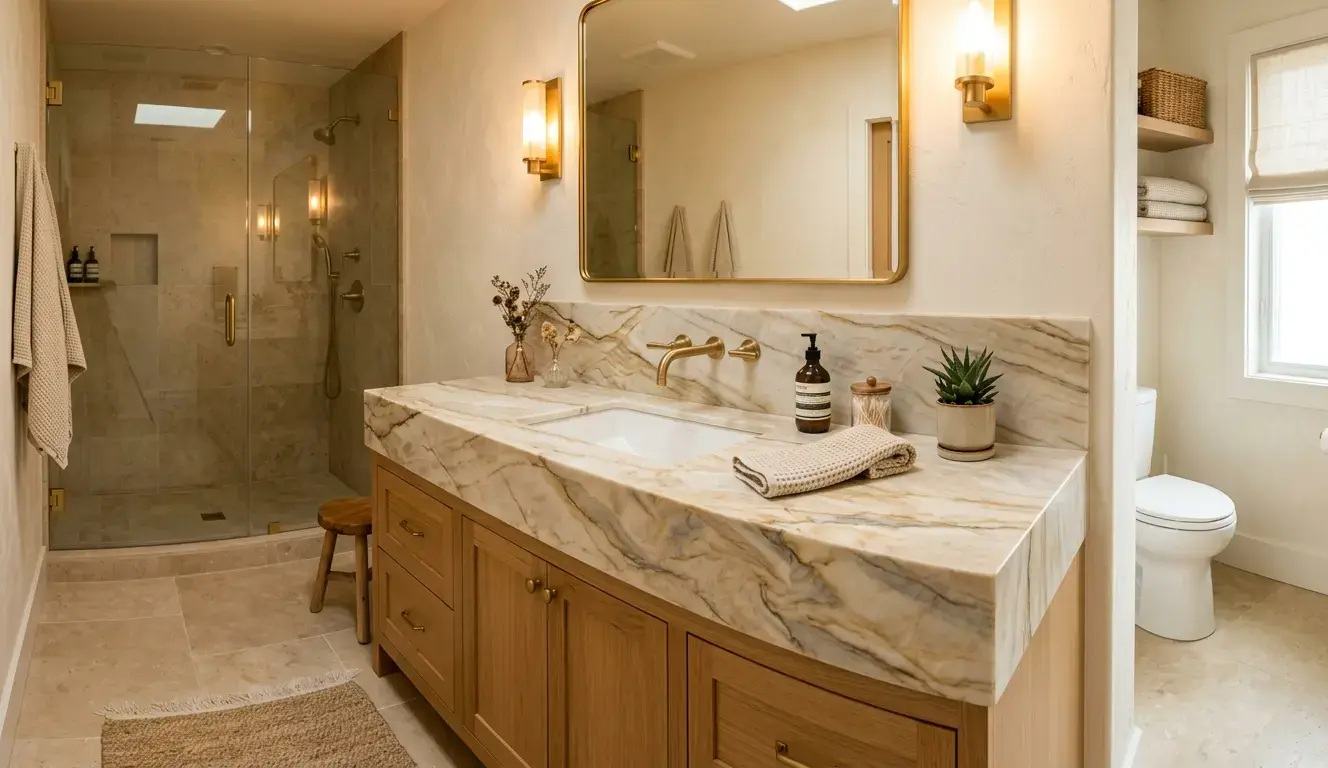
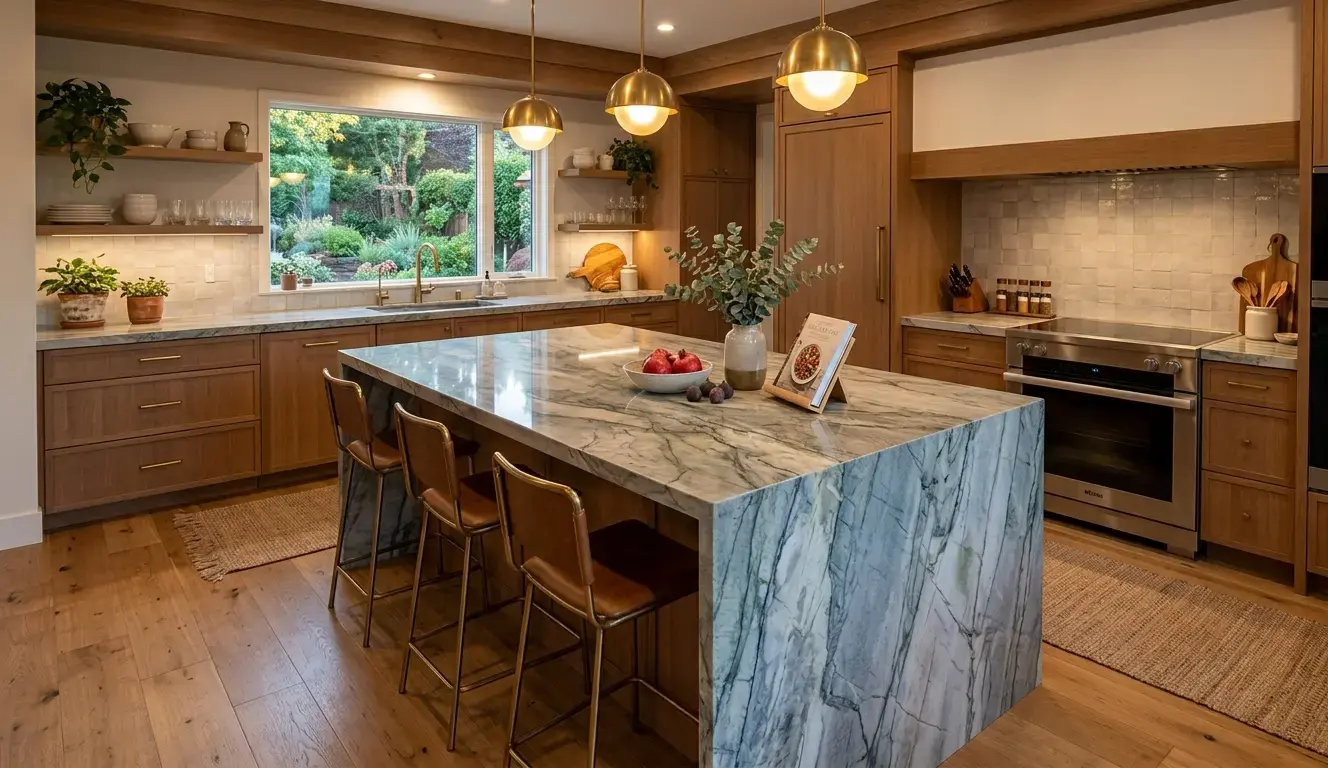
The rare, directional veining in Allure opens up strong design choices across multiple applications. In a kitchen, a horizontal bookmatched layout along a countertop or island creates a mirror-symmetrical flow of the blue and gray movement. For bathroom vanities, a continuous vertical slab panel ties wall and countertop into one cohesive statement. On accent walls and backsplashes, a stacked horizontal pattern lets the cream field anchor the eye while the veining draws it upward.
Allure's warm neutral base works alongside dark wood cabinetry, matte white fixtures, brushed brass hardware, and concrete-look flooring. Its palette spans contemporary, transitional, and even Mediterranean-leaning interiors - which is part of why rare-pattern quartzite holds its design relevance across renovation cycles.
Hard-Working Stone That Earns Its Place
- Mohs 7 hardness resists daily scratching from kitchen tools and general use
- Low 0.4% absorption rate limits staining risk without heavy sealing schedules
- Heat-tolerant surface handles ambient warmth in kitchen and outdoor settings
- Rare, unrepeatable pattern ensures no two installations are ever identical
- Multi-surface use spans kitchen countertops, bathroom vanities, accent walls, backsplashes, flooring, stairs, patio surfaces, pool decks, and wall cladding
- Polished finish makes routine cleaning straightforward and maintains clarity over years of use
Nova Tile and Stone - trusted natural stone and tile specialists backs every slab purchase with expert design consultations, U.S.-based client support available Monday through Friday, and home delivery options that get your stone to your project site with care.
The Long-Term Case for Allure Quartzite
Distinctive natural stone can add lasting visual appeal to residential and commercial spaces when it is selected, installed, and maintained properly. Allure Quartzite Polished Slabs sit in a category where supply is limited by nature, not production schedules, meaning the stone you choose today is unlikely to become a commodity tomorrow. Its polished surface stays crisp for decades with annual sealing and standard care - a low-maintenance commitment for a high-return material.
Unlike surface trends that cycle in and out, the organic cream and beige tones in Allure have appeared in high-end interiors across multiple design eras. That consistency is what separates a smart material investment from a decorative trend. For a deeper look at why quartzite continues to lead the natural stone category, Is Quartzite The Most Versatile Natural Stone? explores the full scope of what this material can do.
Frequently Asked Questions
Yes. Its Mohs 7 hardness and low absorption rate make it one of the more durable natural stones for kitchen use. It resists scratching and handles everyday moisture better than marble or travertine.
Quartzite is a natural metamorphic stone with a one-of-a-kind pattern formed over millions of years. Quartz is an engineered product made from crushed stone and resin. Quartzite requires periodic sealing; quartz does not, but it cannot replicate the depth and movement of a natural surface.
Allure is available in a polished finish, which enhances color depth and is easy to clean. Polished quartzite is the preferred choice for countertops and vanities. If used on floors or stairs, discuss honed or leathered options with your stone specialist for better slip resistance.
Yes, periodic sealing is recommended. Although the 0.4% absorption rate is low, sealing once every one to two years protects the surface from oil, acidic spills, and staining over the long term.
Yes. The density and hardness of this stone make it suitable for patio surfaces, pool decks, and exterior wall cladding. Proper sealing for outdoor UV and weather exposure is advised.
Fresh Perspectives on Natural Stone
See What’s New in Our Design Solutions
Note: Some images on this page may be conceptual renderings created to illustrate design possibilities and may not depict actual installations.