Zermatt Quartzite For Indoor Use
Zermatt quartzite for indoor use is a natural stone option suited to a range of interior applications, from countertops and flooring to fireplace surrounds and accent walls. It is a metamorphic stone formed when sandstone is subjected to intense heat and pressure deep within the earth, producing a surface that is denser and harder than most natural stones.
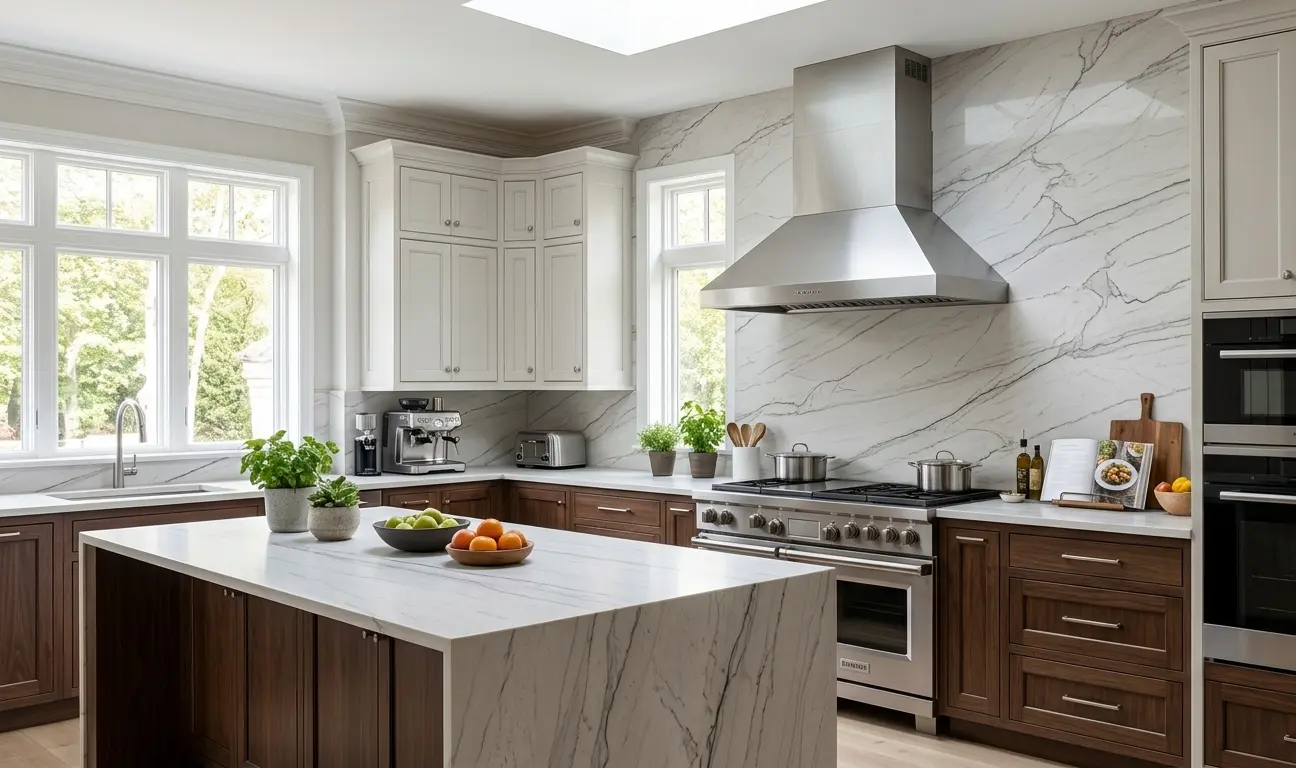
Zermatt quartzite features a white to warm gray base with veining in silver, taupe, and cream, giving indoor spaces a natural aesthetic without strong visual contrast. Unlike marble, which shares a similar visual softness, Zermatt quartzite offers considerably more structural hardness, making it a practical option for surfaces that see regular daily use. It is commonly selected for countertops, flooring, feature walls, and fireplace surrounds. You can browse our current Zermatt quartzite slabs to see what is available.
What Makes Zermatt Quartzite Suited for Interior Surfaces
One of the primary reasons Zermatt quartzite is well suited for indoor applications is its hardness. On the Mohs scale, quartzite typically rates between 7 and 8, placing it above granite and well above marble. That hardness contributes to scratch resistance on countertop surfaces and supports performance on high-traffic floors.
Zermatt quartzite also handles heat exposure well, which makes it a common choice for kitchen countertops and fireplace surrounds. Unlike engineered surfaces, natural quartzite does not contain resins or binders that can be affected by high temperatures.
Another characteristic relevant to indoor use is its porosity. Compared to softer stones like marble or travertine, Zermatt quartzite is less porous, which means it is less susceptible to moisture absorption. That said, all natural stone benefits from periodic sealing, and Zermatt quartzite is no exception.
Where Zermatt Quartzite Fits Inside the Home
Kitchen Countertops: The neutral palette of Zermatt quartzite is compatible with a wide range of cabinet colors and kitchen styles. Its surface performs well under daily use conditions typical of kitchen environments.
Bathroom Vanities and Walls: The tonal range within Zermatt quartzite works with both light and dark bathroom designs. Its lower porosity makes it a reasonable option for vanity tops and shower walls when sealed and maintained on a consistent schedule.
Flooring: Large-format Zermatt quartzite slabs cut for flooring produce a continuous, natural look in living areas, foyers, and open-plan spaces. The density of the stone is consistent with the demands of regular foot traffic.
Fireplace Surrounds and Feature Walls: Zermatt quartzite's heat tolerance and neutral visual quality make it a functional choice for fireplace surrounds and interior accent walls where a natural stone look is the goal.
What to Know Before Selecting a Slab
Because Zermatt quartzite is a natural stone, no two slabs are identical. Veining patterns, background tone, and movement vary from slab to slab. When selecting a slab for indoor use, viewing it in full rather than relying on a small sample gives a more accurate representation of how it will read in your space. Lighting conditions in your room will affect the appearance of the stone, so bringing a photo of your cabinetry, flooring, or wall color to compare against the slab can be helpful before making a final decision. Slabs are typically available in both 2 cm and 3 cm thicknesses, with 3 cm being the more common choice for countertop applications due to its added structural strength.
Keeping Zermatt Quartzite in Good Condition
Routine care for Zermatt quartzite involves cleaning surfaces with a pH-neutral stone cleaner and avoiding acidic or abrasive products that can affect the sealant or the stone surface. Resealing every one to two years is a general guideline depending on use and exposure, though a stone care professional can provide guidance based on the specific installation. Wiping up spills promptly, particularly acidic liquids like citrus juice or vinegar, helps maintain the surface condition over time. Using cutting boards and trivets on countertop surfaces is a standard practice recommended for most natural stone installations, including Zermatt quartzite.
We carry Zermatt quartzite slabs at our showrooms in Reno, Minden, Sacramento, and Fernley. Browse our live slab inventory to see what is currently available, or visit us in person to view full slabs before you decide.
Frequently asked questions
Zermatt quartzite is a suitable material for indoor kitchen countertops. Its hardness and heat resistance are characteristics that align with the demands of kitchen environments, and its neutral coloring is compatible with a range of design styles.
Yes. Like most natural stone, Zermatt quartzite benefits from periodic sealing to maintain its resistance to moisture and staining. For indoor countertops and floors, sealing every one to two years is a common recommendation, though usage and exposure can affect that schedule.
Zermatt quartzite is harder and less porous than marble, which makes it more resistant to scratching and staining. Both stones have a natural, veined appearance, but Zermatt quartzite generally requires less intensive maintenance in high-use indoor spaces.
Yes. Zermatt quartzite is suitable for indoor flooring in living areas, foyers, and similar spaces. Its density is consistent with regular foot traffic, and large-format slab cuts produce a continuous look when installed properly.
We carry Zermatt quartzite at our showrooms in Reno, Minden, Sacramento, and Fernley. We also maintain a live slab inventory online so you can browse current availability before your visit.