
Finish Options for Zermatt Quartzite for Floors
The finish applied to a Zermatt quartzite slab shapes how the floor looks, performs underfoot, and which environments it suits.
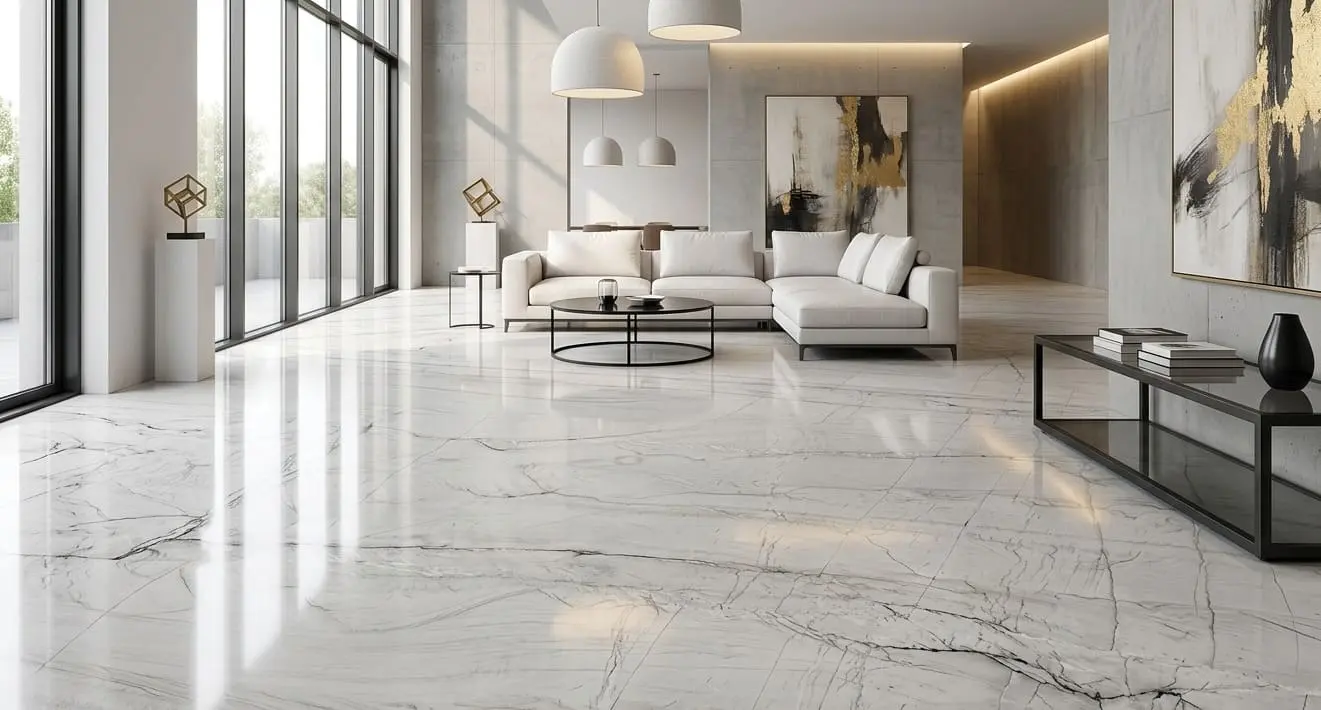
Standard finishes cover most residential applications. A polished finish produces a high-gloss surface that highlights the stone's veining, suited to formal interiors and open-plan living areas. A honed finish creates a smooth, matte surface preferred in casual spaces. A brushed or leathered finish adds subtle texture through mechanical abrasion, giving the surface an organic feel with reduced reflectivity.
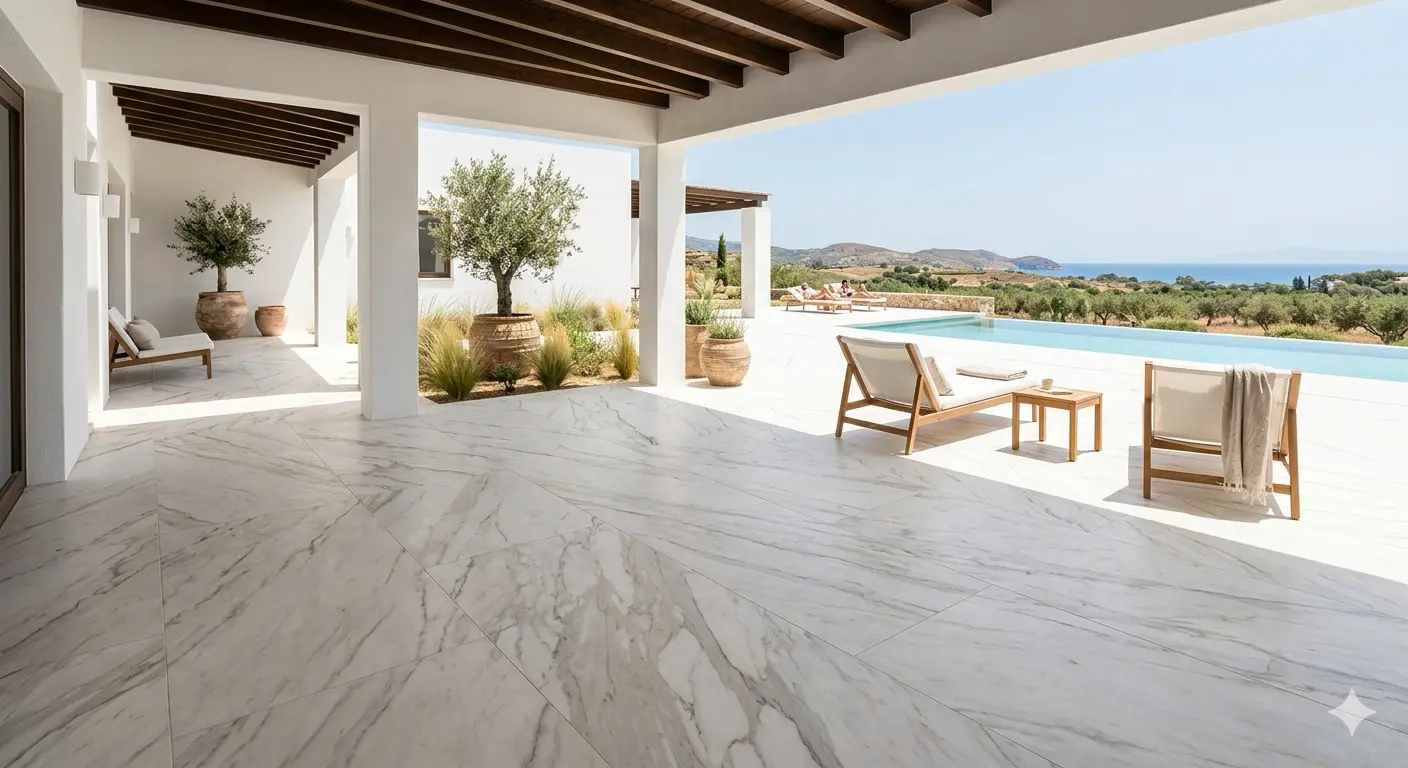
Specialty finishes address performance requirements. A flamed finish exposes the stone to a high-temperature torch, producing a rough, non-slip texture ideal for outdoor quartzite flooring and garden paths. A sandblasted finish uses high-pressure abrasive media to create a slip-resistant surface for wet-area flooring and exterior paving. A bush-hammered finish creates a deeply textured surface for rugged exterior and commercial environments. A tumbled finish softens the stone's edges for an aged aesthetic suited to rustic or traditional interiors.
Caring for Your Quartzite Floor
Zermatt quartzite floor requires two consistent practices: sealing and gentle routine cleaning. Quartzite retains some natural porosity, and without a sealant, the stone can absorb liquids and develop stains that are difficult to reverse. A quality penetrating sealer applied at installation creates a protective barrier, with annual reassessment recommended for most residential floors. Flamed and sandblasted finishes warrant especially thorough sealing, as those treatments open the stone's pores more than standard finishes do.
A pH-neutral cleaner or mild soap and water keeps the surface in good condition. Acidic, alkaline, or abrasive products should be avoided, as they degrade the sealer and dull the surface over time. Using felt pads under furniture legs, placing entry mats in high-traffic zones, and attending promptly to spills extend the finish life and reduce how often resealing is needed.