Travertine Backsplash
A Natural Stone Surface Built for the Kitchen
Travertine has been used in construction and design for thousands of years, and its presence in modern kitchens and bathrooms reflects the same qualities that made it a preferred building material throughout history. When used as a backsplash, travertine slabs bring natural variation in tone, surface texture, and veining that manufactured materials cannot replicate.
We stock natural stone slabs across our four showrooms in Reno, Sacramento, Minden, and Fernley, giving you the opportunity to see travertine in person before making a decision. You can view our current slab inventory to get a sense of what we have on hand.
A Natural Material Built for Wall Applications
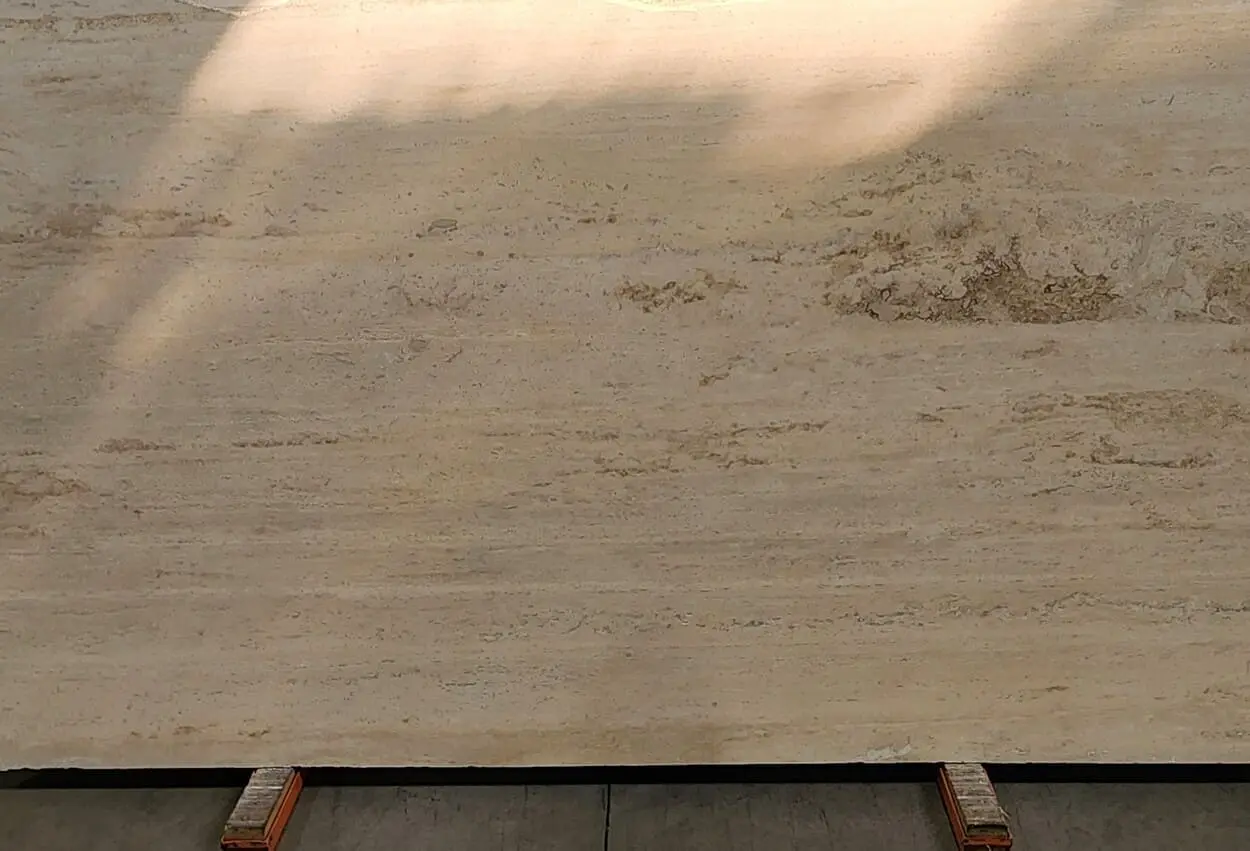
Travertine is a sedimentary stone formed from calcium carbonate deposits, placing it in the same mineral family as marble and limestone. Its Mohs hardness rating falls between 3 and 4, which means it holds up well in low-impact wall applications like backsplashes. The surface of travertine features natural pitting and linear veining that varies from slab to slab, producing a finished installation that is specific to the stone selected. Color ranges from warm ivory and cream to deeper walnut and gold tones, making travertine a material that works across a range of design directions.
For backsplash applications, travertine slabs are typically cut thin and either honed or polished. A honed finish produces a matte, smooth surface that softens the look of the stone. A polished finish brings out the depth of the veining and adds reflectivity to the surface. Both finishes are appropriate for kitchen and bathroom backsplash use, and the choice between them depends largely on the overall design of the space. If you work in the trades, our trade account program is available for professionals sourcing natural stone materials.
Visit Our Slab Shop!
Reading the Surface: Finish and Texture Options
The finish applied to a travertine backsplash affects both appearance and maintenance. Honed travertine has a low sheen and tends to show less water spotting, which can be an advantage near sinks and cooking surfaces. Polished travertine reflects more light and tends to highlight the stone's natural color variation more prominently.
Travertine also commonly comes in a filled or unfilled state. Unfilled travertine retains its natural pits and voids, which contributes to a more rustic, textured appearance. Filled travertine has those voids packed with grout or epoxy filler, resulting in a smoother, more uniform surface. For backsplash applications, filled travertine is the more practical choice in areas exposed to grease, moisture, and cleaning products. Our natural stone showrooms carry slabs in a range of finishes so you can compare options side by side.
Protecting Your Stone Over Time
Travertine is a calcite-based stone and reacts to acidic substances, including citrus, vinegar, and many household cleaners. For backsplash surfaces near cooking and food preparation areas, this is worth factoring into your maintenance routine. Use pH-neutral cleaners and avoid abrasive pads that can scratch the surface.
Sealing is recommended every 6 to 12 months depending on use and exposure. A quality penetrating sealer reduces the stone's porosity and helps prevent staining from oils, grease, and moisture. Resealing on a consistent schedule keeps the surface protected and maintains the appearance of the stone over time.
Frequently asked questions
Travertine works well as a kitchen backsplash when properly sealed and maintained. Its natural hardness and low-impact placement on walls make it suitable for the application. Because travertine is sensitive to acidic substances, routine sealing every 6 to 12 months and pH-neutral cleaning products are recommended for kitchen environments.
Unfilled travertine retains the natural pits and voids that form during the stone's development, producing a textured, rustic surface. Filled travertine has those voids packed with grout or epoxy, resulting in a smoother, more uniform finish. For backsplash use, filled travertine is generally the more practical option in areas exposed to moisture and cooking residue.
Travertine backsplash slabs are commonly available in honed and polished finishes. A honed finish produces a matte surface with low reflectivity. A polished finish brings out the depth of the veining and adds a higher sheen to the stone. The right finish depends on the design direction of the space and how much maintenance the homeowner prefers.
A travertine backsplash should be sealed every 6 to 12 months. Sealing frequency depends on exposure to moisture, grease, and cleaning products. A penetrating sealer reduces porosity and helps protect the surface from staining. Consistent resealing maintains both the appearance and durability of the stone.
Travertine can be used as a backsplash behind a stove or range. Because heat does not directly contact the stone in a standard backsplash installation, thermal stress is not a significant concern. However, the area behind a range is exposed to grease and acidic splatter, which makes proper sealing and regular cleaning with pH-neutral products especially important in that location.
View Slabs in Person
Travertine backsplash slabs are best evaluated in person, where natural light and physical scale give you an accurate read on color, veining, and surface texture. Our design consultants are available at all four locations for free design consultations to help you work through material selection, finish options, and layout decisions. Visit us at our Reno, Sacramento, Minden, or Fernley showrooms to view current slab inventory.
Note: Images on this page are conceptual renderings created to illustrate design possibilities and may not depict actual installations.