Taupe Quartzite
Taupe quartzite is a warm-toned natural stone known for its gray-brown veining, high hardness, and suitability across a wide range of residential and commercial surfaces.
It is a natural metamorphic stone formed when quartz-rich sandstone is subjected to extreme heat and tectonic pressure deep within the earth's crust, producing a natural stone slab known for its hardness and long-term durability in architectural use. Its gray-brown tonality sits between warm and cool, carrying fine veining that varies naturally from slab to slab, making it a highly specifiable neutral stone for contemporary and traditional interiors alike.
It is used across kitchen countertops, bathroom vanities, flooring, wall cladding, and custom architectural surfaces. As a 100% natural material, each slab carries its own veining and character shaped entirely by geological processes, not by manufacturing.
Color, Appearance, and Finish Options
The defining characteristic of this natural stone slab is its complex neutral tone. Taupe sits at the intersection of gray and brown, shifting subtly depending on the minerals present during formation and the lighting conditions of the installed space. Its base tone is layered with fine veining in cream, soft copper, or lighter gray, giving each quartzite slab a quiet, organic movement. Because this character is best understood in person, in-person selection is strongly recommended before finalizing a specification.
To suit different design contexts and surface applications, this stone is available in four finishes:
Polished
High-gloss surface that sharpens veining detail and deepens tonal richness.
Well suited to countertops and vanities where visual impact is a priority.
Honed
Matte finish that softens appearance and reduces reflectivity. Often recommended for flooring and contemporary or transitional interiors.
Leathered
Slightly textured surface that adds tactile depth and understated character. Popular for feature walls, islands, and accent surfaces.
Specialty
Custom and brushed finishes suited to unique architectural applications. Available on request for specific project requirements.
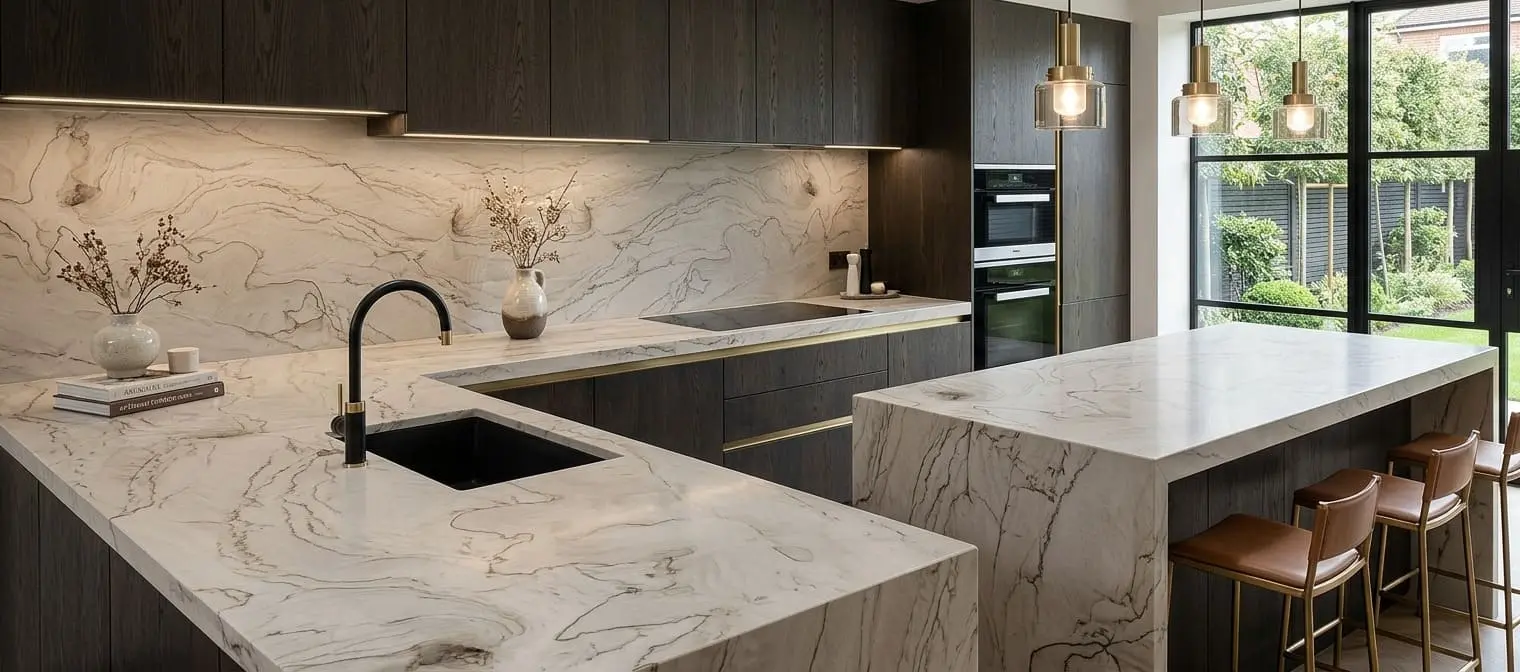
Taupe Quartzite for Countertops, Flooring, and Wall Cladding
Those properties make this natural quartzite stone well suited to a broad range of installation contexts. Its neutral warmth is compatible with contemporary, transitional, and traditional design aesthetics, and its durability supports use across multiple surface types within the same project.
- Kitchen Countertops
The kitchen is where its performance properties tend to be most appreciated. The stone's scratch and acid resistance can hold up well in active cooking environments, while its warm neutral tonality pairs well with cabinetry in white, off-white, wood, greige, and deep-toned finishes. It performs well on large islands where the natural stone slab's veining can be appreciated across an uninterrupted surface.
- Bathroom Vanities and Wet Areas
In bathroom applications, this quartzite slab brings a refined, spa-like quality to vanity tops, shower surrounds, and feature walls. When correctly sealed, its low porosity makes it well suited to wet environments. The honed finish is particularly effective where a softer, less reflective finish is preferred.
- Flooring
For high-traffic residential and commercial environments, large-format slabs offer a solid quartzite flooring option that can create a seamless, continuous look well suited to open-plan living areas, hotel lobbies, and corporate reception spaces where both durability and presentation matter.
- Wall Cladding and Feature Surfaces
As a natural stone cladding material, it adds textural richness and architectural weight to interior accent walls, fireplace surrounds, and exterior facades. Its natural variation in tone and veining can help create visual depth while reducing the need for additional decorative layering, making it a considered choice for feature surfaces intended to anchor a space.
Design Pairings
Given the range of environments it can occupy, taupe quartzite's neutral palette tends to integrate well across a wide range of materials, finishes, and spatial contexts. The following combinations are often recommended by interior designers and specification professionals working with this natural stone.
- White and off-white cabinetry - Warm undertones can help prevent the pairing from reading as sterile, creating a refined contrast in modern and transitional kitchen interiors.
- Natural wood tones - White oak, walnut, and maple complement its earth tones, producing interiors that tend to feel grounded and organically layered.
- Deep-toned cabinetry and walls - Charcoal, forest green, or navy finishes may allow its warm neutrality to anchor darker palettes without adding visual weight.
- Matte black or brushed brass hardware - Brass can draw out warmer copper notes within the stone; matte black may deliver a cleaner, higher-contrast result.
- Neutral flooring materials - A complementary warm gray or greige tile alongside quartzite stone countertops can help create spatial continuity without monotony.
Explore Our Slab Guides and Inspiration
Frequently Asked Questions
Taupe quartzite is a 100% natural metamorphic stone quarried from the earth, formed when quartz-rich sandstone undergoes intense heat and tectonic pressure over millions of years. Engineered quartz is a manufactured product made from crushed quartz combined with polymer resins and pigments. This natural stone carries veining that varies between slabs, while engineered quartz offers a uniform, consistent appearance.
Polished is most commonly specified for countertop applications. It enhances veining clarity, deepens tonal richness, and is easy to clean. Honed suits clients who prefer a matte, less reflective result and works well in contemporary and transitional interiors. Leathered is popular for kitchen islands as a feature surface. Specialty finishes are available for unique project requirements. The right choice depends on the design intent and the client's maintenance expectations.
Yes. An initial seal should be applied at installation, with reapplication generally recommended once a year for most surfaces. High-traffic surfaces such as active kitchen countertops may require resealing every six to eight months, while denser varieties sealed with premium products can go longer between applications. Sealing helps protect against staining from oils, wine, and water-based liquids with minimal effect on the stone's appearance.
In terms of hardness and acid resistance, taupe quartzite generally outperforms marble. Marble rates 3 to 4 on the Mohs scale and is prone to etching under acidic substances such as lemon juice or vinegar, because it is composed primarily of calcite, a carbonate mineral that reacts chemically with acids. This stone, rating 7 to 8 and composed almost entirely of quartz, tends to resist both acid etching and scratching more effectively while offering comparable visual sophistication with greater durability in high-use environments.
Yes, for select exterior applications. Its dense composition can provide good resistance to weathering, frost cycles, and UV exposure, making it potentially suitable for outdoor flooring, facade cladding, and landscape features in many climates. Honed or leathered finishes are recommended outdoors for slip resistance. We advise consulting our team at Nova Tile and Stone to confirm suitability for your specific environment before specifying.