Taj Mahal Kitchen
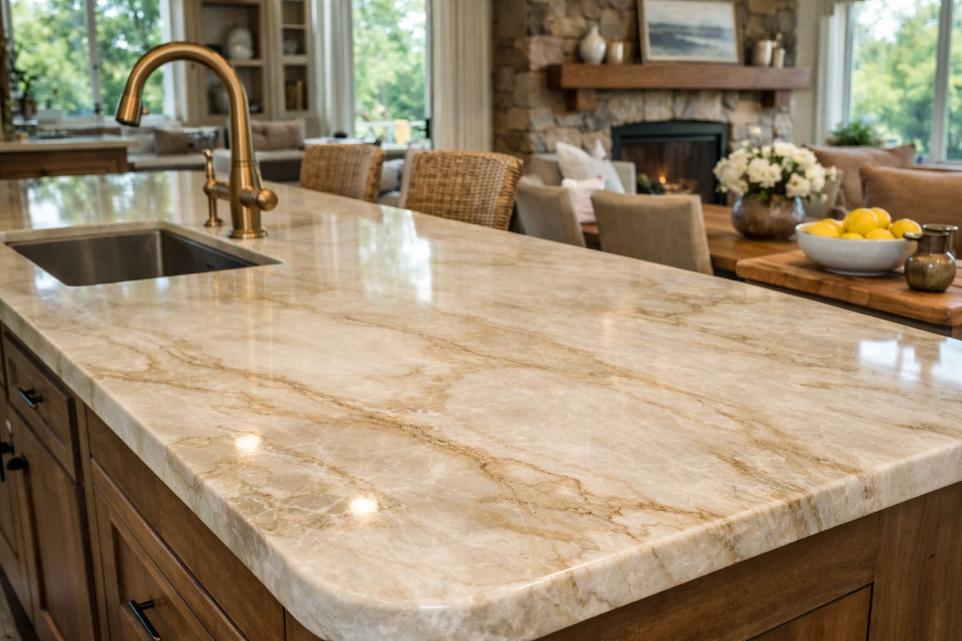
Taj Mahal quartzite is a 100% natural metamorphic stone quarried in Brazil, formed when ancient sandstone undergoes extreme heat and pressure deep within the Earth's crust. The result is a dense, crystalline rock with a creamy off-white to warm beige base and soft, feathery veins of gold, gray, and taupe, an appearance that closely resembles high-end marble while offering significantly greater hardness.
Taj Mahal kitchen countertop ranks between 7 and 7.5 on the Mohs hardness scale, placing it well above marble, which rates 3 to 4, and above granite, which averages 6 to 6.5. This hardness makes it one of the most practical and enduring choices for natural stone surfaces. It is NSF-certified safe for food preparation and holds GreenGuard Gold Certification for low chemical emissions, confirming its suitability for indoor environments
Taj Mahal Kitchen Inspirations
Elegant Countertops Showcasing Natural Beauty and Durability

Where Nature Meets the Kitchen
Carved from the mountains of Brazil and shaped by millions of years of heat and pressure, Taj Mahal quartzite brings unmatched natural elegance to your kitchen. Its creamy, warm base and soft gold veining create a surface that looks like luxury marble, but outlasts it by decades.
Taj Mahal kitchen countertop is not just a surface. It is the centerpiece your kitchen was designed around.
Built to impress. Built to last.
See Our Complete Slab Selection
Why This Quartzite Stands Out in Kitchen Design
Once you understand what this stone is made of, its appeal in kitchen design becomes immediately clear. Its neutral, warm color palette integrates seamlessly into a wide range of styles, from modern and transitional to farmhouse and traditional, while its soft, wispy veining adds visual depth without overwhelming surrounding cabinetry or flooring.
Because each slab is shaped entirely by nature, no two installations are ever identical. This also distinguishes it from engineered alternatives: the stone is 100% natural quartzite with no resins or synthetic additives, offering depth and authenticity that manufactured surfaces cannot replicate.
Taj Mahal Countertop Durability and Performance
That visual appeal is backed by equally strong performance. Its density allows the surface to withstand heavy daily use without gouging or wearing down, and it is highly resistant to heat, warm cookware placed directly on the surface causes no damage under normal cooking conditions. Unlike marble, it also resists etching from acidic substances such as citrus juice or wine, requiring significantly less reactive maintenance.
With annual sealing, or more frequently in high-use kitchens, the surface repels staining effectively. A simple water drop test confirms when resealing is needed: if water beads on the surface, the seal is intact; if it absorbs and darkens the stone, it is time to reseal.
Design Pairings and Style Inspiration
Taj Mahal kitchen countertop serves as a natural anchor for the entire space, complementing a broad range of cabinetry and hardware finishes. White oak and bleached wood cabinets create a light coastal aesthetic, while navy or espresso cabinetry delivers a bold, moody contrast. Both brushed nickel and matte black hardware pair naturally with the stone's warm undertones.
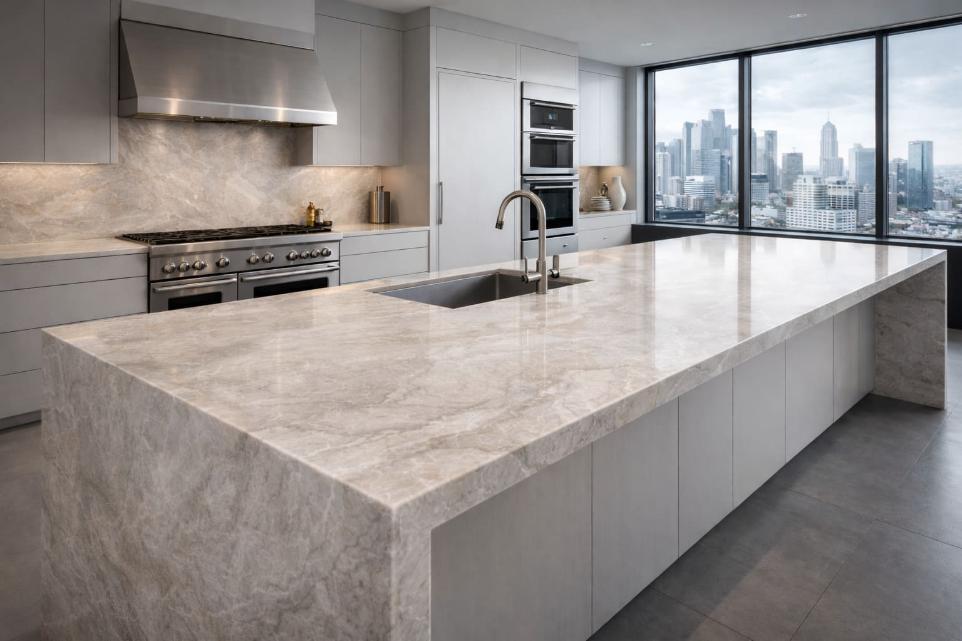
For maximum visual impact, a full-height backsplash using matching slabs creates a seamless, architectural look favored in luxury renovations. A kitchen island in this quartzite is equally striking, especially with a waterfall edge that lets the stone's natural veining flow down the sides. Beyond countertops, the material extends beautifully to bar tops and accent walls.
Frequently Asked Questions
Yes. Ranking between 7 and 7.5 on the Mohs hardness scale, it is among the most durable natural stones available, harder than both marble and granite, and resists scratches, heat, and chipping under normal daily conditions.
For most residential kitchens, sealing once a year is sufficient. Countertops in high-use environments with frequent exposure to oils, wine, or citrus may benefit from resealing every 6 to 9 months. A water drop test is the most reliable way to assess whether the sealant is still performing.
Taj Mahal is 100% natural stone with no resins or synthetic additives, and every slab carries unique natural variation. Engineered quartz is a man-made surface composed of approximately 90–95% crushed quartz combined with resin binders and pigments, producing a uniform, consistent pattern.
Polished, honed, and leathered finishes are available. Each produces a different surface texture and light reflection, polished offers high gloss, honed delivers a matte appearance, and leathered provides a subtly textured feel suited to both indoor and covered outdoor applications.
The standard thickness is 3 cm (approximately 1¼ inches), which provides structural integrity and supports a range of edge profiles. A 2 cm (¾-inch) option is also available and is used in specific applications where weight or support requirements differ.
Transform Your Space
Elevate your kitchen with the natural elegance of Taj Mahal quartzite, available now at Nova Tile and Stone. Our four showrooms, located in Reno, Sacramento, Minden, and Fernley carry an extensive slab selection across multiple finishes and thicknesses.
Visit us in person to view full slab patterns and choose the veining that best suits your vision. Explore our current inventory and bring your dream kitchen to life today.