Skip to Content
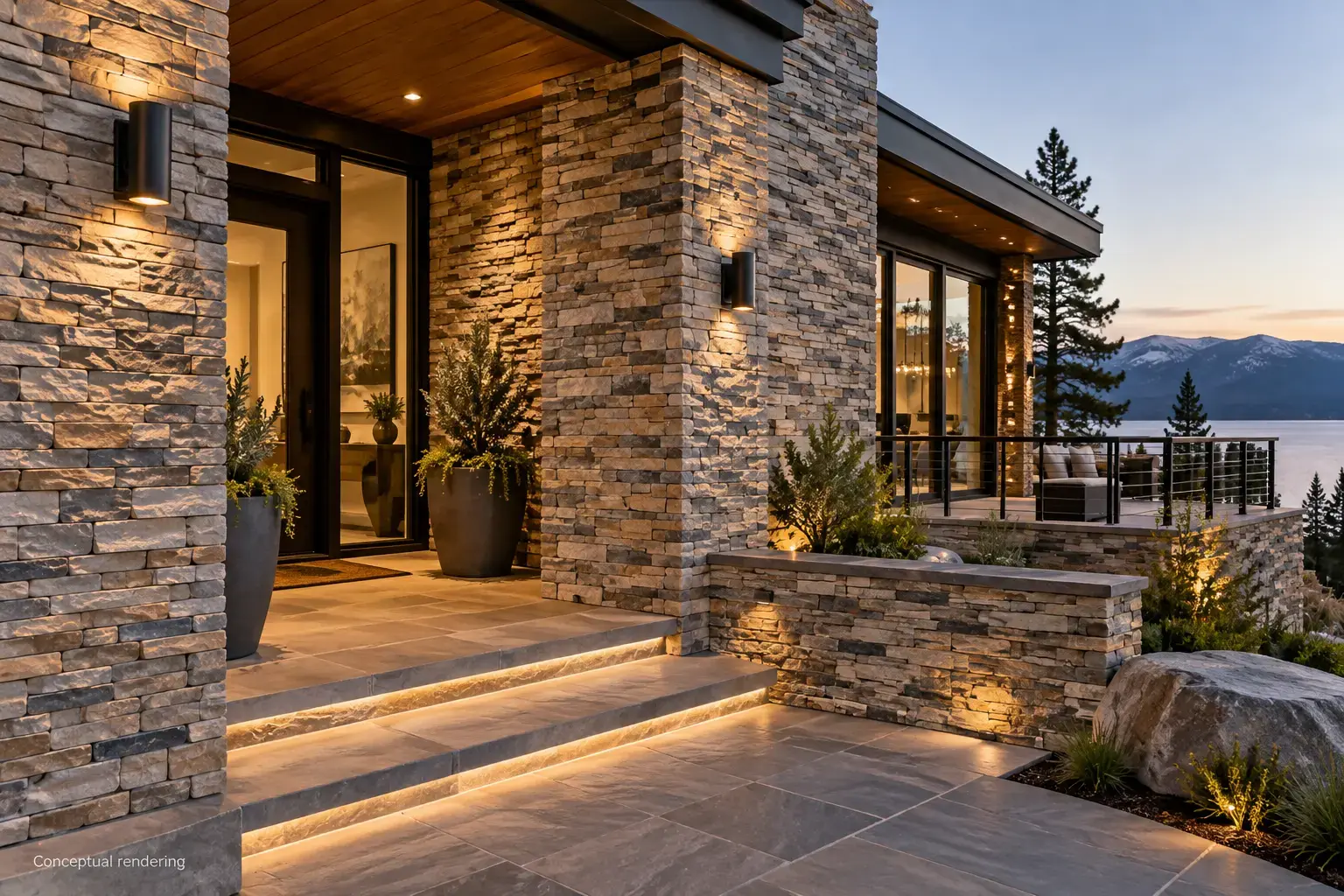
Conceptual rendering of luxury exterior featuring a perfectly installed ledger stone facade. Conceptual rendering

Stone For House Exterior

Comparing Materials by Placement, Finish, and Exposure

Browse our collections

Stone for house exterior projects includes natural stones such as granite, quartzite, and travertine, which can withstand outdoor conditions like sun, rain, and freezing temperatures. Among these types of exterior stone, granite and quartzite are well suited to wall cladding, steps, and outdoor kitchens, while travertine is a common choice for patios and pool decks. Stone-look porcelain, an engineered alternative, can work well in areas that stay wet or freeze often, since the ANSI A137.1 standard defines porcelain as tile with water absorption of 0.5% or less when tested according to the ASTM C373 standard.


The right choice depends on four factors: durability, placement, finish, and exposure. Durability reflects how well a material handles wear and weather, placement sets how much traction and moisture resistance each area of a house needs, finish influences slip resistance and appearance, and exposure to sun, water, and freezing temperatures affects how a material weathers over time.


House Exterior Applications by Placement

A vertical wall tends to shed water quickly, while a patio can collect rain, snowmelt, and foot traffic.

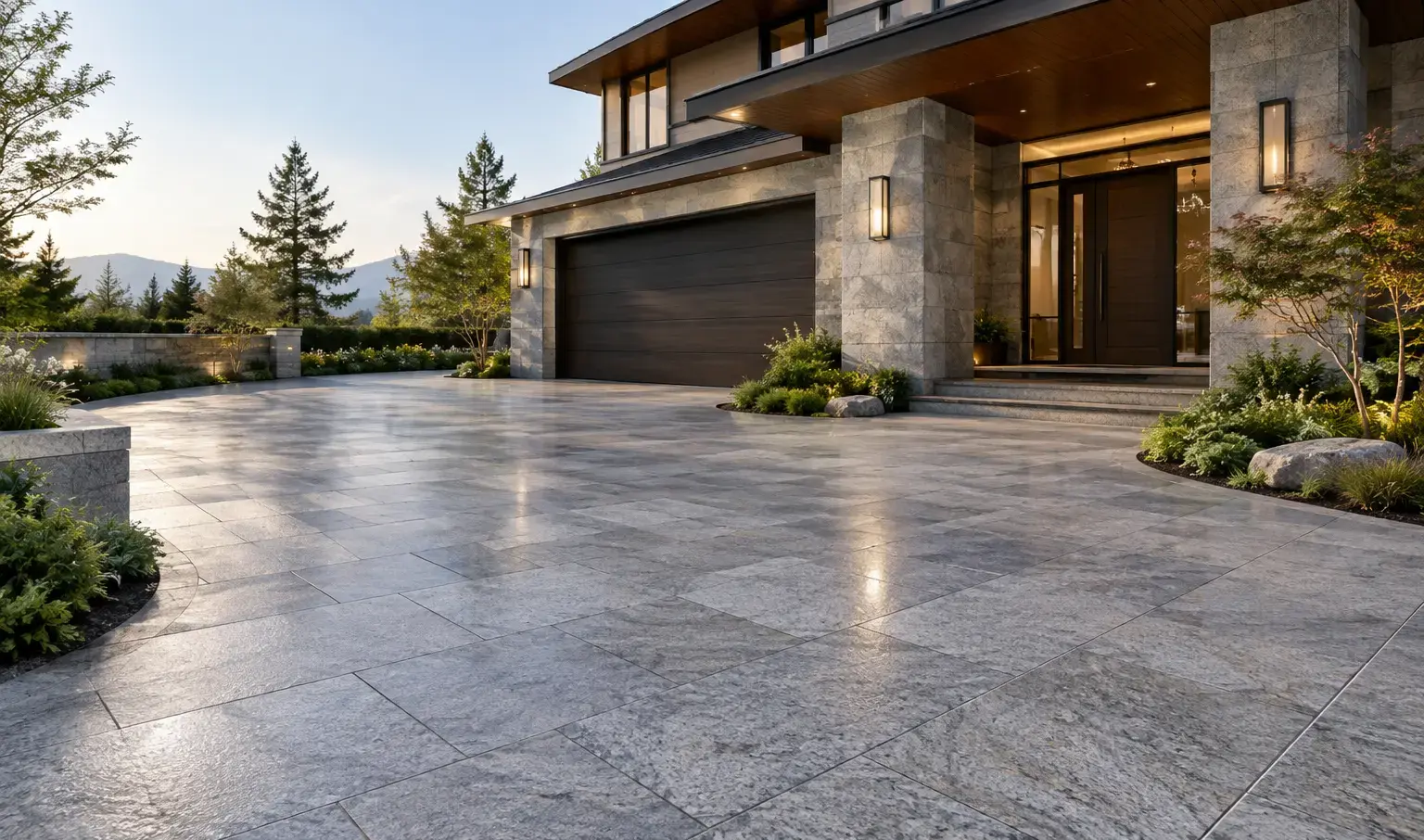
Conceptual rendering of home exterior with granite hardscaped stone for driveway and landscaped entrance.

Patios, Walkways, and Pool Decks

Horizontal surfaces can hold standing water and see steady use, so traction and low absorption are usually priorities. Around pools, safe footing for bare feet and good drainage are key considerations.

House Facades and Wall Cladding

House walls, columns, and foundations often receive direct sun and wind-driven rain but little foot traffic. Color stability and moisture resistance tend to matter more here than slip resistance, whether the exterior stone is applied as thin veneer or full-depth cladding.

Outdoor Kitchens and Fireplaces

Outdoor cooking areas and fireplace surrounds deal with heat, spills, and temperature swings. Heat tolerance and stain resistance are important factors here.

Entryways and Steps

The front steps and landing of a house combine daily foot traffic with rain and snow. Because a slip on a step can carry more risk than one on flat ground, traction is often the primary consideration.

Choosing Stone for House Exterior Projects: A Material Comparison


Those needs point to specific properties, such as low porosity for wet surfaces and UV resistance for sun-facing walls.

​

Granite is an igneous rock with low porosity, which helps limit water absorption and can help it resist freeze-thaw damage. It is known for UV resistance and heat tolerance, making it a practical option for cladding, steps, patios, and outdoor kitchens. Granite is offered in polished, leathered, and specialty finishes.

​

Quartzite is a metamorphic rock formed when sandstone recrystallizes under heat and pressure. Ranking around 7 on the Mohs hardness scale, it is known for resisting scratching and weathering, tends to hold its color in sunlight, and can handle heat in outdoor kitchens and fireplaces. Quartzite comes in polished, honed, leathered, and specialty finishes, so a single material can serve both walls and walking areas.

​

Travertine is a type of limestone deposited by mineral springs, a process that gives it natural pits and voids. It is generally more porous than granite or quartzite, so sealing tends to play a larger role in its outdoor performance. Common uses include patios, pool surrounds, walls, and fireplaces, and it is available in all four finish types. Unfilled or tumbled surfaces can add traction underfoot, and in freeze-prone areas, a dense, premium grade installed with proper drainage is generally recommended.

​

Porcelain is an engineered material, though stone-look versions resemble natural stone. The ANSI A137.1 standard defines porcelain as tile with water absorption of 0.5% or less, a level that helps limit moisture intake and reduce the risk of freeze damage. Porcelain tile rated for exterior use suits patios, pool decks, walls, and fireplaces and is made in all four finish types.

Choosing a Finish for Each Placement


Within any material, a polished surface reflects light and deepens color, but can become slippery when wet, so it is better suited to vertical cladding or covered areas than to steps or walkways. A honed surface has a matte look and typically more traction than a polished surface. A leathered surface has a brushed texture that helps disguise dust and water spots and offers moderate slip resistance. Heavily textured finishes, such as flamed or sandblasted, typically offer greater slip resistance for pool decks and steps; flamed finishes are usually applied to dense materials like granite.
Planning for Exposure and Climate

​Local climate also matters. In regions with freezing winters, water that soaks into a surface can expand as it freezes, so low-absorption materials are often preferred for areas that freeze repeatedly. In hot, sunny climates, UV-resistant materials can help sun-facing house walls hold their color over time. Wherever rain or snowmelt is common, sloping walking surfaces so water drains instead of pooling can help reduce staining and surface wear.

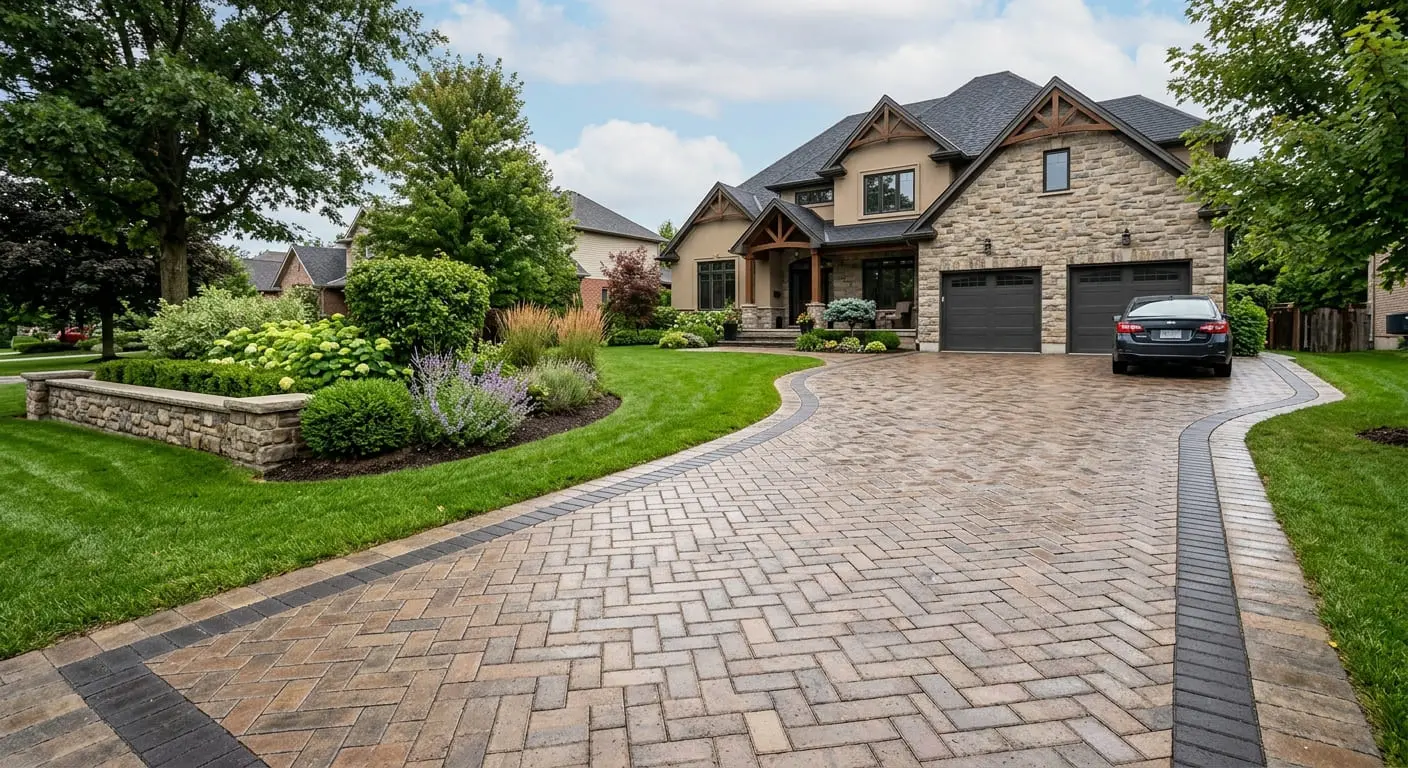
Conceptual rendering of natural stone paver in driveway.

Care and Maintenance for Exterior Stone

Routine care can help protect both the look and the structure of stone for house exterior surfaces.

​Reseal based on absorption.
Granite, quartzite, and travertine can benefit from a penetrating, breathable sealer made for exterior use. Sealing needs depend on each material's density and exposure rather than on a fixed schedule; some dense granites need little sealing, while travertine usually needs it more often.
​ Use pH-neutral cleaners.
Acidic products such as vinegar can etch travertine and other calcite-based stones, and they can break down sealers on any surface. A stone-safe cleaner and a soft brush are generally sufficient for regular cleaning.
Clear debris and standing water.
Leaves, soil, and pooled water can leave stains, and soil can settle into travertine's natural pores.
 
​Apply de-icers sparingly.
Salt brine can soak into porous materials and contribute to surface wear. Remove snow mechanically first, and follow the manufacturer's guidance when choosing an ice melt.​
​Inspect joints each season.
Cracked grout or open joints can let water reach the base below, which may loosen pieces after repeated freeze-thaw cycles.​

Porcelain typically requires little or no sealing, though its grout joints can still benefit from seasonal inspection.

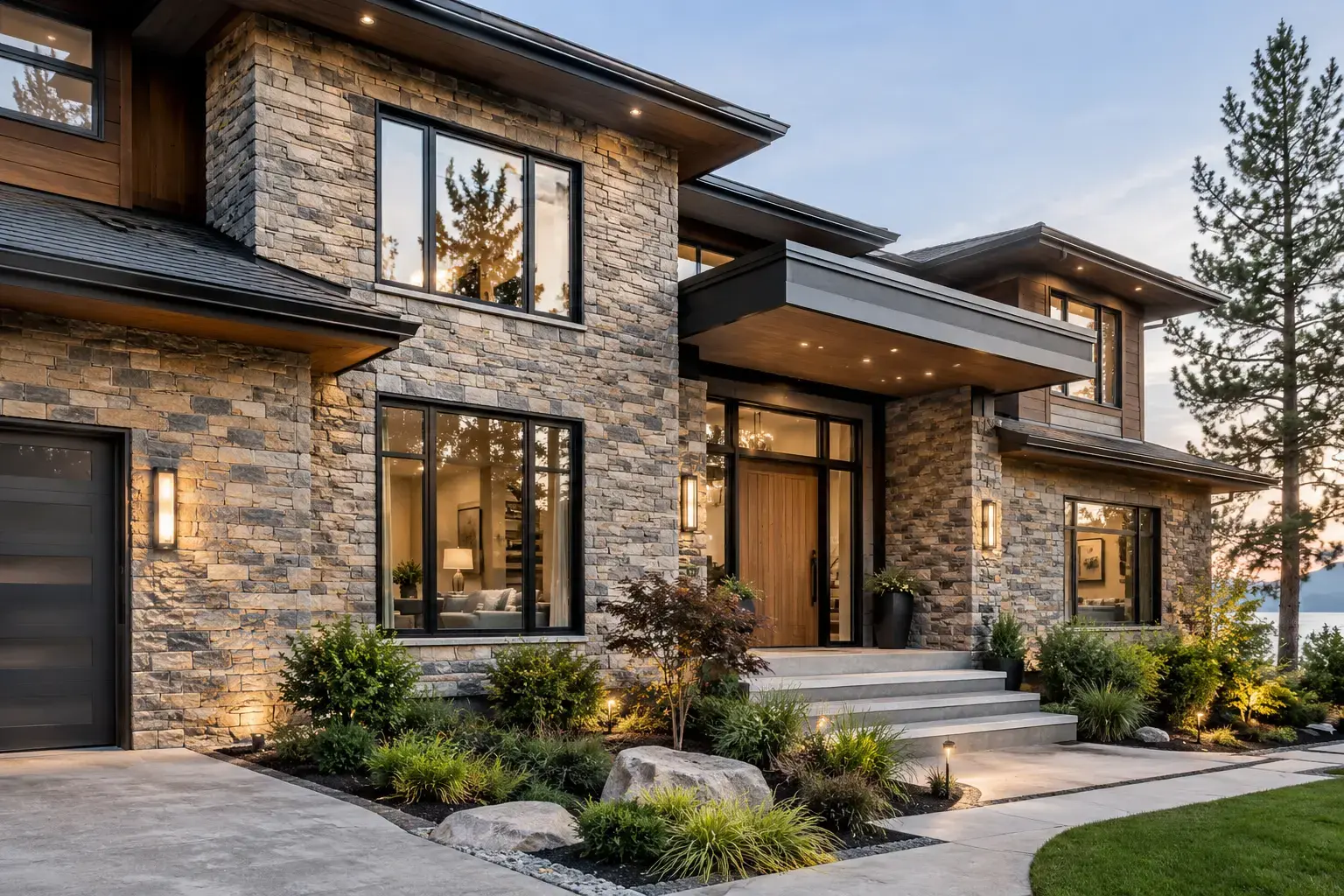
Conceptual rendering of home exterior with stacked stone facade and landscaped entryway.

Explore House Exterior Options at Nova Tile and Stone

Comparing colors, textures, and finishes in person can make selecting stone for house exterior projects easier. Nova Tile and Stone has showrooms in Reno, Minden, Fernley, and Sacramento, and current slabs can be viewed through the live slab inventory. Free design consultations are available to help you match materials to each area of your house, and tile samples can be taken home to view in natural daylight.

Slab Quote Request

Frequently Asked Questions

Yes. A house can use one material for wall cladding and another for walking surfaces, as long as each is suited to its placement and exposure.

Some slabs are treated with resin during processing, and resin can discolor under long-term UV exposure. Before using a granite or quartzite slab outdoors, confirm that it is suitable for direct sun.

Confirm that the product is rated for exterior use and for its specific placement on the house. For patios, steps, and pool decks, check its slip-resistance rating for wet conditions and its suitability for freeze-thaw exposure.

Color can make a noticeable difference. Lighter shades tend to stay cooler than darker ones, which absorb more heat, so lighter tones are often preferred for pool decks and seating areas.

The water-drop test is a common way to check. Place a small amount of water on the surface; if the water soaks in and darkens the stone within a few minutes, it is likely time to apply a fresh coat of exterior-rated sealer.

Visit our Showrooms Now!

Avail our free consultation to plan the right stone choice for a humid climate exterior today!


FERNLEY

1855 US Highway 95A North, Fernley, NV 89408

(775) 575-6682

Fernley google location pin iconGoogle Maps

Store hours this week:

  • Mon. - Fri.: 7:30 am - 4:00 pm
  • Sat. - Sun.: Closed

RENO

12835 Old Virginia Rd Suite 24, Reno, NV 89521

(775) 331-6682

Reno google location pin iconGoogle Maps

Store hours this week:

  • Mon. - Fri.: 7:30 am - 6:00 pm
  • Sat.: 9:00 am - 3:00 pm
  • Sun.: Closed

MINDEN

2548 Business Pkwy, Minden, NV 89423

(775) 783-4970

Minden google location pin iconGoogle Maps

Store hours this week:

  • Mon. - Fri.: 7:30 am - 6:00 pm
  • Sat.: 9:00 am - 3:00 pm
  • Sun.: Closed

SACRAMENTO

6100 Warehouse Way, Sacramento, CA 95826

(916) 913-6682

Sacramento google location pin iconGoogle Maps

Store hours this week:

  • Mon. - Fri.: 7:30 am - 5:00 pm
  • Sat. - Sun.: Closed