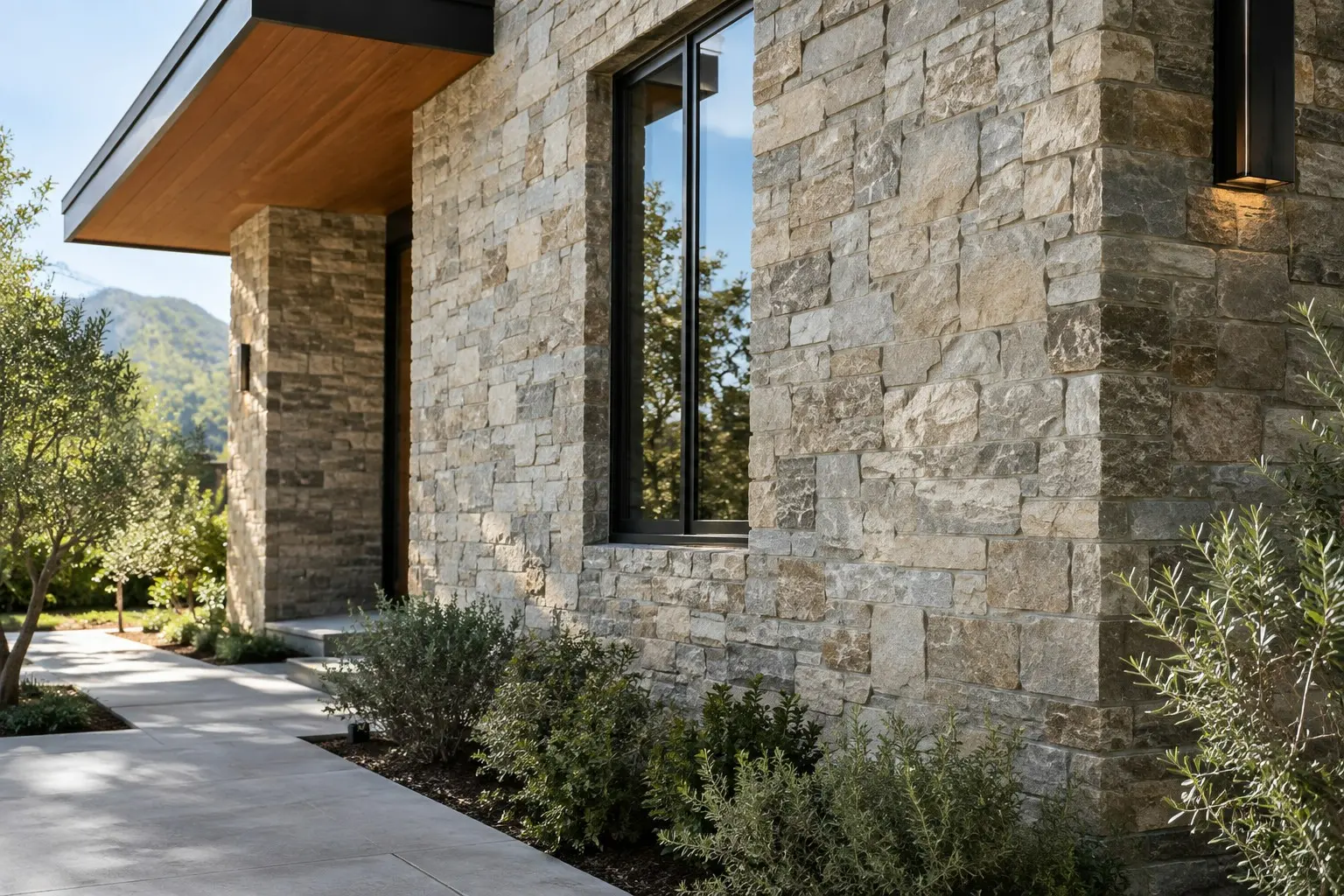
Exterior wall stone is natural stone used as cladding, veneer, or trim on the outside walls of a home. It is commonly applied to façades, entry walls, lower walls, garden walls, and courtyard accent walls, with caps and trim pieces finishing the edges and openings. When selecting stone for exterior walls, the main factors to consider are whether the stone is suited to outdoor exposure, its composition, its finish, and your local climate. Because natural stone forms in the earth rather than in a factory, its color and texture can vary from slab to slab.
Our team supplies the stone material itself, including natural stone slabs and tile, while cutting, fabrication, and installation are handled by your own fabricator and contractor. Seeing material in person before deciding is helpful, and you can start by exploring our full selection of tile, stone, and slabs.
What Stone Is Best for Exterior Walls?
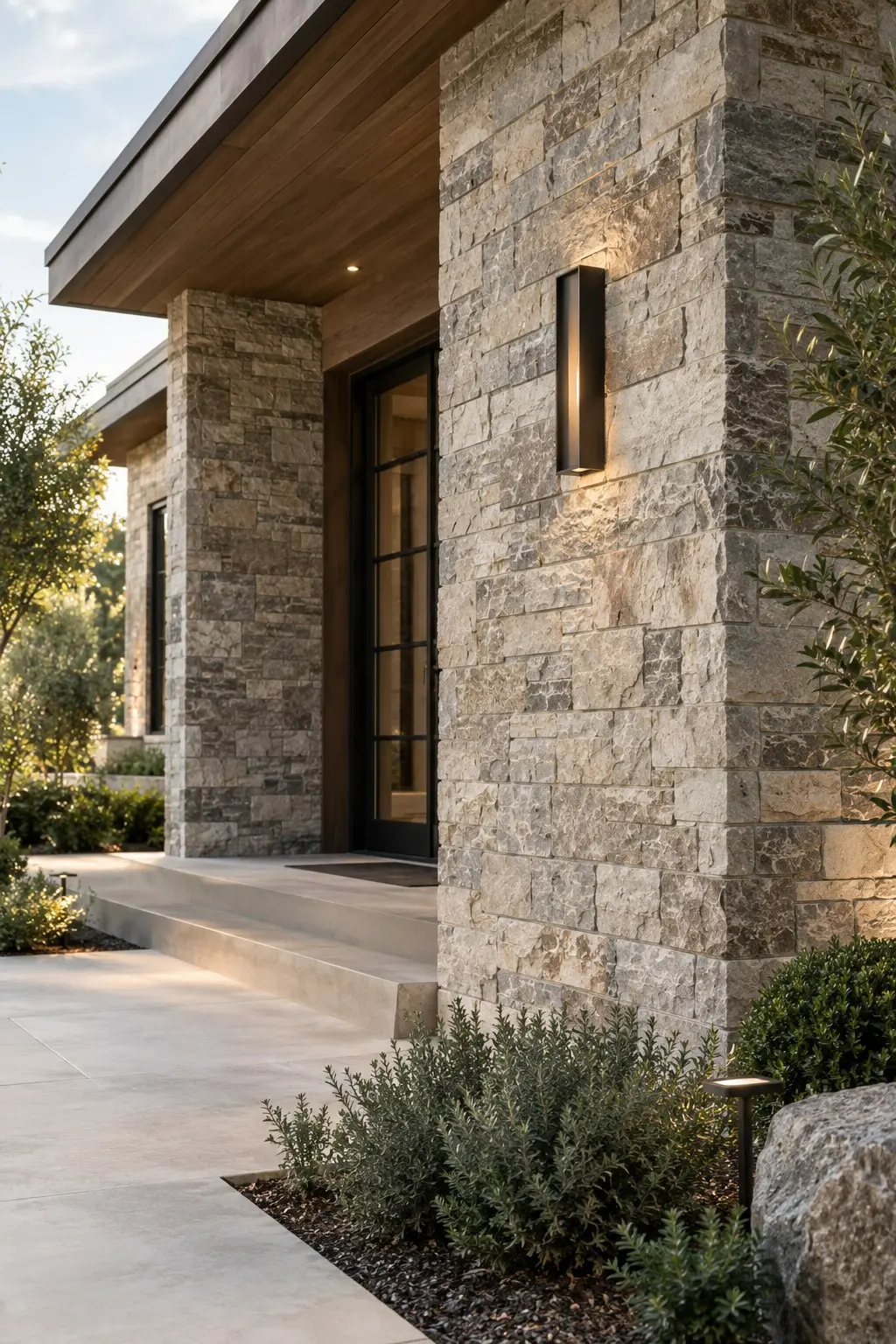
How Does Stone Perform on Exterior Walls?
How stone for exterior walls performs depends on the stone, its composition, its finish, and how the wall is detailed for drainage. Years of sun and weather exposure can gradually change the tone of some stones, which is worth keeping in mind during selection.
Moisture is one of the main factors to plan for. Water moving through stone can carry mineral salts to the surface and leave a white, powdery residue known as efflorescence, and in colder climates, water that freezes inside stone or mortar joints can contribute to damage over repeated cycles. Sealing makes many stones more resistant to staining, but it does not make stone stain proof, so good drainage and limiting standing water at the base of walls still matter.
Sudden and extreme temperature changes can also place stress on stone through thermal shock. Sand, dirt, and grit are abrasive and can damage natural stone over time, which is one reason routine cleaning matters. If sustainability matters for your project, this guide to environmental and health product labels for natural stone explains how these declarations document a stone's life cycle impacts and ingredients.
Note: Some images on this page may be conceptual renderings created to illustrate design possibilities and may not depict actual installations.
How Do You Maintain Stone on Exterior Walls?
Stone walls need relatively simple care, but regular attention helps protect the surface and joints over time. The routine below follows the Natural Stone Institute's care and cleaning guidelines, which start with knowing your stone's composition.
- Clean the wall periodically with a neutral cleaner, stone soap, or mild liquid dishwashing detergent and water, then rinse thoroughly.
- Avoid products containing lemon, vinegar, or other acids, which may dull or etch calcareous stones and are not recommended for siliceous stones either.
- Skip scouring powders and abrasive creams, which can scratch certain stones.
- Keep rust removers away from stone, as many contain hydrofluoric acid, which can attack all stone types.
- For algae or moss, flush with clear water and use a mild bleach solution, and never mix bleach with ammonia.
- Remove efflorescence with a dry brush rather than water, and if it keeps returning, have the source of the moisture identified.
- Follow the sealer manufacturer's instructions on which sealer suits your stone and how often to reapply, since some stones may not need sealing.
- Direct gutters, downspouts, and sprinklers away from stone walls to limit standing water at the base.
- Inspect mortar joints periodically, and have cracks or gaps repaired before moisture works its way in.
Conclusion
Natural stone can add texture and a natural finish to façades, entry walls, lower walls, and garden walls, but the right choice depends on outdoor suitability, composition, finish, and your local climate. Planning for drainage, following a consistent care routine, and working with an experienced fabricator and contractor all help protect the stone over time. Our team supplies the stone material only, including natural stone slabs and tile, so you can select the material while your own professionals handle cutting and installation.
To view slabs in person and discuss material options for your walls, you can book a free design consultation. Contractors and designers who source stone regularly can apply for a trade account, and when your plans are set, you can request a slab quote for the material.
Frequently Asked Questions
The best choice is a natural stone intended for outdoor use that absorbs little water, with a finish that fits the look and exposure of the wall. Knowing whether the stone is calcareous or siliceous also helps, since calcareous stone is sensitive to acids and calls for mild, non-acidic cleaners.
Yes, your own fabricator can cut natural stone slabs into panels, caps, and trim for exterior walls. Your contractor then determines the panel thickness and attachment method based on the wall structure and local building requirements.
Use a neutral cleaner, stone soap, or mild dishwashing detergent with water, and rinse thoroughly. Avoid acidic products, abrasive cleansers, and rust removers containing hydrofluoric acid, since these can etch, scratch, or damage the stone.
It depends on the stone. Sealing makes many stones more resistant to staining, but it does not make stone stain proof, and some stones may not need sealing at all. The sealer manufacturer's instructions can guide the product choice and how often to reapply it.
Water that enters stone or mortar joints and freezes repeatedly can contribute to damage over time. Good drainage, sound mortar joints, and periodic inspections help reduce this risk in colder climates.