Silver Travertine Stone
Timeless in every surface it touches
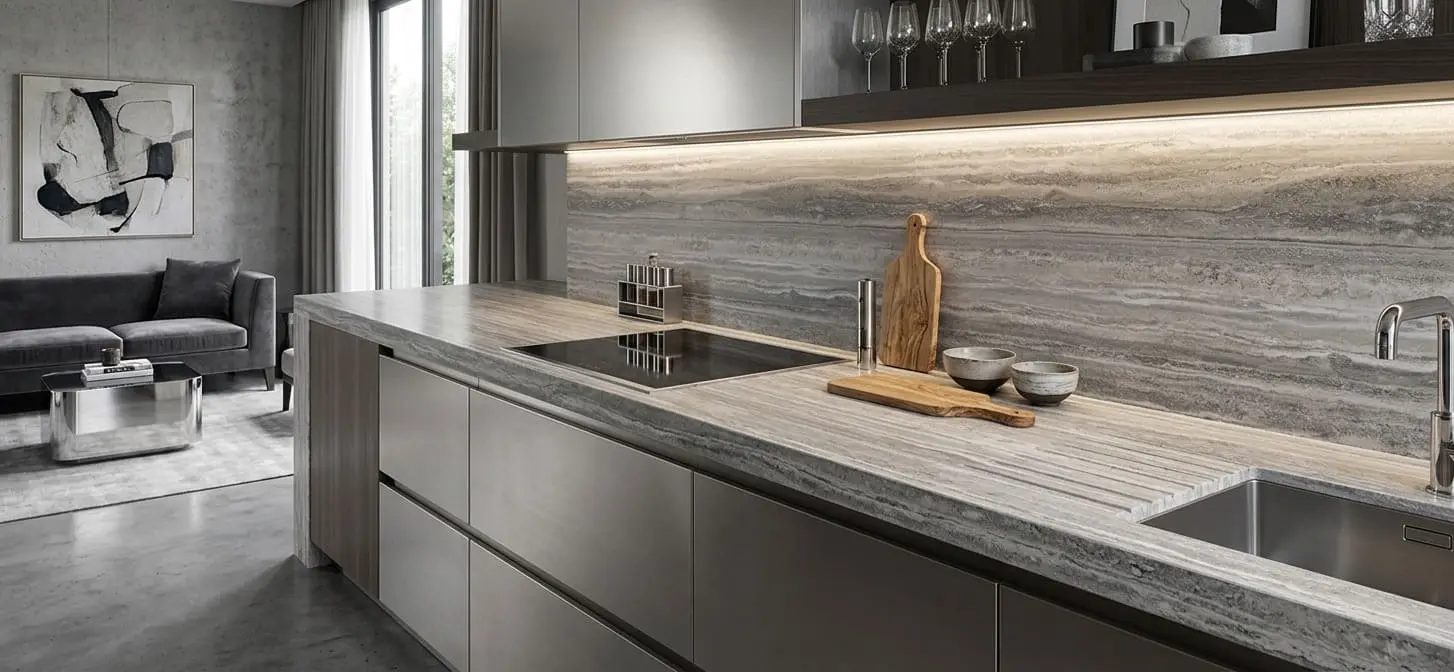
Silver travertine stone is a natural sedimentary stone formed through the precipitation of calcium carbonate from mineral-rich spring waters, a process that produces its characteristic layered structure, open pores, and subtle banding. Its base color is silver-grey, with natural variations of white, beige, and light taupe that shift across each slab depending on mineral content and quarry origin. Major quarry sources include Turkey and Iran, both recognized exporters of this variety.
Natural sedimentary travertine
Calcium carbonate (calcite)
Silver-grey with white, beige, and taupe variation
Floors, walls, indoors, outdoors, fireplace surrounds
Polished, honed, leathered, specialty
Residential and commercial
Nova Tile and Stone's silver travertine stone is available in four surface finishes: polished, honed, leathered, and specialty, and is suited for floors, walls, indoor spaces, outdoor installations, and fireplace surrounds in both residential and commercial projects.
Because travertine is composed primarily of calcite, it is sensitive to acidic substances, routine cleaning with pH-neutral products is recommended. Its porous structure also means sealing is advisable before installation and at regular intervals thereafter to protect against staining and moisture penetration.
What makes Silver Travertine Stone Distinct
The silver-grey palette of this stone comes from iron oxide and organic mineral particles present during formation, which tint the calcite layers and produce the cool, neutral tone the variety is known for. Unlike many natural stones with a uniform color, silver travertine carries tonal variation within each slab, bands may read as cooler silver in one light and warmer grey-beige in another, making every installation visually unique without being unpredictable.
Its porous, open-cell structure, formed by the natural decay of organic matter during deposition, gives the stone visual depth that flat, manufactured surfaces cannot replicate. When cut along the bedding plane (vein-cut), long parallel bands run the length of each slab; when cut across the grain (cross-cut), the same layers break into broader, cloudier patterns. This means two different visual effects are available from a single material, offering design flexibility without changing the stone itself.
Travertine also has natural thermal insulation properties. Its porous structure slows heat transfer, which means underfoot temperatures tend to stay moderate, a practical quality in both outdoor areas and rooms with underfloor heating where comfort underfoot matters.
Four Finishes, One Stone
Each finish changes the surface behavior, visual character, and maintenance requirements of silver travertine stone. Understanding the differences helps match the right option to the right space.
A high-gloss, reflective surface achieved through grinding and buffing. It deepens the stone's color and emphasizes veining, but is more susceptible to visible scratches and offers less slip resistance than other finishes. Best suited to walls, low-traffic floors, and interior feature applications.
A smooth, matte surface that has been ground down without further buffing. It gives a softer, more understated look than polished and is less likely to show surface wear. Because honing opens micro-pores in the stone, it is more absorbent than polished and requires more frequent sealing. A practical choice for floors and wet areas.
A textured surface created by running diamond-tipped brushes over a honed base. The result is a slightly undulating, tactile finish with a low sheen. It conceals fingerprints, smudges, and minor surface marks well, and enhances grip, making it a suitable option for outdoor paving, kitchen floors, and areas with regular foot traffic.
A range of bespoke treatments beyond the three standard finishes, including sandblasted, brushed, tumbled, and antique effects. Each alters the stone's surface texture and tone in a distinct way. Speak with our team to discuss which specialty treatment suits your project requirements.
Where It Works
Silver travertine stone is suited to a wide range of applications across interior and exterior environments. Finish selection should reflect the conditions of each specific setting.
On interior floors, honed and leathered finishes are generally preferred for their slip resistance and lower visibility of everyday wear. On walls, all finishes perform well, with polished best suited to low-contact vertical surfaces. Outdoors, on terraces, pool surrounds, and garden paths, honed and leathered finishes are the more practical choices, particularly in wet conditions. Proper sealing and a heat-resistant adhesive are recommended for outdoor installation to account for moisture and temperature variation across seasons.
For fireplace surrounds, mantels, and hearth faces, travertine stone is a suitable choice. Travertine is non-combustible and can handle the ambient radiant heat produced by a fireplace surround without undergoing structural or chemical change under normal conditions. It should not, however, be used inside the firebox itself, that area requires refractory materials such as fire brick. A honed finish is generally recommended over polished for fireplace applications, as polished surfaces can show thermal marks more readily over time.
Note: Travertine is sensitive to sudden, extreme temperature changes. Avoid placing very hot objects directly on a cold stone surface. When installing near heat sources, use a flexible, heat-rated adhesive and allow for adequate expansion joints.
Frequently Asked Questions
Yes, Silver Travertine Stone can be used outdoors and is a common choice for terraces, pool surrounds, and garden paths. Honed and leathered finishes are better suited to exterior use than polished, as they offer greater grip when wet. In climates with significant frost, the stone should be properly sealed before installation to limit water absorption into the pores, which can be affected by freeze-thaw cycles. Resealing periodically helps maintain performance and appearance over time.
For high-traffic floors, a honed or leathered finish is generally more practical than polished. Honed travertine has a smooth, matte surface that does not show surface wear as readily as polished and provides better slip resistance. The leathered finish adds texture and grip, and it is particularly effective at concealing fingerprints, smudges, and minor marks in busy areas. Both finishes require regular sealing, as their more open surfaces are more susceptible to staining than polished stone.
Silver travertine stone is a suitable material for fireplace surrounds, mantels, and hearth faces. It is non-combustible and can withstand the radiant heat of a standard fireplace surround without cracking or discoloring under normal conditions. It should not be used inside the firebox, where direct flame contact occurs, that zone requires refractory fire brick. A honed finish is generally preferred for fireplace applications, as it is less likely to show heat-related surface marks than a polished finish. Sealing before installation is advisable.
Daily cleaning should use a soft cloth or mop with warm water and a pH-neutral cleaner formulated for natural stone. Acidic products, including vinegar, citrus-based cleaners, and many common bathroom sprays, can etch the calcite surface of travertine and should be avoided. For spills, blot promptly rather than wiping to prevent spread into the stone's pores. The stone should be sealed on installation, with resealing frequency depending on traffic and finish, honed and leathered surfaces typically require more frequent sealing than polished.
The specialty finish category covers surface treatments beyond polished, honed, and leathered, including sandblasted, brushed, tumbled, and antique finishes, among others. Each produces a different surface texture and visual effect. Sandblasting, for example, creates a uniform, matte surface with fine texture, while tumbling rounds edges and produces a more worn, aged appearance. The right specialty finish depends on your project's design intent and the conditions of the installation area.
Transform Your Space
Silver travertine stone from Nova Tile and Stone is available for residential and commercial projects of all scales. Whether you need samples to compare in your space, guidance on finish selection for a specific application, or support with quantities for a larger installation, our team is ready to help.
Request a sample, visit a Nova Tile and Stone showroom, or speak with a design specialist to explore how silver travertine stone can work in your next project.