Silver Travertine
Silver Travertine Slabs for Kitchen Countertops and Timeless Bathroom Vanities
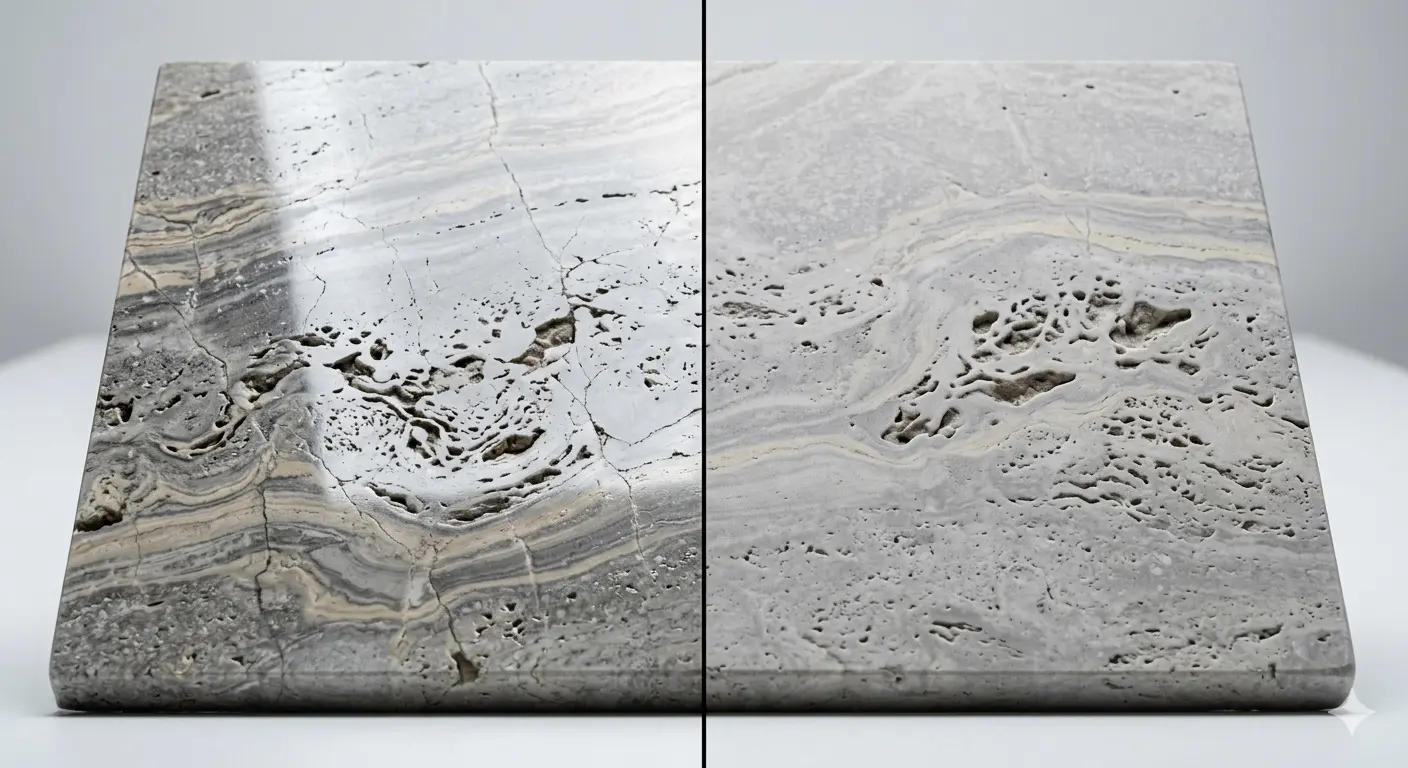
Silver Travertine is a natural sedimentary stone formed through the precipitation of calcium carbonate from mineral-rich water sources over thousands of years. It carries cool silver-gray tones with warm beige undertones, and its surface features characteristic voids, pitting, and natural veining that give it an organic, architectural quality no engineered material replicates. It is an enduring choice for kitchen countertops, bathroom vanities, feature walls, and indoor flooring where warmth, texture, and a connection to natural materials are design priorities.
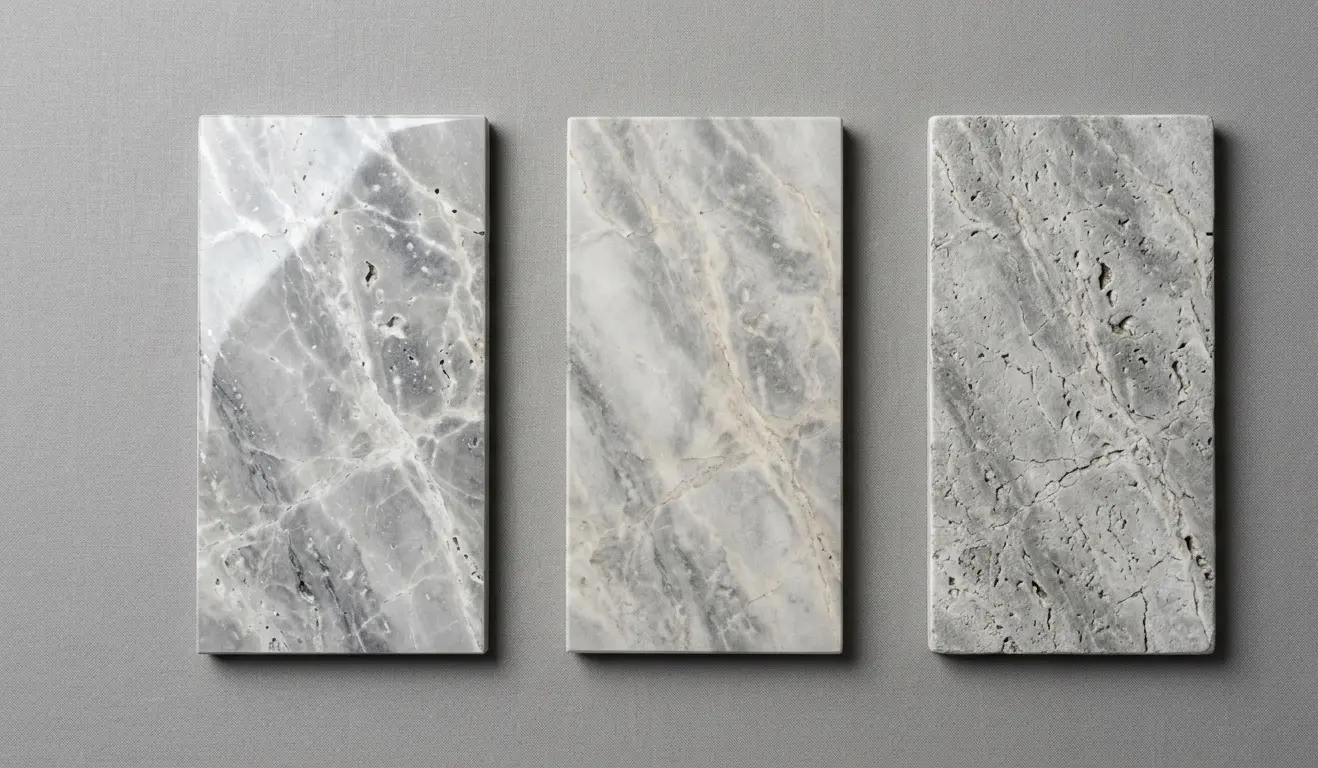
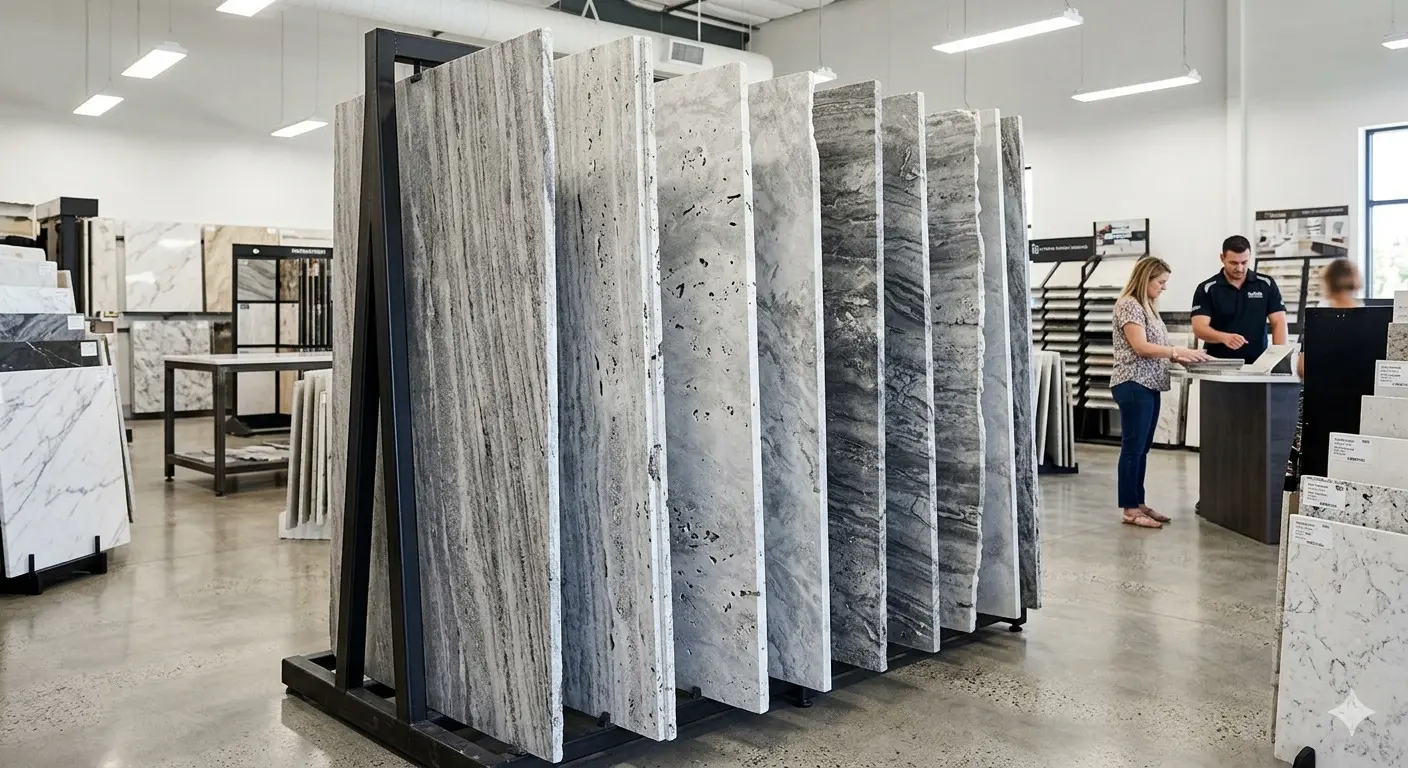
This stone is available in polished, honed, and leathered finishes, each of which reveals a different dimension of its silver-gray character. At Nova Tile and Stone's slab showrooms, you can view real Silver Travertine slabs across all four locations and evaluate the actual surface, tone, and void pattern before making your selection, which is essential for a stone this texturally distinctive.
What Silver Travertine Brings to Kitchen and Bathroom Surfaces
Silver Travertine rates at Mohs 3 to 4 on the hardness scale, which places it in the same material family as marble and limestone. It is softer than quartzite or granite, which means the care approach for this stone differs significantly from harder natural stone options. For kitchen countertops, a filled and sealed travertine surface handles everyday use well, but the stone requires attentive maintenance and protective habits that harder stones do not demand to the same degree.
What travertine brings in return is a surface quality that is genuinely unique in the stone category. Its natural voids and cross-cut veining create visual depth that varies across the surface in ways that polished or uniform stones simply do not. Where standard tile layouts break the surface into repeating grout-divided units, a travertine slab delivers that organic texture across a single, uninterrupted format. For a full comparison of how natural stone types like travertine differ from engineered and other stone categories, this natural stone tile guide is a comprehensive and accurate resource.
The Stone Countertop page at Nova Tile and Stone covers the broader landscape of natural stone slab countertop options if you are still weighing Silver Travertine against other material choices.
Silver Travertine Adapts Across Styles, Spaces, and Surface Types
Silver Travertine's cool silver-gray base with warm undertones gives it a tonal flexibility that works across a broader range of interior styles than many other natural stones. It reads as sophisticated and restrained in contemporary spaces, warm and layered in transitional interiors, and entirely at home in Mediterranean-influenced or classic traditional designs. The finish you select and whether the voids are filled or left open changes how modern or organic the stone feels in a given space.
Understanding finish behavior and void treatment before committing is worth the time. Each option produces a distinctly different visual and tactile result that affects both the stone's appearance and its maintenance requirements in daily use.
Layout and Orientation Options
Cross-cut travertine sections (cut perpendicular to the stone's natural layers) reveal circular and cloud-like patterns with more visual movement. Vein-cut sections (cut parallel to the layers) produce long, linear vein patterns that emphasize horizontal direction. For countertops, vein-cut orientation tends to read as more refined. For walls, cross-cut sections create a more organic, dimensional composition. If you are in the Fernley area and want to see slabs in person, the Fernley showroom carries current inventory you can evaluate directly.
How Silver Travertine Performs Across Different Spaces
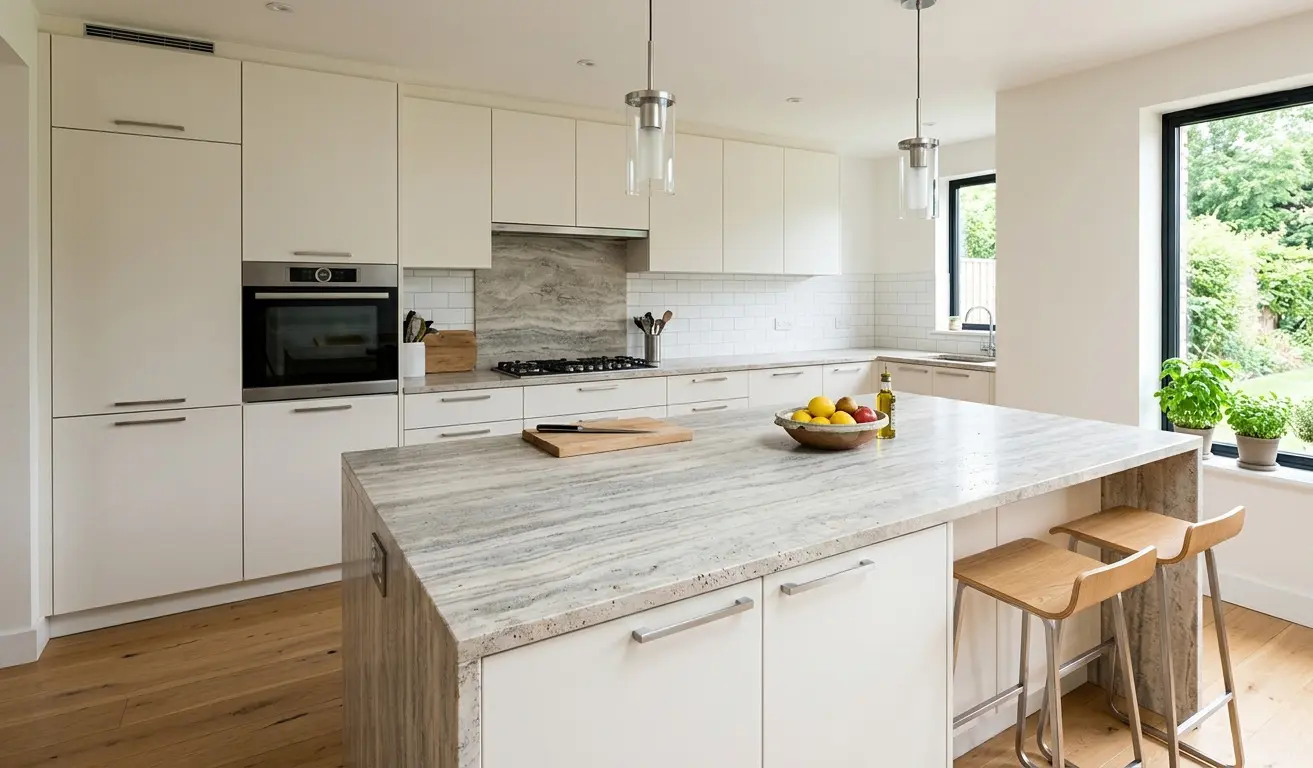
- Kitchen countertops: Honed or leathered finish with filled voids is the most practical choice for kitchen countertop applications. Polished travertine can show etching from acidic kitchen substances more visibly, and unfilled voids can trap debris in high-use areas. A properly filled and sealed honed surface is easier to maintain while keeping the stone's organic texture visible.
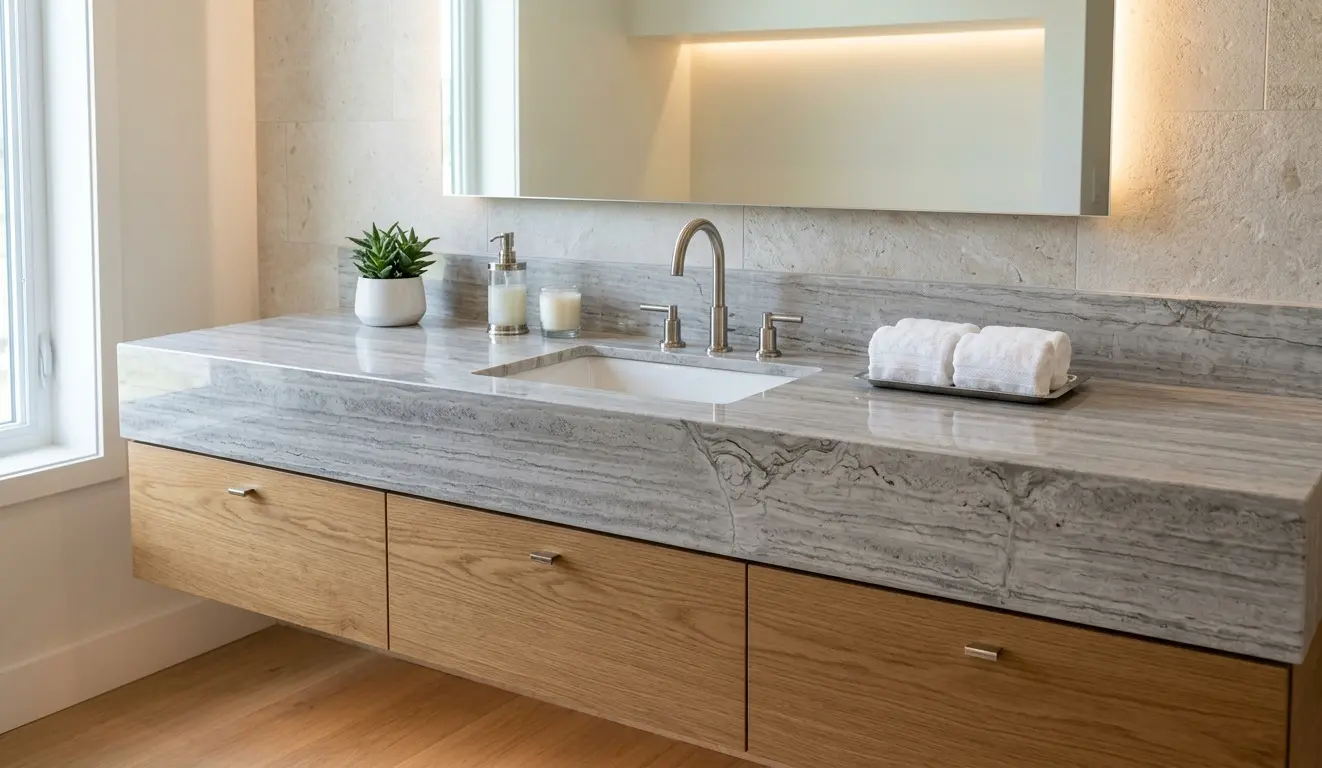
- Bathroom vanities: Polished finish works well for bathroom vanities where daily impact is lower than a kitchen. The silver-gray tones pair naturally with chrome, brushed nickel, and matte white fixtures. Vanity surfaces benefit from sealing to resist moisture from daily use near sinks and faucets.
- Indoor floors: Honed or brushed finish is strongly preferred for floor applications because polished travertine becomes slippery when wet. Filled voids make floor maintenance significantly easier and reduce the risk of debris accumulating in low-lying surface pockets.
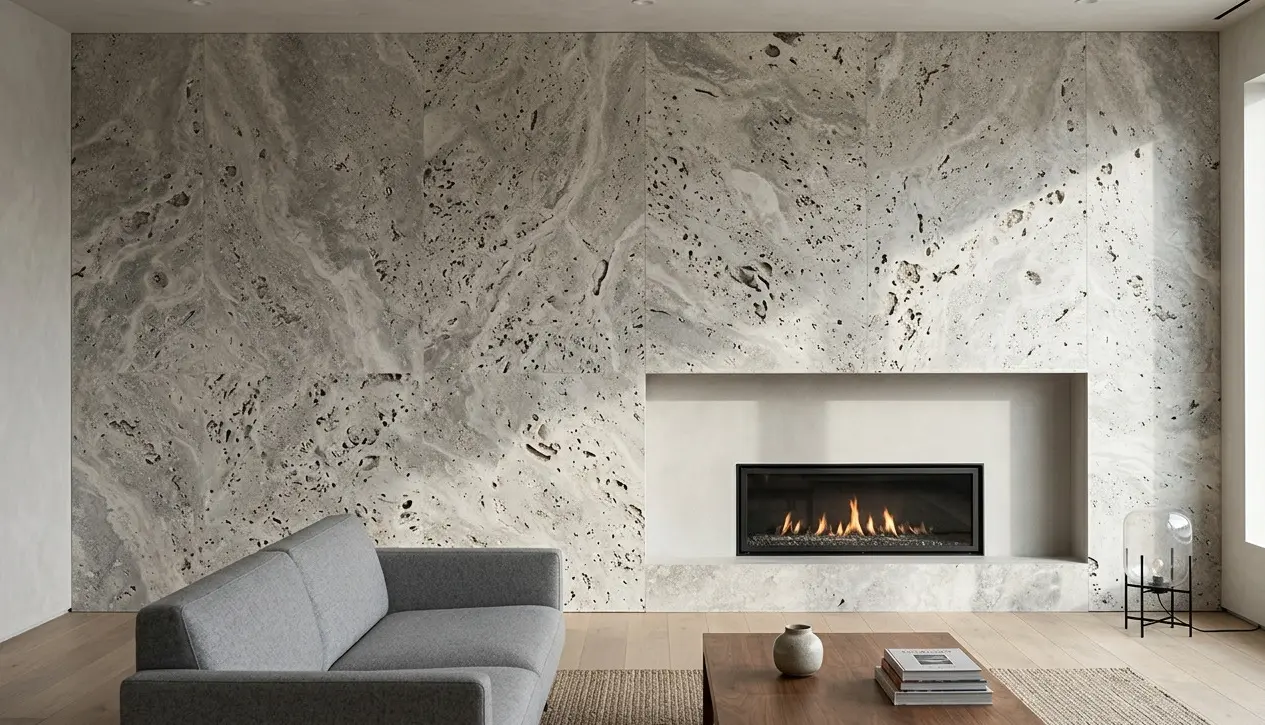
- Feature walls and fireplace surrounds: Silver Travertine's natural void pattern and organic vein movement create striking feature wall compositions. The stone's neutral silver-gray tone works as a backdrop for artwork, furniture, and architectural elements without competing for attention.
What Silver Travertine Delivers Day to Day
Silver Travertine is a natural stone with a specific performance profile that differs from harder metamorphic stones. These practical benefits reflect honest, real-world use across residential kitchens, bathrooms, and interior feature surfaces.
Before finalizing your care plan, this natural stone care guidance provides thorough, material-specific direction on sealing schedules, void filling, cleaning products, and long-term maintenance for travertine surfaces specifically.
Performance Notes for Silver Travertine
- The slab is durable for residential use, but its Mohs 3-4 rating means it is softer than quartzite or granite and requires more attentive care to preserve its surface quality.
- The surface is scratch resistant for everyday light use, but cutting directly on the stone is not recommended; always use a cutting board.
- The material is moisture resistant when properly sealed, but travertine is naturally porous and sealing should be maintained every 6 to 12 months more frequently in high-use kitchen and bathroom applications.
- The stone requires void filling before countertop use in most applications; unfilled voids can trap debris and cleaning product residue and should be addressed before the surface goes into daily service.
- The slab is suitable for food preparation, but a cutting board should always be used and acidic substances including lemon juice, vinegar, and wine should be wiped up promptly to prevent surface etching.
- The surface performs well on bathroom vanities and feature walls where daily contact is lower than on kitchen countertops.
- Polished finish shows etching from acidic contact more visibly than honed or leathered; honed is the preferred finish for kitchen use.
- Avoid abrasive cleaners and harsh chemical products; pH-neutral cleaners and a consistent sealing schedule are the most important maintenance habits for travertine.
- The stone performs well in indoor spaces with moderate humidity, but is not typically recommended for consistently wet outdoor applications.
Silver Travertine as a Long-Term Surface and Design Investment
Travertine has been used in architecture and interior surfaces for thousands of years. It is one of the oldest and most consistently used natural building stones in the world, and Silver Travertine's cool gray-silver variation sits within a color range that holds its relevance across design cycles without effort. The stone does not follow trends because it predates them.
The slab resists fading in indoor applications, but placement near direct sunlight should still be evaluated per slab and finish. The material is built for lasting use when properly maintained, though each application should be assessed individually to ensure the void filling, sealing schedule, and finish choice match the specific environment.
From a home value standpoint, natural stone surfaces remain among the highest-return finish upgrades in kitchen and bathroom renovations.
If you are planning a travertine installation that involves matching slabs across a wall or floor, the Nova Tile and Stone blog post What Is A Bookmatched Slab? Natural Stone Countertops Explained covers everything you need to understand about slab matching, vein alignment, and what to look for when viewing slabs in person.
For those considering Silver Travertine alongside other natural stone slab formats, the Stone Outdoor Kitchen Countertop page is also worth reviewing for applications where the stone's warm organic character is extended beyond interior spaces.
Frequently Asked Questions
Yes, when the stone is properly filled, sealed, and maintained. Honed finish with filled voids is the most practical option for kitchens because it resists etching better than polished and makes cleaning easier. Sealing every 6 to 12 months protects the surface from moisture and staining. Acidic liquids should always be wiped up quickly to prevent etching.
Travertine naturally contains voids and pitting created during its formation. Filled travertine has those voids packed with a grout or resin material before polishing or honing, creating a smoother, more uniform surface. Unfilled travertine retains those natural openings, which creates a more rustic, textured look but is harder to clean in high-use areas. For countertops and bathroom vanities, filled is almost always the practical choice.
Both are natural stones in the Mohs 3-4 range and require similar levels of care and sealing. Silver Travertine has a more organic, textured quality from its natural void pattern, while marble tends to read as more refined and uniform. Silver Travertine's cool gray-silver tones are often more versatile than white or heavily veined marbles when coordinating with a range of fixture and cabinet finishes.
Most travertine surfaces benefit from sealing every 6 to 12 months depending on use intensity and finish type. Kitchen countertops and bathroom vanities should lean toward the more frequent end of that range. Polished surfaces may require slightly more attentive sealing than honed or leathered in high-use applications.
Yes, and this is a popular approach in bathrooms and entryways where matching the floor and wall creates a cohesive, fully natural stone environment. For floors, honed or brushed finish with filled voids is strongly preferred over polished to reduce slip risk and simplify cleaning. Wall installations have fewer restrictions and polished finish is common for the visual impact it creates.
See Your Silver Travertine Slab Before Your Project Begins
Silver Travertine is a stone best understood in person. The void pattern, silver-gray tone depth, and how the finish reads under real lighting are details that need to be seen, not assumed from a screen. Visit any of our four showrooms in Reno, Sacramento, Minden, or Fernley to browse current inventory and bring your project questions to our team.
Note: Some images on this page are conceptual renderings created to illustrate design possibilities and may not depict actual installations.