Silver Gray Quartzite
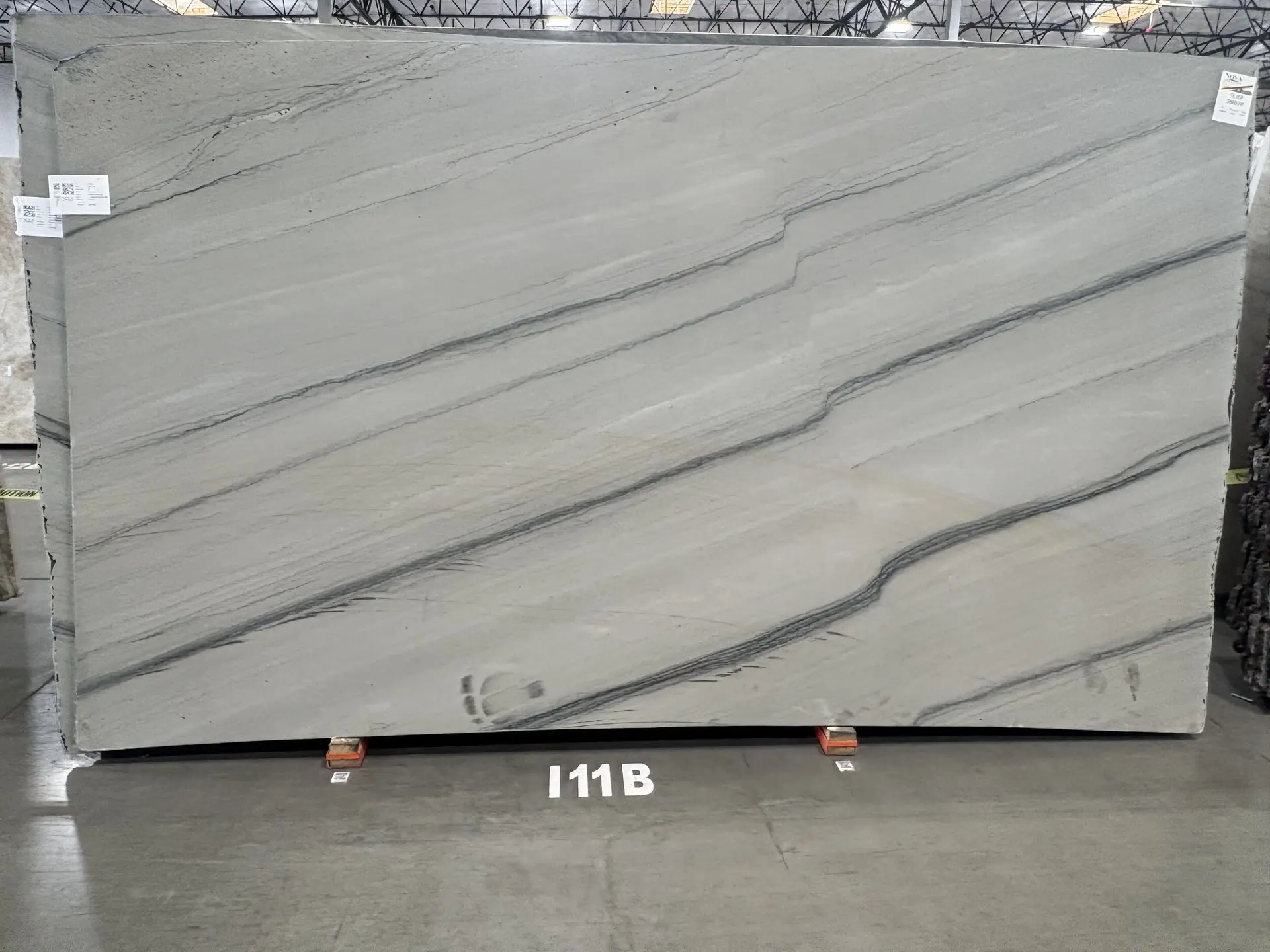
The gray end of the natural stone palette includes marble, limestone, and quartzite, each with different mineral composition and performance characteristics. Silver gray quartzite sits within that range as a metamorphic stone formed from sandstone under sustained heat and pressure. The transformation produces a hard, dense material with a surface that reads as cool and neutral, with variation in tone and pattern depending on the specific slab.
The coloring in silver gray quartzite typically comes from mineral content including quartz, feldspar, and trace amounts of mica, which can produce faint shimmer under certain lighting conditions. Because it forms under natural geological processes, each slab reflects its own distribution of tone and pattern. Surface character ranges from relatively uniform to more expressive with veining or banding.
Our Featured Product
Inventory updates daily, but slabs move fast! Give us a call and we'll do a quick count to verify exact on-hand quantities for you: (775) 374-6682
Store Location: Reno, NV
Hardness and Durability
Quartzite registers between 7 and 7.5 on the Mohs hardness scale, placing it among the harder natural stone options available for residential and commercial applications. This hardness makes it well suited for countertops, kitchen islands, and other surfaces that see regular use. It resists scratching more effectively than softer stones such as marble, which typically registers around 3 on the same scale.
That said, quartzite is not impervious to damage. The stone is porous, meaning it can absorb liquids if left unsealed. Acidic substances such as citrus juice or vinegar can affect the surface over time if spills are not wiped promptly. Proper sealing addresses this and helps extend the life of the installation.
Recommended Applications
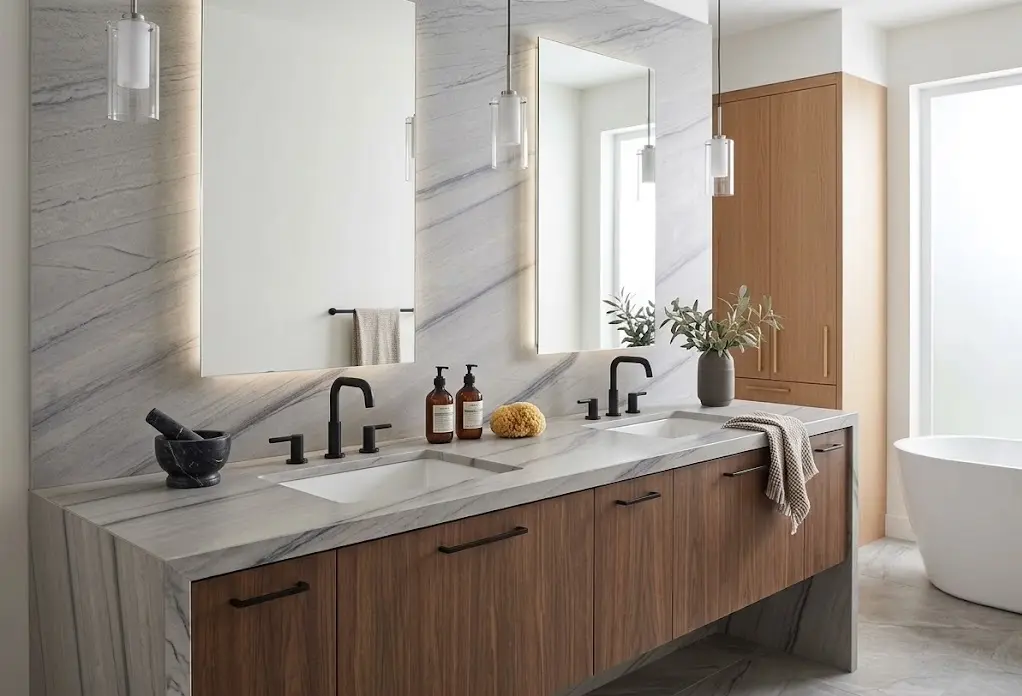
Silver gray quartzite works across a range of interior applications. Its neutral tone palette makes it compatible with a wide variety of cabinet finishes, wall colors, and metal accents. Common uses include kitchen countertops and islands, where the hardness of quartzite handles daily prep work and heat exposure. Bathroom vanity tops and shower surrounds are another suitable application, where the stone's cool tones work with both warm and neutral palettes. Feature walls and fireplace surrounds also accommodate larger format slabs, which allow the stone's natural movement and coloring to function as a design element. Browsing the full slab collection can help narrow down options before a showroom visit.
Finish Options
Quartzite is typically available in polished, honed, and leathered finishes. A polished finish brings out the depth of the stone's color and any natural shimmer from mica content. A honed finish produces a matte surface with a softer appearance and slightly more texture, which some prefer for flooring applications. A leathered finish adds dimensional texture while maintaining much of the stone's natural color.
Care and Maintenance
Because quartzite is a porous stone, sealing is recommended before installation and at regular intervals thereafter. For quartzite, resealing every 12 to 18 months is a standard guideline, though the specific schedule depends on the stone's density, the sealer used, and the level of use the surface receives. A simple water bead test can help determine when resealing is needed: if water absorbs into the surface rather than beading up, it is time to reseal.
For routine cleaning, a pH-neutral stone cleaner or mild dish soap and warm water is appropriate. Avoid abrasive scrubbers and harsh chemical cleaners, as these can break down the sealer and affect the stone's surface over time. Trade professionals working on client projects can explore the trade account program for dedicated support and pricing.
View Slabs in Person
Natural stone reads differently on a screen than it does in person. Lighting, scale, and adjacent materials all affect how a slab will look in a finished space. Visiting a showroom allows you to see full slab dimensions, compare finish options side by side, and assess tone and movement before making a decision. Free design consultations are available at showroom locations in Reno, Sacramento, Minden, and Fernley. For those who prefer to plan ahead, the shop local page has showroom details and directions.
Looking for immediate assistance?
Give us a call!
(Available Mon-Fri 7:30am - 4:00pm PST)
Unlike most customer service lines, ours connects you with real people.
When you call, just press 1 for online shopping support, or 2 for local shopping support!
Frequently asked questions
Silver gray quartzite is a suitable option for kitchen countertops. Its Mohs hardness of 7 to 7.5 makes it more resistant to scratching than softer stones, and it handles heat exposure reasonably well. Sealing the surface before use and maintaining it with pH-neutral cleaners helps protect against staining over time.
Quartzite generally benefits from resealing every 12 to 18 months, depending on use and the density of the specific stone. A water bead test is a reliable way to check: if water soaks in rather than beading on the surface, it is time to reseal.
Quartzite is a natural metamorphic stone formed from sandstone under heat and pressure. Quartz countertop material is an engineered product made from crushed stone bound with resin. Quartzite is entirely natural and varies from slab to slab, while engineered quartz is manufactured to be consistent in pattern and color.
Silver gray quartzite is suitable for bathroom vanity tops, shower surrounds, and flooring with appropriate finish selection. A honed or leathered finish is often preferred in wet areas for its texture compared to a polished surface. Sealing is particularly important in bathrooms where the stone is exposed to water regularly.
Quartzite is significantly harder than marble. Marble typically registers around 3 on the Mohs hardness scale, making it more susceptible to scratching and etching from acidic substances. Quartzite at 7 to 7.5 offers greater resistance to both, making it a more practical choice for high-use surfaces.