Red Marble
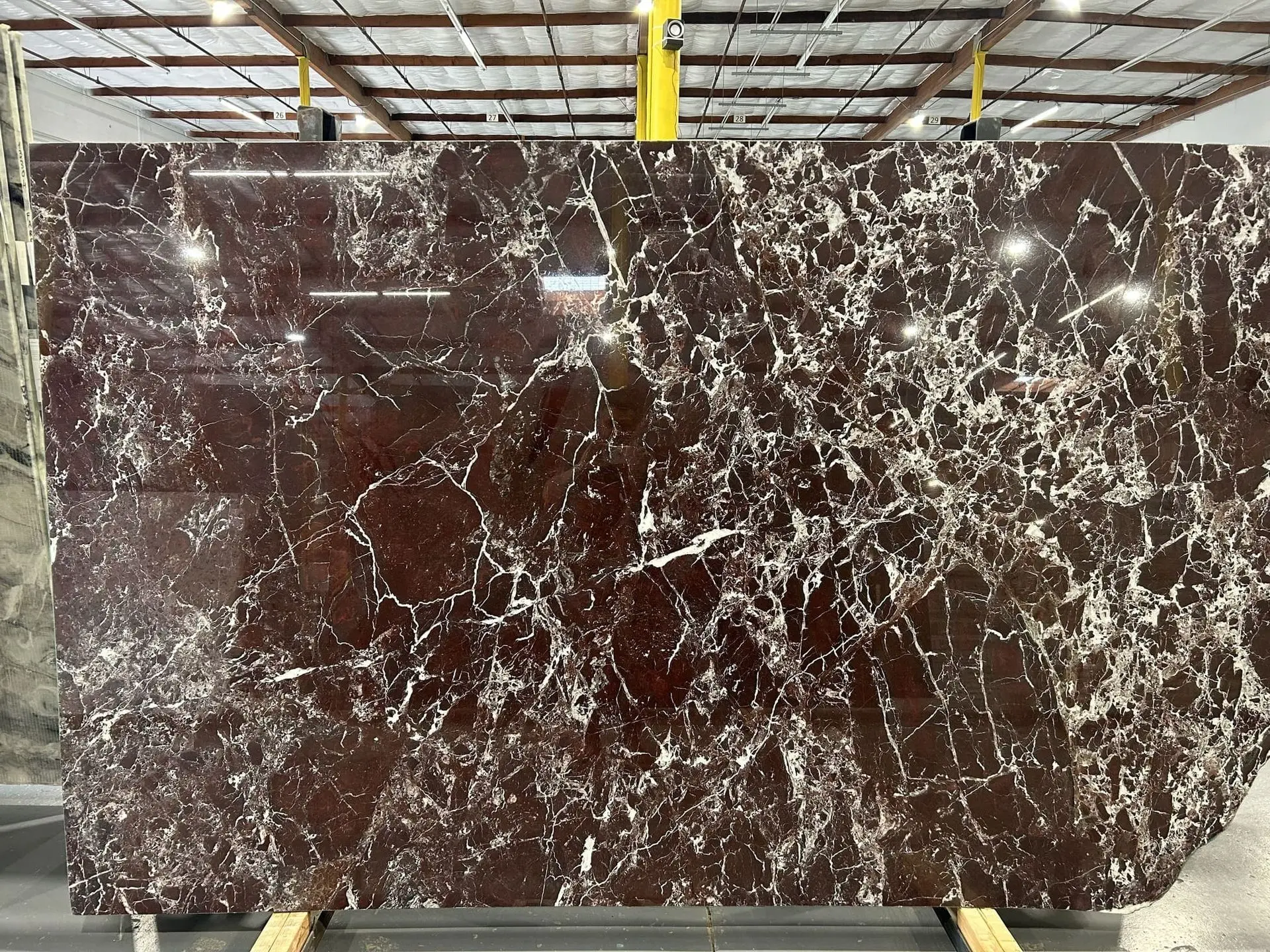
Natural red marble is a calcite-based stone whose color comes from iron oxide deposits formed over millions of years of geological activity, producing hues ranging from warm terracotta to deep burgundy, often cut through with veins of white or cream calcite. Because the iron distribution and calcite veining vary throughout each quarry block, slab patterns differ from piece to piece, making in-person selection an important part of the process for countertops, feature walls, flooring, and fireplace surrounds. Our natural stone slab inventory includes a range of red marble options available for viewing across all four showrooms.
What Makes Red Marble Distinctive
The color range within marble is broader than most stone buyers expect. On the warmer end, varieties like Rojo Alicante, quarried in the Alicante region of southeastern Spain, display earthy crimson tones with delicate white veining that suits both traditional and modern interiors. On the deeper end, Rosso Levanto, sourced from the Ligurian coast of Italy near the town of Levanto, presents a darker burgundy or purplish-red base with sharply contrasting white veins. Both are calcite-dominant marbles and have been used in European architecture for centuries, which reflects the material's established role in residential and commercial design.
The veining in red marble is particularly significant from a design standpoint. Because the calcite veins develop independently from the iron-stained background, slab patterns vary considerably across a given lot. Book-matched installations, where two adjacent slabs are mirrored along a shared edge, are a common way to create visual symmetry across large countertop or wall surfaces. The contrast between the iron-rich background and the calcite veins tends to make book-matching effective in red marble, and evaluating matched pairs in person before committing to a layout is worthwhile.
Technical Considerations
Red marble, like all calcite-based marble, rates between 3 and 4 on the Mohs hardness scale. That places it in the soft-to-medium range relative to granite (6–6.5) and quartzite (7–7.5), which means some care is warranted in high-traffic or high-contact applications. Acidic substances, including citrus juices, vinegars, and certain household cleaners, can etch the surface over time. Sealing every 6–12 months provides meaningful protection against staining and moisture absorption, and pH-neutral cleaners are recommended for routine maintenance.
Surface finish affects both appearance and performance. A polished finish enhances the depth of the red tones and accentuates the white veining, making it the most commonly specified option for countertops and wall cladding. A honed finish softens the overall look and reduces surface reflectivity, a consideration worth discussing with our commission-free design consultants depending on the application. For flooring, a honed or brushed finish is often preferred in residential settings as it reduces the visual impact of foot traffic over time. This Old House provides a practical overview of stone countertop selection that covers finish and material tradeoffs in more detail.
Applications
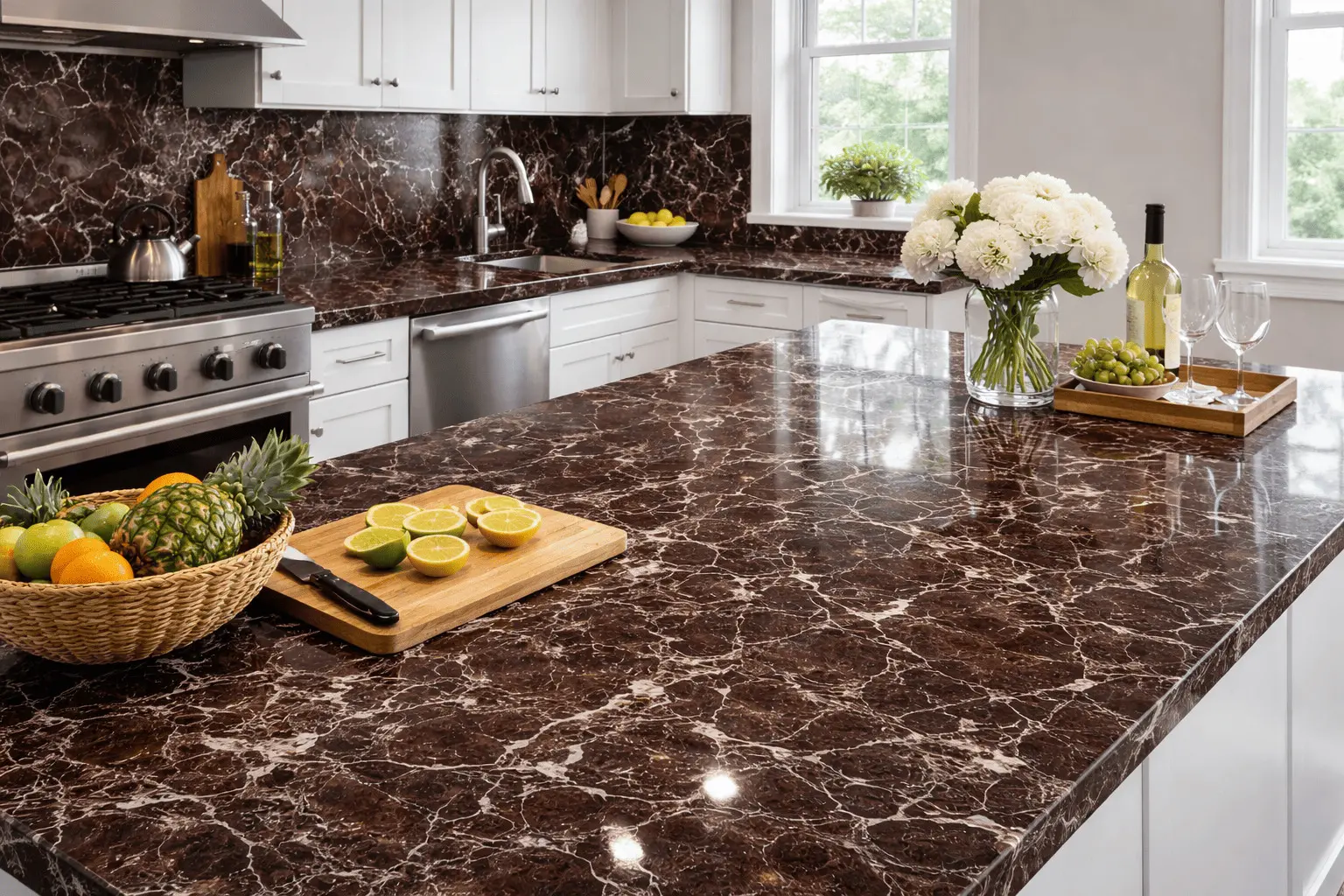
Red marble slabs are well suited to applications where color and pattern are central to the design intent. Kitchen islands and countertops remain popular choices, though clients should factor in the sealing and maintenance requirements before committing in a heavy-use kitchen. Bathroom vanities, wet bar surfaces, and powder room countertops tend to see lighter daily contact, which suits the material's maintenance profile. Feature walls, fireplace surrounds, and flooring medallions are areas where red marble is regularly specified, particularly in spaces where a strong color presence is part of the design brief. Fine Homebuilding's natural stone countertop guide offers additional background on application planning for natural stone surfaces.
Red marble also works well as an accent within larger stone installations. Pairing it with neutral field tiles or white marble field slabs allows the red material to anchor the design without overwhelming the space. This approach is common in open-plan kitchens and bathrooms where a single surface carries the primary color weight of the room.
Natural stone slabs
Are available for viewing at all four showrooms in Reno, Sacramento, Minden, and Fernley. Because slab color, veining, and pattern vary from piece to piece, an in-person visit is recommended before making a final selection. Our experts offer free design consultations to help work through finish, application, and pairing decisions. Schedule a design consultation to get started, or request a slab quote if you already have a project in mind.
775-374-6682
(Available Mon-Fri 7:30am - 4:00pm PST)
Unlike most customer service lines, ours connects you with real people.
When you call, just press 1 for online shopping support, or 2 for local shopping support!
Frequently asked questions
Red marble is a naturally occurring stone whose color comes primarily from iron oxide content within the calcite or limestone matrix. Varieties are quarried across several regions, notably Rojo Alicante from southeastern Spain and Rosso Levanto from the Ligurian coast of Italy, as well as sources in Turkey and parts of the Middle East. Each quarry produces distinct color ranges and veining patterns, which is why slab-to-slab variation is significant.
Marble rates between 3 and 4 on the Mohs hardness scale, making it softer than granite or quartzite. Red marble is used regularly in countertop applications, though it benefits from consistent sealing and care. Avoiding direct contact with acidic substances and using cutting boards and trivets helps preserve the surface over time.
Red marble slabs should be sealed every 6–12 months depending on the application and level of use. A penetrating sealer is standard for countertops and flooring. Avoiding acidic cleaners and using pH-neutral products for routine cleaning will also help maintain the surface between sealing cycles.
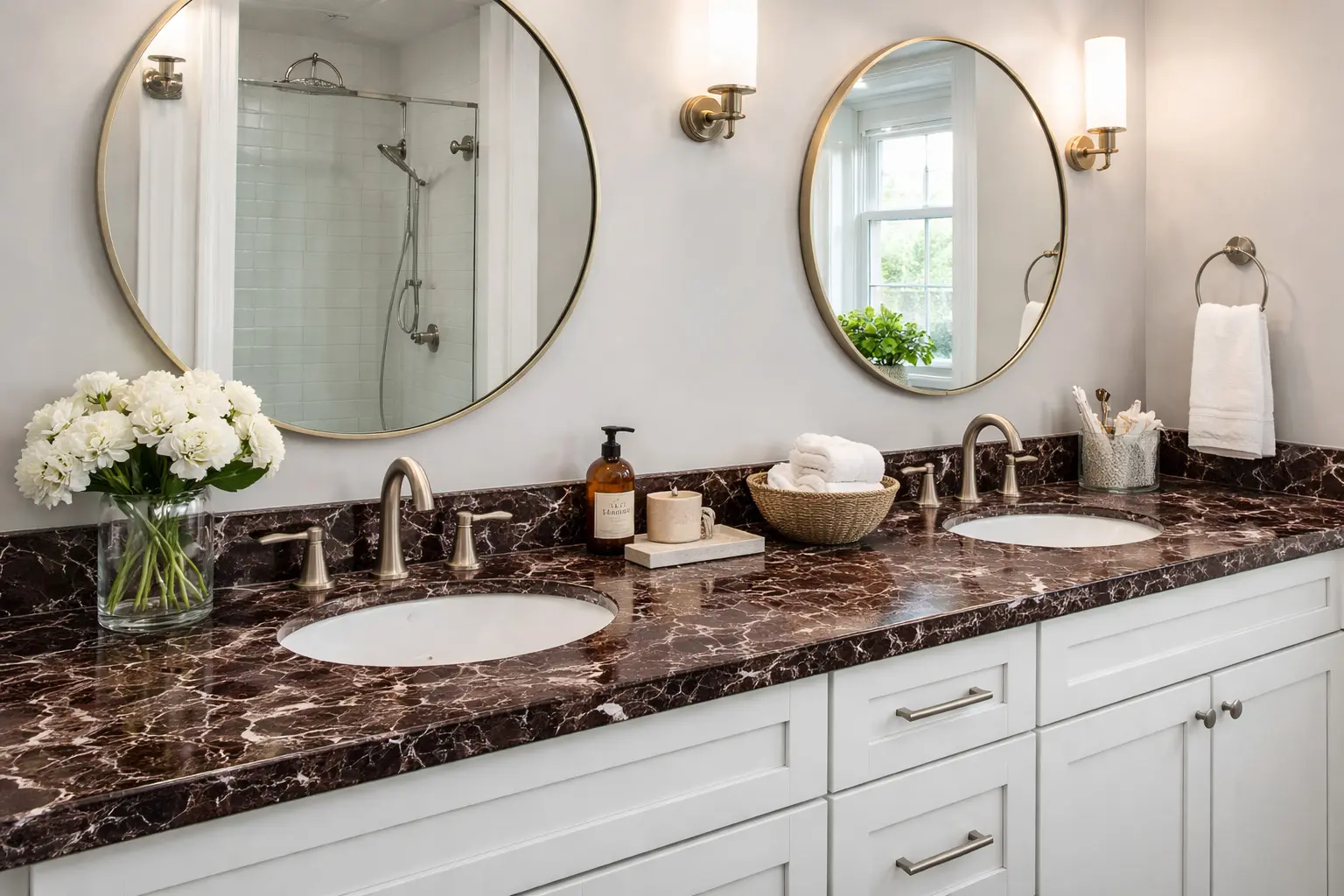
Red marble is well suited to bathroom vanities, shower walls, and wet bar surfaces. These environments typically involve less exposure to acids than a kitchen setting, and the material's color and veining work well in bathroom applications. Sealing before installation and resealing on a regular schedule is important in any wet environment.
Natural red marble slabs are available for viewing at all four Nova Tile and Stone showrooms in Reno, Sacramento, Minden, and Fernley. Because color, veining, and pattern vary significantly from slab to slab, an in-person visit is the best way to evaluate specific material before making a selection. Free design consultations are available through our commission-free design consultants.