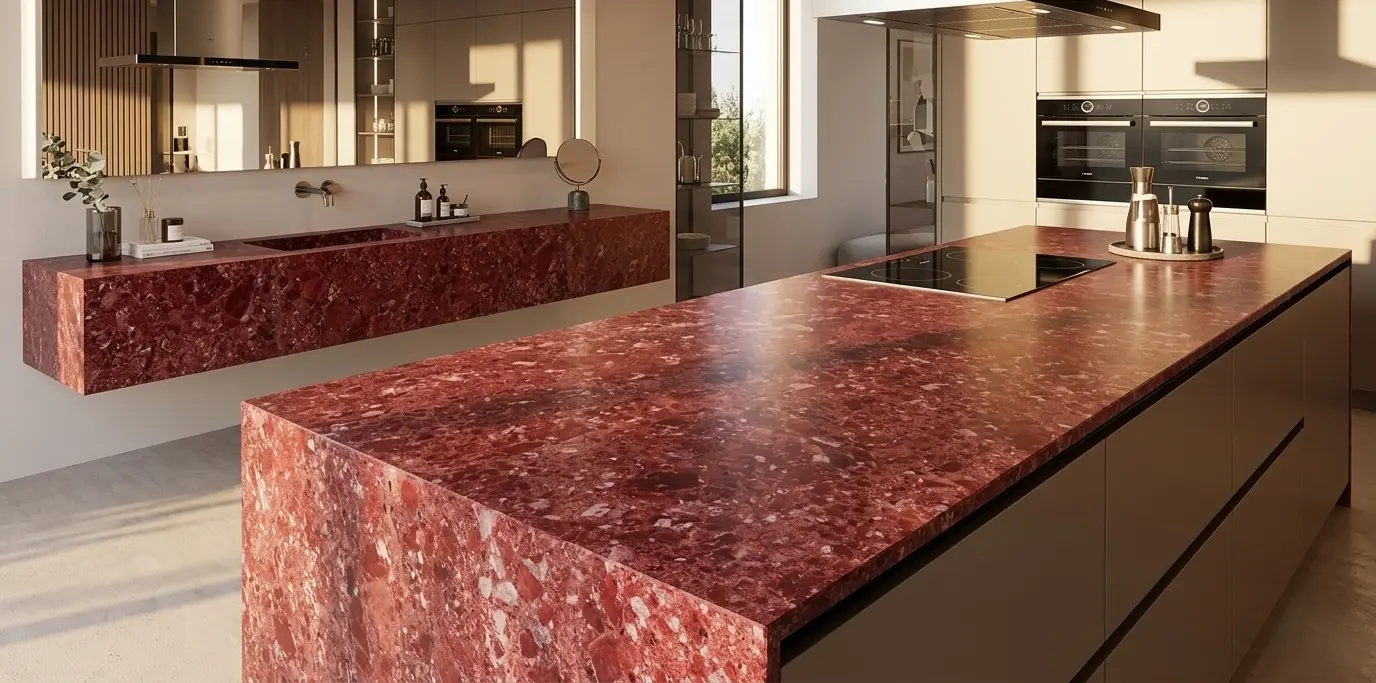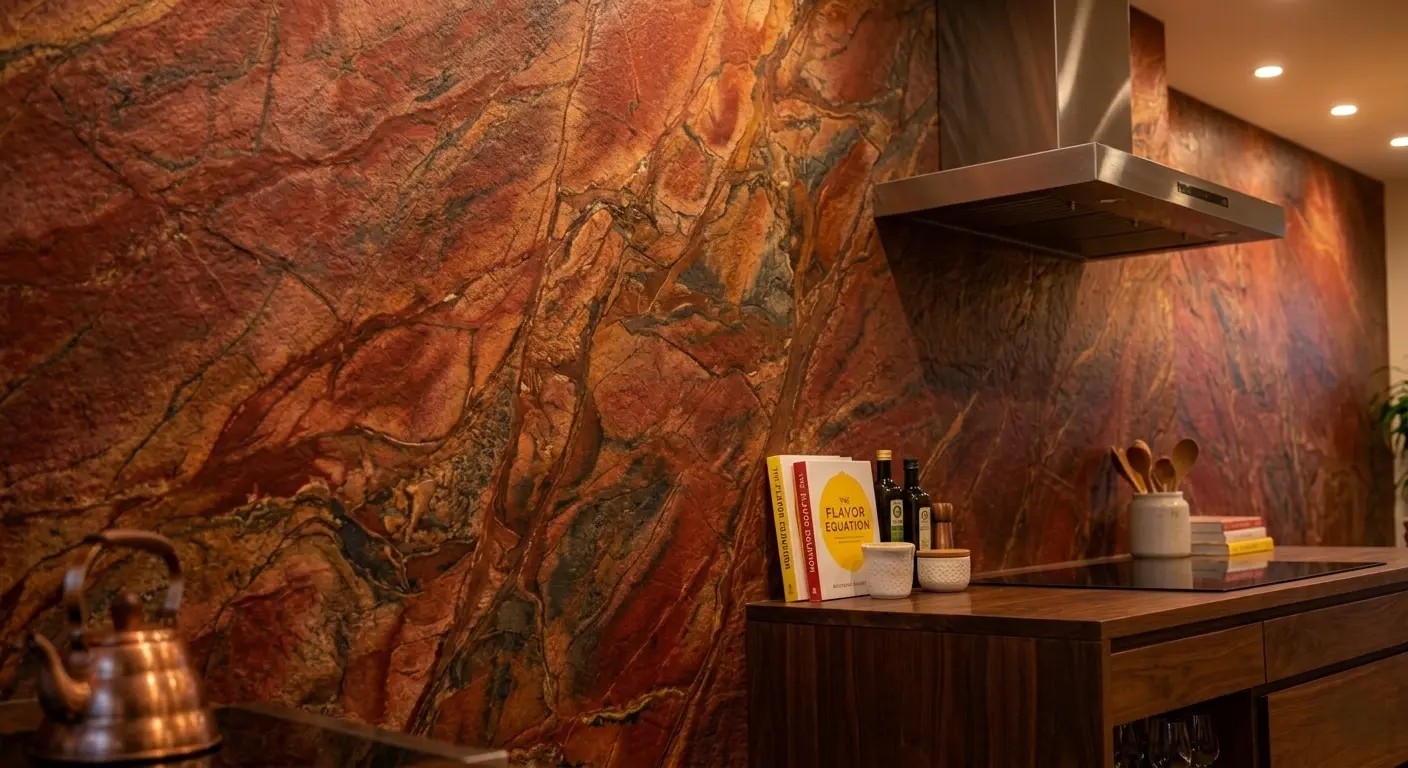
Red dolomite is a premium natural stone slab defined by its striking crimson-to-burgundy tones, bold mineral veining, and a surface pattern that no other material can replicate. Available in polished, honed, and leathered finishes, it brings genuine visual impact to kitchen countertops and bathroom vanities without requiring a custom design brief. Each slab is quarried as a one-of-a-kind piece, which means every project receives a surface that is entirely its own. Nova Tile and Stone personally curate each slab in the live inventory for color quality, pattern strength, and fabrication readiness - so what you view in the showroom is exactly what you take home.
Red Dolomite Slab Specs, Strength, and Stone Comparisons
Red dolomite is composed primarily of calcium magnesium carbonate and rates between 3.5 and 4 on the Mohs hardness scale. That places it harder than standard marble (2.5 to 3 Mohs) while remaining softer than granite (6 to 7) or quartzite (7). The water absorption rate sits at approximately 0.3 to 0.5%, which is low enough for countertop applications when the surface is sealed correctly. Standard slab thicknesses are 2cm and 3cm, with typical dimensions ranging from 118" x 55" to 126" x 63" - large enough to span most kitchen islands or vanity runs without mid-surface seams.
The vivid red coloring originates from iron oxide concentrations formed during sedimentation, and most commercial-grade red dolomite is quarried in Brazil, where those geological conditions are especially pronounced. Compared to engineered quartz or sintered stone, red dolomite offers an organic surface movement and layered color depth that manufactured alternatives cannot replicate at any price point.
Layout and Design Possibilities for Kitchens and Bathrooms
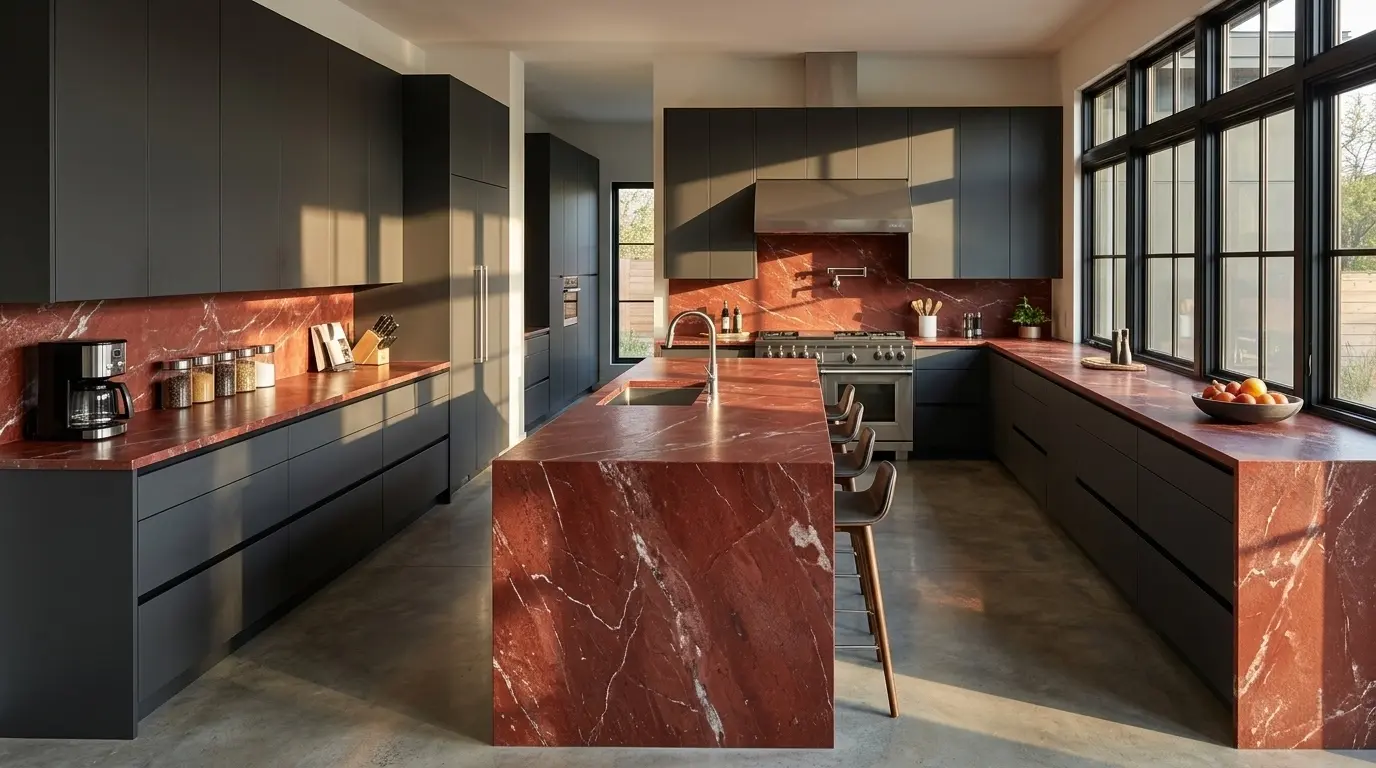
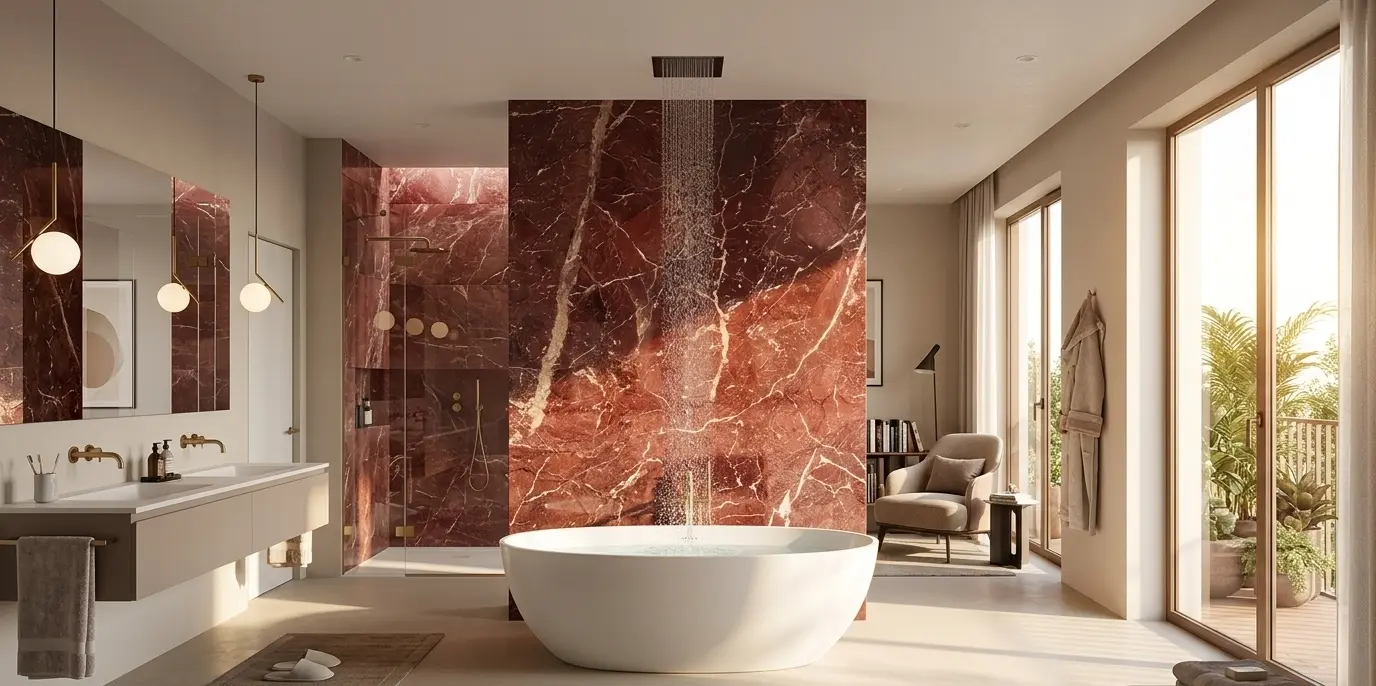
The saturated color profile of red dolomite pairs naturally with neutral cabinet tones. White, cream, or muted grey cabinetry lets the stone hold the visual focus without crowding the room. In kitchens, a horizontal book-match layout spreads the veining symmetrically across a countertop or island surface for a dramatic, deliberate effect. For bathroom vanities, a vertical slab orientation elongates the eye line and adds perceived height to compact rooms.
Finish choice also shapes the final look. The polished option maximizes color reflectivity and works well in formal or high-contrast interiors. Honed delivers a smooth, understated matte surface suited to transitional spaces. Leathered introduces light texture and a low-sheen quality that reads as contemporary and tactile. All three finishes are available through the live slab inventory and can be evaluated in person before any commitment is made.
What Red Dolomite Countertops Deliver Every Day
- Truly unique pattern: no two red dolomite slabs share the same veining layout or color distribution
- Three distinct finish options: polished, honed, and leathered to match different design directions
- Low absorption rate: approximately 0.3 to 0.5% limits liquid penetration when sealed annually
- Heat-tolerant surface: handles warm cookware contact without immediate damage
- Large slab format: full-slab widths reduce or eliminate visible seams on most countertop runs
- Design consultation included: expert guidance is available before purchase through a complimentary in-store session
Red dolomite's absorption rate is notably lower than unsealed marble, which reduces the risk of staining from kitchen oils, bathroom products, or hard water mineral deposits with consistent maintenance.
Frequently Asked Questions
Yes. Sealed red dolomite performs reliably on kitchen countertops. Its Mohs rating of 3.5 to 4 provides adequate scratch resistance for daily prep work, and its low absorption rate keeps moisture from penetrating the surface during normal cooking and cleaning.
Dolomite is harder and slightly less porous than marble, which makes it more forgiving in busy kitchens and bathrooms. It delivers comparable elegance with modestly better practical performance.
Polished (glossy and light-reflective), honed (smooth and matte), and leathered (lightly textured with a low sheen). Each finish changes how the color and veining read in different lighting conditions.
Once per year for countertops and bathroom vanities under regular use. A simple water-bead test on the surface tells you when resealing is due before any staining risk develops.
Yes. Because it is a natural stone, every slab varies in red tone intensity, vein distribution, and background mineral flecking. Viewing the physical slab before purchase ensures the specific piece fits your project.