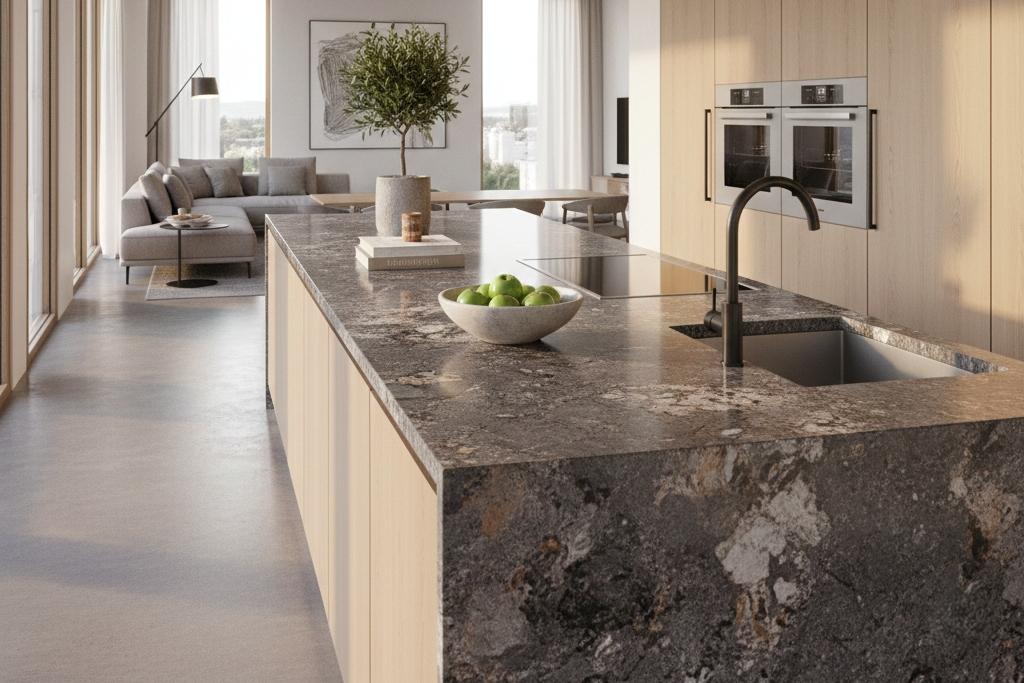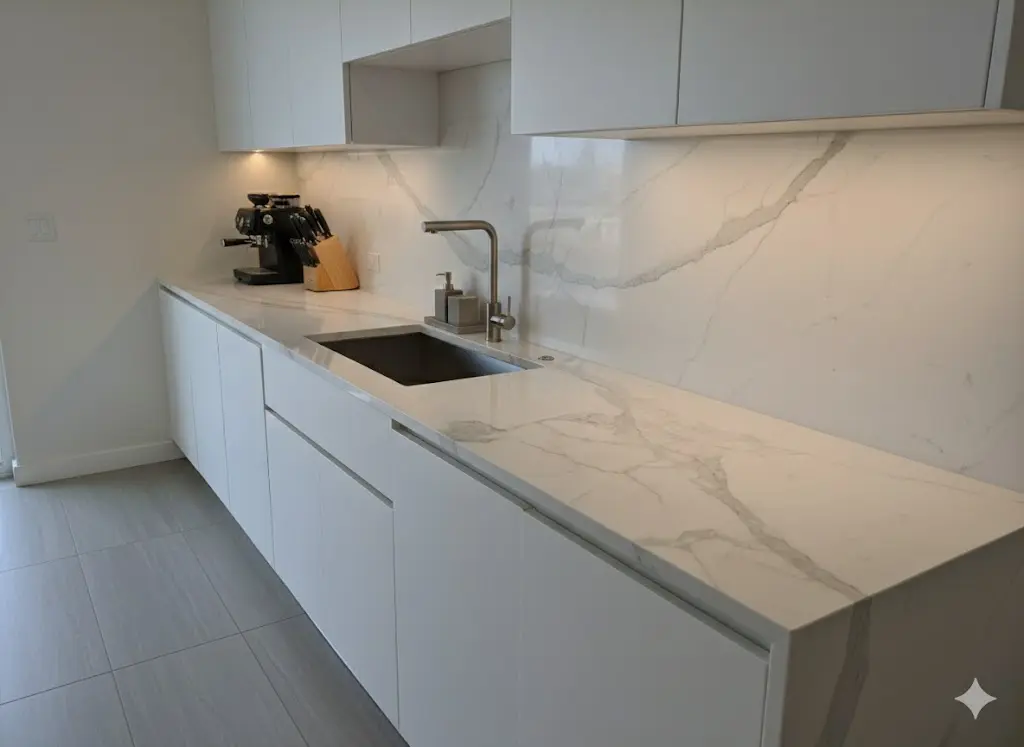
Porcelain has become a widely used countertop material over the past decade. A porcelain slab used as a countertop offers a non-porous surface that resists heat, stains, UV exposure, and scratching without requiring the sealing routine that natural stone demands. For homeowners who want the look of stone without the associated maintenance, porcelain is a material worth understanding before making a decision.
What Sets Porcelain Apart From Other Countertop Materials
The core difference between porcelain and most other countertop options comes down to surface density. Porcelain is fired at high temperatures, which produces a surface that doesn't absorb liquids or harbor bacteria. Unlike marble or quartzite, a porcelain slab doesn't need periodic sealing to maintain its performance. Spills sit on the surface rather than penetrating it, which makes cleaning straightforward.
Porcelain also resists UV light, which matters in kitchens with direct sun exposure or in outdoor kitchen applications. The color and finish remain consistent over time without fading or shifting.
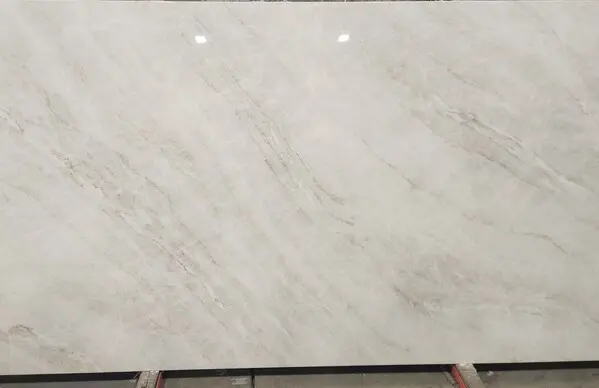
From a design standpoint, large-format porcelain slabs are produced with digital printing technology that replicates the veining and movement of marble, quartzite, and other natural stones with a high degree of detail. The result is a surface that reads as stone but performs differently. For fabricators and designers, porcelain's consistent thickness and uniform density also simplify installation planning. Contractors and trade professionals working with porcelain regularly can learn more about our trade account program.
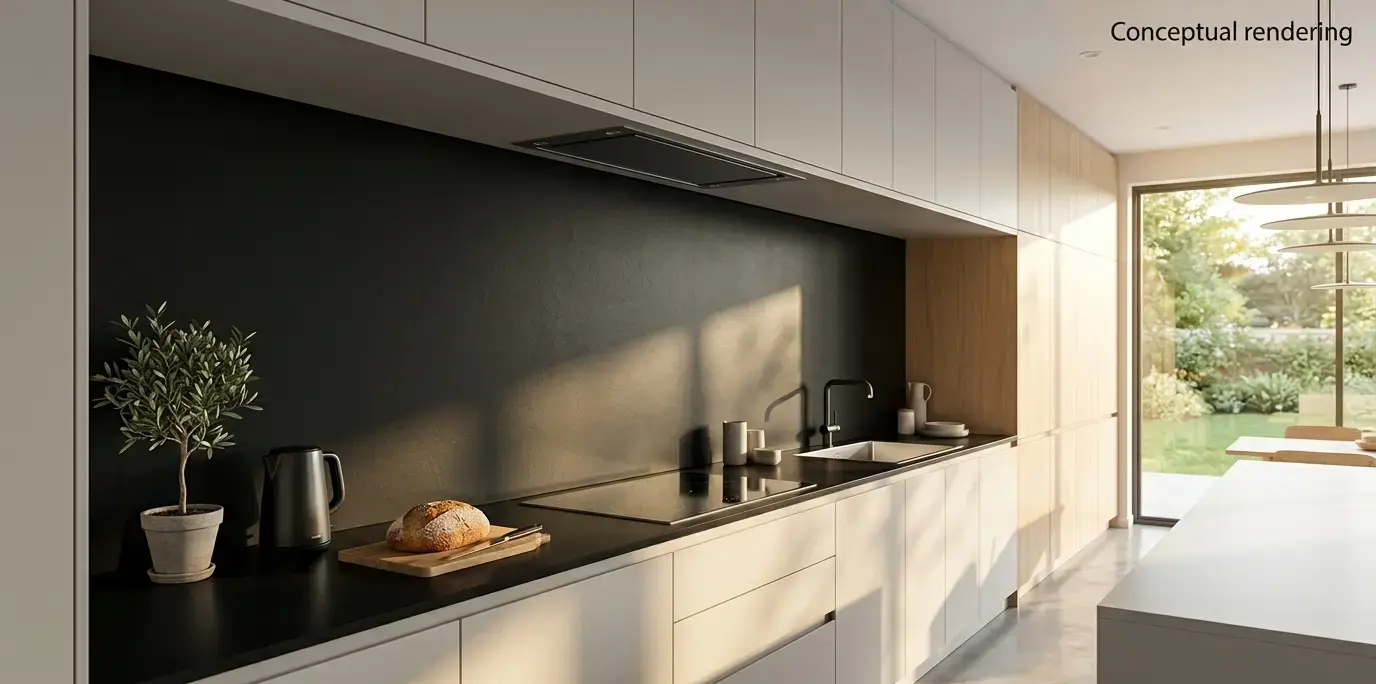
Note: Some images on this page may be conceptual renderings created to illustrate design possibilities and may not depict actual installations.
Thickness and Format
Porcelain slabs are available in multiple thicknesses depending on the application. Thinner formats, such as 6 mm, are used for wall cladding and furniture surfaces. Countertop applications typically call for 12 mm or 20 mm material, which provides the structural integrity needed for kitchen and bathroom work surfaces. We carry porcelain slabs sourced directly from Italy in a range of formats and thicknesses to suit different countertop applications.
The large slab format allows fabricators to minimize seams across a countertop run, which produces a cleaner visual result than smaller slabs would allow. Islands and long countertop runs benefit particularly from this format. If you are specifically researching surface options, our polished porcelain countertop page covers finish considerations in more detail.
Where Porcelain Countertop Slabs Are Used
Kitchen countertops are the most common application, but a porcelain slab also performs well in bathrooms, outdoor kitchens, and bar tops. Because the surface is non-porous and UV-stable, it doesn't require the same level of protection that materials like marble or granite do when used outdoors.
Bathroom vanity tops are another area where porcelain sees regular use. The surface handles moisture and cleaning products without issue, and the large-format slab allows for a continuous look across a double vanity or floating shelf. You can browse current porcelain and natural stone options through our live slab inventory.
Featured Product
Comparing Porcelain Slabs to Natural Stone
The question of porcelain versus natural stone comes down to what a homeowner prioritizes. Natural stone surfaces such as marble, quartzite, and granite each have physical characteristics, color variation, and depth that come directly from the geology of the material. Porcelain, by contrast, offers predictable patterning, consistent thickness, and no sealing requirements.
For kitchens that see heavy use, or in households where maintenance simplicity is a priority, a porcelain slab countertop addresses practical concerns that natural stone may not. For those who prefer the specific character of natural stone, materials like quartzite or granite remain solid options. Many design projects incorporate both, with porcelain for countertops and natural stone for a feature wall or island.
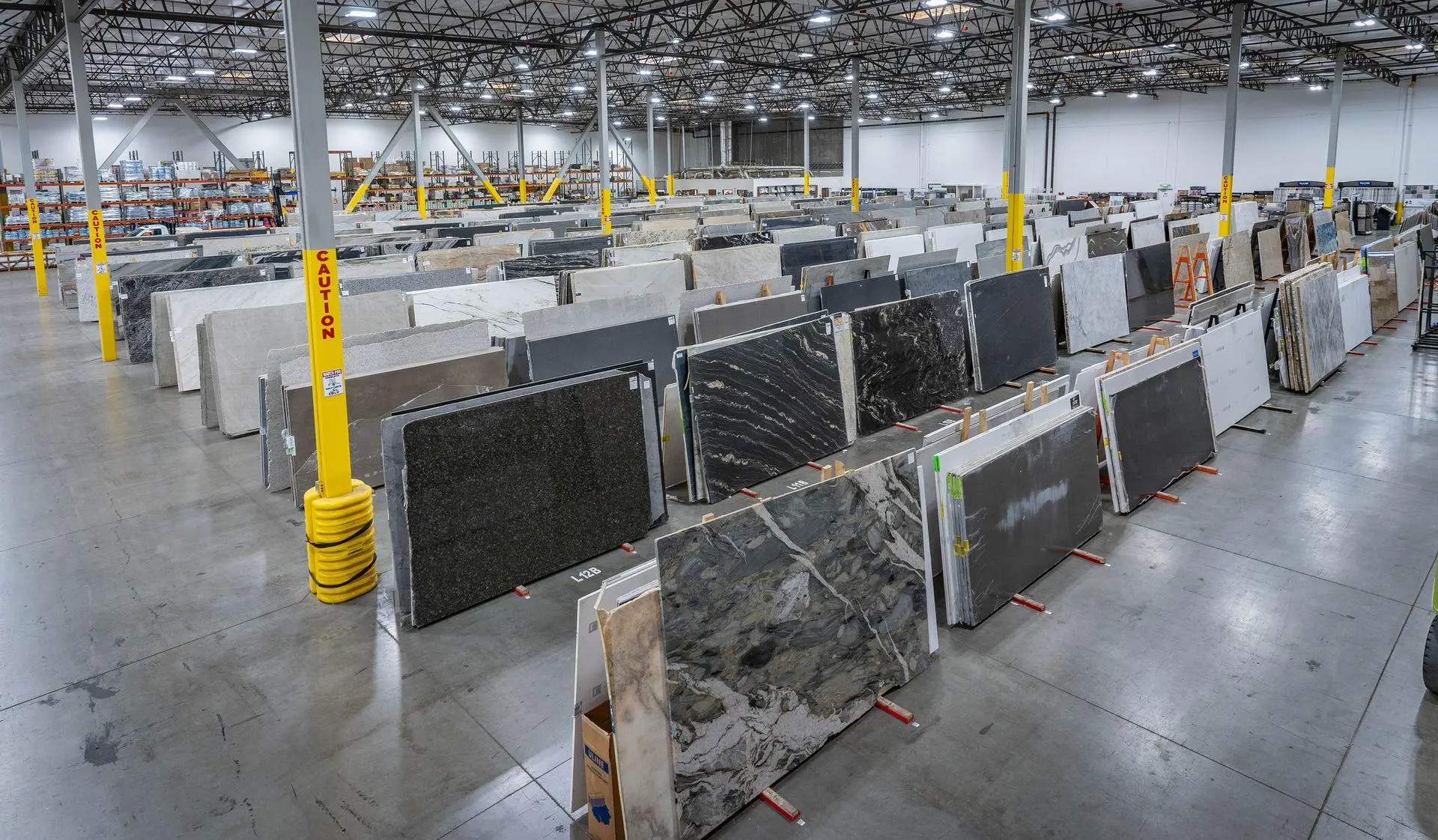
We carry both natural stone slabs and porcelain slabs across our natural stone and tile showrooms in Reno, Sacramento, Minden, and Fernley. Our team can walk you through the differences in person and help you compare materials side by side.
Porcelain Slabs as a Direct Import
One factor that affects both selection and pricing on porcelain slabs is where the material comes from. As a direct importer, we have access to a broader range of designs and formats than what's typically available through domestic distributors. The line includes marble-look, concrete-look, and stone-look options across multiple colorways in large-format sizes.
Because we operate as a direct importer and have been doing so since 2005, we carry inventory across all four of our showroom locations rather than relying on special orders for every request. That means slabs are available to view in person in Reno, Sacramento, Minden, and Fernley, and our team can walk you through what's currently in stock before you make any decisions. To get started, you can schedule a design consultation at the location nearest to you.
Frequently Asked Questions
No. Porcelain is a non-porous material, which means it does not require sealing. Unlike natural stone surfaces such as marble or granite, porcelain does not absorb liquids or staining agents, so there is no periodic sealing maintenance required.
For countertop applications, 12 mm or 20 mm porcelain is the standard recommendation. Thinner 6 mm slabs are better suited to wall cladding, furniture faces, and vertical applications where structural load is not a factor.
Yes. Porcelain is UV-stable and non-porous, which makes it suitable for outdoor kitchen countertops and bar tops. It does not fade from sun exposure or degrade from moisture the way some other countertop materials can.
Porcelain is non-porous and requires no sealing, while natural stone materials like quartzite and marble are porous to varying degrees and require periodic sealing to maintain their surfaces. Natural stone offers geological variation and depth that is distinct from porcelain's printed patterning. The right choice depends on the priorities of the project, whether that is maintenance simplicity, aesthetic preference, or both.
Porcelain slabs vary by manufacturer in both size and thickness. The large-format slabs we carry are well suited to countertop applications where minimizing seams is a design priority. Visit one of our showrooms or browse our slab inventory for current sizing options.