
Skip to Content
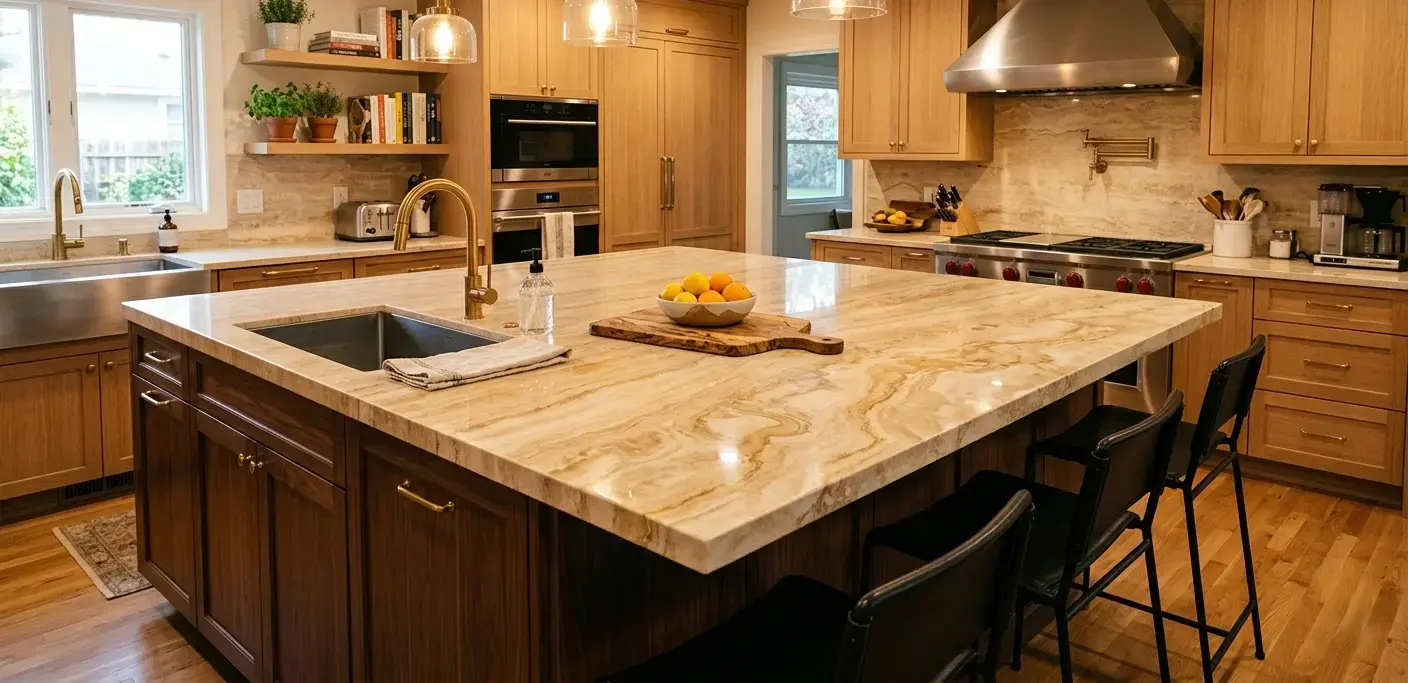
Conceptual rendering of polished travertine countertops Conceptual rendering

Polished Travertine Countertops

Polished Travertine is a natural stone surface made from travertine, a sedimentary stone formed through mineral deposit processes, finished with a high-gloss treatment that enhances the material's natural variation in tone, veining, and movement, commonly used for countertops. Travertine is a porous natural stone that requires sealing to help manage absorption, and the polished finish is one of several available surface options chosen for its refined, light-reflective appearance in both residential and commercial interiors. It may also be appropriate for certain outdoor installations depending on the specific slab, finish, and site conditions.

Our selection of travertine slabs is available in a range of natural tones and surface characters, giving our team the ability to help customers find a slab that fits a specific design direction. Because no two slabs are identical, performance and appearance can vary depending on the specific material, sealing, installation, and conditions of use. For more information on how surface finishes affect the appearance and care requirements of natural stone, the Use Natural Stone finish guide offers a helpful point of reference.

T

A

R

V

E

R

T

I

E

N


Conceptual rendering of polished Travertine countertop slab showing warm ivory and gold veining

Polished travertine countertops bring warm, natural surface to bathrooms and feature walls. Browse our current slab inventory and find your perfect match.

View Available Slabs

Conceptual rendering

C

U

O

N

T

E

R

T

P

O

S


A Natural Stone With Distinctive Character

Travertine is a natural sedimentary stone with a distinctive surface character that develops through a mineral deposit process. Each slab has natural variation in tone, veining, and movement, and the appearance of one slab may differ from another even within the same production lot. Because it is a natural material, travertine requires more considered care than many engineered surfaces, particularly when a polished finish is selected, as the smooth surface may be more susceptible to etching from acidic substances depending on the slab, sealing, and conditions of use.

Our team works with homeowners, interior designers, and contractors to help identify slabs that match both the aesthetic goals and the practical demands of a space. Customers who prefer a softer, more matte appearance may also want to explore our matte travertine countertops as an alternative finish option. To learn more about who we are and how we work, visit our website.

What Sets This Finish Apart


One quality that tends to distinguish travertine from other natural stone options is the warmth and depth of its natural tonal range. The high-gloss finish interacts with the mineral character of the stone in a way that may bring out layers of tone and movement that are less visible in a matte finish, though results can vary depending on the specific slab and conditions of the space. For spaces where the stone itself is meant to be a focal point, this finish option can be a considered design choice, particularly on feature walls, bathroom vanities, and surfaces where light plays across the material throughout the day.

Travertine slabs are also available in large formats, which may allow for installations with fewer seams across a countertop or wall surface. Fewer seams may contribute to a cleaner visual result and could help reduce areas where moisture or debris collect over time, though this depends on the specific installation and how well it is maintained. Each slab has its own natural character, and our team can help identify which direction may best suit the space being designed.

How the Material Holds Up Over Time


Travertine slabs can perform well over time when properly installed and maintained, but travertine's porous structure means sealing is necessary to help manage absorption. The surface may be more prone to etching from acidic substances such as citrus juice, vinegar, or certain cleaning products, so spills should be cleaned promptly regardless of whether the surface has been sealed. Sealing can help reduce absorption, but it does not make the surface impervious, and the frequency of resealing will depend on the specific product used and the conditions of daily use.

The material may handle normal surface use reasonably well when properly maintained, but direct contact with very hot items should still be avoided. Trivets or heat pads are the right practice for hot pans and cookware. A cutting board is always recommended to help protect the finish. The material may be suitable for indoor use across floor, wall, fireplace, and countertop applications, and may also be considered for certain outdoor installations, though each outdoor application should be evaluated individually to ensure the slab and finish are appropriate for the site conditions. The Natural Stone Institute surface care resource offers additional guidance on caring for natural stone surfaces, and the industry events calendar is a useful reference for designers and contractors looking to stay current on stone industry developments.

Fresh Insights from Our Blog

Your Dynamic Snippet will be displayed here... This message is displayed because you did not provided both a filter and a template to use.

Caring for Your Polished Travertine Countertop

Consistent care can help maintain the appearance of the finish over time. Harsh cleaners and abrasive products should always be avoided.


  • Seal the surface using a product appropriate for polished natural stone, and reseal as needed based on the specific product instructions and conditions of use.
  • Clean the surface regularly with a soft cloth and a pH-neutral cleaner to help protect the finish from dulling or etching over time.
  • Wipe up spills promptly, particularly acidic liquids such as citrus juice, vinegar, or wine, as these may affect the surface depending on the slab and sealing condition.
  • Avoid abrasive scrubbers, steel wool, and harsh chemical cleaners, as these may scratch or damage the finish.
  • Use trivets or heat pads under hot cookware. The material may handle normal surface heat reasonably well when properly maintained, but direct contact with very hot items should still be avoided to reduce the risk of thermal shock.
  • Always use a cutting board. The surface may resist scratching under normal use, but cutting directly on the slab is not recommended.
  • Standing water should not be left on the surface for extended periods, particularly near seams or edges, as travertine is a porous material that requires sealing to help manage absorption.
  • For outdoor applications, ensure the installation is designed to handle the specific exposure conditions of the site, as performance can vary depending on climate, use, and maintenance.

Frequently Asked Questions

This surface option can be a considered choice for bathroom vanities when properly sealed and maintained. Each slab has natural variation in tone and movement, and the finish may require more attentive care depending on the specific slab and conditions of use. Regular sealing and prompt cleanup of spills are recommended to help preserve the surface appearance over time.

Yes, sealing is recommended because travertine is naturally porous. Sealing can help reduce absorption and protect the surface, but it does not make the material impervious to staining or etching. The frequency of resealing will depend on the specific sealer used and the conditions of daily use. Regular cleaning with a pH-neutral cleaner is also recommended to help maintain the appearance of the finish.

Travertine may be considered for certain outdoor applications, though each installation should be evaluated individually based on the specific slab, finish, and site conditions. The finish may require more attentive maintenance in outdoor environments due to varying exposure conditions. Performance can vary depending on climate, use, and how well the installation is maintained over time.

Yes, store pickup is available at all four showroom locations. A properly rated truck and A-frame are required to safely transport natural stone slabs. Our team will assist with loading at the time of pickup. Scheduling an appointment in advance is recommended to ensure the slabs are ready upon arrival.

Yes, slab delivery is available to any of the 48 contiguous U.S. states. Natural stone slabs require special handling and are securely strapped to an A-frame and loaded onto a dedicated truck for transport. Delivery is made directly to a fabricator's address, and the receiving facility must have a forklift and slab boom or clamp available for unloading. Contact the team directly for a custom freight quote based on delivery location.