Skip to Content

Polished Marble Countertops

What Buyers Need To Know


Polished marble countertops are interior stone surfaces made from natural marble, a metamorphic rock composed primarily of calcite, and finished through a multi-stage buffing process that produces a high-gloss, mirror-like sheen. They are valued for their distinctive natural veining, light-reflective surface, and timeless aesthetic, making them a popular choice for kitchen countertops, bathroom vanities, and feature installations.

It is available in four finishes: polished, honed, leathered, and specialty. The polished finish is generally known for offering the highest gloss and most vivid color expression. Because the stone rates between 3 and 4 on the Mohs hardness scale, it is softer than granite and requires regular sealing and careful maintenance to protect against etching and staining. It is strictly an interior material; it is not UV resistant and is not suitable for outdoor use, as prolonged sun exposure can cause fading and surface deterioration.

What Are Polished Marble Countertops?


Marble is a metamorphic rock formed when limestone is subjected to intense heat and pressure. The calcium carbonate recrystallizes over time, producing the smooth texture and intricate veining that define this stone. Well-known varieties such as Carrara and Calacatta are recognized for their white to grey tones, while mineral impurities produce darker varieties in deep greens, blacks, and warm beiges. The veining pattern, its direction, density, and contrast, varies from slab to slab and is one of the primary selection criteria buyers consider when choosing among natural stone countertops.

The polished finish is applied during slab processing at the quarry or stone processing facility. Using progressively finer diamond-abrasive pads, each pass removes micro-scratches from the previous one until the surface reaches a high-gloss sheen, sealed in with a final buffing compound. The result deepens the stone's natural color saturation and sharpens the contrast of its veining, which is why the polished finish is among the most commonly specified options for countertop applications. 
 Browse Our Slab Inventory 

Best Interior Applications for Polished Marble 

Polished marble is well suited to interiors where daily exposure to acids and abrasion is limited. Bathroom vanity tops and powder rooms are among the most suitable settings; lower traffic means less exposure to spills and heavy use, and the light-reflective surface can make smaller rooms feel noticeably brighter.

In kitchens, polished marble countertops are popular among bakers and culinary enthusiasts because the stone stays naturally cool, making it well suited for pastry work and food preparation. However, kitchens expose countertops to acidic foods such as lemon juice, vinegar, and wine, all of which can etch the surface over time. Buyers who choose it for the kitchen are typically those who appreciate its beauty and are willing to maintain it with appropriate sealers and cleaning practices.

Fireplace surrounds, feature walls, foyer floors, and decorative furniture pieces are also excellent applications where polished marble can be showcased without the risk of daily culinary wear. Marble is strictly an interior stone; it is not UV resistant and is not suitable for any outdoor application. Prolonged sun exposure can cause the stone to fade, yellow, and gradually lose its sheen.

Outdoor environments also subject it to temperature fluctuations, moisture, and acidic rain, all of which may accelerate surface deterioration over time. For outdoor kitchens, pool surrounds, or patios, a harder and UV-stable stone such as granite or quartzite is the appropriate choice.

Calacatta Marble

The stone that turns countertops into conversations.

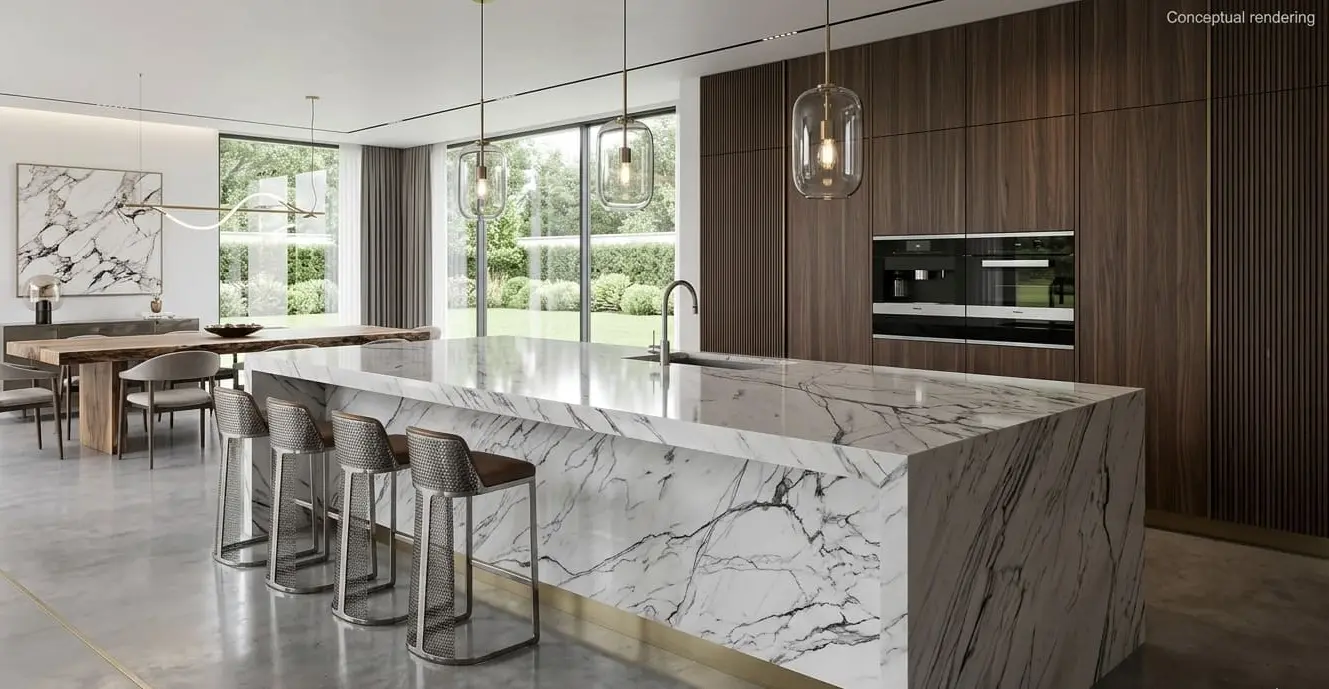
Conceptual rendering of modern kitchen featuring a polished marble countertop island
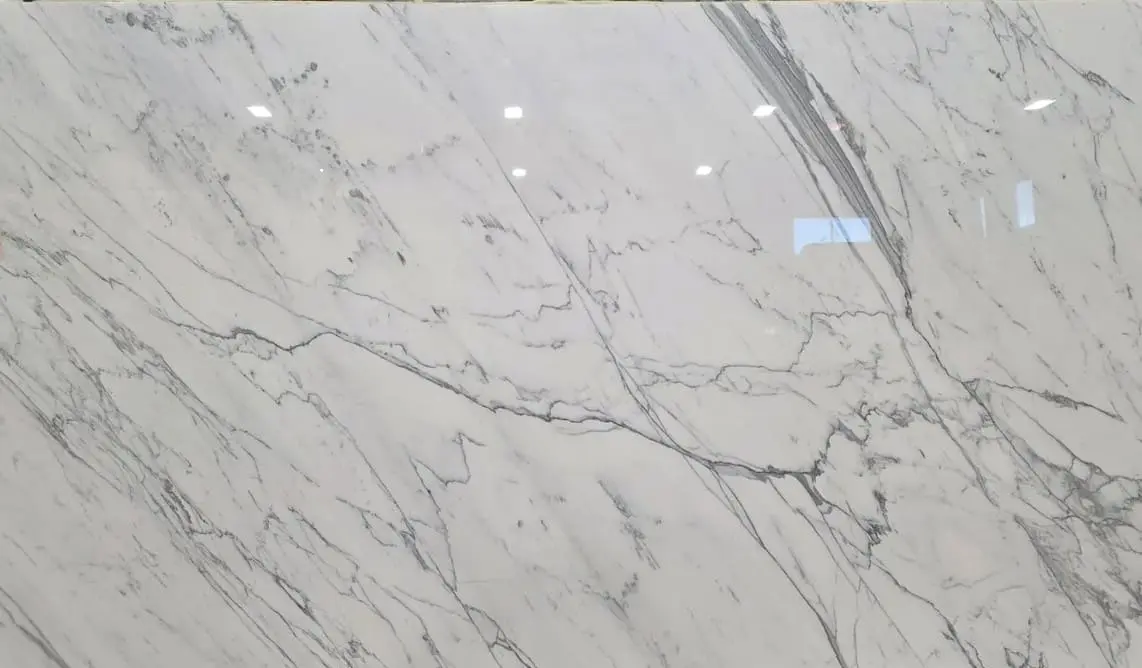
Marble Slab at Nova Tile and Stone showroom

Marble Countertop Care: Sealing, Cleaning, and Repairs

On the Mohs hardness scale, marble rates between 3 and 4, placing it softer than granite, which typically rates 6 to 7. This makes polished marble countertops more susceptible to scratching and etching. Etching occurs when acidic substances react chemically with the calcium carbonate in the stone, leaving dull marks on the surface. Unlike stains, etch marks are surface-level chemical reactions and require a natural stone polishing powder for minor marks, or professional restoration for deeper damage.

A high-quality penetrating sealer fills the stone's microscopic pores, reducing how quickly liquids are absorbed. Most natural stone professionals recommend sealing kitchen surfaces every three to six months, with lighter-use areas such as bathroom vanities extending to every six to twelve months. To check if resealing is needed, place a few drops of water on the surface; if it darkens within ten minutes, it is time to reseal. For daily cleaning, use a pH-neutral stone cleaner or mild dish soap in warm water, and avoid bleach, vinegar, or abrasive scrubbing pads.

When etch marks or minor scratches appear, a stone polishing powder can often restore the surface gloss at home. For deeper damage, a professional stone restoration service can re-hone and re-polish the slab. Consistent sealing, careful cleaning, and prompt attention to damage is a reliable way to help preserve both the finish and the structural integrity of the surface over time.

Browse Polished Marble Slabs for Your Interior Project

Choosing the right slab involves more than color preference. Veining pattern, color depth, and pattern movement can vary noticeably between slabs from the same quarry, so reviewing full slab imagery or selecting in person is worthwhile. Slab thickness is another practical consideration; 2cm slabs are lighter and suit certain applications, while 3cm slabs are thicker, more structurally rigid, and the more common choice for kitchen countertops. Confirming thickness with your fabricator before purchase can help ensure the slab suits your project requirements.

Nova Tile and Stone carries a curated selection of premium polished marble slabs suitable for kitchen countertops, bathroom vanities, feature walls, and other interior stone applications. Browse our inventory to find the right marble slab for your project. Contact us to check current stock and availability.

 Nova Tile and Stone's Offerings  Our Showroom Locations

Frequently Asked Questions

Polished marble can work well in kitchens, though the high-gloss finish shows etch marks and scratches more visibly than honed or leathered surfaces. Households that cook frequently with acidic ingredients may find a honed finish, or a harder stone such as granite, a more practical choice. Many homeowners, however, appreciate the natural patina that polished marble develops over time as part of the material's character.

Polished granite countertops are made from an igneous rock, formed from cooled magma, composed primarily of quartz, feldspar, and mica, rating 6 to 7 on the Mohs scale. This makes granite significantly more resistant to scratching and etching than marble, which rates 3 to 4 and reacts to acids. Granite tends toward a speckled appearance, while natural stone slabs such as marble are generally regarded as offering more dramatic veining and a more refined aesthetic.

Most natural stone professionals recommend sealing polished marble countertops in kitchens every three to six months. Bathroom vanities and lighter-use surfaces may extend to every six to twelve months. To check if resealing is needed, place a few drops of water on the surface and wait ten minutes; if the stone darkens or absorbs the water, it is time to reseal using a penetrating sealer formulated for natural stone.

Minor etch marks can often be reduced at home using a stone polishing powder. Etch removers are a separate product; they are chemical treatments suited to very light surface marks. Deeper scratches or significant etching typically require a professional stone restoration service to re-hone and re-polish the surface.

The four finishes differ primarily in surface texture, light reflectivity, and how visibly they show wear. Polished offers the highest gloss and is widely considered the most visually striking option, but shows etch marks and scratches most readily. Honed produces a smooth, matte surface that is more forgiving of daily use and less prone to showing marks. Leathered uses diamond-tipped brushes to create a subtle texture with a soft sheen, making it practical for high-traffic households. Specialty finishes such as brushed, antiqued, or sandblasted are generally reserved for decorative applications.