Onyx Stone Slabs
Onyx stone slabs are among the most visually striking natural surfaces available in interior design. Formed from banded calcite deposits, architectural onyx develops its signature translucency and layered veining through a slow geological process in which mineral-rich water deposits thin, successive layers of calcite inside limestone cavities over thousands of years. The result is a luminous, deeply patterned material that is genuinely one of a kind.
At our home design center in Reno, Sacramento, Minden, and Fernley, we carry a rotating selection of natural stone slabs for homeowners, designers, and trade professionals. If you are drawn to dramatic natural materials, onyx stone slabs are worth understanding before you visit.
What Makes Onyx Different
Most natural stones used in interior design, including granite, quartzite, and marble, are dense and opaque. Onyx stands apart because light passes through the stone rather than simply reflecting off it, creating a depth and warmth no other slab material can replicate.
That translucency makes onyx ideal for backlighting. When LED panels are installed behind an onyx slab, the stone glows from within, amplifying its color and revealing veining invisible in standard lighting. Backlit onyx feature walls, bar fronts, and vanities have become a defining element of high-end residential and hospitality design.
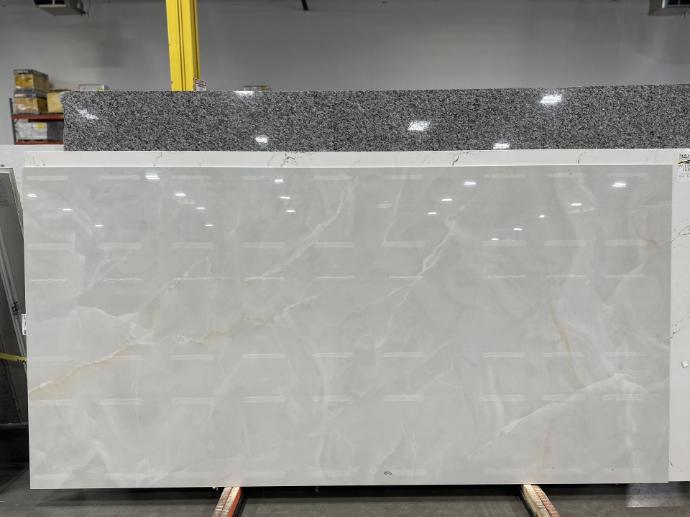
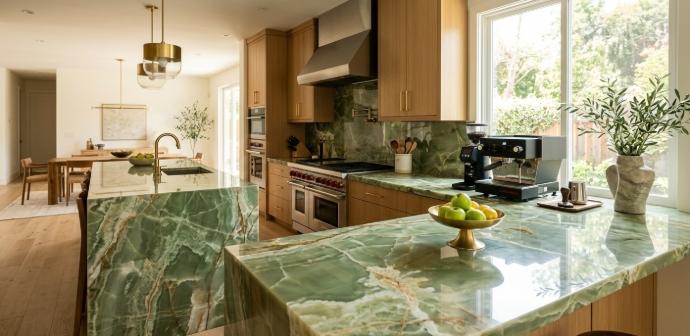
Onyx slabs are available in a wide color range. Honey and amber tones are among the most sought-after. Green onyx carries a vivid, architectural hue. White onyx features softer, cloud-like veining. Each slab is unique in its banding, color distribution, and translucency.
We Also Carry Porcelain Slabs with an Onyx Look
Durability and Best Applications
Architectural onyx scores approximately 3 to 4 on the Mohs hardness scale, similar to marble. It is softer and more brittle than granite or quartzite, and more susceptible to scratching and etching from acidic substances like citrus juice or wine. Onyx stone slabs perform best in lower-traffic, protected applications, including:
Feature walls and accent panels. A full-height onyx wall in an entry, living room, or primary bathroom creates an immediate focal point with minimal risk of surface damage.
Bathroom vanities. Less exposure to harsh substances makes a vanity a practical and beautiful setting for onyx.
Bar fronts. Backlit onyx bar fronts are a staple of upscale commercial design, where the stone's ability to glow under LED lighting is especially effective.
Fireplace surrounds. The warmth and movement of firelight naturally enhances onyx's visual depth.
For high-use kitchen countertops, onyx requires diligent maintenance, prompt spill cleanup, and regular sealing to hold up over time.
Sealing and Care
Onyx should be sealed at installation and resealed every six to twelve months. When water no longer beads on the surface, it is time to reseal. For daily cleaning, a pH-neutral stone cleaner and a soft cloth are sufficient. Acidic cleaners and abrasive products should be avoided entirely, as they can etch the calcite surface. Spills should be blotted immediately. Because onyx slabs are often fiberglass-mesh-backed to reinforce structural integrity, professional fabrication and installation are strongly recommended.
Read Our Blogs
See Onyx Stone Slabs in Person
No photograph does onyx justice. Translucency, color depth, and veining movement only become fully apparent in person under real lighting. Because every slab is unique, the piece you select is the piece used in your project, making an in-person visit especially worthwhile.
Our current onyx slab inventory is available to browse across all four locations. Our design consultants can help you evaluate options in the context of your specific project. Book a free design consultation and bring photos of your space and any finishes you are working around.
Frequently Asked Questions
Architectural onyx slabs are composed primarily of banded calcite, formed when mineral-rich water deposits successive layers of calcium carbonate inside limestone cavities over time. This process produces the stone's signature translucency and parallel banding. The material sold as decorative slab onyx is calcite-based, similar in composition to marble.
Onyx can work in a kitchen, but it requires more care than harder stones like granite or quartzite. With a Mohs hardness of approximately 3 to 4, it is more vulnerable to scratching and etching from acidic foods and liquids. It performs best where spills are addressed immediately and the surface is sealed regularly. For high-use kitchens, a harder stone may be more practical. Onyx is particularly well-suited to bathroom vanities, bar tops, and feature walls.
Onyx is translucent, so light passes through the stone rather than reflecting off it. When LED panels are placed behind an onyx slab, the material glows from within and the natural veining becomes dramatically more visible. No other common slab material produces the same illuminated effect, making onyx the preferred choice when backlighting is part of a design plan.
Onyx should be sealed at installation and resealed every six to twelve months depending on use. To check whether resealing is needed, place a few drops of water on the surface. If the water beads, the seal is holding. If it absorbs, it is time to reseal. pH-neutral cleaning products and avoiding acidic substances will help extend the life of the seal.
Yes, and we strongly recommend it. Photographs cannot fully capture the translucency, color depth, or patterning of an individual slab. Visiting one of our showrooms in Reno, Sacramento, Minden, or Fernley allows you to see current inventory in person and work with a design consultant to find the right fit for your project.