What Makes Olive Green Granite Worth Choosing
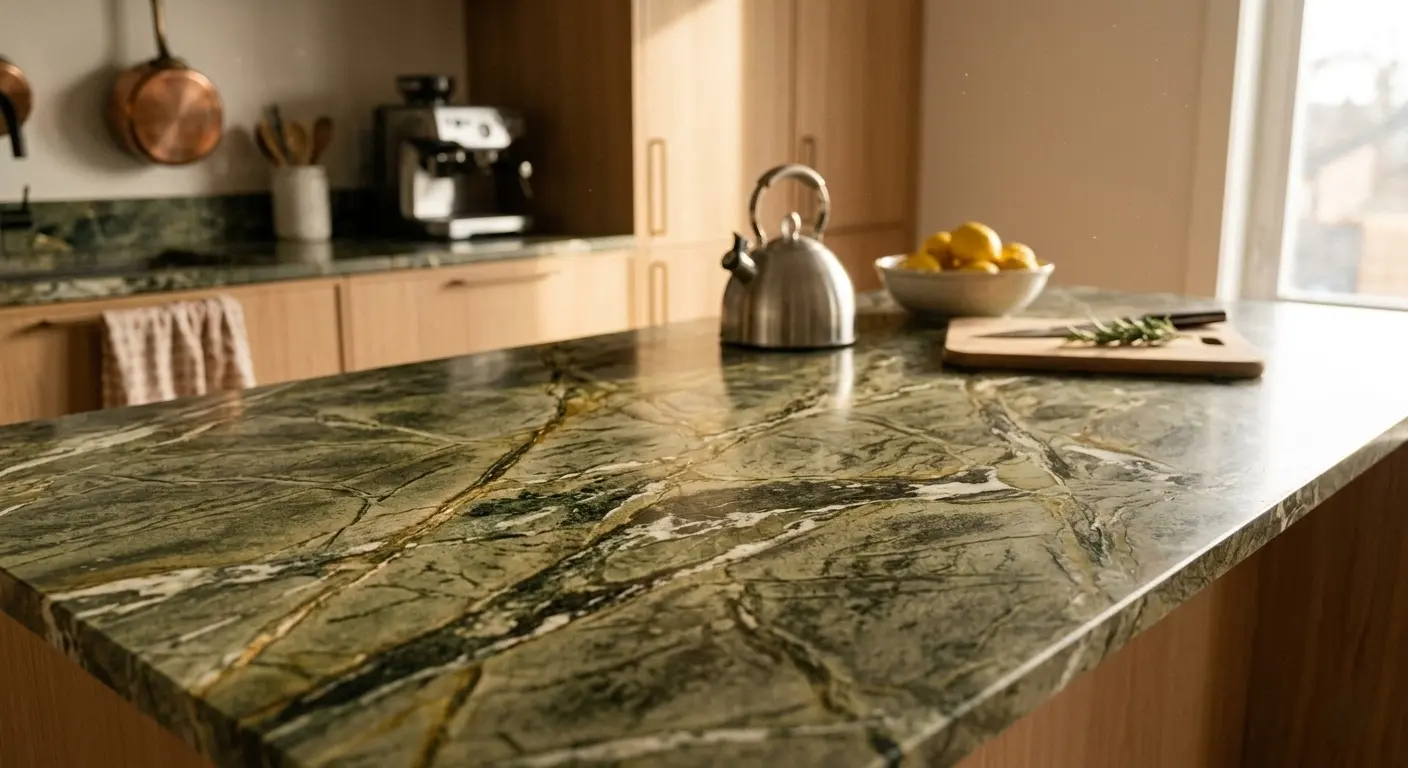
Olive Green Granite slabs are large-format natural stone surfaces that offer full-slab continuity, meaning no grout lines break up the visual flow the way standard subway tile layouts do. Unlike the classic 3x6 brick-pattern subway tile arrangement - where the repeated grid can feel expected - a continuous slab creates an uninterrupted surface that reads as a single piece of art. The stone typically runs in slab dimensions suited for full countertop coverage and wall cladding, with thicknesses available for residential and commercial applications.
The material is dense and heat-tolerant, making it a practical fit for kitchen environments where hot cookware is common. Its natural mineral composition gives it a hardness that resists everyday surface wear, while its olive-green palette anchors earthy, biophilic, and contemporary design schemes equally well. At Nova Tile and Stone's natural stone slab inventory, you can view live slab availability so you select the exact piece going into your home.
Design Versatility That Fits Any Room
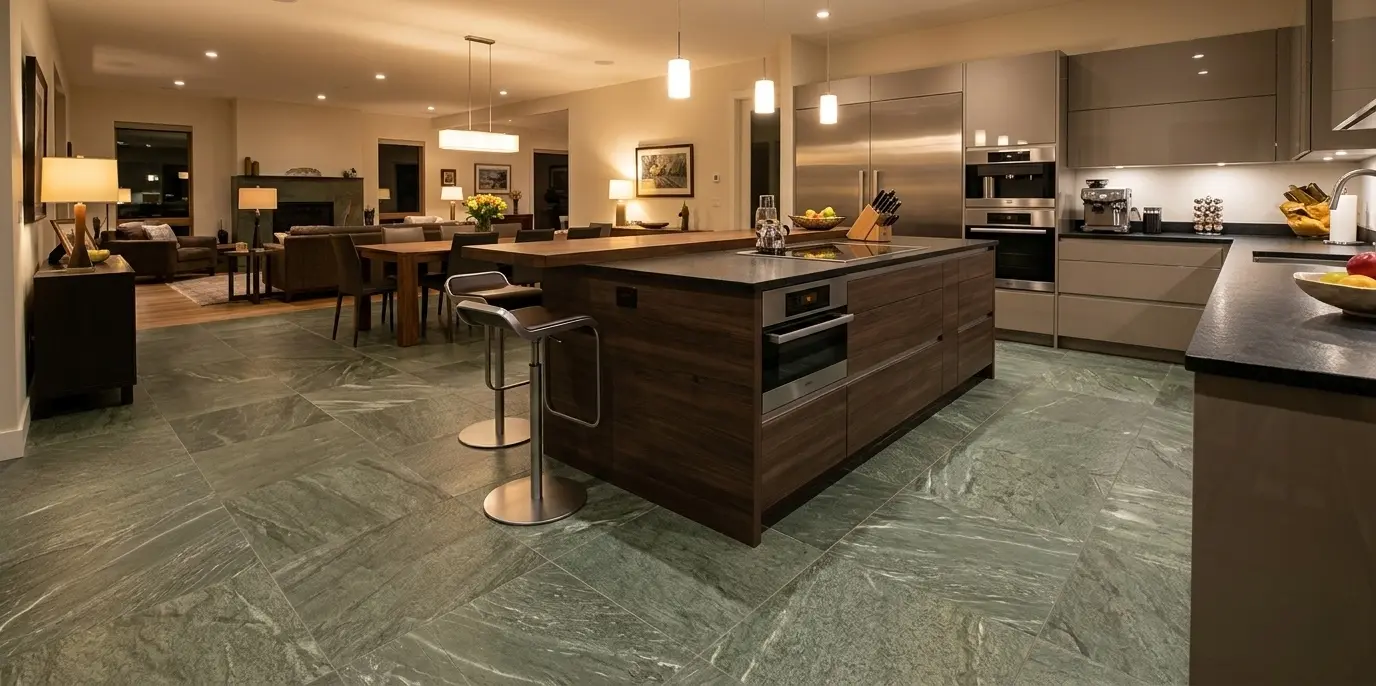
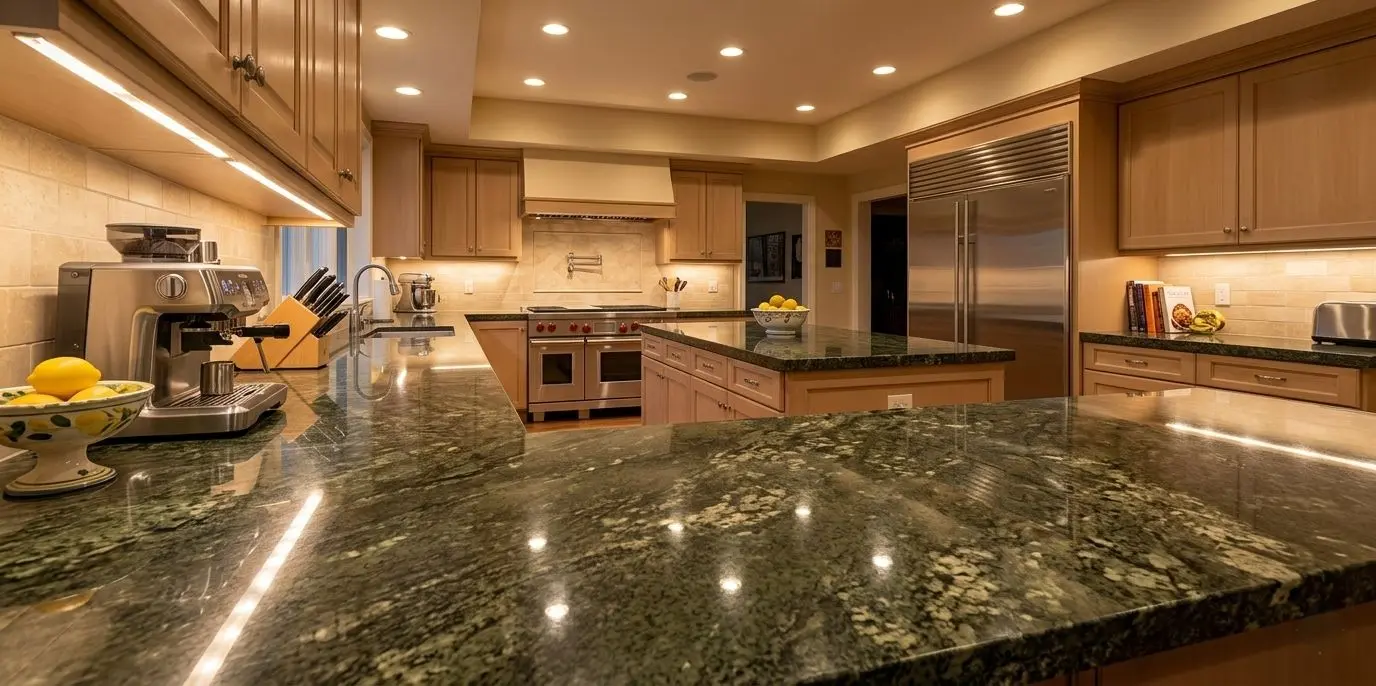
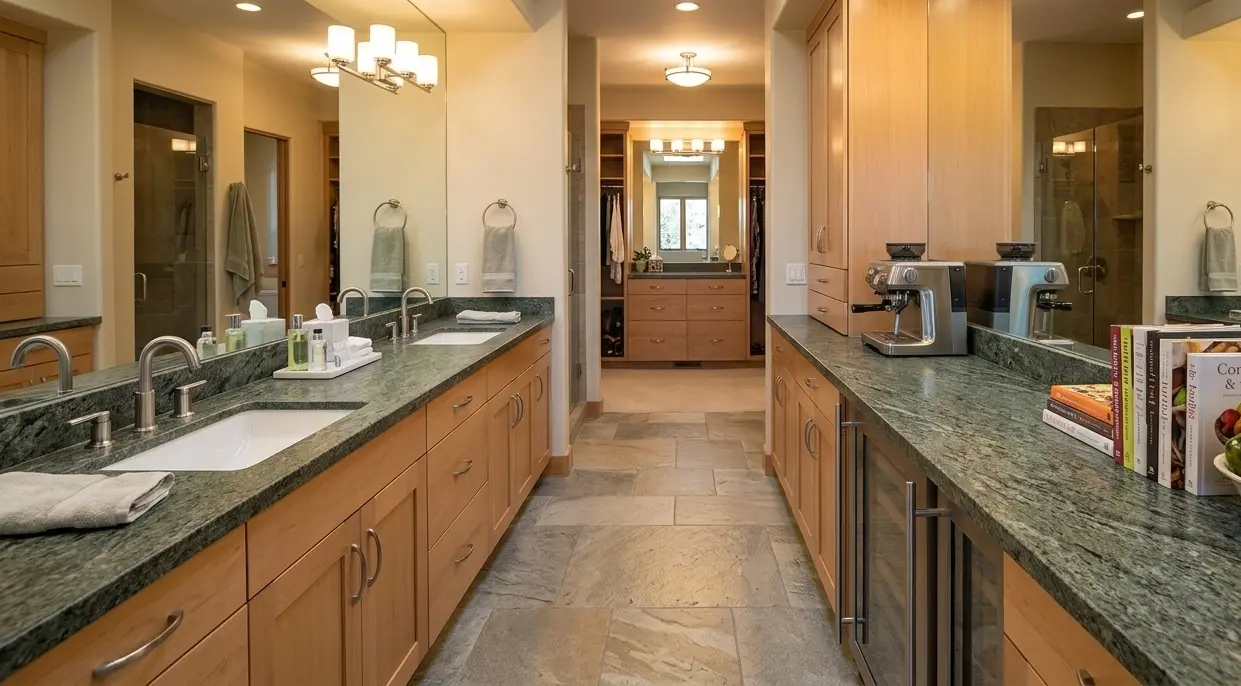
One of the strongest qualities of olive green granite is how well it translates across different spatial contexts. In kitchens, a polished finish reflects light and creates that clean, luxurious kitchen countertop aesthetic often seen in high-end renovations. In bathrooms, a honed finish softens the surface visually, making it ideal for vanities and shower surrounds where a matte, spa-like feel is preferred. The leathered finish, which preserves the stone's natural pitting and texture, works beautifully on floors and accent walls because it reduces glare while adding tactile depth.
Layout orientation also plays a role in the final look. Installed horizontally across a kitchen island, the veining draws the eye outward and makes a space feel wider. Used vertically on a bathroom wall, it adds height. As a floor surface, the olive tone grounds the room and pairs naturally with warm wood cabinetry, white oak, brass fixtures, and matte black hardware. Its rare pattern means no two slabs are identical, so every project becomes genuinely one of a kind.
Why Olive Green Granite Performs as Well as It Looks
- Heat resistance: The dense natural composition handles hot pots and pans without damage, reducing the need for trivets on kitchen countertops.
- Scratch resistance: Harder than most engineered alternatives, the surface holds up well to daily prep work and traffic.
- Finish versatility: Polished surfaces are easiest to wipe clean; honed finishes are less prone to showing fingerprints; leathered finishes hide minor scuffs well in high-traffic zones.
- Non-repetitive patterning: Every slab carries a unique vein structure - ideal for clients who want a surface that cannot be replicated anywhere else.
- Surface continuity: Large-format slabs eliminate grout lines entirely, giving counters and walls a seamless, sanitary finish that is particularly valued in kitchens and bathrooms.
- Expert guidance available: Nova Tile and Stone's trusted natural stone specialists offer free design consultations, home delivery options, and 100% U.S.-based client support to help you make the right decision with confidence.
Olive Green Granite as a Long-Term Investment
Rare stones do not go out of style. While trending colors and manufactured finishes cycle in and out of fashion, natural stone surfaces like olive green granite age gracefully and tend to increase the perceived value of any home they are featured in. The polished finish, in particular, retains its reflective quality for decades with basic maintenance, making it one of the more durable options for a luxury kitchen countertop or bathroom vanity renovation.
Because this is a natural material with limited quarry availability, slabs are not restocked on demand. Buying early and reserving your slab ensures consistency across a project - especially important when matching countertops, island surfaces, or multi-wall bathroom applications. For a deeper look at how to evaluate and select the right granite for your space, the guide on Granite Slab for Countertops: How to Choose the Right One walks through color matching, lighting compatibility, and slab variation in detail.
Frequently Asked Questions
Despite the product name, this stone is classified as an igneous-type natural stone based on its mineral structure and formation. The term "granite" is often used commercially for dense, polished slabs with similar durability profiles. Always ask for the technical stone classification if it matters for your specific application.
Polished is the most popular finish for kitchen countertops because it is the easiest to clean and reflects light well. Honed provides a more understated, matte appearance and is slightly more forgiving of surface marks. Leathered is best for areas where you want texture and reduced glare.
Yes. The leathered finish is particularly well suited to floor applications because it offers better traction than polished stone and integrates naturally into both residential and commercial settings.
Seal the surface periodically using a stone-appropriate penetrating sealer. For daily cleaning, use a pH-neutral cleaner and avoid harsh acidic products. Polished finishes may benefit from more frequent sealing than leathered or honed ones.
Natural stone slabs vary by quarry lot and are not produced in uniform sizes the way manufactured tiles are. Size, thickness, and vein pattern differ between individual slabs. Viewing the slab in person before purchasing is strongly recommended to ensure it meets your project requirements.