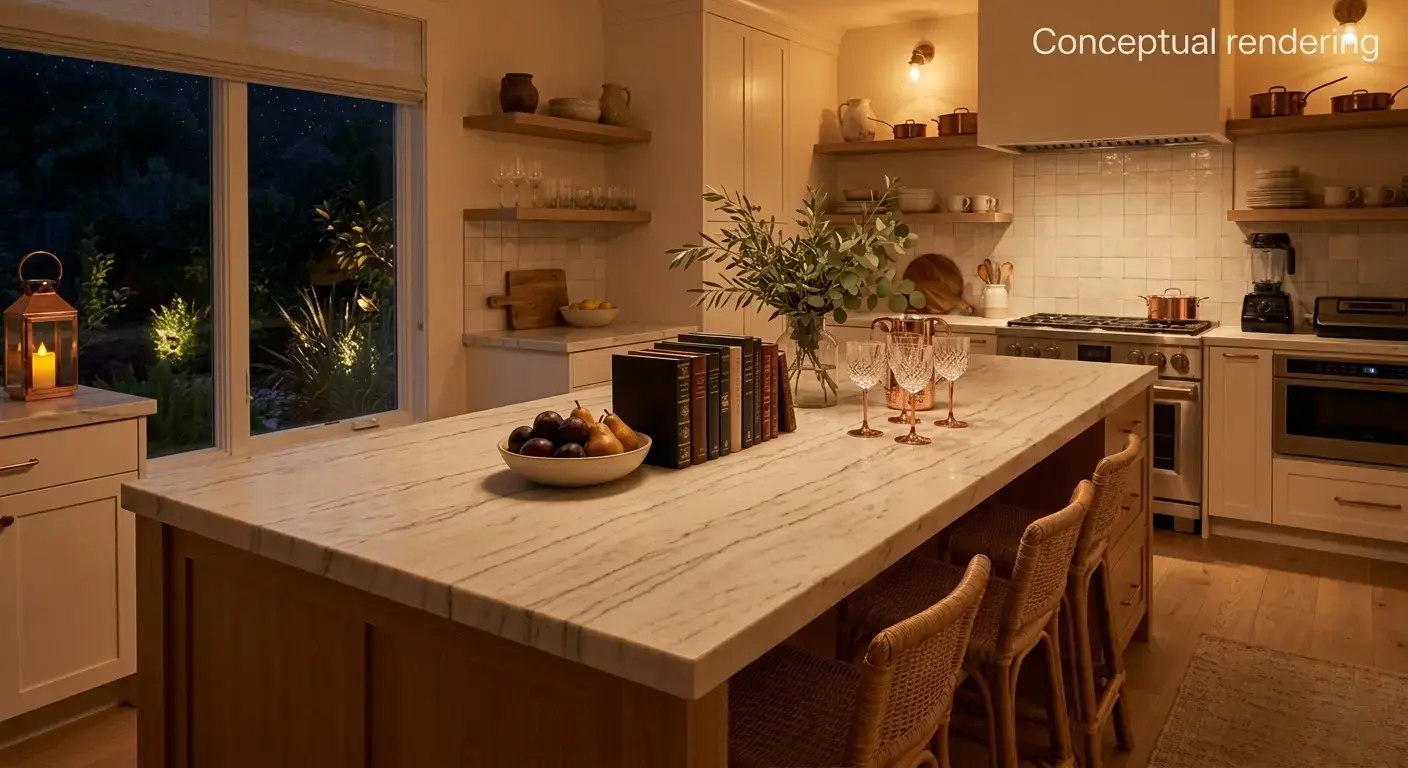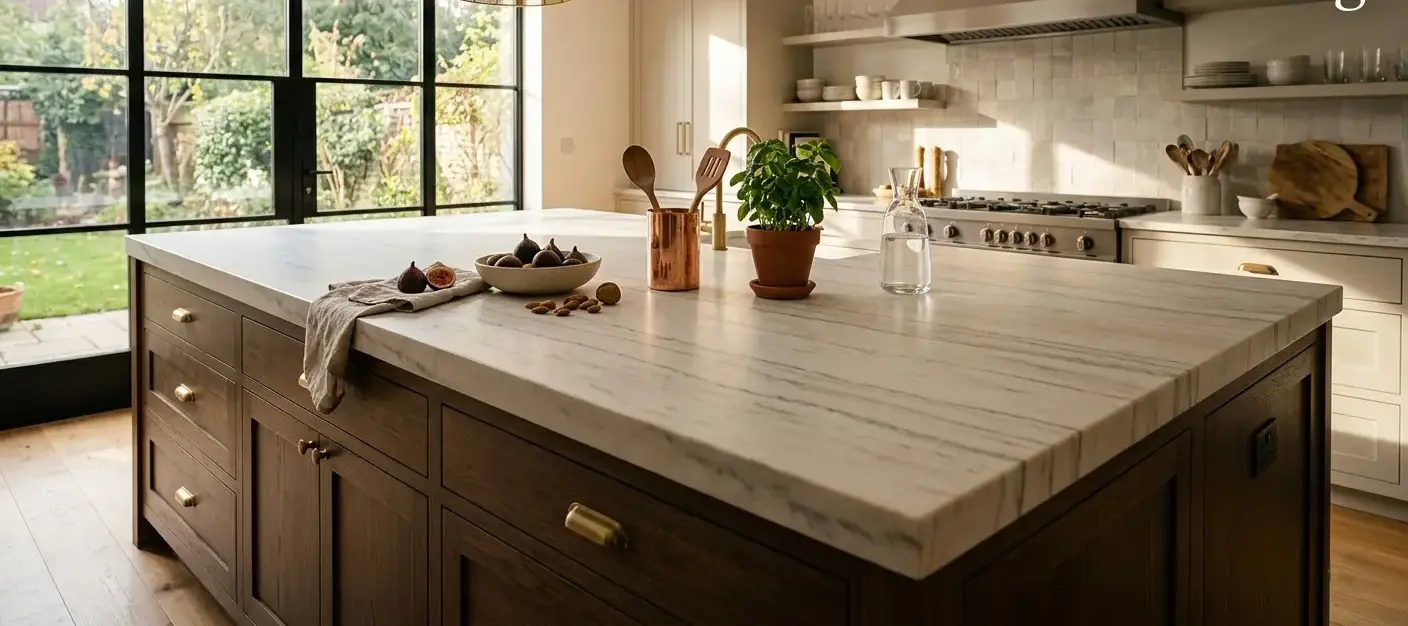
A marble slab for top kitchen island brings timeless elegance to one of the home's most-used surfaces. These natural stone slabs feature classic white-to-cream base tones and sweeping grey veining.
Available in polished, honed, leathered, and specialty finishes, these marble slabs suit a range of island applications. With proper sealing and routine care, a marble top kitchen island delivers lasting beauty few materials can match.
Marble Slabs for a Top Kitchen Island: Material, Specs, and Design Appeal
Marble is a metamorphic stone formed when limestone recrystallizes under heat and pressure. The result is a crystalline surface with flowing veins that give each slab a distinct character.
Nova Tile and Stone slabs are sourced from quarries in Italy, Turkey, and Greece, regions recognized for premium marble with consistent color and veining depth.
White is the most popular color for a marble slabs for top kitchen island, ranging from bright Calacatta whites to the softer tones of Carrara. Secondary grey tones flow through the slab in long linear formations, and bold dramatic veining remains the most requested pattern.
Standard thickness is 2 cm or 3 cm, with 3 cm preferred for heavy daily use surfaces. On the Mohs scale, marble rates between 3 and 4, meaning it polishes well but etches more readily from acidic substances than granite or quartzite.
Absorption rates are moderate, making periodic resealing essential to limit staining risk. Compared to engineered quartz, marble offers unmatched natural variation; compared to granite, it presents a more refined aesthetic at the cost of lower scratch resistance.
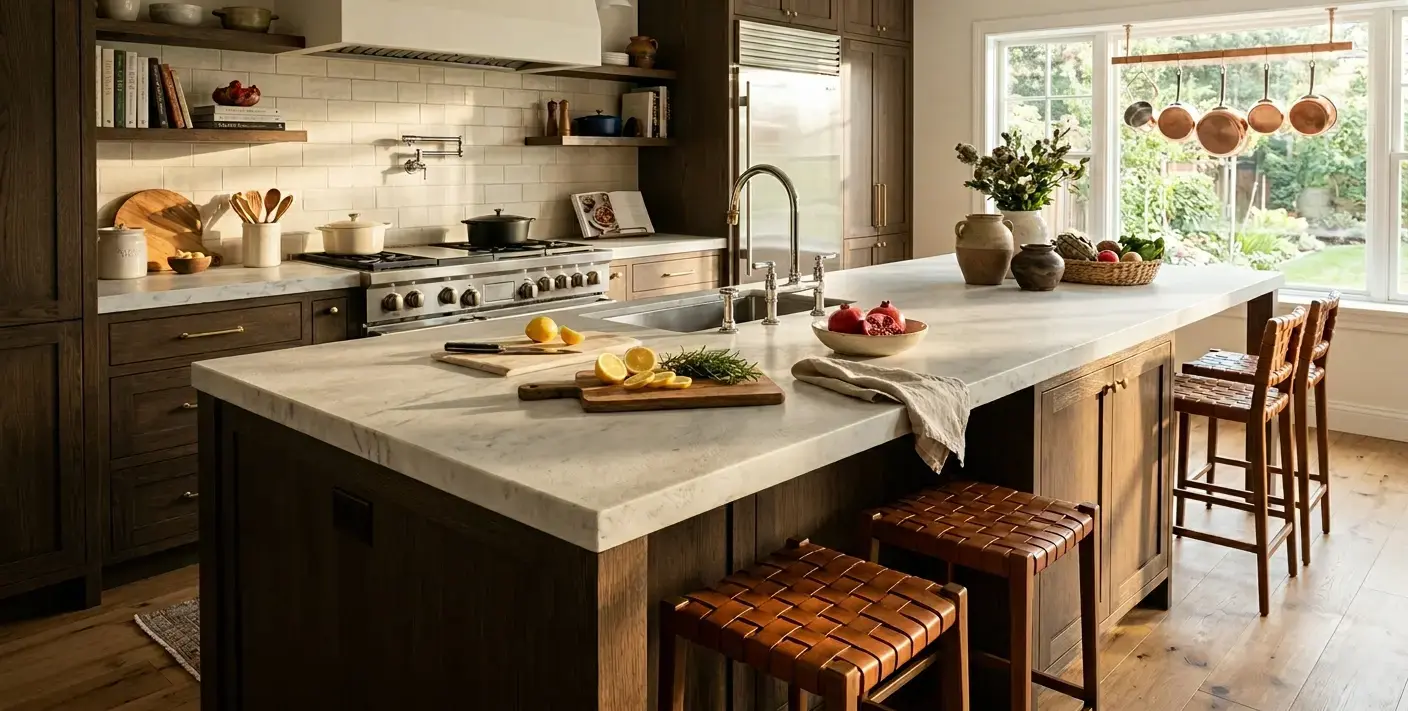 Conceptual rendering
Layout Options and Finish Versatility
A bookmatched marble slab pair creates a mirrored vein pattern across the island surface, producing a dramatic focal point that suits both traditional and contemporary kitchens.
Waterfall edge treatments are popular with white marble because the continuous surface amplifies the stone's natural flow. Designers often pair a polished slab top with honed side panel faces to balance visual weight on larger islands.
Leathered finishes add subtle texture that helps disguise minor surface marks from everyday kitchen activity. Vertical slab panels on the island base coordinate well with a marble top kitchen island slab without feeling repetitive.
Browse Nova Tile and Stone slab inventory to explore available marble formats, sizes, and finishes for kitchen island applications.
Practical Advantages of Marble Slab for Top Kitchen Island
- Stay-cool surface: Marble naturally stays cooler than room temperature, making it practical for pastry and baking prep where dough temperature matters.
- Suited for indoor applications: Marble is specified for indoor floor and wall use, making it appropriate for kitchen island tops and integrated side cladding.
- Finish options for wet-area considerations: Honed and leathered finishes offer more textured surfaces than polished marble, which can be slippery when wet.
- Large-format slab availability: Marble slabs come in large formats that minimize seams on most standard kitchen island dimensions.
- Heat-resistant surface: Marble withstands typical kitchen heat, though trivets protect the surface since it is not thermal-shock proof.
- Broad design compatibility: Marble's veining and tonal range pair well with a wide range of cabinet finishes, hardware metals, and backsplash materials.
Whether a marble slab surface is suitable for direct food contact depends largely on its finish type and sealing status. Honed finishes tend to mask minor etching and scratches better than polished ones, but both require proper sealing to reduce porosity and limit bacterial absorption. Even with sealing, marble remains more vulnerable to staining and etching compared to non-porous materials like quartz or stainless steel. For safe use in food preparation areas, regular resealing and prompt cleanup of spills are essential. To ensure compliance with health standards and to match care practices to your specific slab, consult a qualified stone care specialist for tailored guidance.
Why a Marble Slab for Top Kitchen Island Holds Long-Term Value
Marble's position in the luxury residential market has remained consistent across decades. A well-maintained marble top kitchen island slab retains its visual appeal for many years, particularly when kept away from abrasive cleaners and prolonged acid exposure.
Because each slab is naturally unique, the surface cannot be replicated elsewhere, a distinction that carries weight in premium real estate. Honed and leathered finishes reduce visible surface wear compared to polished alternatives, extending marble's practical lifespan.
Pairing marble slab selections with consistent stone slab care practices protects the investment long term. Prompt spill cleanup, pH-neutral cleaners, and periodic professional resealing are the most effective strategies for a marble countertop slab.
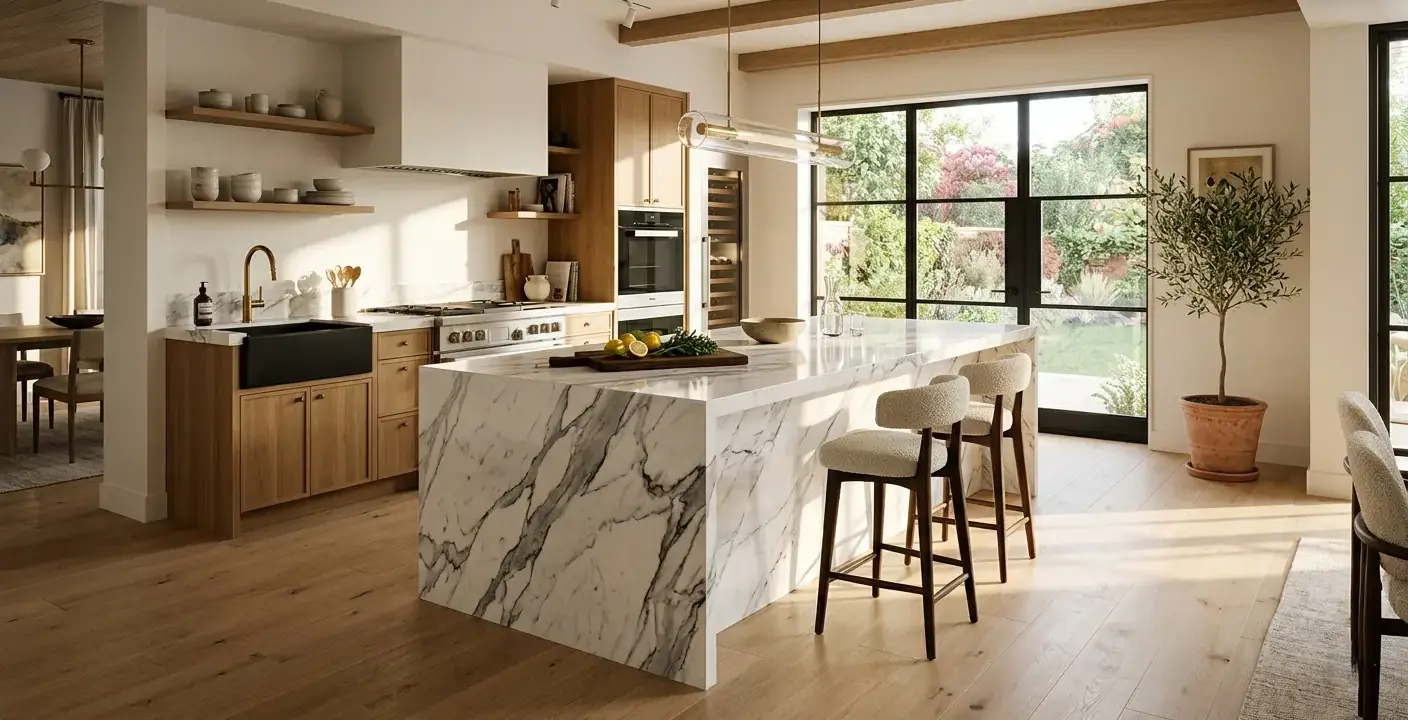 Conceptual rendering
Freshly Published Resources
Find Out What’s New with Us!
Frequently Asked Questions
Honed marble is generally more practical for
a kitchen island top used for daily prep because its matte surface is less likely to show etching and minor scuffs, though neither finish eliminates the need for sealing and careful maintenance.
Marble can be positioned near a sink, but its moderate absorption rate makes sealing critical to reduce stain penetration. Near a stovetop, trivets are recommended because marble is heat-resistant but not thermal-shock proof.
Bold, flowing grey-toned veining against a white background, characteristic of Calacatta and Carrara varieties, is the most requested pattern for marble kitchen island slabs due to its visual impact and pairing versatility.
A 3 cm slab is the most common choice for kitchen islands because of its visual presence and durability. A 2 cm slab is also used, sometimes with a laminated edge to achieve a thicker-looking profile.
Marble should be cleaned with pH-neutral, non-abrasive products only. Acidic cleaners including vinegar and citrus-based sprays can etch the surface. Spills should be wiped promptly rather than left to absorb.