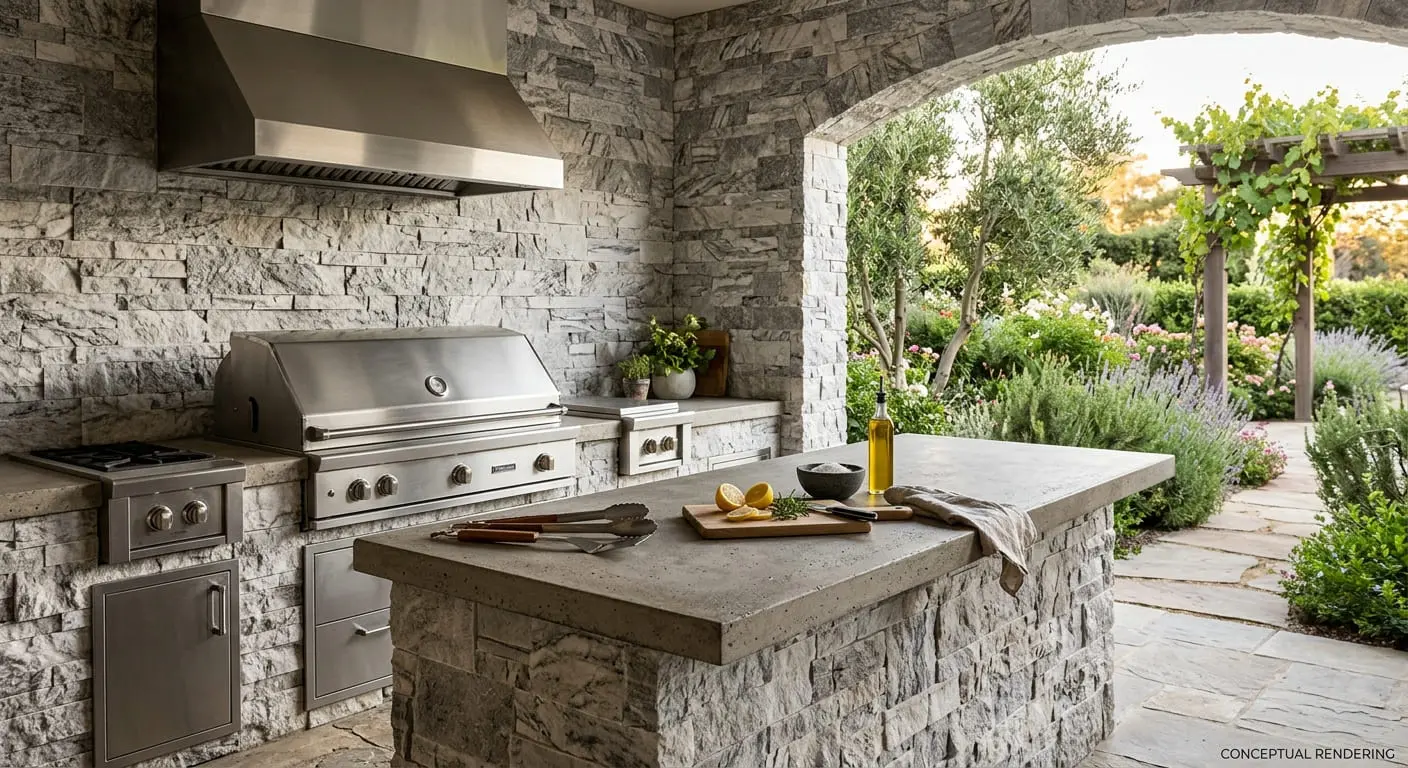
A ledger stone outdoor kitchen uses panels of thin natural stone strips, set in a stacked pattern, to clad the base of a grill island, bar, or prep counter. The most common panel size is 6 by 24 inches, covering one square foot each. Most natural panels weigh roughly 8 to 13 pounds per square foot. Stone options include quartzite, slate, travertine, marble, and limestone. L-shaped corner pieces carry the pattern around the edges of the island. Natural stone is noncombustible, so ledger stone is widely used around built-in grills. Outdoors, a polymer-modified thin-set meeting ANSI A118.15 and a penetrating sealer help panels handle freeze-thaw exposure.
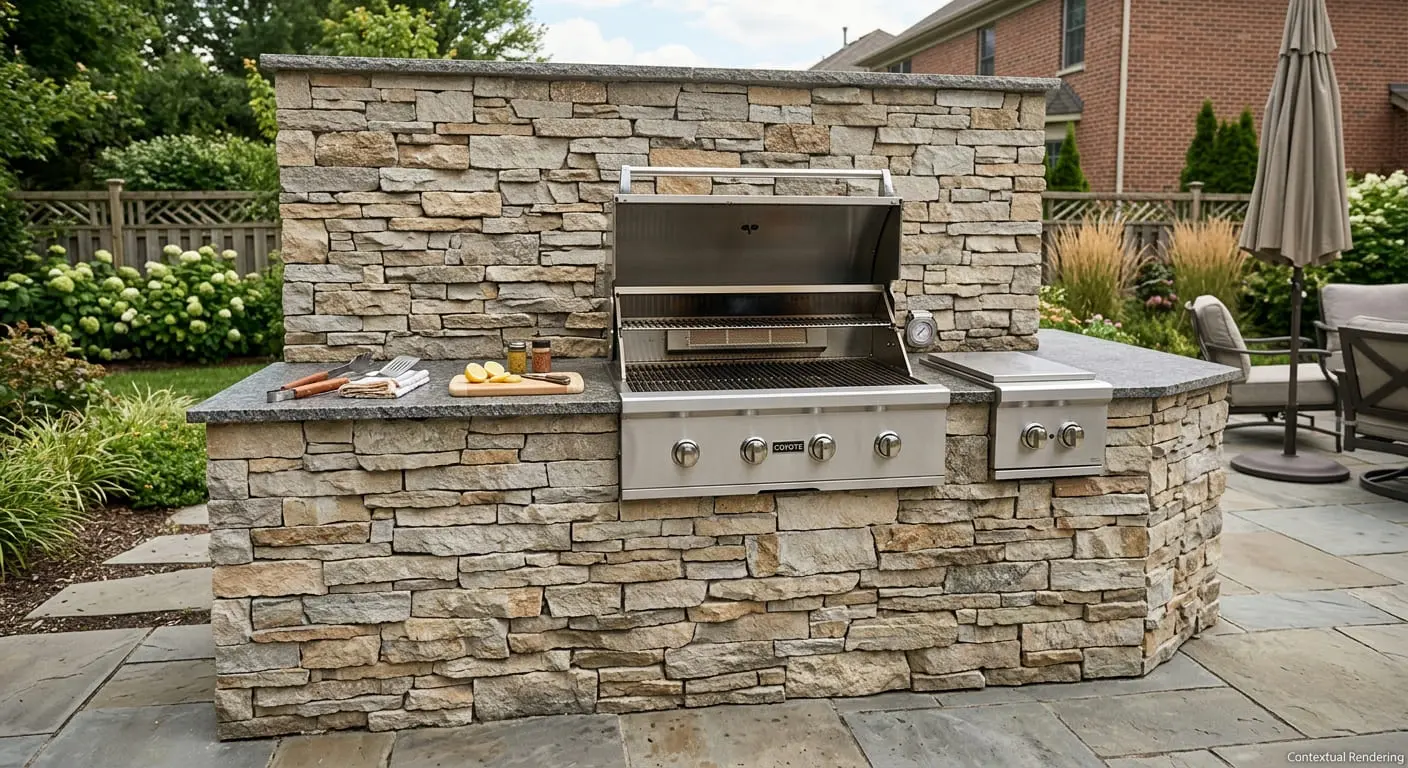
How Ledger Stone Panels Are Put Together
Each panel holds rows of split or sawn stone strips set at varying depths, creating a layered texture with shadow lines between pieces. The back is flat so it can be set against a prepared substrate.
Most panels use a Z-shaped or staggered end design, letting one panel lock into the next without a visible vertical seam. Corner pieces come in long and short legs, and alternating them keeps the outside corners of an island from looking repetitive. Some lines are split face for a rougher look, while others are honed or sawn for a flatter face.
Choosing Stone for a Ledger Stone Outdoor Kitchen
The stone inside the panel affects color, texture, and how the cladding responds to weather. For other outdoor surfaces, our exterior stone guide compares additional stone types.
Quartzite
Quartzite ledger stone panels tend to be dense and hard, with low water absorption. Colors often include silver, gold, rust, and white tones.
Slate
Slate panels show charcoal, gray, green, and rust shades. Slate splits into thin layers, giving the panel a sharp, linear profile.
Travertine and Limestone
Travertine and limestone panels lean toward cream, beige, and walnut tones. These stones are more porous than quartzite, so sealing matters more outdoors.
Marble
Marble panels offer white and gray options with visible veining. Marble is softer and can etch from acidic spills such as citrus juice or marinades.
Whichever stone you consider, view it in daylight. Outdoor sun can shift how warm or cool a color appears.
Weather, Heat, and Water Exposure
Freeze and thaw cycles are a key factor in Northern Nevada and at higher Sierra elevations. Water that soaks into porous stone can expand when it freezes. Denser stones and a penetrating sealer help limit how much water the surface takes in.
The stone itself will not burn, but grill manufacturers set their own clearance rules, and many call for an insulated jacket when an island includes combustible materials. Always check the grill's installation manual.
A countertop with an overhang helps shed rain away from the cladding below. Without it, water can run down the panels and collect in the recesses of the stacked pattern. Efflorescence, a white powdery residue, can appear when moisture carries mineral salts to the surface. Good drainage and a sealed surface reduce how often it shows up.
What Goes Behind the Panels
Ledger stone is a veneer, so it needs a solid structure behind it. Outdoor kitchen islands are commonly built from concrete block, which can accept panels directly once clean, or from steel studs covered with cement backer board.
For exterior work, many panel manufacturers call for a polymer-modified thin-set that meets ANSI A118.15, applied to the substrate and back-buttered onto each panel. Because methods vary by product and site, we recommend working with a qualified contractor who can review local building codes and the panel instructions. Contractors sourcing materials for these projects can apply for a trade account.
Design Ideas for a Ledger Stone Grill Island
Here are combinations homeowners often consider:
Warm gold quartzite panels with a honed granite or quartzite countertop in a deeper tone.
Charcoal slate panels with a light porcelain slab or concrete-look countertop.
Cream travertine panels with matching travertine pavers on the patio.
White and gray marble panels with stainless steel appliances and black hardware.
A stacked stone island ties into the patio more clearly when the paver color either echoes one tone in the panel or contrasts with it. After dark, low-angle LED strip lights under a countertop overhang cast shadows across the stacked texture. Our team can help you narrow combinations during a free design consultation.
Caring for Ledger Stone Outdoors
Brush off dust and leaves with a soft-bristle brush. For grease near the grill, use a pH-neutral stone cleaner and water, then rinse. Avoid acidic cleaners, especially on marble, limestone, and travertine, and skip high-pressure washing, which can erode the stone face and loosen individual pieces.
A water drop test shows when to reseal. If water darkens the stone quickly instead of beading, the surface may be ready for another coat of penetrating sealer.
Conclusion
A ledger stone outdoor kitchen combines a layered natural stone texture with a wide range of countertop and paver choices. The right panel depends on your color goals, the weather your patio sees, and how much upkeep you prefer. We invite you to visit our showrooms in Sacramento, Reno, Minden, and Fernley, where our team can walk you through exterior stone options in person.
Frequently Asked Questions
Ledger stone is used to clad the base of an outdoor kitchen island, grill surround, bar, or prep counter. The panels attach to a concrete block base or a steel stud frame with cement backer board and give the structure a stacked natural stone face.
Yes. Natural stone is noncombustible, so it is commonly used around built-in grills. Grill manufacturers may still require specific clearances or an insulated jacket, so check the appliance installation manual before building.
Sealing is generally recommended, especially for porous stones such as travertine, limestone, and marble. A penetrating sealer helps limit water absorption, which matters in areas with freezing winter nights.
Most natural ledger stone panels weigh roughly 8 to 13 pounds per square foot, depending on the stone type and thickness. The supporting structure and adhesive should be rated for that load.
Granite, quartzite, porcelain slab, and concrete-look surfaces are common choices. Many homeowners pick a countertop that either contrasts with the panel color or echoes one of its tones, with an overhang to shed water away from the stone.