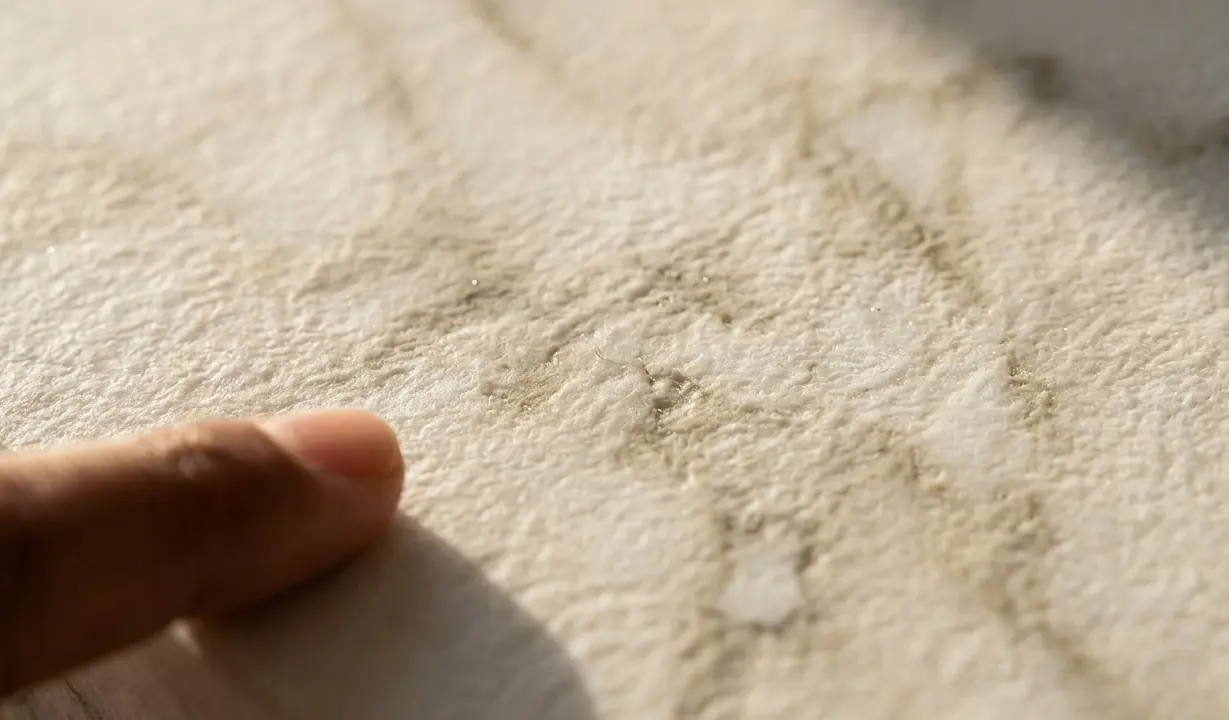
Marble is a metamorphic natural stone composed primarily of crystalline calcium carbonate, rating 3 to 5 on the Mohs hardness scale, and it has defined luxury interiors for centuries. The leathered finish is applied by passing diamond-tipped brushes across a honed slab, creating subtle peaks and valleys that introduce a suede-like texture and a low, matte sheen. That texture conceals fingerprints and water spots more effectively than polished marble, and it makes minor surface etching from acidic contact less visible.
Leathered marble is a refined and practical choice for countertops, offering tactile depth and organic warmth with a meaningful advantage over polished marble in everyday kitchen and bathroom environments.
Nova Tile and Stone, your curated natural stone slab supplier, carry a selection of leathered marble options across four showrooms in Reno, Sacramento, Minden, and Fernley.
Where Leathered Marble Slabs Work Best for Countertops
Leathered marble slabs adapt to a wide range of design settings and applications. The finish changes the character of the stone in ways that make it more versatile across different rooms and styles than polished marble alone, and the custom applications available with a full slab format expand the design possibilities further still.
Kitchen Countertops, Islands and Custom Configurations
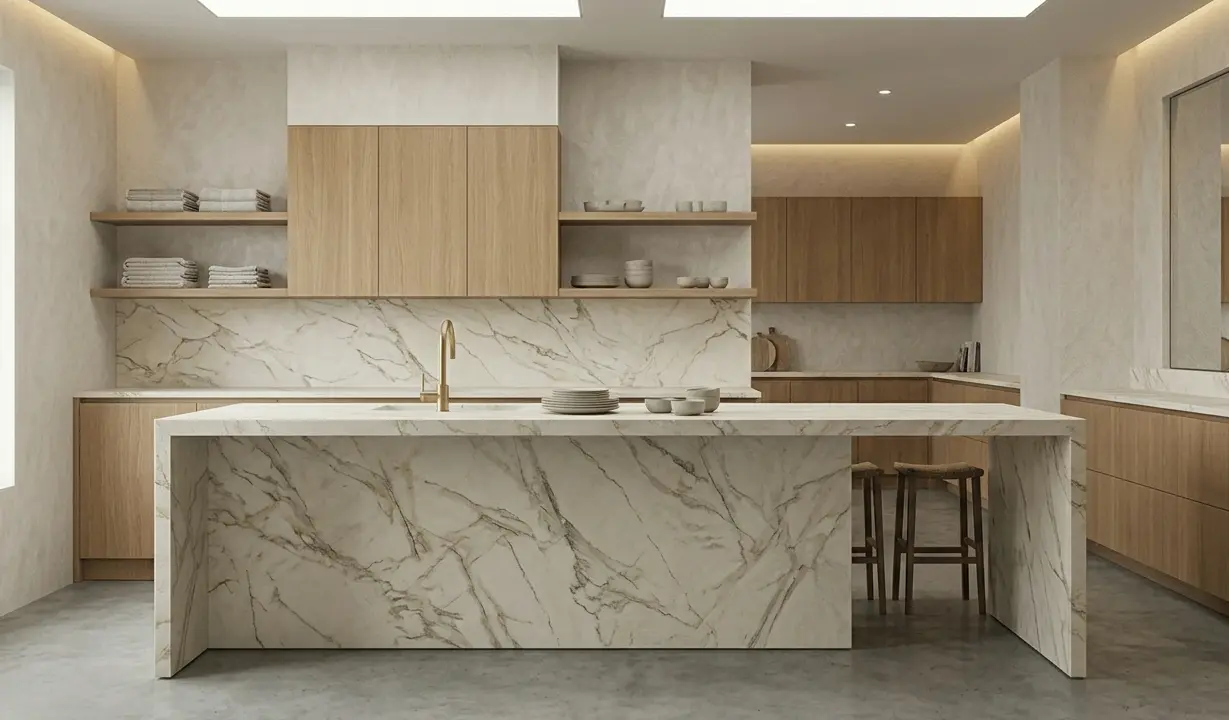
In a modern kitchen setting, leathered marble introduces a richness that polished marble delivers differently. The matte, textured quality grounds the surface and makes it feel more intimate and material-focused rather than formal and reflective. It pairs naturally with warm-toned cabinetry in wood, cream, or gray, as well as with matte black and brushed gold hardware where the stone's texture adds to the overall material layering of the space.
For kitchen islands, a custom waterfall edge in leathered marble carries the stone's veining and suede-like texture from the horizontal surface down both vertical sides, creating an architectural feature that is especially striking in a luxury kitchen setting. A full-height backsplash cut from the same slab as the countertop creates a cohesive, uninterrupted stone surface across the entire kitchen back wall.
Bathroom Vanities, Walls and Feature Applications
For luxury bathroom vanities, the leathered marble finish creates a spa-like quality that polished alternatives do not deliver in the same way. The non-gloss, textured surface conceals moisture marks more effectively throughout the day, making it a practical vanity surface in single and double-sink configurations. It pairs especially well with brushed gold, matte black, and polished chrome fixtures where the contrast between the metal finish and the stone's textured surface adds design depth.
On feature walls and fireplace surrounds, large-format leathered marble panels deliver visual presence and tactile character that other formats simply cannot replicate.
What the Leathered Finish Actually Does for Marble
Marble's beauty is well established, but its sensitivity to acidic substances is equally well known. Citrus, vinegar, wine, and certain cleaning products can etch the surface of polished marble within minutes of contact, leaving dull marks that are highly visible against the reflective finish. A leathered finish does not eliminate that sensitivity, since marble is composed of calcium carbonate regardless of finish, but it does reduce how visible surface etching and minor wear appear over time. The gentle texture of the leathered surface scatters light rather than reflecting it in a flat plane, which means minor imperfections read as part of the stone's natural character rather than as damage.
The practical benefits extend further. Fingerprints, water spots, and kitchen smudges that show prominently on polished marble are far less visible on a leathered surface throughout the day. That makes the countertop easier to maintain its clean appearance between thorough cleanings, which is a meaningful quality-of-life benefit for a busy household. Sealing every 6 to 12 months remains essential regardless of finish. A pH-neutral cleaner and immediate spill cleanup are the two most important daily habits for any marble surface.
Compared to standard subway tile layouts, a full leathered marble slab eliminates grout lines entirely and delivers the stone's natural veining as one continuous, uninterrupted visual across the full counter span. For buyers who want to see how the leathered finish looks on a specific marble variety before committing, the Calacatta marble leathered page offers detailed guidance on one of the most popular leathered marble options available.
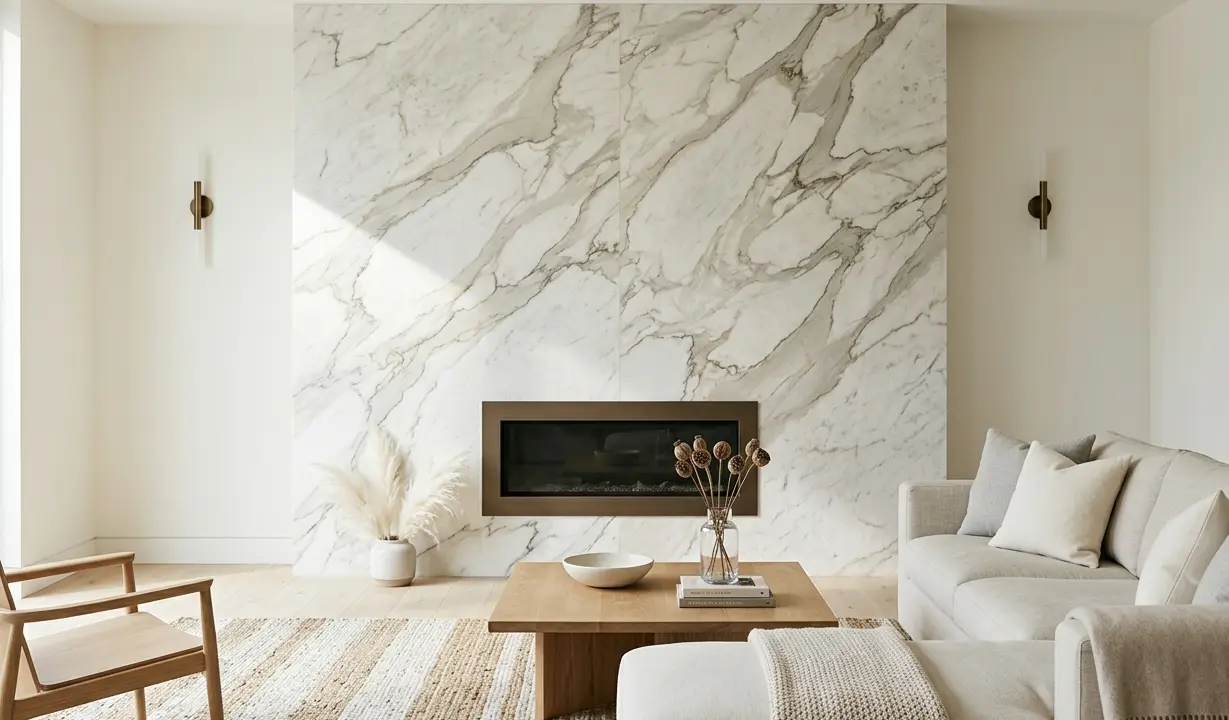
Note: Some images on this page may be conceptual renderings created to illustrate design possibilities and may not depict actual installations.
What to Expect From Leathered Marble Countertops
Leathered marble slabs for countertops are a refined natural stone surface, but they require consistent care and sealing to maintain their beauty and resist staining over time.
- Makes etching less visible than polished marble, but acidic spills must still be wiped up immediately to prevent damage
- Conceals fingerprints and water spots more effectively than polished, reducing how often the surface needs wiping throughout the day
- Stain resistant when sealed, but sealing every 6 to 12 months is essential and should be maintained consistently
- Mohs 3 to 5, softer than granite and quartzite, so cutting directly on the surface is not recommended
- Heat resistant for brief contact, but trivets should always be used under hot cookware on the surface
- Suitable for kitchen countertops, bathroom vanities, walls, and floors, but each application benefits from specific sealing and care guidance
- Easy to clean with pH-neutral cleaner and mild soap, but acidic and abrasive products must always be avoided
- Custom applications including waterfall edges and full-height backsplash panels are achievable, but should be planned with a qualified fabricator
- Each slab is one of a kind, so the specific veining and leathered texture cannot be replicated in a future replacement
For buyers who want a reliable starting point on evaluating and choosing natural stone countertop materials, a comprehensive natural stone countertop guide covers the key distinctions between materials and finish types in a clear, practical format. To see leathered marble slabs in person and compare the finish directly against polished and honed options, visit our Reno showroom where current marble slab inventory is available for evaluation at full scale.
Frequently Asked Questions:
A leathered marble finish has a subtly textured surface with gentle peaks and valleys created during processing by diamond-tipped brushes. The result is a low-sheen, matte-like quality that sits between polished and honed. The texture gives the stone a suede-like tactile quality and reduces light reflectivity, making minor etching and daily wear less visible than on a polished surface.
In terms of daily appearance, yes. The leathered texture conceals fingerprints, water spots, and minor surface contact more effectively than polished marble, so the surface looks cleaner between thorough cleanings. However, the same sealing schedule and care habits apply: seal every 6 to 12 months, wipe acidic spills immediately, and use pH-neutral cleaners only.
It makes etching less visible, but it does not prevent etching. Marble contains calcium carbonate, which reacts to acidic substances regardless of the finish applied. The leathered surface scatters light in a way that reduces how prominently etching marks appear compared to polished, but prompt spill cleanup is still the most important protective habit.
Yes. The leathered finish suits bathroom environments well because the texture conceals moisture marks more effectively than polished and adds a spa-like depth that flat polished surfaces do not deliver. It pairs naturally with brushed gold, matte black, and polished chrome fixtures and works well in both single and double vanity configurations.
Both stones can be leathered, and both deliver a similar tactile, organic surface character. Quartzite at Mohs 7 is significantly harder than marble at Mohs 3 to 5, making it more resistant to scratching and etching from acidic contact in an active kitchen. Leathered marble is the choice where the aesthetic priority is the stone's veining character; leathered quartzite is the choice where durability is the top concern.
Leathered Marble Slabs: A Material That Stands the Test of Time
Leathered marble slabs are a long-term investment in a material that does not go out of style. Marble has defined luxury interiors across centuries and design movements, and the leathered finish adds a layer of contemporary relevance that brings the stone into modern kitchen and bathroom design without abandoning its classical character.
The leathered surface develops a subtle, lived-in warmth over time that polished marble does not develop in the same way. The stone resists surface wear well across years of consistent use, but the sealant layer must be monitored and refreshed every 6 to 12 months depending on use intensity. Because every marble slab is formed by geological processes over millions of years, no two leathered marble installations will ever look exactly alike. That individuality is a design asset that adds genuine, irreplaceable value to any space.
Our latest Slab Blogs!
Design Your Projects with Leathered Marble Slabs
Leathered marble slabs reward an in-person selection process. The finish texture, the veining movement, and the way the leathered surface interacts with light in your specific space are all things that a screen cannot fully convey. All four showroom locations carry live slab inventory available for direct comparison.